

Kirjailija
J. Hillis Miller
Kirjat ja teokset yhdessä paikassa: 37 kirjaa, julkaisuja vuosilta 1990-2022, suosituimpien joukossa Medium is the Maker. Vertaile teosten hintoja ja tarkista saatavuus suomalaisista kirjakaupoista.
Mukana myös kirjoitusasut: J Hillis Miller
37 kirjaa
Kirjojen julkaisuhaarukka 1990-2022.

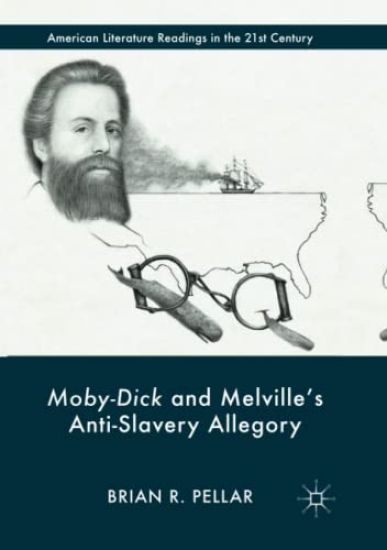
Moby-Dick and Melville’s Anti-Slavery Allegory
Brian R. Pellar; J. Hillis Miller
Springer International Publishing AG
2018
nidottu
This book unfurls and examines the anti-slavery allegory at the subtextual core of Herman Melville’s famed novel, Moby-Dick. Brian Pellar points to symbols and allusions in the novel such as the albinism of the famed whale, the “Ship of State” motif, Calhoun’s “cords,” the equator, Jonah, Narcissus, St. Paul, and Thomas Hobbe’s Leviathan. The work contextualizes these devices within a historical discussion of the Compromise of 1850 and subsequently strengthened Fugitive Slave Laws. Drawing on a rich variety of sources such as unpublished papers, letters, reviews, and family memorabilia, the chapters discuss the significance of these laws within Melville’s own life. After clarifying the hidden allegory interconnecting black slaves and black whales, this book carefully sheds the layers of a hidden meaning that will be too convincing to ignore for future readings: Moby-Dick is ultimately a novel that is intimately connected with questions of race, slavery, and the state.
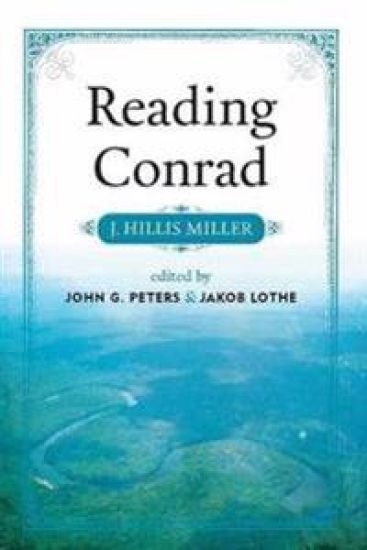
For half a century, J. Hillis Miller has been a premier figure in English and comparative literature, influencing and leading the direction of literary studies. What is less well-known is that he has been equally influential in Conrad studies with his work on nihilism, language, and narrative in Joseph Conrad's fiction. Returning to Conrad at different stages of his long career--reading and rereading him in light of new critical trends--Miller continually discovered new aspects of the influential author's fiction. This volume, edited by John G. Peters and Jakob Lothe, charts Miller's shifting insights into Joseph Conrad's fiction and also highlights the potential of Conrad studies to illuminate core questions in studies of narrative theory, aesthetics, and history. Reading Conrad by J. Hillis Miller demonstrates a surprising cohesiveness across Miller's career as well as the richness of Conrad's fiction, which affords varied opportunities for critical approaches as different as phenomenology, new criticism, deconstruction, narrative theory, and narrative ethics. Miller's analyses emphasize literature's rhetorical and performative power, ultimately suggesting that while narrative fiction is an effect of a series of complex phenomena in society and in the human psyche, as literary language it can also refer to the external world indirectly and contribute to the formation of history from within.

Moby-Dick and Melville’s Anti-Slavery Allegory
Brian R. Pellar; J. Hillis Miller
Springer International Publishing AG
2017
sidottu
This book unfurls and examines the anti-slavery allegory at the subtextual core of Herman Melville’s famed novel, Moby-Dick. Brian Pellar points to symbols and allusions in the novel such as the albinism of the famed whale, the “Ship of State” motif, Calhoun’s “cords,” the equator, Jonah, Narcissus, St. Paul, and Thomas Hobbe’s Leviathan. The work contextualizes these devices within a historical discussion of the Compromise of 1850 and subsequently strengthened Fugitive Slave Laws. Drawing on a rich variety of sources such as unpublished papers, letters, reviews, and family memorabilia, the chapters discuss the significance of these laws within Melville’s own life. After clarifying the hidden allegory interconnecting black slaves and black whales, this book carefully sheds the layers of a hidden meaning that will be too convincing to ignore for future readings: Moby-Dick is ultimately a novel that is intimately connected with questions of race, slavery, and the state.
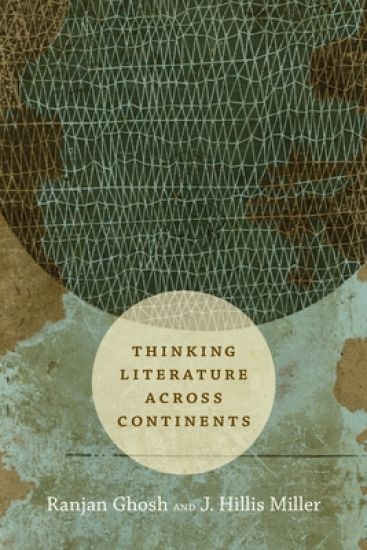
Thinking Literature Across Continents
Ranjan Ghosh; J. Hillis Miller
Duke University Press
2016
pokkari
Thinking Literature across Continents finds Ranjan Ghosh and J. Hillis Miller-two thinkers from different continents, cultures, training, and critical perspectives-debating and reflecting upon what literature is and why it matters. Ghosh and Miller do not attempt to formulate a joint theory of literature; rather, they allow their different backgrounds and lively disagreements to stimulate generative dialogue on poetry, world literature, pedagogy, and the ethics of literature. Addressing a varied literary context ranging from Victorian literature, Chinese literary criticism and philosophy, and continental philosophy to Sanskrit poetics and modern European literature, Ghosh offers a transnational theory of literature while Miller emphasizes the need to account for what a text says and how it says it. Thinking Literature across Continents highlights two minds continually discovering new paths of communication and two literary and cultural traditions intersecting in productive and compelling ways.
Thinking Literature Across Continents
Ranjan Ghosh; J. Hillis Miller
Duke University Press
2016
sidottu
Thinking Literature across Continents finds Ranjan Ghosh and J. Hillis Miller-two thinkers from different continents, cultures, training, and critical perspectives-debating and reflecting upon what literature is and why it matters. Ghosh and Miller do not attempt to formulate a joint theory of literature; rather, they allow their different backgrounds and lively disagreements to stimulate generative dialogue on poetry, world literature, pedagogy, and the ethics of literature. Addressing a varied literary context ranging from Victorian literature, Chinese literary criticism and philosophy, and continental philosophy to Sanskrit poetics and modern European literature, Ghosh offers a transnational theory of literature while Miller emphasizes the need to account for what a text says and how it says it. Thinking Literature across Continents highlights two minds continually discovering new paths of communication and two literary and cultural traditions intersecting in productive and compelling ways.


Draping the Sky for a Snowfall
Julian Wolfreys; J Hillis Miller; Jean-Michel Rabate
Triarchy Press
2016
nidottu
But, while the essays are often 'hard work', inviting us to grapple with Derrida and Merleau-Ponty, the finer points of linguistics and etymology, they are often also light, playful, beautiful. And each essay, appearing on the right (recto), faces a matching poem. The poetry (printed verso) is usually firmly located on the Isle of Wight, in the Baltic, in a cafe or on the steps of a railway station and is often the beautifully and minutely observed account of an event, action, remembrance, plant or bird. Sometimes the essays explain or offer context for the matching poem, and other times the essay is replaced by a photograph or on of Judy Rodrigues' inveigling paintings.At whatever level you absorb the poetry, read the essays and explore the illustrations, this is remarkable writing - writing that sometimes seems to touch us directly, bypassing the cognitive and, at other times, opens the doors of the mind onto corridors peopled with ideas we had never imagined existed.

Twilight of the Anthropocene Idols
Tom Cohen; Claire Colebrook; J. Hillis Miller
Open Humanities Press
2016
nidottu

Since 1988, J. Hillis Miller has traveled to China to lecture on literary theory, especially the role of globalization in literary theory. Over time, he has assisted in the development of distinctively Chinese forms of literary theory, Comparative Literature, and World Literature. The fifteen lectures gathered in An Innocent Abroad span both time and geographic location, reflecting his work at universities across China for more than twenty-five years.More important, they reflect the evolution of Miller’sthinking and of the lectures’ contexts in China as these have markedly changed over the years, especially on either side of Tiananmen Square and in light of China’s economic growth and technological change. A foreword by the leading theorist Fredric Jameson provides additional context.
Communities in Fiction reads six novels or stories (one each by Trollope, Hardy, Conrad, Woolf, Pynchon, and Cervantes) in the light of theories of community worked out (contradictorily) by Raymond Williams, Martin Heidegger, and Jean- Luc Nancy. The book's topic is the question of how communities or noncommunities are represented in fictional works. Such fictional communities help the reader understand real communities, including those in which the reader lives. As against the presumption that the trajectory in literature from Victorian to modern to postmodern is the story of a gradual loss of belief in the possibility of community, this book demonstrates that communities have always been presented in fiction as precarious and fractured. Moreover, the juxtaposition of Pynchon and Cervantes in the last chapter demonstrates that period characterizations are never to be trusted. All the features both thematic and formal that recent critics and theorists such as Fredric Jameson and many others have found to characterize postmodern fiction are already present in Cervantes's wonderful early-seventeenth-century "Exemplary Story," "The Dogs' Colloquy." All the themes and narrative devices of Western fiction from the beginning of the print era to the present were there at the beginning, in Cervantes Most of all, however, Communities in Fiction looks in detail at its six fictions, striving to see just what they say, what stories they tell, and what narratological and rhetorical devices they use to say what they do say and to tell the stories they do tell. The book attempts to communicate to its readers the joy of reading these works and to argue for the exemplary insight they provide into what Heidegger called Mitsein— being together in communities that are always problematic and unstable.
Communities in Fiction reads six novels or stories (one each by Trollope, Hardy, Conrad, Woolf, Pynchon, and Cervantes) in the light of theories of community worked out (contradictorily) by Raymond Williams, Martin Heidegger, and Jean- Luc Nancy. The book's topic is the question of how communities or noncommunities are represented in fictional works. Such fictional communities help the reader understand real communities, including those in which the reader lives. As against the presumption that the trajectory in literature from Victorian to modern to postmodern is the story of a gradual loss of belief in the possibility of community, this book demonstrates that communities have always been presented in fiction as precarious and fractured. Moreover, the juxtaposition of Pynchon and Cervantes in the last chapter demonstrates that period characterizations are never to be trusted. All the features both thematic and formal that recent critics and theorists such as Fredric Jameson and many others have found to characterize postmodern fiction are already present in Cervantes's wonderful early-seventeenth-century "Exemplary Story," "The Dogs' Colloquy." All the themes and narrative devices of Western fiction from the beginning of the print era to the present were there at the beginning, in Cervantes Most of all, however, Communities in Fiction looks in detail at its six fictions, striving to see just what they say, what stories they tell, and what narratological and rhetorical devices they use to say what they do say and to tell the stories they do tell. The book attempts to communicate to its readers the joy of reading these works and to argue for the exemplary insight they provide into what Heidegger called Mitsein— being together in communities that are always problematic and unstable.

The Caribbean at Mid-Century: School of Inter-American Studies, Series 1, V1
Alva Curtis Wilgus; J. Hillis Miller
Literary Licensing, LLC
2012
nidottu
A masterclass in attentive reading that opens up brilliant insights into two of George Eliot's novels. Can reading Adam Bede and Middlemarch be justified in this time of climate change, financial meltdown and ineffective politicians? J. Hillis Miller shows how, to be read for today, they must be read slowly, closely and carefully, with much attention to linguistic detail and especially to figures of speech. By relating mistakes like Dorothea's about Casaubon to current affairs, Miller's 'readings for today' can help us to come to terms with our human, social and political situation and even inspire us to act to ameliorate it. Key Features: * The product of many years of reading, teaching and writing by this world-renowned critic * Supported by the abundant previous scholarship on these texts
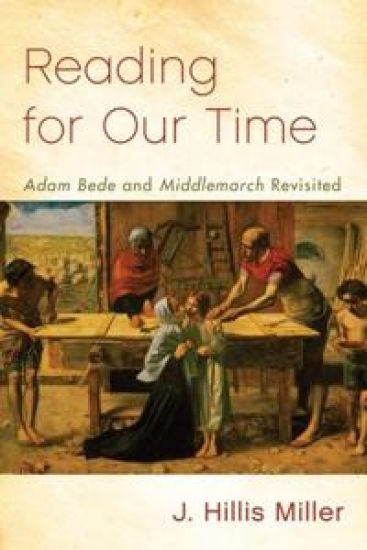
A masterclass in attentive reading that opens up brilliant insights into two of George Eliot's novels. Can reading Adam Bede and Middlemarch be justified in this time of climate change, financial meltdown and ineffective politicians? J. Hillis Miller shows how, to be read for today, they must be read slowly, closely and carefully, with much attention to linguistic detail and especially to figures of speech. By relating mistakes like Dorothea's about Casaubon to current affairs, Miller's 'readings for today' can help us to come to terms with our human, social and political situation and even inspire us to act to ameliorate it. Key Features: * The product of many years of reading, teaching and writing by this world-renowned critic * Supported by the abundant previous scholarship on these texts

Theory and the Disappearing Future
Tom Cohen; Claire Colebrook; J. Hillis Miller; with a manuscript by Paul de Man
Routledge
2011
sidottu
Paul de Man is often associated with an era of ‘high theory’, an era it is argued may now be coming to a close. This book, written by three leading contemporary scholars, includes both a transcript and facsimile print of a previously unpublished text by de Man of his handwritten notes for a lecture on Walter Benjamin. Challenging and relevant, this volume presents de Man’s work as a critical resource for dealing with the most important questions of the twenty-first century and argues for the place of theory within it.The humanities are flooded with crises of globalism, capitalism and terrorism, contemporary narratives of financial collapse, viral annihilation, species extinction, environmental disaster and terrorist destruction. Cohen, Colebrook and Miller draw out the implications of these crises and their narratives and, reflecting on this work by de Man, explore the limits of political thinking, of historical retrieval and the ethics of archives and cultural memory.

Theory and the Disappearing Future
Tom Cohen; Claire Colebrook; J. Hillis Miller; with a manuscript by Paul de Man
Routledge
2011
nidottu
Paul de Man is often associated with an era of ‘high theory’, an era it is argued may now be coming to a close. This book, written by three leading contemporary scholars, includes both a transcript and facsimile print of a previously unpublished text by de Man of his handwritten notes for a lecture on Walter Benjamin. Challenging and relevant, this volume presents de Man’s work as a critical resource for dealing with the most important questions of the twenty-first century and argues for the place of theory within it.The humanities are flooded with crises of globalism, capitalism and terrorism, contemporary narratives of financial collapse, viral annihilation, species extinction, environmental disaster and terrorist destruction. Cohen, Colebrook and Miller draw out the implications of these crises and their narratives and, reflecting on this work by de Man, explore the limits of political thinking, of historical retrieval and the ethics of archives and cultural memory.

"After Auschwitz to write even a single poem is barbaric". "The Conflagration of Community" challenges Theodor Adorno's famous statement about aesthetic production after the Holocaust, arguing for the possibility of literature to bear witness to extreme collective and personal experiences. J. Hillis Miller considers how novels about the Holocaust relate to fictions written before and after it, and uses theories of community from Jean-Luc Nancy and Derrida to explore the dissolution of community bonds in its wake. Miller juxtaposes readings of books about the Holocaust - Keneally's "Schindler's List", McEwan's "Black Dogs", Spiegelman's "Maus", and Kertesz's "Fatelessness" - with Kafka's novels and Morrison's "Beloved", asking what it means to think of texts as acts of testimony. Throughout, Miller questions the resonance between the difficulty of imagining, understanding, or remembering Auschwitz - a difficulty so often a theme in records of the Holocaust - and the exasperating resistance to clear, conclusive interpretation of these novels. "The Conflagration of Community" is an eloquent study of literature's value to fathoming the unfathomable.