Kirjojen hintavertailu. Mukana 12 595 353 kirjaa ja 12 kauppaa.

Kirjailija

J.J. Long

Kirjat ja teokset yhdessä paikassa: 3 kirjaa, julkaisuja vuosilta 2008-2018, suosituimpien joukossa W. G. Sebald. Vertaile teosten hintoja ja tarkista saatavuus suomalaisista kirjakaupoista.

Mukana myös kirjoitusasut: J. J. Long

3 kirjaa

Kirjojen julkaisuhaarukka 2008-2018.

W. G. Sebald

W. G. Sebald

J.J. Long

Columbia University Press
2010
pokkari
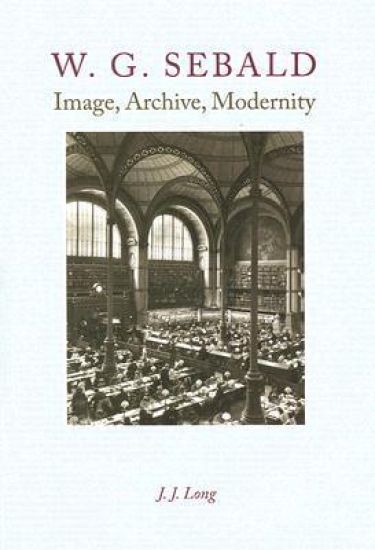
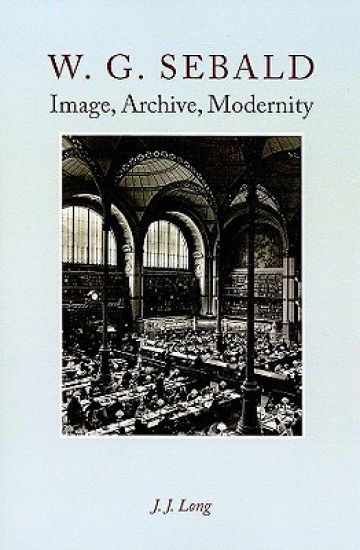
The contemporary German author W. G. Sebald was a master of the fiction of recollection and observation, often exploring the reverberations of World War II on the personal and collective memories of Germans and Jews. His rich body of work earned him legions of fans across the globe, but in the wake of his death in 2001, Sebald also became the subject of extensive critical study. Literary scholars have identified a number of subjects that frequently appear in Sebald's novels: the Holocaust, trauma and memory, melancholy, photography, travel, intertextuality, and the nature and meaning of home, but they have yet to locate an overarching narrative that ties these topics to the broader historical trajectories with which Sebald's work is also fundamentally concerned. In W. G. Sebald: Image, Archive, Modernity, J. J. Long identifies a wider "meta-problem" in Sebald's work--the problem of modernity. The numerous archival institutions and processes that lie at the heart of modernity are repeatedly explored in Sebald's novels. Photography, museums, libraries, and other institutions for producing and preserving knowledge are among Sebald's main obsessions. Following Foucault, these systems are seen as central to the exercise of power and the constitution of subjectivity, themes embodied in Sebald's melancholy search for autonomous selfhood in an increasingly impersonal and bureaucratized age. Considering the evocation of wonder in the prose narratives of Vertigo, family albums in The Emigrants, the ambulatory narrative in The Rings of Saturn, and the archival subject in Austerlitz, Long advances a highly original interpretation of the author's oeuvre, arguing that Sebald's project needs to be understood as a response not merely to post-Holocaust trauma but to the longer history of modernity.
The Mindful Artist: How Mindfulness Increases Productivity, Reduces Anxiety, and Creates Overall Abundance for Creative Entrepreneurs
Paperback Version Now Available Here is a personal testimony from the author about the life changing benefits that mindfulness has had on his life: "For the first 10 years that I was a self employed artist I was not a mindful artist. I didn't know what mindfulness was and I just roamed the world on autopilot every day like many of us do. I had great aspirations for my life and big dreams for my art career, but I was so caught up in the minutiae of every day life that I never took the time to listen to myself and reflect inward. As a result of not giving myself enough time to focus on myself, I was always stressed, financially unstable, emotionally and physically drained, and was just never in a confident state of mind. I never had enough money in the bank, never had time for a social life, and was just never satisfied. My eyes were always set on the destination rather than the journey and I never took the time to relish in the amazing progress that was always unfolding underneath my feet. Because of practicing mindfulness on a daily basis, I've been able to restore my mental and physical health, stabilize my finances, maintain my emotional well-being, and also enhance my creative drive. I attribute all of my career and personal success to the lessons I talk about in this book and I'd love for you to pick up a copy and take a chance on living a mindful life to help you fulfill your own creative passions as well " -J.J. Long Here Is A Preview Of What You'll Learn... The Definition of Mindfulness The Health Benefits of MindfulnessSome Mindfulness Techniques In Less Than 5 MinutesHow To Live a Typical Mindful Work DayHow To Prime Your Day and Be Less ReactiveHow To Increase Productivity in Your BusinessHow To Align With Your PurposeHow To Maintain AbundanceAnd much, much more Take action today and pick up a copy of "The Mindful Artist" I look forward to taking you on a mindfulness journey to help bring you more abundance in your career and in your personal life
W. G. Sebald

W. G. Sebald

J.J. Long

Columbia University Press
2008
sidottu
The contemporary German author W. G. Sebald was a master of the fiction of recollection and observation, often exploring the reverberations of World War II on the personal and collective memories of Germans and Jews. His rich body of work earned him legions of fans across the globe, but in the wake of his death in 2001, Sebald also became the subject of extensive critical study. Literary scholars have identified a number of subjects that frequently appear in Sebald's novels: the Holocaust, trauma and memory, melancholy, photography, travel, intertextuality, and the nature and meaning of home, but they have yet to locate an overarching narrative that ties these topics to the broader historical trajectories with which Sebald's work is also fundamentally concerned. In W. G. Sebald: Image, Archive, Modernity, J. J. Long identifies a wider "meta-problem" in Sebald's work--the problem of modernity. The numerous archival institutions and processes that lie at the heart of modernity are repeatedly explored in Sebald's novels. Photography, museums, libraries, and other institutions for producing and preserving knowledge are among Sebald's main obsessions. Following Foucault, these systems are seen as central to the exercise of power and the constitution of subjectivity, themes embodied in Sebald's melancholy search for autonomous selfhood in an increasingly impersonal and bureaucratized age. Considering the evocation of wonder in the prose narratives of Vertigo, family albums in The Emigrants, the ambulatory narrative in The Rings of Saturn, and the archival subject in Austerlitz, Long advances a highly original interpretation of the author's oeuvre, arguing that Sebald's project needs to be understood as a response not merely to post-Holocaust trauma but to the longer history of modernity.