Kirjojen hintavertailu. Mukana 12 595 353 kirjaa ja 12 kauppaa.

Kirjailija

J. Michael Spector

Kirjat ja teokset yhdessä paikassa: 13 kirjaa, julkaisuja vuosilta 2000-2026, suosituimpien joukossa An Analysis of Two Decades of Educational Technology Publications. Vertaile teosten hintoja ja tarkista saatavuus suomalaisista kirjakaupoista.

Mukana myös kirjoitusasut: J.Michael Spector

13 kirjaa

Kirjojen julkaisuhaarukka 2000-2026.

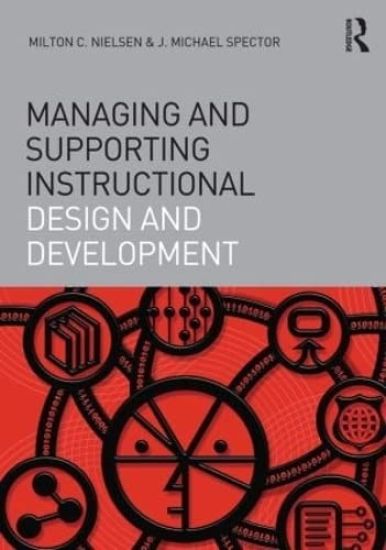
Managing and Supporting Instructional Design and Development

Managing and Supporting Instructional Design and Development

Milton C. Nielsen; J. Michael Spector

Routledge
2026
sidottu
Managing and Supporting Instructional Design and Development is a practical guide to managing multiple levels of instructional design activities, based upon management concept and application as well as instructional design process and application. The book takes an integrated approach within each level of an instructional design project: lesson, block, course, and courses leading to a certificate or degree. Topics of special focus ranging from scope and estimation to personnel and communication are addressed initially as discrete and segregated topics and later elaborated in more detail within the context of the different project or program levels.This volume includes a systemic perspective, elaborated examples, meaningful activities, engaging exercises, multiple contexts, and best practices. In addition, each chapter that introduces the students to instructional project management at a particular project or program level has an integrated, scenario based project activity for students and faculty to develop. The book concludes with an examination of challenging instructional project management tasks, situations, and environments. A companion website contains examples, resources, and activities will be maintained to complement the contents and maintain currency with new and relevant technologies.
Managing and Supporting Instructional Design and Development

Managing and Supporting Instructional Design and Development

Milton C. Nielsen; J. Michael Spector

Routledge
2026
nidottu
Managing and Supporting Instructional Design and Development is a practical guide to managing multiple levels of instructional design activities, based upon management concept and application as well as instructional design process and application. The book takes an integrated approach within each level of an instructional design project: lesson, block, course, and courses leading to a certificate or degree. Topics of special focus ranging from scope and estimation to personnel and communication are addressed initially as discrete and segregated topics and later elaborated in more detail within the context of the different project or program levels.This volume includes a systemic perspective, elaborated examples, meaningful activities, engaging exercises, multiple contexts, and best practices. In addition, each chapter that introduces the students to instructional project management at a particular project or program level has an integrated, scenario based project activity for students and faculty to develop. The book concludes with an examination of challenging instructional project management tasks, situations, and environments. A companion website contains examples, resources, and activities will be maintained to complement the contents and maintain currency with new and relevant technologies.

Foundations of Educational Technology

Foundations of Educational Technology

Gwendolyn M. Morel; J. Michael Spector

TAYLOR FRANCIS LTD
2022
sidottu
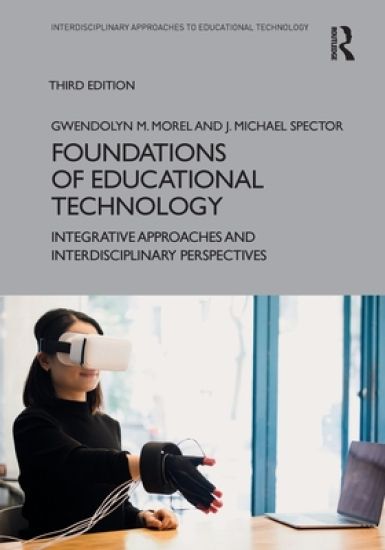
Foundations of Educational Technology offers a fresh, interdisciplinary, problem-centered approach to educational technology, learning design, and instructional systems development. As the implementation of online, blended, hybrid, mobile, open, and adaptive learning systems rapidly expands, emerging tools such as learning analytics, artificial intelligence, mixed realities, serious games, and micro-credentialing are promising more complex and personalized learning experiences. This book provides faculty and graduate students with a conceptual, empirical, and practical basis for the effective use of these systems across contexts, integrating essential theories from the fields of human performance, learning and development, information and communications, and instructional design. Key additions to this revised and expanded third edition include coverage of the latest learning technologies, research from educational neuroscience, discussions about security and privacy, new attention to diversity, equity, and inclusion, updated activities, support materials, references, and more.
Foundations of Educational Technology

Foundations of Educational Technology

Gwendolyn M. Morel; J. Michael Spector

TAYLOR FRANCIS LTD
2022
nidottu
Foundations of Educational Technology offers a fresh, interdisciplinary, problem-centered approach to educational technology, learning design, and instructional systems development. As the implementation of online, blended, hybrid, mobile, open, and adaptive learning systems rapidly expands, emerging tools such as learning analytics, artificial intelligence, mixed realities, serious games, and micro-credentialing are promising more complex and personalized learning experiences. This book provides faculty and graduate students with a conceptual, empirical, and practical basis for the effective use of these systems across contexts, integrating essential theories from the fields of human performance, learning and development, information and communications, and instructional design. Key additions to this revised and expanded third edition include coverage of the latest learning technologies, research from educational neuroscience, discussions about security and privacy, new attention to diversity, equity, and inclusion, updated activities, support materials, references, and more.
Educational Technology

Educational Technology

Ronghuai Huang; J. Michael Spector; Junfeng Yang

Springer Verlag, Singapore
2019
sidottu
The aim of this book is to prepare students with knowledge and skills to understand the organizational needs and requirements of educational technology. Students should be able to use and manage both existing and emerging technologies effectively and be able to apply associated pedagogies to suit the environment, but also evaluate and manage technological advances of future and the requisite pedagogical shifts to achieve efficiency and effectiveness. The demand of educational technology has been rising steadily, primarily due to the fact that e-learning is a huge and significantly expanding world-wide industry. Commercial e-learning companies, training departments in large companies and organizations, computer software companies and educational institutions the world over employ large numbers of educational technology specialists. There is a strong demand for technologists who understand educational theories and for instructional designers and teachers who understand technologies. This book is targeted towards those who are looking for career in educational technology, instructional design, or media and information systems, or may want to continue their studies in graduate programs in learning and instructional technology, and those who are interested in becoming teacher in K-12 setting but need background in educational technology. This book will also act as a valuable resource in teacher education programs where primary focus on mainstream education and requires an authentic resource in instructional design and educational technology. Keeping in mind the varied needs of the organizations, employees and potential students, this book adopts a competency approach to learning and assessment. The themes and topics take a multi-disciplinary approach, and are aimed at preparing students for competent and innovative educational technology professionals.
An Analysis of Two Decades of Educational Technology Publications

An Analysis of Two Decades of Educational Technology Publications

Gloria Natividad; J. Michael Spector; Nicholas Evangelopoulos

Springer Verlag, Singapore
2018
nidottu
This book presents a challenging and multi-faceted research project that required state-of-the-art methodological approaches. The project involved analyzing data collected from 10,000 research articles published in ten leading journals in the area of educational technology over 20 years, from January 1994 to December 2014; advanced analytic approaches such as latent semantic analysis; and expert insights and interpretations of the subject matter.It captures the trends in a number of research streams within the discipline of educational technology and identifies the point in time when a massive change took place. This is a significant achievement given that, in epistemology and philosophy of science, there have always been discussions of paradigm shifts, but researchers have always identified them qualitatively. This is the first work to identify a paradigm shift using rigorous quantitative methods. The analysis procedure involved big data and sophisticated analysis, which supported the identification of clusters at several breakpoints from which the richest set was selected in order to provide the most detailed analysis. This comprehensive analysis also shows what has been published and by whom in those ten top-tier journals. This work makes a highly significant contribution to the field of learning technologies and provides the groundwork and a significant data source for other scholars, both new and experienced, to build on and expand in their work.
An Analysis of Two Decades of Educational Technology Publications

An Analysis of Two Decades of Educational Technology Publications

Gloria Natividad; J. Michael Spector; Nicholas Evangelopoulos

Springer Verlag, Singapore
2018
sidottu
This book presents a challenging and multi-faceted research project that required state-of-the-art methodological approaches. The project involved analyzing data collected from 10,000 research articles published in ten leading journals in the area of educational technology over 20 years, from January 1994 to December 2014; advanced analytic approaches such as latent semantic analysis; and expert insights and interpretations of the subject matter.It captures the trends in a number of research streams within the discipline of educational technology and identifies the point in time when a massive change took place. This is a significant achievement given that, in epistemology and philosophy of science, there have always been discussions of paradigm shifts, but researchers have always identified them qualitatively. This is the first work to identify a paradigm shift using rigorous quantitative methods. The analysis procedure involved big data and sophisticated analysis, which supported the identification of clusters at several breakpoints from which the richest set was selected in order to provide the most detailed analysis. This comprehensive analysis also shows what has been published and by whom in those ten top-tier journals. This work makes a highly significant contribution to the field of learning technologies and provides the groundwork and a significant data source for other scholars, both new and experienced, to build on and expand in their work.
Motivation, Learning, and Technology

Motivation, Learning, and Technology

J. Michael Spector; Seung Won Park

Routledge
2017
nidottu
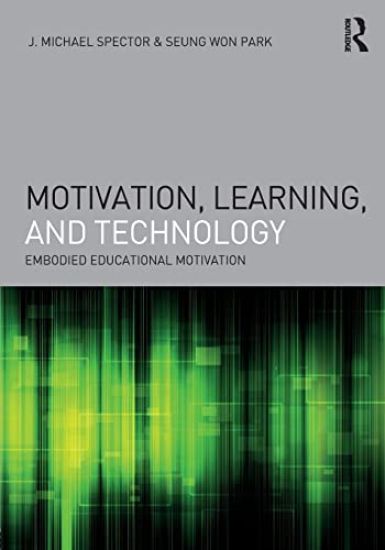
Motivation, Learning, and Technology is a fresh, thorough, and practical introduction to motivational research, theories, and applications for learning and instruction. Written for both instructional designers and teachers, this foundational textbook combines learning design and learning technologies, synthesis of current research and models, and practical advice for those looking to improve how they motivate learners. Building from existing models in an interactional, holistic approach, J. Michael Spector and Seung Won Park guide readers through all steps of educational motivation, from designing a motivation plan through implementation and assessment.
Motivation, Learning, and Technology

Motivation, Learning, and Technology

J. Michael Spector; Seung Won Park

Routledge
2017
sidottu
Motivation, Learning, and Technology is a fresh, thorough, and practical introduction to motivational research, theories, and applications for learning and instruction. Written for both instructional designers and teachers, this foundational textbook combines learning design and learning technologies, synthesis of current research and models, and practical advice for those looking to improve how they motivate learners. Building from existing models in an interactional, holistic approach, J. Michael Spector and Seung Won Park guide readers through all steps of educational motivation, from designing a motivation plan through implementation and assessment.
Educational Technology Program and Project Evaluation

Educational Technology Program and Project Evaluation

J. Michael Spector; Allan H.K. Yuen

Routledge
2016
nidottu
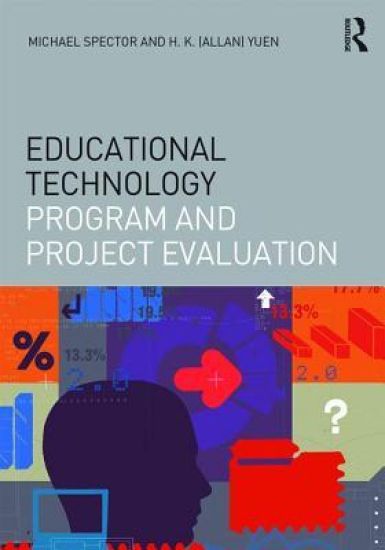
Educational Technology Program and Project Evaluation is a unique, comprehensive guide to the formative and summative evaluation of programs, projects, products, practices and policies involving educational technology. Written for both beginning and experienced evaluators, the book utilizes an integrative, systems-based approach; its practical emphasis on logic models and theories of change will help readers navigate their own evaluation processes to improve interventions and conduct meaningful educational research. Key features include: evidence-based guidelines for constructing and conducting evaluations practical exercises to support the development of knowledge, skills, and program evaluation portfolios a variety of interdisciplinary case studies references and links to pertinent research and resourcesUsing the TELL, ASK, SHOW, DO model first introduced in this series, Educational Technology Program and Project Evaluation provides comprehensive coverage of the concepts, goals, design, implementation, and critical questions imperative to successful technology-enhanced evaluation.
Educational Technology Program and Project Evaluation

Educational Technology Program and Project Evaluation

J. Michael Spector; Allan H.K. Yuen

Routledge
2016
sidottu
Educational Technology Program and Project Evaluation is a unique, comprehensive guide to the formative and summative evaluation of programs, projects, products, practices and policies involving educational technology. Written for both beginning and experienced evaluators, the book utilizes an integrative, systems-based approach; its practical emphasis on logic models and theories of change will help readers navigate their own evaluation processes to improve interventions and conduct meaningful educational research. Key features include: evidence-based guidelines for constructing and conducting evaluations practical exercises to support the development of knowledge, skills, and program evaluation portfolios a variety of interdisciplinary case studies references and links to pertinent research and resourcesUsing the TELL, ASK, SHOW, DO model first introduced in this series, Educational Technology Program and Project Evaluation provides comprehensive coverage of the concepts, goals, design, implementation, and critical questions imperative to successful technology-enhanced evaluation.
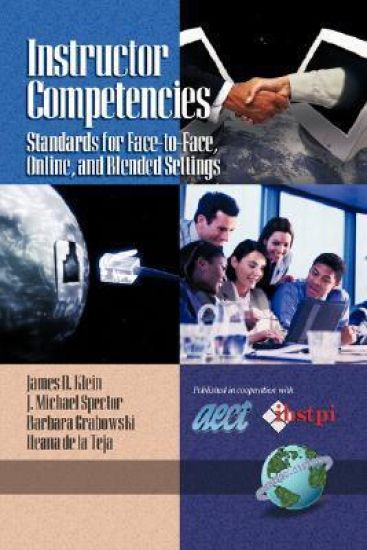
Instructor Competencies

Instructor Competencies

James D. Klein; J.Michael Spector; Barbara L. Grabowski; Ileana de la Teja

Information Age Publishing
2000
sidottu
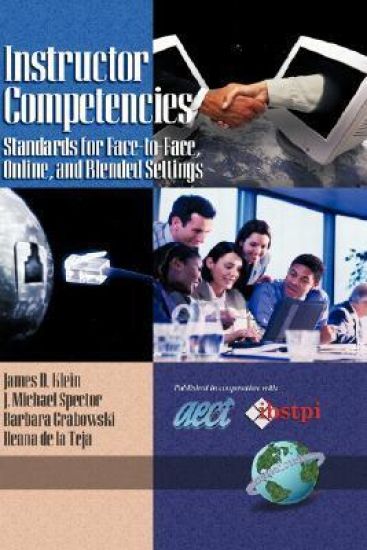
This edition is not just a rehash of old, albeit classic and still important, stuff. Instead, it provides a fresh perspective on a topic of perennial interest for those working in the field that has been variously called training and development, human resource development, performance technology, and workplace learning and performance. The fresh perspective takes into consideration two additional instructor settings to the traditional face-to-face environments that most instructors and trainers know -- that is, online and blended settings. These settings are, of course, becoming more critical as instruction moves beyond classroom settings to include virtual and combinations of classroom and other media delivery methods.The ibstpi instructor competencies match up well to Mapping the Future (Bernthal, Colteryahn, Davis, Naughton, Rothwell, & Wellins 2004), the current ASTD competency study of the field now known as Workplace Learning and Performance (WLP) and previously known as Training and Development (T&D). WLP is more than a new name for an old subject and represents a fundamental paradigm shift in what it means to be a professional in the field formerly known as training. WLP is all about getting improved performance -- and therefore improved results -- in organizational settings through planned and unplanned learning interventions. Instruction is thus a means to an end and not an end in itself. The ibstpi instructor competencies dovetail well with that philosophy.
Instructor Competencies

Instructor Competencies

James D. Klein; J.Michael Spector; Barbara L. Grabowski; Ileana de la Teja

Information Age Publishing
2000
nidottu
This edition is not just a rehash of old, albeit classic and still important, stuff. Instead, it provides a fresh perspective on a topic of perennial interest for those working in the field that has been variously called training and development, human resource development, performance technology, and workplace learning and performance. The fresh perspective takes into consideration two additional instructor settings to the traditional face-to-face environments that most instructors and trainers know -- that is, online and blended settings. These settings are, of course, becoming more critical as instruction moves beyond classroom settings to include virtual and combinations of classroom and other media delivery methods.The ibstpi instructor competencies match up well to Mapping the Future (Bernthal, Colteryahn, Davis, Naughton, Rothwell, & Wellins 2004), the current ASTD competency study of the field now known as Workplace Learning and Performance (WLP) and previously known as Training and Development (T&D). WLP is more than a new name for an old subject and represents a fundamental paradigm shift in what it means to be a professional in the field formerly known as training. WLP is all about getting improved performance -- and therefore improved results -- in organizational settings through planned and unplanned learning interventions. Instruction is thus a means to an end and not an end in itself. The ibstpi instructor competencies dovetail well with that philosophy.