Kirjojen hintavertailu. Mukana 12 595 353 kirjaa ja 12 kauppaa.

Kirjailija

J. Norman Reid

Kirjat ja teokset yhdessä paikassa: 4 kirjaa, julkaisuja vuosilta 1996-2020, suosituimpien joukossa Rural Development Research. Vertaile teosten hintoja ja tarkista saatavuus suomalaisista kirjakaupoista.

4 kirjaa

Kirjojen julkaisuhaarukka 1996-2020.

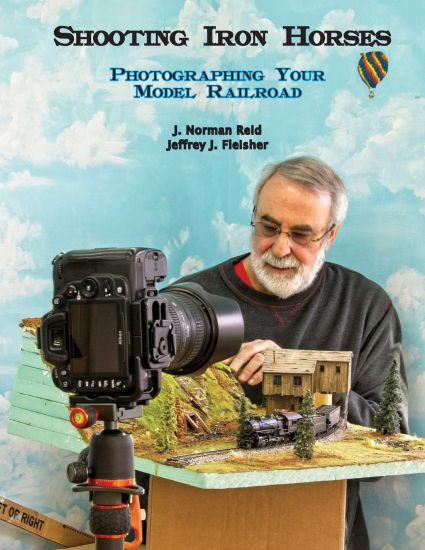
Shooting Iron Horses: Photographing Your Model Railroad

Shooting Iron Horses: Photographing Your Model Railroad

Jeffrey J. Fleisher; J. Norman Reid

Lulu Press
2020
nidottu
There are lots of reasons why model railroaders want to photograph their layouts. Many want to show off their craftsmanship on Facebook, in blogs or elsewhere on the web. Club newsletters need photos from individual or club layouts. And some model railroad organizations like the NMRA sponsor photo competitions with the chance for prizes and recognition. Others want to sell their surplus trains on eBay or other auction sites and know that good photos bring higher prices. Modelers with major investments in their models and layouts need documentation for insurance and estate purposes. Model railroaders who make club presentations or conduct clinics at conferences know that the quality of their photos can make or break their presentation and that professional-level photography is a plus in these settings. This is even more true for photos intended for publication in magazines and books, where special requirements must be met and only the best will do.The ability to post videos to Facebook or YouTube, combined with the miniaturization of video cameras, has led to an explosion in the popularity of model railroad videos and opened an entirely new field for model railroad photography. In addition, this fact remains: making and showing photos of your layout is simply fun Shooting Iron Horses has several main objectives: -To explain how to set up outstanding photos of your trains and layouts-To demystify the processes for making high quality photos and videos-To help you avoid common mistakes and adopt best practicesIn this book you'll learn: -How to start making photos and videos quickly-What makes effective subjects for model railroad photos and videos-How lighting can make or break your photos-How to make your best shots-How to do focus stacking-How to add smoke to your locomotive photos-How to process your photos and videos once you've made them-How you can use your photos and videos in a variety of ways-What gear you'll need and how to choose it-And much more The authors have long experience as model railroaders and photographers. Their published work includes a book on landscape photography, Creative Composition for Landscape Photography, and an in-process book on close-up and macrophotography. They have made public presentations on using focus stacking to enhance sharpness throughout the miniature scenes found on model railroad layouts.

Choosing and Using Handplanes: All You Need to Know to Get Started Planing by Hand
If you're hankering to explore the use of handplanes in woodworking, this succinct but detailed guide will get you started and take you far along your way. Designed especially for the newer handplane user, it describes handplanes and planing methods from the ground up in thorough, easy-to-follow language. Richly illustrated with over 90 color photographs and drawings, Choosing and Using Handplanes answers the questions beginning and intermediate handplane users have about this exciting but sometimes confusing mode of woodworking. In this book, you'll learn about - The types and uses of different planes - How to set up handplanes for use - Sharpening blades - Planing techniques - Work-holding methods - Buying and restoring old planes - Caring for your planes - Diagnosing and fixing planing problems Foreword by Charles Neil, Furniture Craftsman and Woodworking Instructor
The Hero of Gucci Gulch: A Capitol Hill Mystery

The Hero of Gucci Gulch: A Capitol Hill Mystery

J. Norman Reid

Createspace Independent Publishing Platform
2014
nidottu
Henry Wright, a milk-loathing dairy promoter turned environmentalist, is na ve, unsure of himself, sometimes quirky. Now he is caught in the political fight of his life-to get a climate change bill passed by a Congress riddled with the scheming pals of polluters. But this test of his political skills is no match for his fight to escape his own seemingly inevitable death. The Hero of Gucci Gulch is set in the halls of Congress, where anti-environmental skullduggery mixes with mayhem to create exciting twists and turns sure to entice any fan of mysteries. Henry befriends Alicia Cummings, a pretty young intern whose passion for environmental justice matches his own. But youthful impetuousity leads her to ignore Henry's warnings and she digs too deeply into the nefarious plans of the powerful opposition. When Henry finds her strangled body in a lonely Washington garden, he becomes the number one murder suspect. He tries to plow his anguish into his legislative campaign, but the unsolved murder weighs heavily on him and he can't leave it alone. He stumbles onto clues that point to his anti-environmental enemies, and when the police are slow to act he takes matters into his own hands. His increasingly daring amateur investigation gets him crosswise with the police but he persists until violence and still more death force him to live on the run. Henry faces both personal threats and political challenges as he claws his way toward the surprising conclusion. The first novel in a series featuring the lobbyist amateur sleuth is rich with Washington and political insider details. It will appeal to mystery fans, environmentalists and lovers of political intrigue alike.
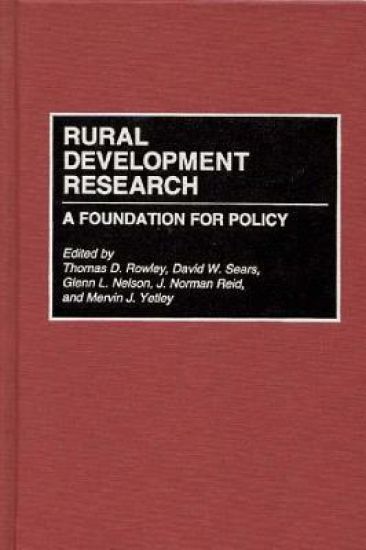
Rural Development Research

Rural Development Research

Glenn Nelson; J. Norman Reid; Thomas Rowley; David W. Sears; Mervin J. Yetley

Praeger Publishers Inc
1996
sidottu
Currently, the research community lacks the capacity to provide accurate, up-to-date information about conditions and trends in rural areas. Bringing together some of the best known rural development researchers, this volume begins to build an information base that can serve as a foundation for rural development policy. It deals with four components of development—education, entrepreneurship, physical infrastructure, and social infrastructure. The opening chapters address two aspects of each component—the use of the component to achieve rural development and measuring the impact of its use. The volume then applies specific analytic methods of measuring impact to each component.The opening chapters address two aspects of each component—the concept of using that component to achieve rural development and the concept of measuring its impact. The volume then examines analytic methods of measuring impact. Following an overview of analytic methods, chapters apply a different analytic technique to each of the components. The techniques considered include econometric models, computable general equilibrium models, input-output analysis, and the case-study method.