Kirjojen hintavertailu. Mukana 12 336 165 kirjaa ja 12 kauppaa.

Kirjailija

J. Patrick Hornbeck II

Kirjat ja teokset yhdessä paikassa: 3 kirjaa, julkaisuja vuosilta 2010-2019, suosituimpien joukossa What is a Lollard?. Vertaile teosten hintoja ja tarkista saatavuus suomalaisista kirjakaupoista.

3 kirjaa

Kirjojen julkaisuhaarukka 2010-2019.

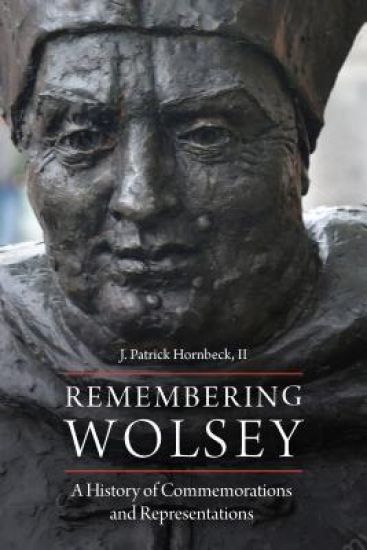
Remembering Wolsey

Remembering Wolsey

J. Patrick Hornbeck II

Fordham University Press
2019
pokkari
Remembering Wolsey seeks to contribute to our understanding of historical memory and memorialization by examining in detail the commemoration and representation of the life of Thomas Wolsey, the sixteenth-century cardinal, papal legate, and lord chancellor of England. Hornbeck surveys a wide range of representations of Cardinal Wolsey, from those contemporary with his death to recent mass-market appearances on television and historical fiction, to go beyond previous scholarship that has examined Wolsey only in an early modern context. Remembering Wolsey contributes significantly to the ongoing reimagining of English church history in the years prior to the Reformation. Surveying chronicle accounts, pamphlets, plays, poems, historical fictions, works of historical scholarship, civic pageants and monuments, films, and television programs, the book shows how an extended sequence of authors have told widely varying stories about Wolsey's life, often through the lens of their own religious and ideological commitments and/or in response to the pressing concerns of their times.
Remembering Wolsey

Remembering Wolsey

J. Patrick Hornbeck II

FORDHAM UNIVERSITY PRESS
2019
sidottu
Remembering Wolsey seeks to contribute to our understanding of historical memory and memorialization by examining in detail the commemoration and representation of the life of Thomas Wolsey, the sixteenth-century cardinal, papal legate, and lord chancellor of England. Hornbeck surveys a wide range of representations of Cardinal Wolsey, from those contemporary with his death to recent mass-market appearances on television and historical fiction, to go beyond previous scholarship that has examined Wolsey only in an early modern context. Remembering Wolsey contributes significantly to the ongoing reimagining of English church history in the years prior to the Reformation. Surveying chronicle accounts, pamphlets, plays, poems, historical fictions, works of historical scholarship, civic pageants and monuments, films, and television programs, the book shows how an extended sequence of authors have told widely varying stories about Wolsey's life, often through the lens of their own religious and ideological commitments and/or in response to the pressing concerns of their times.
What is a Lollard?

What is a Lollard?

J. Patrick Hornbeck II

Oxford University Press
2010
sidottu
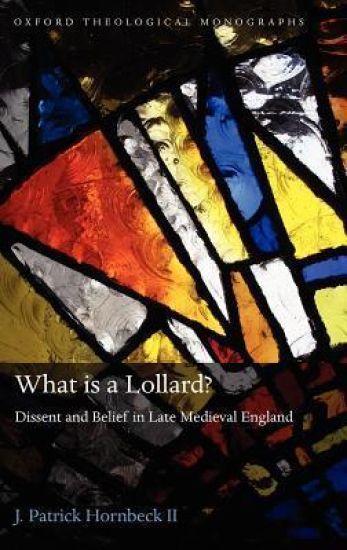
What is a lollard? Generations of historians and propagandists, bishops and inquisitors, theologians and polemicists have asked this question about the dissenters who began to trouble the English church in the late fourteenth century; indeed, many interpretations of the English Reformation have turned on its answer. This is a book not only about lollards but also about the terms and categories that have been used to describe them: through the process of documenting and analysing the dissenting beliefs preserved in lollard texts and the records of heresy trials, what becomes apparent is that there is no static essence that we can call lollardy. Rather than a narrowly defined theological category, lollardy is and has been a capacious term, under which all manner of religious outliers await closer examination. J. Patrick Hornbeck II explores the wide range of lollard beliefs on some of the key issues in late medieval Christianity: how one is saved; what truly happens in the sacrament of the eucharist; who can get married, and why; whether there should exist discrete orders of clergy, or even the pope. He argues that the beliefs of individual dissenters were conditioned by a number of social, textual, and cultural factors, including the ideas they discussed with other members of their local communities, the texts to which they had access, and the influence of mainstream religion and spirituality.