Kirjojen hintavertailu. Mukana 12 595 353 kirjaa ja 12 kauppaa.

Kirjailija

J. Simpson

Kirjat ja teokset yhdessä paikassa: 6 kirjaa, julkaisuja vuosilta 1991-2014, suosituimpien joukossa Warlpiri Morpho-Syntax. Vertaile teosten hintoja ja tarkista saatavuus suomalaisista kirjakaupoista.

6 kirjaa

Kirjojen julkaisuhaarukka 1991-2014.

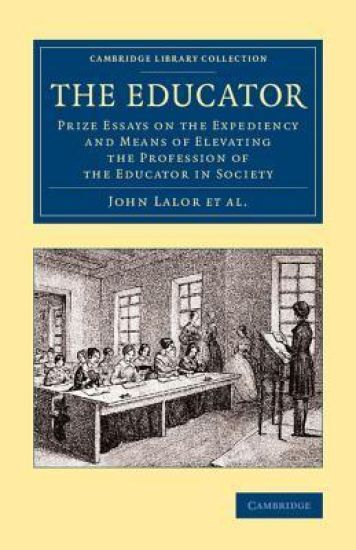
The Educator

The Educator

John Lalor; John Abraham Heraud; Edward Higginson; J. Simpson; Sarah Porter

Cambridge University Press
2014
pokkari
This work on the theory of education was first published in 1839. The five writers had been chosen as the winners in a competition for an essay on the 'Expediency and Means of Elevating the Profession of the Educator in Society', organised by the Central Society of Education, founded in 1837 to promote state funding of education, at a time when the 'monitor' system, whereby older children taught younger ones, was seen as an effective (and money-saving) method. The journalist John Lalor (1814–56) won first prize with a wide-ranging consideration of all the aspects of education, comparing the status of teachers through history and across several countries, and championing their 'sacred mission'. The runners-up were the writer John A. Heraud, the Unitarian minister Edward Higginson, the lawyer and author James Simpson, and Mrs Sarah Porter, prolific writer on education and sister of the political economist David Ricardo.
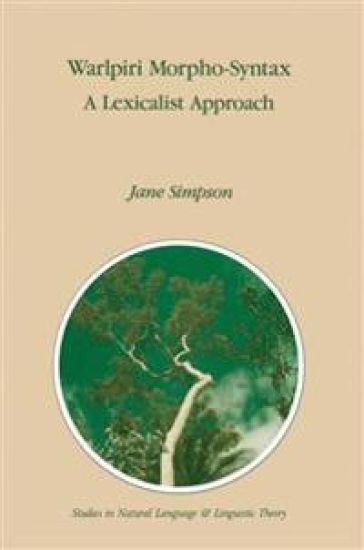
Warlpiri Morpho-Syntax

Warlpiri Morpho-Syntax

J. Simpson

Springer
2012
nidottu
Warlpiri is a Pama-Nyungan language (Ngarrka group) spo- ken by over 3,000 people in Central Australia. Neighbour- ing languages (all Pama-Nyungan) include its closest relatives, Warlmanpa and Ngardily, to the north-east and west respec- tively, Warumungu (Warumungic) and the Arandic languages, Kaytetye and Alyawarr, to the east, the Western Desert lan- guages, Pintupi and Kukatja, to the south and west respectively, the Ngumbin language Jaru to the north-west, the Arandic lan- guage, Anmatyerre, to the south-east, and the Ngumbin lan- guages, Gurindji and Mudburra, to the north. Warlpiri country encompasses a huge area of semi-desert stretching west of Tennant Creek to the Western Australian border. For the Warlpiri, this country is filled with meaning. Jukurrpa (often translated as 'Dreaming') beings travel across it, creating and changing the landscape in their passing. Songs, dances, painting, stories and journeys celebrate the jukurrpa and the country. The Warlpiri language is also from the jukurrpa; it is the language spoken by the jukurrpa beings on their travels through Warlpiri country.
Warlpiri Morpho-Syntax

Warlpiri Morpho-Syntax

J. Simpson

Springer
1991
sidottu
Warlpiri is a Pama-Nyungan language (Ngarrka group) spo- ken by over 3,000 people in Central Australia. Neighbour- ing languages (all Pama-Nyungan) include its closest relatives, Warlmanpa and Ngardily, to the north-east and west respec- tively, Warumungu (Warumungic) and the Arandic languages, Kaytetye and Alyawarr, to the east, the Western Desert lan- guages, Pintupi and Kukatja, to the south and west respectively, the Ngumbin language Jaru to the north-west, the Arandic lan- guage, Anmatyerre, to the south-east, and the Ngumbin lan- guages, Gurindji and Mudburra, to the north. Warlpiri country encompasses a huge area of semi-desert stretching west of Tennant Creek to the Western Australian border. For the Warlpiri, this country is filled with meaning. Jukurrpa (often translated as 'Dreaming') beings travel across it, creating and changing the landscape in their passing. Songs, dances, painting, stories and journeys celebrate the jukurrpa and the country. The Warlpiri language is also from the jukurrpa; it is the language spoken by the jukurrpa beings on their travels through Warlpiri country.