Kirjojen hintavertailu. Mukana 12 516 340 kirjaa ja 12 kauppaa.

Kirjailija

Jaan Valsiner

Kirjat ja teokset yhdessä paikassa: 35 kirjaa, julkaisuja vuosilta 1988-2026, suosituimpien joukossa Child Development Within Culturally Structured Environments, Volume 4. Vertaile teosten hintoja ja tarkista saatavuus suomalaisista kirjakaupoista.

35 kirjaa

Kirjojen julkaisuhaarukka 1988-2026.

A Guided Science

A Guided Science

Jaan Valsiner

AldineTransaction
2012
sidottu
That sciences are guided by explicit and implicit ties to their surrounding social world is not new. Jaan Valsiner fills in the wide background of scholarship on the history of science, the recent focus on social studies of sciences, and the cultural and cognitive analyses of knowledge making. The theoretical scheme that he uses to explain the phenomena of social guidance of science comes from his thinking about processes of development in general--his theory of bounded indeterminacy--and on the relations of human beings with their culturally organized environments. Valsiner examines reasons for the slow and nonlinear progress of ideas in psychology as a science at the border of natural and social sciences. Why is that intellectual progress occurs in different countries at different times? Most responses are self-serving blinders for presenting science as a given rather than understanding it as a deeply human experience. For Valsiner, scientific knowledge is cultural at its core. Major changes have occurred in contemporary sciences--collective authorship, fragmentation of knowledge into small, quickly published (and equally quickly retractable) journal articles, and the counting of numbers of such articles by institutions as if that is a measure of "scientific productivity." Scientists are inherently ambivalent about the benefit of these changes for the actual development of knowledge. There is a gradual "takeover" of the domain of scientific knowledge creation by other social institutions with vested interests in defending and promoting knowledge that serves their social interests. Sciences are entering into a new form of social servitude.
Genetic Theory of Reality

Genetic Theory of Reality

James Mark Baldwin; Jaan Valsiner

AldineTransaction
2009
nidottu
James Mark Baldwin left a legacy that has yet to be fully examined, one with profound implications for science and the humanities. In some sense it paralleled that of his friend Charles Sanders Peirce, whose semiotics became understood only a century later. Baldwin was trying to make sense of complex biological and social processes that only now have come into the limelight as biological sciences have re-emerged in psychology. Baldwin's focus on development, based on the observation of his own children and extrapolated to his general theoretical scheme, is fully in line with where contemporary biological sciences are heading. This is exemplified by the bounded flexibility of the work of the genetic system. The general principle of persistent exploration of the environment with the result of creating novelty, which was the core of Baldwin's theoretical system, has since the 1960s become the guiding idea in genetics. Contemporary developmental science is rooted in Baldwin's thinking. In his new introduction, Jaan Valsiner shows that Baldwin's Genetic Theory of Reality demonstrates how human beings are in their nature social beings, establishes an alternative conceptualization of evolutionary theory, and formulates a system of developmental logic, all of which serve as the foundation for developmental psychology as a whole. This is a work of social science rediscovery long overdue.
The Social Mind

The Social Mind

Jaan Valsiner; Rene van der Veer

Cambridge University Press
2000
sidottu
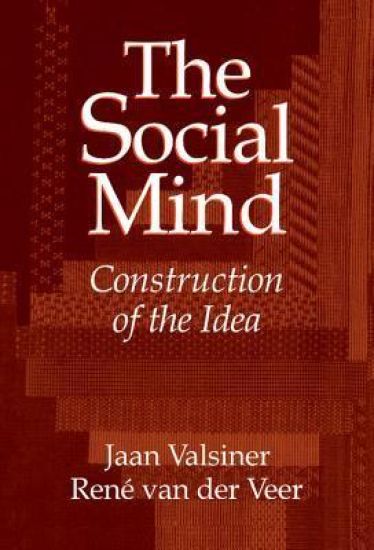
The Social Mind, first published in 2000, charts the intellectual history of the idea of socially constructed mind through the examination of four key theorists - Lev Vygotsky, George Herbert Mead, James Mark Baldwin, and Pierre Janet. An analysis of the theories of these scholars and the social climate in which they worked will be invaluable to contemporary social scientists. In their analysis of the social construction of mind, the authors elaborate on their notion of intellectual interdependency in the development of scientific ideas and they take a new look at how progress in science is a socially constructed entity. Their well constructed, ambitious volume makes an important and timely contribution to the theory and history of psychology.
Culture and Human Development

Culture and Human Development

Jaan Valsiner

SAGE Publications Inc
2000
sidottu
This major new textbook by Jaan Valsiner focuses on the interface between cultural psychology and developmental psychology. Intended for students from undergraduate level upwards, the book provides a wide-ranging overview of the cultural perspective on human development, with illustrations from pre-natal development to adulthood.A key feature is the broad coverage of theoretical and methodological issues which have relevance to this truly interdisciplinary field of enquiry encompassing developmental psychology, cultural anthropology and comparative sociology. The text is organized into five coherent parts: Part 1: Developmental theory and methodology; Part 2: Analysis of environments for human development Part 3: Cultural organization of pregnancy and infancy; Part 4: Early childhood development; and Part 5: Entering the world of activities - culturally ruled.
Culture and Human Development

Culture and Human Development

Jaan Valsiner

SAGE Publications Inc
2000
nidottu
This major new textbook by Jaan Valsiner focuses on the interface between cultural psychology and developmental psychology. Intended for students from undergraduate level upwards, the book provides a wide-ranging overview of the cultural perspective on human development, with illustrations from pre-natal development to adulthood.A key feature is the broad coverage of theoretical and methodological issues which have relevance to this truly interdisciplinary field of enquiry encompassing developmental psychology, cultural anthropology and comparative sociology. The text is organized into five coherent parts: Part 1: Developmental theory and methodology; Part 2: Analysis of environments for human development Part 3: Cultural organization of pregnancy and infancy; Part 4: Early childhood development; and Part 5: Entering the world of activities - culturally ruled.
The Guided Mind

The Guided Mind

Jaan Valsiner

Harvard University Press
1998
sidottu
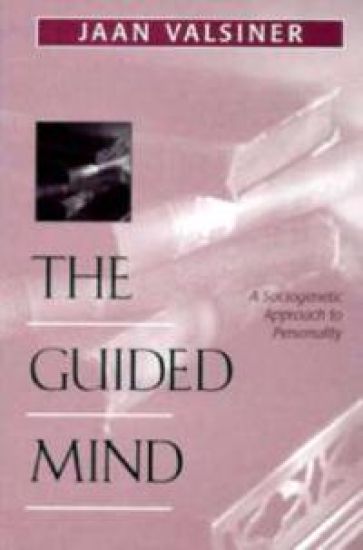
How is something as broad and complex as a personality organized? What makes up a satisfactory theory of personality? In this ambitious book, Jaan Valsiner argues for a theoretical integration of two long-standing approaches: the individualistic tradition of personalistic psychology, typified by the work of William Stern and Gordon Allport, and the semiotic tradition of cultural-historical psychology, typified by the work of L. S. Vygotsky. The two are brought together in Valsiner's theory, which highlights the sign-constructing and sign-using nature of all distinctively human psychological processes.Arguing that the individualistic and the cultural traditions differ largely in emphasis, Valsiner unites them by focusing on the intricate relations between personality and its social context, and their interplay in personality development. The semiotic devices internalized from the social environment shape an individual's development, and the flow of thinking, feeling, and acting. Valsiner uses this theoretical approach to illuminate two remarkable, and remarkably different, phenomena: letters from the mother of Allport's college roommate, a key empirical case in Allport's theory, and the ritual movements of a Hindu temple dancer. Valsiner shows how both exemplify basic human tendencies for the cultural construction of life courses.The Guided Mind shows the fundamental unities in the vastly diverse phenomenon of human personality.
Literacy in Human Development

Literacy in Human Development

Marta Kohl de Oliveira; Jaan Valsiner

Praeger Publishers Inc
1998
sidottu
This volume considers the teaching of writing in computer-supported and traditional classrooms. It is divided into three main sections which consider: literary processes - access to a symbolic system; learning and meaning in childhood; and literacy and activity contexts in adulthood.
Culture and the Development of Children's Action

Culture and the Development of Children's Action

Jaan Valsiner

John Wiley Sons Inc
1997
sidottu
In this deeply probing, intellectually challenging work, Dr. Jaan Valsiner lays the groundwork for a dynamic new cultural-historical approach to developmental psychology. He begins by deconstructing traditional developmental theory, exposing the conceptual confusion and epistemological blind spots that he believes continue to undermine the scientific validity of its methodologies. He describes the ways in which embedded cultural biases shape interventional goals and influence both the direction research takes and the ways in which research data are interpreted. And he suggests ways in which researchers and clinicians can become more aware of and transcend those biases. Dr. Valsiner then develops a hierarchical, systemic model that portrays development as an open-ended, dialectical process. Central to Valsiner's approach is the premise that, since each child is unique—as are his or her life conditions—deviations in function or the rate of development from a prescribed norm are just as likely to be constructive adaptations to changing environmental pressures as symptoms of psychological disorder. Drawing upon sources as varied as linguistic philosophy, structural anthropology, thermodynamics, and systems theory, as well as the work of many of the leading figures in twentieth-century developmental theory, Valsiner argues convincingly for an approach to developmental psychology mature enough to recognize the difference between healthy variability and dysfunction. In later chapters the focus shifts from development in the abstract to the everyday challenges encountered by the developing child. Case histories illustrate the subtle interplay of cultural, physiological, and psychological factors in shaping childhood behavior. Called an "intellectual tour de force" by the Bulletin of the Menninger Clinic, Culture and the Development of Children's Action is important reading for developmental psychologists, child psychologists, and all child clinicians. "Of course, no science progresses in a linear fashion. It moves interdependently with the society in which it is embedded, making use of the narrative forms in describing itself to its insiders and outsiders. The rhetoric of scientists about their science is therefore necessarily inconsistent. Sciences are both social institutions within a society and social organizations that attempt to build universal knowledge. It is a complicated task for psychology to be both knowledge-constructing and self-reflexive at the same time. Nevertheless, it is the latter kind of reflexivity that guides the actual construction of knowledge." — Jaan Valsiner "[This book] is a fascinating and important work that challenges much of contemporary developmental psychology. The Second Edition has changed in a number of respects, and much new material has been added, but at root, Valsiner grapples with the question 'how shall we understand development?' He continues to struggle also with what he describes rather vividly as the 'epistemological windmills of psychology.' His challenge is summed up succinctly in two lines from a poem by T. S. Eliot: *Where is the wisdom we have lost in knowledge? *Where is the knowledge we have lost in information?" — — from the Foreword by Kevin Connolly
The Structure of Learning Processes

The Structure of Learning Processes

Jaan Valsiner; Hans-Georg Voss

Praeger Publishers Inc
1996
nidottu
This book brings together a variety of contemporary approaches to learning that by and large follow the structuralist path to understand learning, a path both ecological and dynamic. The book views the learning processes as they take place in the course of personenvironment relationships.
The Structure of Learning Processes

The Structure of Learning Processes

Jaan Valsiner; Hans-Georg Voss

Praeger Publishers Inc
1996
sidottu
This book brings together a variety of contemporary approaches to learning that by and large follow the structuralist path to understand learning, a path both ecological and dynamic. The book views the learning processes as they take place in the course of personenvironment relationships.
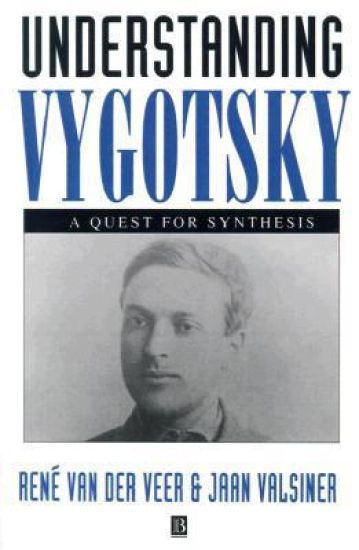
Understanding Vygotsky

Understanding Vygotsky

Rene Van der Veer; Jaan Valsiner

Blackwell Publishers
1993
nidottu
This book presents the most comprehensive introduction to the life and ideas of Lev Vygotsky (1896-1934) yet written. As a key to understanding one of the most potent influences on developmental theories this century, Van der Veer and Valsiner explore Vygotsky's ideas in the contexts of Russian psychology and the politics of the inter-war years. The authors chart Vygotsky's intellectual development through the course of his life, establishing links with his predecessors and contemporaries and illustrating his intellectual interdependence with the contemporary scientific community and the creative endeavors of the fine arts. Careful analysis of his social context allows detailed discussion of Vygotsky's indebtedness to literary scholarship, with psychoanalysis, Gestalt psychology and paedology. Understanding Vygotsky not only shows the extent to which Vygotsky's work can be further developed to be relevant to the end of the twentieth century but also opens up scope for a more detailed analysis of his contemporaries. It will be essential reading for all students of Vygotsky and his ideas.