Kirjojen hintavertailu. Mukana 12 290 406 kirjaa ja 12 kauppaa.

Kirjailija

Jack Goody

Kirjat ja teokset yhdessä paikassa: 40 kirjaa, julkaisuja vuosilta 1973-2021, suosituimpien joukossa Food and Love. Vertaile teosten hintoja ja tarkista saatavuus suomalaisista kirjakaupoista.

40 kirjaa

Kirjojen julkaisuhaarukka 1973-2021.

The Theft of History

The Theft of History

Jack Goody

Cambridge University Press
2007
sidottu
Professor Jack Goody builds on his own previous work to extend further his highly influential critique of what he sees as the pervasive eurocentric or occidentalist biases of so much western historical writing. Goody also examines the consequent 'theft' by the West of the achievements of other cultures in the invention of (notably) democracy, capitalism, individualism, and love. The Theft of History discusses a number of theorists in detail, including Marx, Weber and Norbert Elias, and engages with critical admiration western historians like Fernand Braudel, Moses Finlay and Perry Anderson. Major questions of method are raised, and Goody proposes a new comparative methodology for cross-cultural analysis, one that gives a much more sophisticated basis for assessing divergent historical outcomes, and replaces outmoded simple differences between East and West. The Theft of History will be read by an unusually wide audience of historians, anthropologists and social theorists.
Capitalism and Modernity

Capitalism and Modernity

Jack Goody

Polity Press
2004
nidottu
This important new book investigates how the West attained its current position of economic and social advantage. In an incisive historical analysis, Jack Goody examines when and why Europe (and Anglo-America) started to outstrip all other continents in socio-economic growth. Drawing on non-Western examples of economic and technical progress, Goody challenges assumptions about long-term European supremacy of a ‘cultural’ kind, as was a feature of many theories current in social science. He argues that the divergence came with the Industrial Revolution and that the earlier bourgeois revolution of the sixteenth century was but one among many Eurasia-wide expressions of developing mercantile and manufacturing activity. This original book casts new light on the history of capitalism, industrialization and modernity, and will be essential reading for all those interested in the great debate about the economic rise of the West.
Death and the Ancestors

Death and the Ancestors

Jack Goody

Routledge
2004
sidottu
Deliberately considering relevant theories put forward by earlier writers and examining them in the light of the research for this particular book, the author spent over 100 days attending funeral ceremonies and he attended 25 burial services. First published in 1962.
Comparative Studies in Kinship
Against the background of the problems involved in the comparative study of human society, the essays in this book show the comparative ideal in practice, which combines elements from both sociology and anthropology. In each essay, specific problems are treated in a way which tests theory against evidence, to replace assertion by demonstration. Topics covered include: · Incest and Adultery · Double descent systems · Inheritance, social change and the boundary problem · Marriage policy · The circulation of women and children in northern Ghana · Indo-European kinship. First published in 1969.
Islam in Europe

Islam in Europe

Jack Goody

Polity Press
2003
nidottu
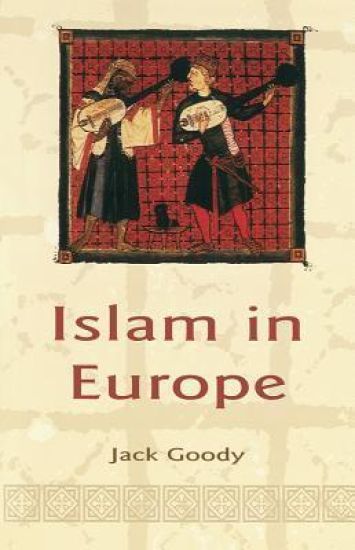
This vigorously argued book reveals the central role that Islam has played in European history. Following the movement of people, culture and religion from East to West, Goody breaks down the perceived opposition between Islam and Europe, showing Islam to be a part of Europe's past and present. In an historical analysis of religious warfare and forced migration, Goody examines our understanding of legitimate violence, ethnic cleansing and terrorism. His comparative perspective offers important and illuminating insights into current political problems and conflicts. Goody traces three routes of Islam into Europe, following the Arab through North Africa, Spain and Mediterranean Europe; the Turk through Greece and the Balkans; and the Mongol through Southern Russia to Poland and Lithuania. Each thrust made its mark on Europe in terms of population and culture. Yet this was not merely a military impact: especially in Spain, but elsewhere too, Europe was substantially modified by this contact. Today it takes the form of some eleven million immigrants, not to speak of the possible incorporation of further millions through Bosnia, Albania and Turkey.
The East in the West

The East in the West

Jack Goody

Cambridge University Press
1996
pokkari
The East in the West reassesses Western views of Asia. Traditionally many European historians and theorists have seen the societies of the East as ‘static’ or ‘backward’. Jack Goody challenges these assumptions, beginning with the notion of a special Western rationality which enabled ‘us’ and not ‘them’ to modernise. He then turns to book-keeping, which several social and economic historians have seen as intrinsic to capitalism, arguing that there was in fact little difference between East and West in terms of mercantile activity. Other factors said to inhibit the East’s development, such as the family and forms of labour, have also been greatly exaggerated. This Eurocentrism both fails to explain the current achievements of the East, and misunderstands Western history. The East in the West starts to redress the balance, and so marks a fundamental shift in our view of Western and Eastern history and society.
The Expansive Moment

The Expansive Moment

Jack Goody

Cambridge University Press
1995
pokkari
Jack Goody’s new book explores the development of the discipline of social anthropology through its key practitioners and how far its concerns interacted with the political and ideological debate of the interwar years. It is a study of the different ideological and intellectual approaches adopted by the emerging subject of social anthropology and how far these views were incorporated into and defined by the structures and institutions in which they developed. But it is also an analysis of how far the subject was created by its own response to key issues of the time: colonialism - specifically Africa, anti-Semitism and communism. Goody’s approach is characteristically personal: Malinowski dominates the discussion, as well as Fortes, Radcliffe-Brown and Evans-Pritchard, and his own experience, gathered over a wide-ranging life of fieldwork informs the conclusion of the book.
The Expansive Moment

The Expansive Moment

Jack Goody

Cambridge University Press
1995
sidottu
Jack Goody’s new book explores the development of the discipline of social anthropology through its key practitioners and how far its concerns interacted with the political and ideological debate of the interwar years. It is a study of the different ideological and intellectual approaches adopted by the emerging subject of social anthropology and how far these views were incorporated into and defined by the structures and institutions in which they developed. But it is also an analysis of how far the subject was created by its own response to key issues of the time: colonialism - specifically Africa, anti-Semitism and communism. Goody’s approach is characteristically personal: Malinowski dominates the discussion, as well as Fortes, Radcliffe-Brown and Evans-Pritchard, and his own experience, gathered over a wide-ranging life of fieldwork informs the conclusion of the book.
The Oriental, the Ancient and the Primitive

The Oriental, the Ancient and the Primitive

Jack Goody

Cambridge University Press
1990
pokkari
In The Oriental, the Ancient and the Primitive one of the world’s most foremost anthropologists looks in depth at kinship practice in Asia, and continues the comparative survey of pre-industrial family formation undertaken in The Development of Family and Marriage in Europe (1983) and elsewhere. Professor Goody’s findings cause him to question many traditional assumptions about the ‘primitive’ east, and he suggests that, in contrast to pre-colonial Africa, kinship practice in Asia has much in common with that prevailing in parts of pre-industrial Europe. Goody examines the transmission of productive and other property in relation both to the prevailing political economy and to family and ideological structures, and then explores the distribution of mechanisms and strategies of management across cultures. He concludes that notions of western ‘uniqueness’ are often misplaced, and that much previous work on Asian kinship has been unwittingly distorted by the application of concepts and approaches derived from other, inappropriate, social formations, simple or post-industrial.
The Interface between the Written and the Oral

The Interface between the Written and the Oral

Jack Goody

Cambridge University Press
1987
pokkari
Whilst the fundamental significance of the spoken language for human interaction is widely acknowledged, that of writing is less well known, and in this wide-ranging series of essays Jack Goody examines in depth the complex and often confused relationship between oral and literate modes of communication. He considers the interface between the written and the oral in three cultures or societies with and without writing, and that within the linguistic life of an individual. Specific analyses of the sequence of historical change within writing systems, the historic impact of writing upon Eurasian cultures, and the interaction between distinct oral and literate cultures in West Africa, precede an extensive concluding examination of contemporary issues in the investigation, whether sociological or psychological, of literacy. A substantial corpus of anthropological, historical and linguistic evidence is produced in support of Goody’s findings, which form a natural complement to his own recently published study of The Logic of Writing and the Organization of Society.
The Logic of Writing and the Organization of Society

The Logic of Writing and the Organization of Society

Jack Goody

Cambridge University Press
1986
pokkari
This book assesses the impact of writing on human societies, both in the Ancient Near East and in contemporary Africa, and highlights some general features of social systems that have been influenced by this major change in the mode of communication. Such features are central to any attempt at the theoretical definition of human society and such constituent phenomena as religious and legal systems, and in this study Professor Goody explores the role of a specific mechanism, the introduction of writing and the development of a written tradition, in the explanation of some important social differences and similarities. Goody argues that a shift of emphasis from productive to certain communicative processes is essential to account adequately for major changes in human societies. Whilst there have been previous descussions of the effect of literacy upon social organisation, no study has hitherto presented the general synthesis developed here.
Cooking, Cuisine and Class

Cooking, Cuisine and Class

Jack Goody

Cambridge University Press
1982
pokkari
Jack Goody sets his own observations on cooking in West Africa. He criticizes those approaches which overlook the comparative historical dimension of culinary, and other, cultural differences that emerge in class societies, both of which elements he particularly emphasizes in this book.
Succession to High Office

Succession to High Office

Jack Goody

Cambridge University Press
1979
pokkari
Positions of authority in any society are limited in number, and therefore rules of selection must operate in their recruitment. There must also be limitations upon the range of authority exercised. These problems are particularly acute in the case of high office, where the questions of recruitment and succession are of central importance. This 1979 volume provides a general and theoretical analysis of succession in different traditional African societies. Jack Goody's introduction spells out the main ways in which systems of succession to office differ, and assesses the problem each system solves and the dilemmas it creates. He also analyses the tensions to which succession gives rise, and relates these to specific methods of transferring office from one generation to the next, The four case studies, all based on extensive fieldwork, consider succession among the Bausto, the Baganda, the Nyamwezi and the Gonja.
Family and Inheritance

Family and Inheritance

Jack Goody; Joan Thirsk; E. P. Thompson

Cambridge University Press
1978
pokkari
This pioneering book examines different aspects of the inheritance customs in rural Western Europe in the pre-industrial age: for families and whole societies, the roles of lawyers in reducing them to a common system, and the recurring debate on the merits of various inheritance customs in shaping particular kinds of society. At first sight the study of inheritance customs may appear to be a dull affair, concerned with outdated practices of hair-splitting lawyers; certainly, little academic interest has been shown in the subject. Yet inheritance customs are vital means for the reproduction of the social system, by the transmission of property and other rights through the family. Various family structures and social arrangements are linked by different means of inheritance. This book will interest a wide range of historians, students, postgraduates and teachers alike, whether they are concerned with social, economic, demographic or legal history, in the medieval, early modern or modern periods, and whether their interests are directed to England or other countries of Western Europe; it will also be valuable to social anthropologists, sociologists and historians of ideas. A comprehensive glossary of technical terms has been added for the non-specialist.
The Domestication of the Savage Mind

The Domestication of the Savage Mind

Jack Goody

Cambridge University Press
1977
pokkari
Current theories and views on the differences in the "mind" of human societies depend very much on a dichotomy between one of a whole variety of "we-they" distinctions. This text argues that such an approach inhibits serious discussion of cognitive processes in human cultures.
Production and Reproduction

Production and Reproduction

Jack Goody

Cambridge University Press
1977
pokkari
This is an attempt to see the development of domestic institutions in relation to changes in the mode of productive activity. It shows that the social sciences must be comparative and historical to contribute to the analysis of fundamental features of social organization and development.
Literacy in Traditional Societies

Literacy in Traditional Societies

Jack Goody

Cambridge University Press
1975
pokkari
The importance of writing as a means of communication in a society formerly without it, or where writing has been confined to particular groups, is enormous. It objectifies speech, provides language with a material correlative, and in this material form speech can be transmitted over space and preserved over time. In this book the contributors discuss cultures at different levels of sophistication and literacy and examine the importance of writing on the development of these societies. All the articles except the first were specially written for this book and the extensive introduction unites and synthesizes the material.
Bridewealth and Dowry

Bridewealth and Dowry

Jack Goody; S. J. Tambiah

Cambridge University Press
1973
pokkari
Bridewealth and dowry have certain obvious similarities in that they both involve the transmission of property at marriage, the usual interpretation suggesting that what distinguishes them is the direction in which the property travels - in the case of bridewealth, from the husband and his kin to the wife and her kin, and in the case of dowry, vice versa. The authors of these 1973 papers criticise this interpretation as oversimplified, and analyse the two institutions in the contexts of Africa, with its preponderance of bridewealth, and South Asia, where dowry is the commoner institution. Dr Goody seeks to explain these geographical differences in terms of the basic structure of the societies and the rules governing the inheritance of property. Dr Tambiah considers these institutions in India, Ceylon and Burma as two kinds of property transfer, examining Indian juridical concepts, and relating these to the concepts and practices of Ceylon and Burma.