Kirjojen hintavertailu. Mukana 12 657 676 kirjaa ja 12 kauppaa.

Kirjailija

Jack J. Phillips

Kirjat ja teokset yhdessä paikassa: 37 kirjaa, julkaisuja vuosilta 1999-2024, suosituimpien joukossa The ROI Fieldbook. Vertaile teosten hintoja ja tarkista saatavuus suomalaisista kirjakaupoista.

Mukana myös kirjoitusasut: Jack J Phillips

37 kirjaa

Kirjojen julkaisuhaarukka 1999-2024.

Measuring the Success of Leadership Development

Measuring the Success of Leadership Development

Patricia Pulliam Phillips; Jack J. Phillips; Rebecca Ray

ATD Press
2015
pokkari
Evaluate leadership development programs all the way to impact and ROI.Globally, a record amount is being invested in leadership development, more than at any other time in history. And that translates into additional accountability for anyone spearheading a new program. Measuring the Success of Leadership Development offers a proven methodology that will help you step up to the challenge. You’ll learn how to begin the leadership development process with the end in mind and show return on investment to key stakeholders.Renowned ROI experts Jack and Patti Phillips have joined knowledge organization expert Rebecca Ray to support you every step of the way. This essential guide outlines each step of the proven ROI Methodology and explains how to apply it to driving leadership development program performance and evaluating results. Case studies show the methodology in action across seven successful leadership development programs.If you’re leading the charge, it’s crucial that you create and track metrics for your program’s success. In this book you will learn:how to begin the leadership development process with the end in mindwhat data to collect to show return on investment to key stakeholdersbest practices in measurement and evaluation strategies.
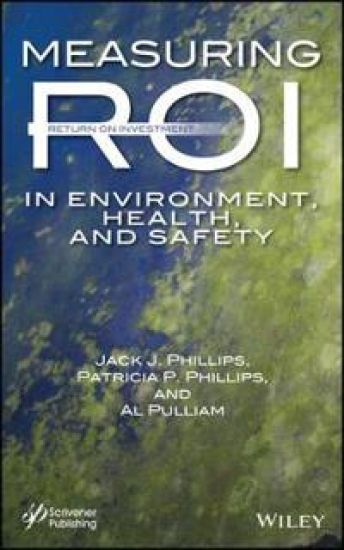
Measuring ROI in Environment, Health, and Safety

Measuring ROI in Environment, Health, and Safety

Jack J. Phillips; Patricia Pulliam Phillips; Al Pulliam

John Wiley Sons Inc
2014
sidottu
Using the most successful evaluation system in the world for measuring impact and ROI—the ROI Methodology—learn how to measure the success of all business programs and projects involving environmental initiatives, health-related programs for employees and citizens, and various safety programs in all types of settings Few topics are more important than the health and safety of employees, associates, and citizens. Organizations focus a tremendous amount of money/resources on maintaining a zero-harm approach to its employees, the greater community, and the surrounding environment. At the same time, organizations are implementing many types of wellness and fitness programs ensuring that employees remain healthy, safe, and productive. Measuring ROI in Environment, Health, and Safety shows how to measure the success of all types of programs and projects involving environmental initiatives, health-related programs for employees and citizens, and various safety programs in all types of settings. Environmental efforts, or green projects, can represent value for organizations. Eighty percent can deliver a positive ROI, and the other 20 percent are often required by regulation. In either case, it is critical to understand whether or not these projects are working. This new book will show step-by-step how to measure the success of many types of green programs. Within an organization, responsibility for environment, health, and safety is often under the direction of the same executive team. Their concern is always about how well the programs are working and, more importantly, what can be done to ensure that they are more successful. ROI in Environment, Health, and Safety introduces the ROI Methodology, now used by over 4,000 organizations, and the most successful and utilized evaluation system in the world for measuring program impact and ROI. It shows step-by-step how to capture the reaction to the various initiatives and programs a firm may institute, the learning necessary to make them successful, progress in terms of application and implementation, the specific business impact measures driven by these programs, and, finally, the financial ROI. Along the way, data is collected for process improvement to ensure that if certain programs are not working, they can be adjusted for success.
Measuring the Success of Organization Development

Measuring the Success of Organization Development

Patricia Pulliam Phillips; Jack J. Phillips; Lizette Zuniga

ATD Press
2013
pokkari
Measuring the Success of Organization Development: A Step-by-Step Guide for Measuring Impact and Calculating ROI examines the strategic role of organisational development (OD), explains the reasons for measuring OD efforts, and proposes a framework for measuring effectiveness. Ultimately, OD practitioners will be able to determine how particular OD interventions correlate with business results; determine areas for investments, modifications, and cessation; justify budget allocations; and be more accountable for how money is spent within their organisations. Part I of the book explains the concept of ROI and outlines the steps to ensure accurate measurement of the effects of OD programs. Part II consists of case studies that show “evaluation in action,” providing a conceptual framework and workable suggestions for developing, implementing, and maintaining programs for measuring success in OD programmes.
Survey Basics

Survey Basics

Patricia Pulliam Phillips; Jack J. Phillips; Bruce Aaron

ATD Press
2013
pokkari
Known for their expertise in ROI, Jack and Patricia Phillips have contributed to another area in the field of measurement and evaluation. Together with Bruce Aaron, they’re offering a useful tool to help learning and development professionals design and administer surveys and questionnaires. Written in the accessible style of ASTD Basics books, this volume covers: the purpose of surveys and questionnaires types of error that can creep into survey results considerations when developing survey questions tricks to ensure positive response rates content on validity and reliability approaches to data analysis and reporting results. In addition to content on survey design, the book includes a section that evaluates various survey technologies. By applying a simple decision-making process, readers can identify the most appropriate survey tool for their needs.
Measuring the Success of Sales Training

Measuring the Success of Sales Training

Patricia Pulliam Phillips; Jack J. Phillips; Rachel Robinson

ATD Press
2013
pokkari
Measuring the Success of Sales Training provides a framework of how to measure ROI in sales training and discusses the principles behind The Phillips ROI Methodology. The second half of the book delivers a broad array of case studies from many different disciplines from all over the world. These case studies will be ideal for anyone involved in the design, development, implementation, facilitation, or support of sales training and development programs. These studies show how these programs can be evaluated, pinpointing specific success factors along the way.
Measuring ROI in Learning & Development

Measuring ROI in Learning & Development

Patricia Pulliam Phillips; Jack J. Phillips

ATD Press
2012
pokkari
How do you accurately and effectively measure return on investment (ROI) in training and performance improvement? Measuring ROI in Learning and Development, a new volume with a focus on the international arena and including a selection of case studies, provides detailed information on how to create, develop, and sustain a comprehensive ROI evaluation system. A focus on accountability in measuring ROI in learning and performance improvement programs has produced a book filled with functional, pragmatic suggestions and examples that can be implemented in the real world.
Return on Investment in der Personalentwicklung

Return on Investment in der Personalentwicklung

Jack J. Phillips; Frank C. Schirmer

Springer-Verlag Berlin and Heidelberg GmbH Co. K
2008
sidottu
Die Suche nach Kostenvorteilen und ständig steigender Wettbewerb erhöhen den Druck auch auf die Personalentwicklung und ihre Budgets. Dabei stellt der nur unzureichend nachprüfbare Erfolg von Trainingsmaßnahmen den großen Unsicherheitsfaktor dar. Das Buch beschreibt detailliert den 5 Evaluationsstufen umfassenden ROI-ProcessTM, der Unternehmen eine transparente und damit messbare Personalentwicklung ermöglicht und deren Kosten-Nutzen-Verhältnis als Return on Investment ermittelt. Die Prozessabschnitte „Einfluss der Effekte isolieren" und „finanzielle Bewertung" werden besonders eingehend behandelt. Der praxisbewährte ROI-Process TM, nach Jack J. Phillips, PH. D., von namhaften Unternehmen in mehr als 42 Ländern weltweit eingesetzt, ermöglicht jetzt auch Managern im deutschsprachigen Raum, kosteneffektiv und ergebnisorientiert in ihre Personalentwicklung zu investieren. Die zweite Auflage enthält ein umfangreiches Kapitel mit praktischen Checklisten, eine Lernerfolgsanalyse und neue Tools zum Best-Practise-Prozess für die Personalentwicklung sowie eine detaillierte ROI-Fallstudie.
Beyond Learning Objectives

Beyond Learning Objectives

Jack J. Phillips; Patricia Pulliam Phillips

ATD Press
2008
pokkari
For decades, the emphasis in the training and development has been upon instructional objectives. But todayâ s organizations demand attention to higher-level objectivesâ objectives that clearly provide business impact and value and satisfy the expectations of key stakeholders. If youâ re involved in implementing projects, programs, initiatives, or solutions in your organization, Beyond Learning Objectives is the must-have guidebook that can help you meet these new expectations. This title provides step-by-step processes for defining, measuring, and developing six types of objectives: input, reaction, learning, application, impact, and ROI. Youâ ll also have help avoiding common pitfalls in the development of objectives, such as unclear, incomplete, non-specific or even missing objectives
ROI in Action Casebook

ROI in Action Casebook

Patricia Pulliam Phillips; Jack J. Phillips

Jossey-Bass Inc.,U.S.
2008
sidottu
ROI in Action Casebook offers a collection of ROI case studies that represent the classic use of the proven ROI Methodology. A companion volume to Jack J. Phillips and Patricia Pulliam Phillips?s six books in the Measurement and Evaluation series, this book clearly illustrates the ROI Methodology. The case studies represent a variety of applications in human resources, learning and development, and performance improvement. Each case follows the methodology and describes in detail how it was used to show the value of a particular project or program.
ROI Fundamentals

ROI Fundamentals

Patricia Pulliam Phillips; Jack J. Phillips

Jossey-Bass Inc.,U.S.
2008
nidottu
ROI Fundamentals ROI Fundamentals is the first of six books in the Measurement and Evaluation Series from Pfeiffer. The proven ROI Methodology--developed by the ROI Institute--provides a practical system for evaluation planning, data collection, data analysis, and reporting. All six books in the series offer the latest tools, most current research, and practical advice for measuring ROI in a variety of settings. ROI Fundamentals outlines the basic ROI Methodology and shows why measuring return on investment is such a valuable process. The book highlights the benefits of implementing an effective ROI model and also reveals the challenges organizations face when incorporating the ROI Methodology. Using real-world examples from international companies, the authors explore the types of organizations that are best suited for the ROI Methodology and suggest the optimal time to implement it. The book also offers step-by-step information for planning an effective ROI evaluation.
Costs and ROI

Costs and ROI

Jack J. Phillips; Zuniga Lizette

Jossey-Bass Inc.,U.S.
2008
nidottu
Costs and ROI Costs and ROI is the fifth of six books in the Measurement and Evaluation Series from Pfeiffer. The proven ROI Methodology--developed by the ROI Institute--provides a practical system for evaluation planning, data collection, data analysis, and reporting. All six books in the series offer the latest tools, most current research, and practical advice for measuring ROI in a variety of settings. All costs must be captured for an accurate cost profile. Costs and ROI focuses on developing program costs and the ROI and explains this vital element in the ROI Methodology. The authors show how to capture all costs in order to bring credibility to the analysis. The book outlines the actual ROI calculation and explains the many assumptions and issues that must be considered when calculating the ROI. Costs and ROI presents three effective calculations: the benefit-cost ratio, the ROI percentage, and the payback period. Costs and ROI includes all the challenges and concerns regarding the use of ROI.
Return on Investment in Meetings & Events

Return on Investment in Meetings & Events

M. Theresa Breining; Jack J. Phillips; Patricia Pulliam Phillips

Butterworth-Heinemann Ltd
2007
nidottu
The Phillips ROI Methodology™ utilizes five levels of evaluation, which are essential in determining the return on investment. At Level 1 - Reaction and Planned Action, attendee and stakeholder satisfaction from the meeting can be measured. Almost all organizations evaluate at Level 1, usually with a generic, end-of-meeting questionnaire. While this level of evaluation is important as a “stakeholder” satisfaction measure, a favorable reaction does not ensure that attendees have acquired new skills, knowledge, opinions or attitudes from the meeting. At Level 2 - Learning, measurements focus on what participants learned during the meeting using tests, skill practices, role-plays, simulations, group evaluations, and other assessment tools. A learning check is helpful to ensure that attendees have absorbed the meeting material or messages and know how to use or apply it properly. It is also important at this level to determine the quantity and quality of new professional contacts acquired and whether existing professional contacts were strengthened due to the meeting. However, a positive measure at this level is no guarantee that what was learned or whether the professional contacts acquired will be used on the job. At Level 3 - Job Applications, a variety of follow-up methods can be used to determine if attendees applied on the job what they learned or acquired at the meeting. The frequency and use of skills are important measures at Level 3. While Level 3 evaluations are important to gauge the success of the meeting, it still does not guarantee that there will be a positive business impact in the organization or for the attendee. At Level 4 - Business Results, the measurement focuses on the actual business results achieved by meeting participants as they successfully apply the meeting material or messages. Typical Level 4 measures include output, sales, quality, costs, time and customer satisfaction. Although the meeting may produce a measurable business impact, there is still a concern that the meeting may cost too much. At Level 5 - Return on Investment, this ultimate level of measurement compares the monetary benefits from the meeting with the fully-loaded meeting costs as expressed in the ROI formula. All levels of evaluation must be conducted in order to determine the ROI of a meeting or event. The data collected should show a chain of impact occurring through the levels as the skills and knowledge learned (Level 2) are applied on the job (Level 3) to produce business results (Level 4).
ROI for Technology Projects

ROI for Technology Projects

Brian Roulstone; Jack J. Phillips

Butterworth-Heinemann Ltd
2007
nidottu
This is the first book focusing on the ROI for technology investments written by a technology executive for technology decision makers with the support and guidance of the foremost authority in the discipline of Return on Investment. This book leverages the talents of both authors to provide a framework and methodology that can ensure greater success in mobilizing technology initiatives. There is no other book on the market that specifically addresses the critical need to prove ROI on resource intensive technology projects with a time-tested and industry leading methodology. To date, most ROI books have focused in the areas of human performance, training, marketing, and other human capital related disciplines. With increased scrutiny of technology spending by the most complex organizations in the world, technology leaders need a 'tool kit' to help them prepare for hard-hitting discussions with their organization's CFO, president, CEO, or chairman about the return they should expect from critical technology projects. Rather than focusing top managers' attention on cutting, challenging, and controlling expenditures (as many C-level accountants prefer to do), this approach guides technology managers in providing executives with more comprehensive, balanced information that helps all involved make better business decisions. Along the way, it helps technology managers communicate more effectively with the financial decision makers in their organizations. The book also shows executives how partnering with IT leaders can help top management understand the return these technology projects can provide to the organization in increased human efficiency, automation of manual processes, unified organizational data, and other high-return results from complex and critical technology initiatives. At the same time, executives and IT professionals need to have their projects measured with a balanced perspective. While the ROI itself is very important, it's also important to capture intangibles related to the project, as well as information about application and implementation of the project. Even earlier in the cycle, it's important to capture reaction to the technology and the extent to which individuals have learned the technology. Together, these data sets represent a balanced profile of success, with ROI at the pinnacle.
The Leadership Scorecard

The Leadership Scorecard

Jack J. Phillips; Lynn Schmidt

Butterworth-Heinemann Ltd
2004
nidottu
Strong leaders are essential to business success, which makes leadership development a business imperative in today’s competitive environment. Leaders are needed that can do more than manage - leaders are needed that can make a business great. In addition, there is increasing pressure on organizations to demonstrate the wise investment of development dollars. This requires the effective use of leadership development methods, as well as the ability to demonstrate the success of those methods. The Leadership Scorecard combines an explanation and discussion on best practice leadership development methods and incorporates ROI measurement & evaluation methodology.
Managing Employee Retention

Managing Employee Retention

Jack J. Phillips; Adele O. Connell

Butterworth-Heinemann Ltd
2003
sidottu
During the past decade, employee turnover has become a very serious problem for organizations. Managing retention and keeping the turnover rate below target and industry norms is one of the most challenging issues facing business. All indications point toward the issue compounding in the future and, even as economic times change, turnover will continue to be an important issue for most job groups. Yet despite these facts employee turnover continues to be the most unappreciated and undervalued issue facing business leaders. There are a variety of reasons for this, for example, the true cost of employee turnover is often underestimated. The causes of turnover are not adequately identified, and solutions are often not matched with the causes, so they fail. Preventive measures are either not in place or do not target the issues properly, and therefore have little or no effect, and a method for measuring progress and identifying a monetary value (ROI) on retention does not exist in most organizations. 'Managing Employee Retention' is a practical guide for managers to retain their talented employees. It shows how to manage and monitor turnover and how to develop the ROI of keeping your talent using innovative retention programs. The book presents a logical process of managing retention, from identifying turnover costs and causes, designing solutions that match the causes of turnover, developing tools for tracking turnover and placing alerts when action is needed, and measuring the ROI of retention programs.
The Human Resources Scorecard

The Human Resources Scorecard

Jack J. Phillips; Ron Stone; Patricia Phillips

Gulf Publishing Co
2001
sidottu
'The Human Resources Scorecard: measuring the return on investment' is the first book to provide a comprehensive, step-by-step process for measuring return on investment in human resources programs. Based on the classic ROI definition of earnings divided by investment, the ROI Process developed 20 years ago by co-author Jack J Phillips aids managers in determining and improving the bottom-line impact that human resource programs have on an organization. The ROI Process provides six additional measures in the form of a scorecard to track and monitor the total impact of the human resource programs. 'The Human Resources Scorecard' is essential for human resource executives, professionals, CEOs, CFOs, consultants, professors and other managers concerned with their businesses' bottom lines. Jack J. Phillips, Ph.D. is a renowned expert of measurement and evaluation. He provides consulting services for Fortune 500 companies and workshops for major conference providers throughout the world. He is also an author or editor of more than 20 books and 100 articles. Ron D. Stone is vice president and chief consulting officer for Performance Resources Organization. He is also director of the company's consulting practices in measurement and accountability. He has published numerous articles on the subject of ROI. Patricia Pulliam Phillips is chairman and CEO of the Chelsea Group, a consulting and publishing organization that focuses on accountability issues in organizations. She works with organizations to implement measurement and evaluation processes.
HRD Trends Worldwide

HRD Trends Worldwide

Jack J. Phillips

Gulf Publishing Co
1999
sidottu
Meet the demands of a competitive worldwide competitive economy. Discover the relevance of these 16 global HRD trends to your organization: * Strategy and training * Needs assessment and analysis * Performance improvement * Corporate universities * Training and delivery * Shared responsibilities * Systematic evaluation * Measuring the return on investment (ROI) * Training costs * Profit centers * Budgeting * Learning objectives * Management partnerships * Technology * Global training programs * Outsourcing Jack Phillips noticed something while consulting for organizations all over the world. He discovered that training and development departments - even though they are in different countries - experience many of the same issues and challenges. He recognized and then researched, sixteen critical global HRD trends. These sixteen noteworthy trends were formulated by surveying thirty-five organizations in various industrialized countries, as well as actually working with training and development departments across the globe. This firsthand global HRD experience verified and brought to life the trends. As a result of the author's investigation, 'HRD Trends Worldwide' outlines each HRD trend and helps you thoroughly understand them all and, more importantly, put them to good use. This text presents the survey results and explains each trend through examples and evidence. To help you work with the trends, the text provides an examination of each trend's potential impact on your training and performance improvement functions. Every HRD and training and development professional interested in meeting the demands of a competitive worldwide economy should make reading this book a priority.