Kirjojen hintavertailu. Mukana 12 595 353 kirjaa ja 12 kauppaa.
Kirjailija
Jack McDonald
Kirjat ja teokset yhdessä paikassa: 24 kirjaa, julkaisuja vuosilta 1986-2023, suosituimpien joukossa Young Wings. Vertaile teosten hintoja ja tarkista saatavuus suomalaisista kirjakaupoista.
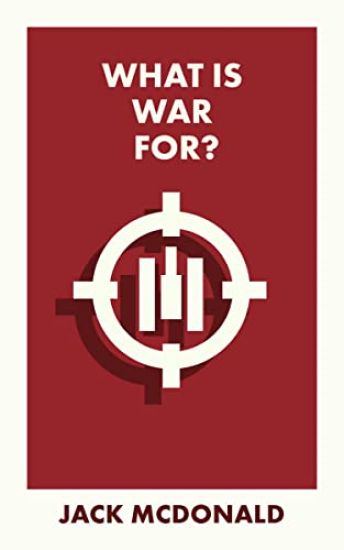
How does armed conflict shape global politics? And, critically, can it ever be regulated, a necessary first step to achieving a more peaceful world? This book examines the factors that define and shape war in the contemporary world, and how changes to technology and society are transforming warfare. Focusing on efforts to regulate and eliminate war, it provides a guide to the complex problems it poses now – and threatens in the future.
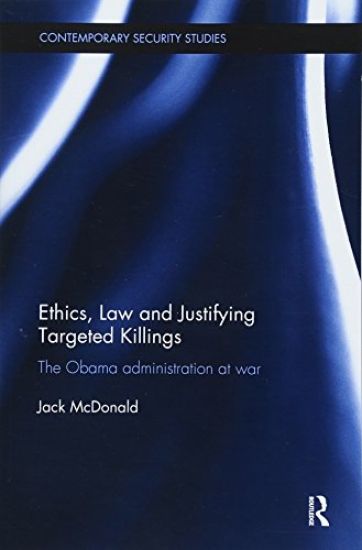
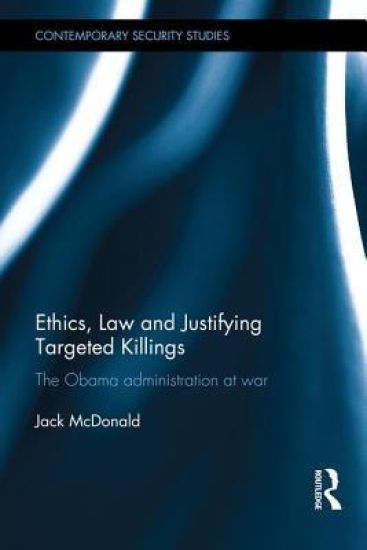
This book examines the normative debates around the American use of targeted killings. It questions whether the Obama administration’s defence of its use of targeted killings is cohesive or hypocritical. In doing so, the book departs from the disciplinary purpose of international law, constitutional law and the just war tradition and instead examines discipline-specific defences of targeted killings to identify their requisite normative principles in order to compare these norms across disciplines. The methodology used in this book means that it argues that targeted killings are only defensible as acts of war, but it also highlights the normative role of accountability and responsibility in this defence. In doing so, it offers an argument that the use of ‘pattern of life’ killings by the CIA falls outside the defence offered by the Obama administration, but that this same type of targeting could be used by the military due to differing standards/mechanisms of responsibility assignment in these organisations. The book thus provides a way of investigating contemporary wars where the conduct of war lacks the traditional hallmarks of conventional warfare. Furthermore, by drawing attention to differing normative concepts that underpin competing interpretations of law and morality, it provides a way of analysing contemporary political violence in an interdisciplinary fashion without seeking to displace single disciplinary study.This book will be of much interest to students of military studies, ethics of war, foreign policy, international security and IR.
It took me quite a while to develop short story writing skills. I even purchased several books to get to this point. In fact, I had written two novels before I tackled a short story. After that, I went buck wild. These are my choices for Collection from the library of Shorts: by Jack McDonald. Here are nine stories of pure entertainment. Enjoy.
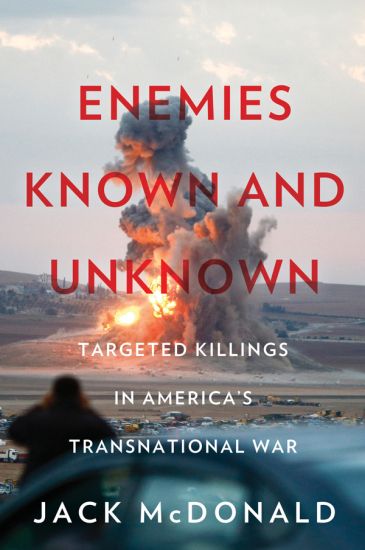
President Obama was elected on an anti-war platform, yet targeted killings have increased under his command of the 'War on Terror'. The US thinks of itself as upholding the rule of international law and spreading democracy, yet such targeted killings have been widely decried as extra-judicial violations of human rights. This book examines these paradoxes, arguing that they are partially explained by the application of existing legal standards to transnational wars. Critics argue that the kind of war the US claims to be waging - transnational armed conflict - doesn't actually exist. McDonald analyses the concept of transnational war and the legal interpretations that underpin it, and argues that the Obama administration's adherence to the rule of law produces a status quo of violence that is in some ways more disturbing than the excesses of the Bush administration. America's interpretations of sovereignty and international law shape and constitute war itself, with lethal consequences for the named and anonymous persons that it unilaterally defines as participants. McDonald's analysis helps us understand the social and legal construction of legitimate violence in warfare, and the relationship between legal opinions formed in US government departments and acts of violence half a world away.
President Obama was elected on an anti-war platform, yet targeted killings have increased under his command of the 'War on Terror'. The US thinks of itself as upholding the rule of international law and spreading democracy, yet such targeted killings have been widely decried as extra-judicial violations of human rights. This book examines these paradoxes, arguing that they are partially explained by the application of existing legal standards to transnational wars. Critics argue that the kind of war the US claims to be waging - transnational armed conflict - doesn't actually exist. McDonald analyses the concept of transnational war and the legalinterpretations that underpin it, and argues that the Obama administration's adherence to therule of law produces a status quo of violence that is in some ways more disturbing than the excessesof the Bush administration.America's interpretations of sovereignty and international law shape and constitute war itself, with lethal consequences for the named and anonymous persons that it unilaterally defines as participants.McDonald's analysis helps us understand the social and legal construction of legitimate violence in warfare, and the relationship between legal opinions formed in US government departments and acts of violence half a world away.
Stories aren't really about people. Stories are about events: Things that may happen to people. Characters in the stories are just thrown in to emphasize the events. When a character dies, life just goes on to the next character. And on. And on. And on, until there are no more characters to play. Then it becomes another story about something else.
This book examines the normative debates around the American use of targeted killings. It questions whether the Obama administration’s defence of its use of targeted killings is cohesive or hypocritical. In doing so, the book departs from the disciplinary purpose of international law, constitutional law and the just war tradition and instead examines discipline-specific defences of targeted killings to identify their requisite normative principles in order to compare these norms across disciplines. The methodology used in this book means that it argues that targeted killings are only defensible as acts of war, but it also highlights the normative role of accountability and responsibility in this defence. In doing so, it offers an argument that the use of ‘pattern of life’ killings by the CIA falls outside the defence offered by the Obama administration, but that this same type of targeting could be used by the military due to differing standards/mechanisms of responsibility assignment in these organisations. The book thus provides a way of investigating contemporary wars where the conduct of war lacks the traditional hallmarks of conventional warfare. Furthermore, by drawing attention to differing normative concepts that underpin competing interpretations of law and morality, it provides a way of analysing contemporary political violence in an interdisciplinary fashion without seeking to displace single disciplinary study.This book will be of much interest to students of military studies, ethics of war, foreign policy, international security and IR.
Ladies and gentlemen, this is Galaxy Tours' Flight 259, and we are about to enter the Xyiaocon Empire. For those of you who have never been to the Xyiaocon Empire, we feel we should prepare you for certain things. First thing you will notice is the big difference in the Xyiaocon Empire's way of life, and the one we are used to. Eight quadrants make up the Xyiaocon Empire. However, two different systems are used in the Xyiaocon Empire that governs the way citizens of the Empire function. One of these systems is, The Knomes System. These can be earned by any citizen. They are controlled by the leaders of the Seventh and the Eighth Quadrants. The other six quadrants rely upon a scheme known as, The Credit System. Together the two systems provide something for everyone. We feel this is something that might amaze you. But, we want you to know ahead of time ------ all is not what you may think it is. This is because all of the citizens of the Xyiaocon Empire play Games.
How much do we know about our Universe? Is it conceivable to think life doesn't exist in the far reaches of outer space? Perhaps, beings elsewhere are wondering what lies beyond the stars? Perhaps they have already acquired the knowledge to shorten those dreams?We've heard stories of people who've sworn they've seen extraterrestrials. However, they are such a small percentage to have much validity in the real world. We will agree that our Universe is vast with infinitudes of celestial delights. Even the Milky Way is so vast that it will create multitudes of unanswered questions: Many never to be known. With our technology however, it is easy to assume those things we do not know, don't exist. Still, as far as we know, aliens could be walking among us. So was the case for Lugormians at one point in their lives. For them, the Uquinlyga Galaxy was all they knew. Life outside was never a factor. When they were forced to flee their galaxy however, they adopted whole other attitudes. Scientists assured refugees that another galaxy existed far beyond the other side of their Sun where they could relocate. For them, Scientists were always right. The Uquinlyga Galaxy was under siege. Refugees only cared about getting as far away as possible. The assurance they got from Scientists told them that they would be safe.Jasmine trusted her Scientists religiously. With the responsibility of getting her people to a safe port, she had to trust her feelings. Looking at the way things have turned out, she wasn't so sure if her feelings was the best source to tap. Jasmine heard many tales of other galaxies to be inhabited in the outer reaches of space. It was very much a part of her training. She never thought the need would come for her to put it to the test. Five years later is not the time to start second-guessing, however. Hindsight is all that is available to most people. All Jasmine could do was hope everything would pan out instead of looking more and more like a dumb decision made by an adolescent.
Chicago, 1977. Things are changing in the city, and it's not for the better. Everyone is touched by it, one way or another. Summer comes, and brings with it complete chaos. Driven by revenge, Frank Matterson is willing to forsake his freedom to destroy a Criminal Organization. He sneaks back into the city with a plan, and it sets off a powder keg. Many lives are touched. Many stories are told. Pain Merchants is designed to touch your pleasure center. It will keep you guessing. Not since the Riverview Amusement Park has there been this many rollercoaster rides in one place. Many changes were made to make this story work. I give you 1977, Chicago as I saw it. Pain Merchants is my chance to brag about my city, and the Westside of Chicago. Sit back, break out your favorite beverage, and escape with Pain Merchants. Pain Merchants also goes well with music.
Deep Brain Stimulation or DBS for Essential Tremor, Parkinson's disease and Dystonia. Sound like science fiction? It's not When Sister and Brother are told their Grandfather is having BRAIN SURGERY for Parkinson's disease, a Movement Disorder, they are at first shocked, then very frightened-and they have lots of questions. Although this book is written and illustrated for children, it is also an excellent primer for anyone wanting to learn the basics of Deep Brain Stimulation for Movement Disorders.