Kirjojen hintavertailu. Mukana 12 595 353 kirjaa ja 12 kauppaa.

Kirjailija

Jack Smith

Kirjat ja teokset yhdessä paikassa: 71 kirjaa, julkaisuja vuosilta 1999-2026, suosituimpien joukossa Finding Peace in Everyday Moments. Vertaile teosten hintoja ja tarkista saatavuus suomalaisista kirjakaupoista.

71 kirjaa

Kirjojen julkaisuhaarukka 1999-2026.

Wrongful Convictions

Wrongful Convictions

Jack Smith

Createspace Independent Publishing Platform
2015
pokkari
Astonishingly Wrongful convictions that led to rethinking capital punishment Ever since DNA evidence started exonerating death row inmates, public concern about wrongful executions has been on the rise. It has been such a source of worry that some states have abolished the death penalty entirely. Although we want to believe that the criminal justice system designed to protect us is infallible, mistakes can be and are made. The ultimate tragedy is when an innocent person is executed for a crime that he or she didn't commit.Inside find three stories of wrongful executions in the UK, where justice was swift and limitless appeals were not supported. In one case the person was actually exonerated forty-six years after being hanged. Eliza Fenning and the Devilish Dumplings In March 1815, the entire household of Robert Turner, a London law stationer, was struck by a mysterious illness. When a search was made for its cause, a substance believed to be arsenic was found in the dish used to mix up yeast dumplings the family had eaten for dinner. Although she had fallen ill too, Eliza Fenning, the twenty-one-year-old maid who had prepared the dumplings, was charged with attempted murder and hanged. Her execution is still regarded as one of Britain's worst miscarriages of justice.The Messalina of IlfordEdith Thompson and her younger lover, Frederick Bywaters, were executed in January 1923 for the murder of Edith's husband. Although Mr. Bywaters confessed and insisted that Mrs. Thompson had nothing to do with the murder, she was held equally responsible for the crime because of some letters that expressed hostile intent toward her overbearing spouse. Her supporters believed that she had really been condemned for being an adulteress. There is currently a campaign in process to win her a posthumous royal pardon."Let Him Have It"On January 28, 1953, nineteen-year-old Derek Bentley was hanged at Wandsworth Prison for the murder of a Metropolitan Police constable. Bentley had not fired the fatal shot, but his sixteen-year-old accomplice was too young to receive the death penalty, so the mentally impaired Bentley went to the gallows instead. In 1998, thanks to four decades of vigorous campaigning by his family, he received a posthumous pardon. His execution was instrumental in the abolition of capital punishment in the UK.It is too late to save these victims of wrongful execution, but the time has come to accept that, regardless of our individual feelings about the death penalty, all future debates on the subject must proceed with the knowledge that innocent people have been put to death.Scroll back up and grab your copy today
By Person or Persons...UNKNOWN

By Person or Persons...UNKNOWN

Jack Smith

Createspace Independent Publishing Platform
2015
pokkari
Chilling stories of unsolved murders lost in time but never ForgottenWhat if the criminal or criminals are never punished? Or even conclusively identified?When this happens, there is a vacuum that continually demands to be filled, even decades after the crime was committed. This is why unsolved crimes - in this instance, murders - are rarely forgotten entirely. Finding new solutions is something that fascinates us. What did really happened? Who did it? We need answers.This book examines three cases of unsolved murders that continue to fascinate and horrify us: The Murder of Margaret Blake: On April 23, 1816, Margaret Blake was found in her decrepit cellar apartment, dead from a stab wound. Three people - her husband and two boarders - were present when it happened, but none of them were declared guilty. Modern forensic investigative techniques have been applied to this 200-year-old murder and have resulted in what may be the final solution.The Mad Axeman of New Orleans: From 1918-1919, a series of mysterious and gruesome axe murders terrified the Crescent City. The majority of the victims were Italians, but citizens of all backgrounds worried that their skulls would be caved in while they slept. The killer or killers were never caught, but recent research suggests a seminal form of organized crime directed the assaults.The Grimes Murders of 1956: A few days before New Year's Eve, 1957, 15-year-old Barbara Grimes and her 13-year-old sister Patricia left their Chicago home to see their idol, Elvis Presley's newest film. Weeks later, their naked bodies were found southwest of the city. Doctors could not pinpoint a primary cause of death and the murders remain unsolved.These crimes are only a mere sample of the world's best-known unsolved murders. Despite advancements in forensic science and investigative techniques, more cases are added to this list every year. Detectives today have better training and more resources than their predecessors who investigated the Jack the Ripper murders of 1888, yet some killer or killers still remain free. When a murder defies immediate solution, the only thing that can be done is keep the case - and the cause - alive until more evidence comes to light. This is what this book is all about, trying to shed a new light on solving these horrific murders.Scroll back up and grab your copy today
The Casanova Killer

The Casanova Killer

Jack Smith

Createspace Independent Publishing Platform
2015
pokkari
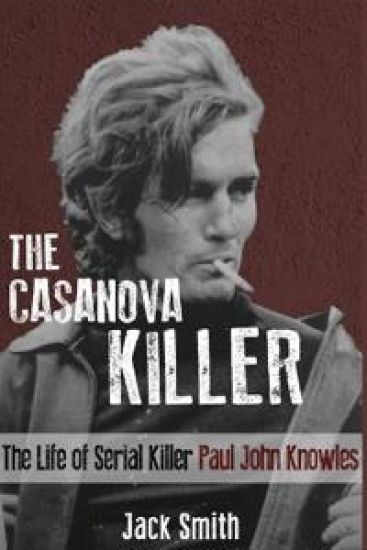
Paul John Knowles, nicknamed the Casanova killer, went on a 4 month killing spree in 1974. He still remains one of the lesser known serial killer of his generation. Read all about this psychopath who wanted fame before his life ended November 7, 1974As she entered her home in Milledgeville, Georgia, all Ellen Carr probably had on her mind was going to bed. She was a registered nurse who worked a night shift, and although the small family welcomed the money, the job was a demanding one.Inside, the house was unnaturally quiet. She found that odd. Her husband, forty-five-year-old businessman Carswell Carr and fifteen-year-old daughter Amanda usually greeted her when she came home from the hospital. That wasn't the only sign that something was seriously amiss. As an investigator later put it, "The (place) looked as if it had been attacked by an animal." Mirrors were smashed. Slashed furniture lay everywhere, some of it in pieces. Books from the bookshelves littered the floor. Had they been robbed? Where were Carswell and Mandy? Heart pounding, Mrs. Carr ran from room to room, calling out. Minutes later, she was back outside, screaming hysterically. Neighbors called the police to what was obviously the scene of gruesome double homicide.Carswell Carr's nude corpse was lying face down on the couple's bed, hands bound behind his back and twenty-seven stab wounds, inflicted by scissors, all over his body. The medical examiner later determined that he had died of a heart attack, likely brought on by the torture. Down the hall, Amanda was also face down in her room, one nylon stocking tied tightly around her neck and the other shoved down her throat. To compound the horror, she appeared to have been raped after death.When Mrs. Carr regained her senses, she went through the house with the police and identified several things that were missing: Carswell's briefcase, shaving kit, credit cards, identification, and most of his clothing. While detectives searched for more clues, the murderer, wearing his victim's clothes, was in an Atlanta bar, flirting with a lady reporter. He told her his name was Daryl Golden, but his real name was Paul John Knowles, and he was destined to be remembered as one of most vicious and unpredictable serial killers of his generation.Scroll back up and grab your copy today
Christmas Slay Ride

Christmas Slay Ride

Jack Smith

Createspace Independent Publishing Platform
2015
pokkari
There's never a good time to die violently, but Christmas tragedies are especially heinous.Christmas is a time for Peace on Earth and Good Will Toward Men. Holiday bloodshed feels like a sacrilege, but it does happen. Whether by accident or deliberate malice, scores of people have been killed on December 25 or the days surrounding it. This volume contains seven accounts of unnatural deaths that occurred on or around Christmas Day: The Ashland Tragedy: On December 24, 1881, three burned corpses were pulled from a house in Ashland, Kentucky. They belonged to teenagers Robert Gibbons, Fannie Gibbons, and Emma Carrico, who had all been bludgeoned to death. The girls had also been sexually assaulted. A formerly quiet Kentucky town was plunged into a nightmare fueled by grief and lust for revenge. Christmas Eve Combustion: On Christmas Day, 1885, Patrick Rooney and his wife were found dead in their home in Seneca, Illinois. Rooney died from smoke inhalation, caused by his wife's body suddenly bursting into flames. It is an early and sensational case of spontaneous human combustion. Delia's Gone: Early on Christmas morning in 1900, fourteen-year-old Moses "Cooney" Houston murdered his lover, Delia Green, who was the same age. Because Georgia had no youth justice system, Cooney Houston was charged as an adult. The senseless crime shocked the citizens of Savannah, Georgia, and inspired songs later recorded by Johnny Cash and Bob Dylan. The Holyhead Horror: On Christmas Day, 1909, a horrific murder took place in North Wales. Gwen-Ellen Jones was killed by her ex-soldier lover, William Murphy, in a manner so depraved that even in an era when domestic violence was commonplace, people were shocked. The murder and subsequent execution of William Murphy are still talked about in Holyhead today. Changing of the Guard: Early on the morning of December 26, 1920, New York underworld legend Edward "Monk" Eastman, was shot down by a crooked Prohibition agent, ending a thirty-plus year career marked by murder and mayhem. Eastman, who had once ruled the roost in Manhattan's Lower East Side, died in a freezer gutter. The Adonis Club Massacre: December 25, 1925 was the last Christmas on earth for Irish gangster Richard "Pegleg" Lonergan. He and his White Hand gang had taunted, abused, and killed their Italian rivals for years. Finally, when Lonergan and his boys went to the Italian-owned Adonis Social Club, their resentful enemies got even. Lawson Family Massacre: On December 25, 1929, North Carolina tobacco farmer Charlie Lawson murdered his wife and six of their seven children. The reason for this brutal act is a subject of debate even today, but may be attributable to a terrible family secret that remained hidden until 1990. All of these events took place in the distant past. People who knew the victims, remembered the circumstances of their demise, or were directly involved in the investigations are dead. That's why these cases were chosen for this book. The passage of time has transmuted them into tragic mysteries, ensuring that they arouse astonishment, sympathy, and indignation instead of the grief and personal loss that is at odds with the holiday season. Scroll back up and grab your copy today
Lancashire Coast Through Time

Lancashire Coast Through Time

Jack Smith

Amberley Publishing
2013
nidottu
Stretching from the Ribble Estuary to the River Kent, the Lancashire coast provides both spectacular views and glimpses of the county's industrial heritage. As the Industrial Revolution took hold in the eighteenth and nineteenth centuries, Lancashire flourished, producing over 80 per cent of the world's cotton. People flocked to the county's beautiful coastline, and towns like Lytham St Annes, Blackpool and Morecambe became popular coastal resorts. Although much has changed over the years, Lancashire's coastline still retains many of its traditional features. In Lancashire Coast Through Time, local historian Jack Smith charts these various developments and brings together a comparative collection of old and new photographs. Join the author as he delves into the history of the towns and villages along this picturesque coastline, showcasing its many points of interest and awakening treasured memories.
Chorley Borough Through Time

Chorley Borough Through Time

Jack Smith

Amberley Publishing
2012
nidottu
Located on the eastern edge of the Lancashire plain on the banks of the River Chor, at the centre of a rich agricultural area, Chorley was a market town from medieval times. This beautifully presented book depicts the growth and prosperity which arose with the Industrial Revolution, through juxtaposing old and new images of streets, buildings and people. Jack Smith has carefully selected this unique selection to reflect the effect that history has had on this typical English town.The photographs feature aspects of industry such as cotton weaving and spinning; coal mining and quarrying; and canal and railway links. Images showing the development are accompanied by changes in costume and custom, transport and trading, sport and entertainment. The captions will help the reader understand how all this contributed to the rich history of Chorley, and ensure that the book will be essential for residents and visitors alike.
Killing Me Softly: Toxic Waste, Corporate Profit, and the Struggle for Environmental Justice
The political economy of toxic waste was summed up by Lawrence Summersthen chief economist at the World Bank, later U.S. Treasury Secretaryin his notorious claim that poor people live in environments that are, from an economic point of view, not sufficiently polluted. The toxic waste industry came to prominence in the United States after 1945. In its ceaseless search for profit, it now routinely endangers the health of people around the worlds and the planet itself. Smith and Girdner's Killing Me Softlyexamines the growth of the toxic waste industry and the economic logic behind its expansion. It gives a hard-hitting account of the damage it has done throughout the United States. It focuses in particular on the struggle of the people of Mercer County, Missouri, against the plans of Amoco Waste-Tech to establish a huge toxic waste landfill in the county. It shows how the persistence of ordinary people in a poor and politically marginalized area could prevail against the predations of corporate power. Although race and ethnicity play a crucial role in deciding which communities are targeted for toxic waste dumps, Smith and Girdner argue that the critical cleavage within the United States and globally is that of class. The struggle for environmental justice has an important role to play in empowering poor communities and bringing them into a larger movement for social justice.
The Scots Guard

The Scots Guard

William F Hendrie; Jack Smith

The History Press Ltd
2002
nidottu
The Scots Guards can trace their history back to 1642 when the regiment was raised as the King’s Lifeguard of Foot by the Marquis of Argyll. From those early beginnings the Scots Guards have played a pivotal role in the history of the British Army. They fought on many different battlefields, from the Battle of Namurin to Waterloo. Going through various name changes the regiment became known as the Scots Guards in 1877, and fought at Telel Kebir in 1882, Mahdi in 1885 and the Boer War. At the First Battle of Ypres the regiment lost three quarters of its strength and won five VCs on the Western Front. In the Second World War Scots Guards fought in Norway, North Africa, Italy and from Normandy to the Baltic. Post-war the regiment has fought in Malaya, Suez, Borneo and in the Falklands. Its history is one of perseverance, of great bravery and of privation in time of war. Its troops have served Britain for five centuries, which is a record few can match. Within the pages of The Scots Guards are over 200 images of the regiment and its men at their best, in battle and in play, and the images and accompanying text are a unique record of a unique regiment.