Kirjojen hintavertailu. Mukana 12 595 353 kirjaa ja 12 kauppaa.

Kirjailija

Jack Turner

Kirjat ja teokset yhdessä paikassa: 11 kirjaa, julkaisuja vuosilta 1993-2026, suosituimpien joukossa Murdoch Vs. Freud. Vertaile teosten hintoja ja tarkista saatavuus suomalaisista kirjakaupoista.

11 kirjaa

Kirjojen julkaisuhaarukka 1993-2026.

Die Your Own Death

Die Your Own Death

Jack Turner

PRINCETON UNIVERSITY PRESS
2026
pokkari
How Whitman’s philosophy of death prepares the soul for freedom and equality. Humans fantasize about immortality. Billionaires dabble in cryonics, politicians build monuments to themselves, and writers donate their papers to libraries. In Die Your Own Death, Jack Turner argues that the quest for immortality—literal or symbolic—is politically destructive. He does so through a meditation on the work of Walt Whitman. Whitman held that democracy prepares individuals to “die their own deaths”—free of fear, resentment, and illusion. In Whitman’s “existential democracy,” accepting death strengthens freedom and equality. And yet, Turner finds, Whitman only half-succeeded in forging a democratic philosophy of death. As Whitman’s thought evolved in response to changing ideas about nation, race, and empire, he encouraged citizens to seek immortality through racial imperialism—the expansion of white empire from North America to the Pacific islands—as a monument to American greatness. Turner explores the poetics of death in Leaves of Grass and its relationship to Whitman’s democratic theory (“I exist as I am, that is enough”). Through a close analysis of Drum-Taps and Memoranda During the War, Turner shows that Whitman sought to redeem the mass slaughter of the Civil War by cloaking it in poetic and national glory. And in Whitman’s greatest prose work, Democratic Vistas, Turner argues, Whitman envisioned an antidemocratic national immortalism that ignored Native sovereignty and Black equality. Turner exposes the dark side of Whitman’s philosophy of death, but he also reveals how that philosophy can still be a resource in the ongoing struggle for freedom and equality.

Die Your Own Death

Die Your Own Death

Jack Turner

PRINCETON UNIVERSITY PRESS
2026
sidottu
How Whitman’s philosophy of death prepares the soul for freedom and equality. Humans fantasize about immortality. Billionaires dabble in cryonics, politicians build monuments to themselves, and writers donate their papers to libraries. In Die Your Own Death, Jack Turner argues that the quest for immortality—literal or symbolic—is politically destructive. He does so through a meditation on the work of Walt Whitman. Whitman held that democracy prepares individuals to “die their own deaths”—free of fear, resentment, and illusion. In Whitman’s “existential democracy,” accepting death strengthens freedom and equality. And yet, Turner finds, Whitman only half-succeeded in forging a democratic philosophy of death. As Whitman’s thought evolved in response to changing ideas about nation, race, and empire, he encouraged citizens to seek immortality through racial imperialism—the expansion of white empire from North America to the Pacific islands—as a monument to American greatness. Turner explores the poetics of death in Leaves of Grass and its relationship to Whitman’s democratic theory (“I exist as I am, that is enough”). Through a close analysis of Drum-Taps and Memoranda During the War, Turner shows that Whitman sought to redeem the mass slaughter of the Civil War by cloaking it in poetic and national glory. And in Whitman’s greatest prose work, Democratic Vistas, Turner argues, Whitman envisioned an antidemocratic national immortalism that ignored Native sovereignty and Black equality. Turner exposes the dark side of Whitman’s philosophy of death, but he also reveals how that philosophy can still be a resource in the ongoing struggle for freedom and equality.
Lube: A Modern Love Story Songbook: All the Music from the New Gay-Themed Musical
Lube is a new gay-themed Broadway-style musical. Great theater has always had a social justice imperative at its core, and today's equality struggle centers around gay rights. The unique experience of growing up gay is finally explored in "Lube: A Modern Love Story." Lube provides positive role models that encourage at-risk youth to grow into productive, happy, valued members of our communities by providing characters and situations that they can directly identify with. Lube is a musical with a theme: "Just love yourself; the rest will fall in place." It's a Boy meets Boy, Boy loses Boy story that includes a few twists along the way. It's set in modern times (2014) at a fictitious high school in Amarillo, Texas.The show deals with bullying, prejudice, and religious persecution. But it also deals with coming out, friendship, changing attitudes, and ultimately acceptance - especially what is sometimes the hardest of all: self-acceptance. You'll meet straights, gays, bisexuals, and even a drag queen or two.This gay romp is loaded with humor and original music that is catchy. The memorable lyrics will make you want to sing along. So, join Andy and Manny as they meet, fall in love, then fall apart due to the influences of their friends and family. Will they ever get back together, or will they decide to hide their sexuality and live lives full of despair and lies?This book contains all the music from the new gay-themed, Broadway-style musical, "Lube: A Modern Love Story." Great theater has always had a social justice imperative at its core, and today's equality struggle centers around gay rights. The unique experience of growing up gay is finally explored in "Lube: A Modern Love Story." Lube provides positive role models that encourage at-risk youth to grow into productive, happy, valued members of our communities by providing characters and situations that they can directly identify with. Lube is a musical with a theme: "Just love yourself; the rest will fall in place." It's a Boy meets Boy, Boy loses Boy story that includes a few twists along the way. It's set in modern times (2014) at a fictitious high school in Amarillo, Texas.The show deals with bullying, prejudice, and religious persecution. But it also deals with coming out, friendship, changing attitudes, and ultimately acceptance - especially what is sometimes the hardest of all: self-acceptance. You'll meet straights, gays, bisexuals, and even a drag queen or two.This gay romp is loaded with humor and original music that is catchy. The memorable lyrics will make you want to sing along. So, join Andy and Manny as they meet, fall in love, then fall apart due to the influences of their friends and family. Will they ever get back together, or will they decide to hide their sexuality and live lives full of despair and lies?Until you get to see the show itself, you can play the music with the songs from this Songbook. Enjoy
Awakening to Race

Awakening to Race

Jack Turner

University of Chicago Press
2012
nidottu
The election of America's first black president has led many to believe that race is no longer a real obstacle to success and that remaining racial inequality stems largely from the failure of minority groups to take personal responsibility for seeking out opportunities. Often this argument is made in the name of the long tradition of self-reliance and American individualism. In "Awakening to Race", Jack Turner upends this view, arguing that it expresses not a deep commitment to the values of individualism, but a narrow understanding of them. Drawing on the works of Ralph Waldo Emerson, Henry David Thoreau, Frederick Douglass, Ralph Ellison, and James Baldwin, Turner offers an original reconstruction of democratic individualism in American thought. All these thinkers, he shows, held that personal responsibility entails a refusal to be complicit in injustice and a duty to combat the conditions and structures that support it. At a time when individualism is invoked as a reason for inaction, Turner makes the individualist tradition the basis of a bold and impassioned case for race consciousness - consciousness of the ways that race continues to constrain opportunity in America. Turner's "new individualism" becomes the grounds for concerted public action against racial injustice.
Awakening to Race

Awakening to Race

Jack Turner

University of Chicago Press
2012
sidottu
The election of America's first black president has led many to believe that race is no longer a real obstacle to success and that remaining racial inequality stems largely from the failure of minority groups to take personal responsibility for seeking out opportunities. Often this argument is made in the name of the long tradition of self-reliance and American individualism. In "Awakening to Race", Jack Turner upends this view, arguing that it expresses not a deep commitment to the values of individualism, but a narrow understanding of them. Drawing on the works of Ralph Waldo Emerson, Henry David Thoreau, Frederick Douglass, Ralph Ellison, and James Baldwin, Turner offers an original reconstruction of democratic individualism in American thought. All these thinkers, he shows, held that personal responsibility entails a refusal to be complicit in injustice and a duty to combat the conditions and structures that support it. At a time when individualism is invoked as a reason for inaction, Turner makes the individualist tradition the basis of a bold and impassioned case for race consciousness - consciousness of the ways that race continues to constrain opportunity in America. Turner's "new individualism" becomes the grounds for concerted public action against racial injustice.
Spice: The History of a Temptation
A history of the pursuit and use of spices notes how major voyages of discovery were linked to the spice trade, discussing the role of spices in the forging of relations between Europe and Asia and depicting spices as food enhancers, archaeological clues, aphrodisiacs, and more. Reprint. 17,500 first printing.
Spice

Spice

Jack Turner

HARPERCOLLINS PUBLISHERS
2005
pokkari
A history of the trade that controlled the world and left an indelible impression on our taste buds; a sweeping story of avarice, ingenuity and exploration, spanning the globe and the centuries in its epic reconstruction of this magnificent obsession.
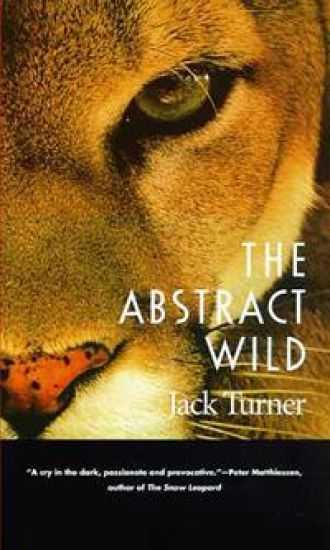
The Abstract Wild

The Abstract Wild

Jack Turner

University of Arizona Press
1996
nidottu
If anything is endangered in America it is our experience of wild nature--gross contact. There is knowledge only the wild can give us, knowledge specific to it, knowledge specific to the experience of it. These are its gifts to us. How wild is wilderness and how wild are our experiences in it, asks Jack Turner in the pages of The Abstract Wild. His answer: not very wild. National parks and even so-called wilderness areas fall far short of offering the primal, mystic connection possible in wild places. And this is so, Turner avows, because any managed land, never mind what it's called, ceases to be wild. Moreover, what little wildness we have left is fast being destroyed by the very systems designed to preserve it. Natural resource managers, conservation biologists, environmental economists, park rangers, zoo directors, and environmental activists: Turner's new book takes aim at these and all others who labor in the name of preservation. He argues for a new conservation ethic that focuses less on preserving things and more on preserving process and "leaving things be." He takes off after zoos and wilderness tourism with a vengeance, and he cautions us to resist language that calls a tree "a resource" and wilderness "a management unit." Eloquent and fast-paced, The Abstract Wild takes a long view to ask whether ecosystem management isn't "a bit of a sham" and the control of grizzlies and wolves "at best a travesty." Next, the author might bring his readers up-close for a look at pelicans, mountain lions, or Shamu the whale. From whatever angle, Turner stirs into his arguments the words of dozens of other American writers including Thoreau, Hemingway, Faulkner, and environmentalist Doug Peacock. We hunger for a kind of experience deep enough to change our selves, our form of life, writes Turner. Readers who take his words to heart will find, if not their selves, their perspectives on the natural world recast in ways that are hard to ignore and harder to forget.
Murdoch Vs. Freud

Murdoch Vs. Freud

Jack Turner

Peter Lang Publishing Inc
1993
sidottu
This first book-length discussion of the Iris Murdoch-Sigmund Freud connection shows her resistance to his theories to be based on her essential mysticism, her apparent need both to venerate and castrate her father, and her participation in an antirationalist trend. Her feud with Freud leads to a dialectic between religion and science in her novels, with Freud her favorite straw man, even while she employs his ideas to predict and provoke desired reader responses. Freud is a threatening father figure to Murdoch, though she learned important parts of her discourse from him. Thus, the theories of Jacques Lacan are also important to a complete analysis and understanding of Murdoch's philosophy and fiction. A detailed look at the situation offers a new hermeneutic for reading Murdoch, a great but didactic writer.