

Kirjailija
Jacob Abbott
Kirjat ja teokset yhdessä paikassa: 1 339 kirjaa, julkaisuja vuosilta 1834-2026, suosituimpien joukossa Bruno. Vertaile teosten hintoja ja tarkista saatavuus suomalaisista kirjakaupoista.
1 339 kirjaa
Kirjojen julkaisuhaarukka 1834-2026.




The Teacher, Or, Moral Influences Employed in the Instruction and Government of the Young
Jacob Abbott
Antigonos Verlag
2025
nidottu

Inquiries Concerning the Intellectual Powers, and the Investigation of Truth
John Abercrombie; Jacob Abbott
Antigonos Verlag
2025
nidottu

Rollo at Work; or, the Way for a Boy to Learn to be Industrious
Jacob Abbott
Antigonos Verlag
2025
nidottu

Josiah in New York or, A coupon from the Fresh Air Fund (Edition1)
Jacob Abbott
Alpha Editions
2025
nidottu

A journal containing an accurate and interesting account of the hardships, sufferings, battles, defeat, and captivity of those heroic Kentucky volunteers and regulars, commanded by General Winchester, in the year 1812-13 Also, two narratives, by men that were wounded in the battles on the River Raisin, and taken captive by the Indians (Edition1)
Jacob Abbott
Alpha Editions
2025
nidottu
Josiah Allen's Wife as a P. A. and P. I. Samantha at the Centennial Designed As a Bright and Shining Light, to Pierce the Fogs of Error and Injustice That Surround Society and Josiah, and to Bring More Clearly to View the Path That Leads Straight on to Virtue and Happiness. (Edition1)
Jacob Abbott
Alpha Editions
2025
nidottu

Georgie. Story VI of Rollo at Work, or The way to be Industrious
Jacob Abbott
Hutson Street Press
2025
sidottu
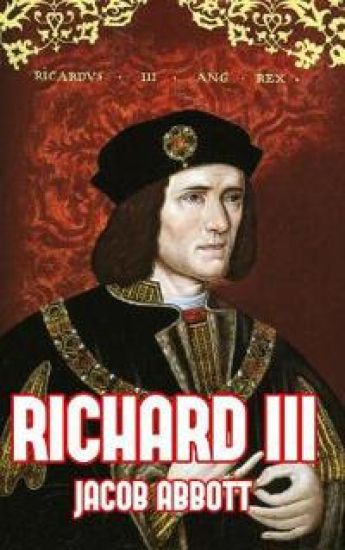
King Richard III of England (1452-1485) only occupied the throne for two years, but his death at the Battle of Bosworth Field marked the end of the thirty-year long Wars of the Roses and symbolized the end of the Middle Ages in that country. His life and death became entwined with intrigue and myth, spurred on by William Shakespeare's dramatization of his life in one of the Bard's most famous plays. This enthralling account of Richard III's life, retold by master storyteller Jacob Abbott, starts with his family background and the build-up to the Wars of the Roses, which saw the Houses of York and Lancaster lock horns over the succession to the throne. When Edward IV died in 1483, Richard, as his younger brother, was named Lord Protector of the realm on behalf of Edward's son and successor, the 12-year-old King Edward V. This young boy-king and his brother disappeared under mysterious circumstances, allegedly murdered in the Tower of London, and Richard was declared king in terms of the rules of royal succession. Linked by common gossip to the disappearance of the two princes, Richard's reign was marked by continued civil unrest, culminating in the landing of Henry Tudor on the coast of Wales. Henry, who claimed the throne for himself, met Richard's army in battle at Bosworth Field, where Richard was slain, making him the last English king to die in battle. Henry Tudor was crowned king, and the Wars of the Roses came to an end.
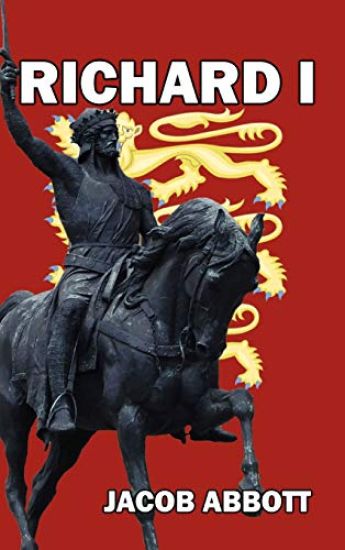
One of the greatest kings of England who hardly ever set foot in that country, Richard I is remembered in history by his epithet Richard Lionheart, mainly for his incredible series of wars and military victories, both within Europe and in the European counterattack (known as the Crusades) which opposed Islamic aggression against Christian lands in the Middle East. Made king of England in 1189, Richard was actually French, and also ruled in Normandy as Richard IV, as well as holding supreme leadership in many other parts of France. His Muslim foes, however, just called him Malek al-Inkitar-"King of England." This astonishing story starts with the fascinating tale of his mother, and how by the age of 16, Richard had taken command of his own army, putting down rebellions in Poitou against his father, King Henry II. His greatest military feats came however as a commander during the Third Crusade, where he led the Christian counterattack against his Muslim counterpart, Saladin. Dramatic events covered in this work include his campaigns in Sicily and Cyprus, the siege of Acre, and the monumental Battle of Jaffa, which brought an end to the Third Crusade and forced Saladin to grant access to Jerusalem to the Christians once again. By this time, Richard had generated many enemies at home as well, and this book ends with the story of his capture and ransom in Germany, before his return to England and death in 1199. This is a riveting story of personal bravery, courage, betrayal and intrigue, set against the bloody backdrop of the Third Crusade.
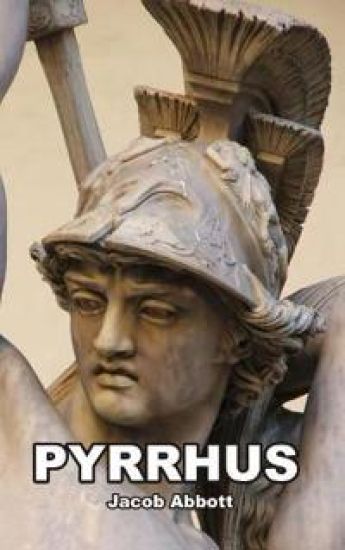
The English saying "a Pyrrhic victory" comes from the name of the third century BC king of Epirus, Pyrrhus. After a battle with the Romans which was won at great cost, Pyrrhus famously said, "one more victory like that and I will be undone." Pyrrhus, who was born only a few years after the death of Alexander the Great, was of the royal Aeacid house, and his military adventures were nearly as remarkable as those of the more famous Macedonian king. During his time, Pyrrhus conquered Sicily, parts of southern Italy, and finally Macedon, where he briefly held the crown. This work chronicles the remarkable life of one of ancient European history's most able military leaders, and also his bizarre and unexpected end.
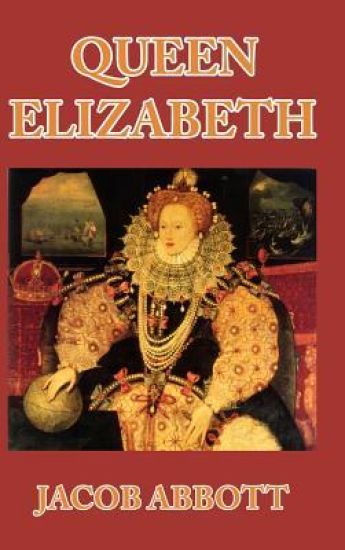
Queen Elizabeth I, daughter of Henry VIII and Anne Boleyn, was England's greatest monarch. This riveting account of her life and her exploits during her mid-sixteenth century reign provide the reader with a comprehensive insight into events which have become engraved in world history. Starting with her family background, master storyteller Jacob Abbott takes the reader on a nonstop narration through her imprisonment, the intrigues which led to her ascension to the throne following the reign of "Bloody Mary," the formal establishment of the English Protestant ("Anglican") church, the threats to her life after the Pope released her subjects from all loyalty to her throne, the war with Scotland, and the momentous defeat of the Spanish Armada. It also discusses her personal life, lovers, suitors, and death in 1603 after forty-four tumultuous years as leader of her nation. During her time, England started on its path to establishing a world empire, and gifted the world such intellectual treasures as William Shakespeare. This edition has been completely reset and illustrated.

The violent, bloody, and incredible story of Nero Claudius Caesar Augustus Germanicus (37-68 AD), who was Roman Emperor from 54 to 68, forms the basis of this highly readable and compelling work by master storyteller and popular historian Jacob Abbott. Beginning with the previous emperors Caligula and Claudius, Abbott lays the groundwork for Nero's early years and family background. Nero was adopted by his great-uncle Claudius to become his heir and successor, and succeeded to the throne after Claudius's death. The author is careful to make sure that all the details he provides are accurate and sourced-and then presents to the reader a whirlwind of drama, intrigue, amazing extravagance, and ultimately, madness, centered around the highest office in the Roman Empire. As Nero's personal behavior became more and more erratic, he accumulated endless enemies at home. This resulted in assassination conspiracies-all of them unsuccessful, but increasingly desperate and causing a spiral of retaliation and cruelty. Finally, in 68, the rebellion of Vindex in Gaul, and later the acclamation of Galba in Hispania, drove Nero from the throne. Threatened with death by execution, Nero committed suicide, finally ending the Julio-Claudian Dynasty.