
Kirjailija
Jacqueline Rose
Kirjat ja teokset yhdessä paikassa: 30 kirjaa, julkaisuja vuosilta 1992-2026, suosituimpien joukossa Two Women. Vertaile teosten hintoja ja tarkista saatavuus suomalaisista kirjakaupoista.
30 kirjaa
Kirjojen julkaisuhaarukka 1992-2026.

In Two Women, Jacqueline Rose fictionalizes and intertwines the lives of two remarkable figures whose stories trace the contours of the twentieth century: Edith Stein, the German-Jewish philosopher, Catholic convert and saint; and Gillian Rose, philosopher of German-Jewish thought, also a convert, and Jacqueline’s sister. Through a luminous weaving of fiction and history, Rose traces the parallels and distances between these women – their intellect, faith, suffering and courage – while also confronting the mysteries of love, loss and belonging that shape every human life. A deeply moving work, Two Women is at once an act of remembrance and a daring work of imagination by one of the most important feminist writers of our time.
A slim, heart-wrenching, and rousing new book from the leading feminist writer Jacqueline Rose. In early 2020, when the COVID-19 pandemic began to infiltrate public consciousness, sales of The Plague, the classic novel by French philosopher Albert Camus, skyrocketed. At the same time, the virus's toll surged exponentially. Amid the harrowing loss, many sensed a glimmer of possibility--the potential for radical empathy wrought by shared experience--even as the death-dealing divisions of class, race, gender, and citizenship were underscored like never before. We have been through a time of 'living death' when, for millions across the globe, untold horror has seemed to infiltrate the very air we breathe. Jacqueline Rose's trenchant new book unravels recent history via the lives and works of three extraordinary thinkers--Albert Camus, Sigmund Freud, and Simone Weil, each one afflicted by catastrophe. Their politics and private griefs, the depth of their understanding, fling open a window into our present crises. Rose, one of the most insightful thinkers on politics and psychoanalysis alike, has written a story of unusual range, spanning World War II to Russia's invasion of Ukraine, surging domestic violence to emboldened anti-racist protest, the Spanish influenza to Omicron, Boris Johnson's deranged optimism to Vladimir Putin's megalomania. The Plague: Living Death In Our Times enacts a psychic reckoning for our moment and for the future to be forged in its aftermath.
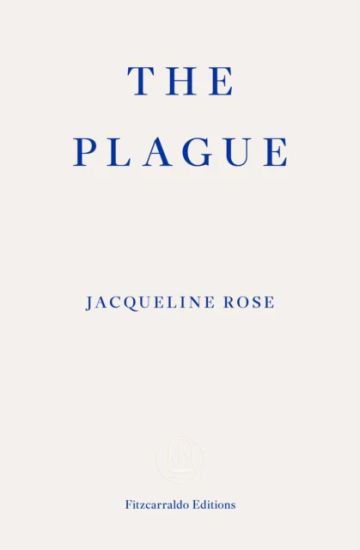
What do you do with death and dying when they can no longer be pushed to the outer limits of your lived experience or dismissed from your conscious mind? How do you live with death or rather how do you ‘live death’ when death comes too close, seeming to enter the very air you breathe? The Plague is a collection of essays guiding us from the Covid-19 pandemic through to the war in Ukraine in order to imagine a world in which a radical respect for death might exist alongside a fairer distribution of the earth’s wealth. ‘Living death’ will appear as something of a refrain, a reminder that to think of death as an avoidable intruder into how we order our lives, especially in the West, is an act of defiance that is doomed to fail. In the thought of the philosopher Simone Weil, who plays a key role in the book, only if we admit the limits of the human, will we stop vaunting the brute illusion of earthly power.
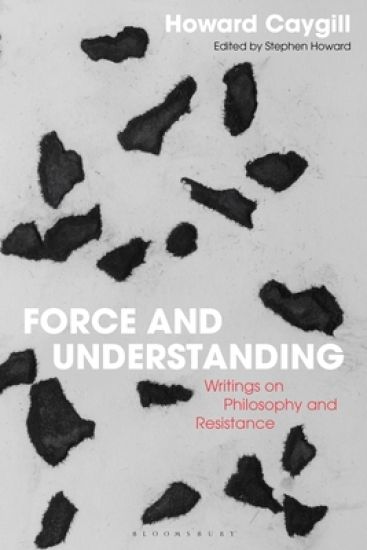
For the past thirty years, Howard Caygill has been a distinctive and radical voice in continental philosophy. For the first time, this volume gathers together Caygill’s most significant philosophical essays, the majority of which are not freely available and many of which are previously unpublished.Here, a major philosopher is at work, offering rich, rigorous and politically-engaged readings of canonical and lesser-known figures and texts. From Kant and Frantz Fanon to Herman Kahn, founder of the Hudson Institute, Caygill uncovers the untapped resources that the history of philosophy provides for contemporary thought, whilst critically pushing beyond the limits of the tradition. Divided into two parts, the first part of the collection reveals the philosophical backdrop to Caygill’s acclaimed study of political resistance, On Resistance: A Philosophy of Defiance (2015), whilst the second part sees Caygill further develop his account of resistance through wide-ranging analyses of contemporary culture. Exploring numerous subjects, including Nietzsche, metaphysics, radical politics, and digital resistance, to name but a few, Force and Understanding introduces readers to the orienting themes of Caygill’s thought and provides the opportunity to engage with one of the most astute, learned, and critical philosophical minds around.
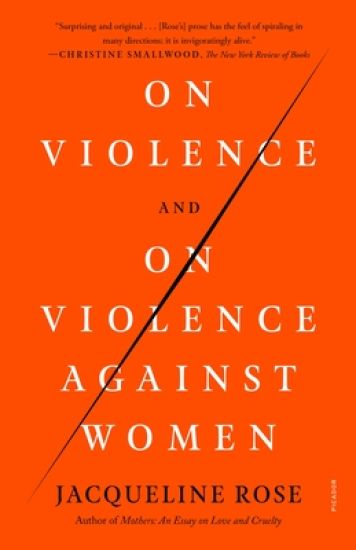
A blazingly insightful, provocative study of violence against women from the peerless feminist critic. Why has violence, and especially violence against women, become so much more prominent and visible across the world? To explore this question, Jacqueline Rose tracks the multiple forms of today's violence - historic and intimate, public and private - as they spread throughout our social fabric, offering a new, provocative account of violence in our time. From trans rights and #MeToo to the sexual harassment of migrant women, from the trial of Oscar Pistorius to domestic violence in lockdown, from the writing of Roxanne Gay to Hisham Mitar and Han Kang, she casts her net wide. What obscene pleasure in violence do so many male leaders of the Western world unleash in their supporters? Is violence always gendered and if so, always in the same way? What is required of the human mind when it grants itself permission to do violence? On Violence and On Violence Against Women is a timely and urgent agitation against injustice, a challenge to radical feminism and a meaningful call to action.

A blazingly insightful, provocative study of violence against women from the peerless feminist critic. 'To read Rose is to understand that there is no border between us and the world; it is an invitation to a radical kind of responsibility.'NEW YORK TIMES'It's really hard for me to overestimate how important [Rose's] work has been for me . . . I don't feel like that about very many writers.'MAGGIE NELSON, GRAND JOURNAL'An immense achievement.' JUDE KELLY CBE'Timeless.' HELEN PANKHURST CBEWhy has violence - particularly against women - become exponentially more prominent and visible across the world?Tracking multiple forms of today's violence - ranging through trans rights and #MeToo; the suffragette movement and the sexual harassment faced by migrant women; and the sharp increase in domestic violence over the course of the pandemic - this blazing exploration is an agitation against injustice and a formidable call to action from a world-renowned feminist thinker.'Rose explodes the myth that violence and misogyny only happens to other women.'VAL McDERMID'This book confirms Jacqueline Rose's position as one of the world's foremost public intellectuals.'MARK GEVISSER'A daring thinker, willing to make bold statements and take imaginative leaps.'NEW STATESMAN'Rose's work remains surprising and original . . . Her prose has the feel of spiraling in many directions; it is invigoratingly alive . . . necessary and as well as unique.'NEW YORK REVIEW OF BOOKS'For anyone looking to educate themselves on this essential subject, start here and now.'ESQUIRE
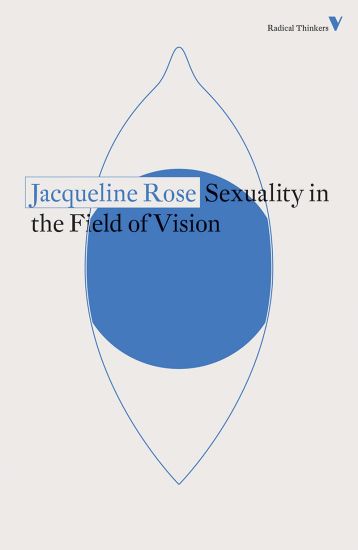
A pivotal work in the history of feminism and a groundbreaking intervention into film theory, Sexuality in the Field of Vision is a brilliantly original exploration of the interface between feminism, psychoanalysis, semiotics and film theory
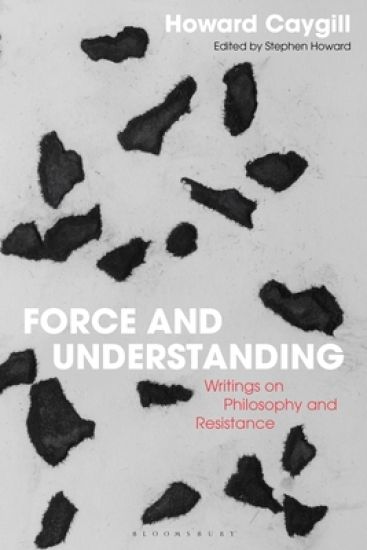
For the past thirty years, Howard Caygill has been a distinctive and radical voice in continental philosophy. For the first time, this volume gathers together Caygill’s most significant philosophical essays, the majority of which are not freely available and many of which are previously unpublished.Here, a major philosopher is at work, offering rich, rigorous and politically-engaged readings of canonical and lesser-known figures and texts. From Kant and Frantz Fanon to Herman Kahn, founder of the Hudson Institute, Caygill uncovers the untapped resources that the history of philosophy provides for contemporary thought, whilst critically pushing beyond the limits of the tradition. Divided into two parts, the first part of the collection reveals the philosophical backdrop to Caygill’s acclaimed study of political resistance, On Resistance: A Philosophy of Defiance (2015), whilst the second part sees Caygill further develop his account of resistance through wide-ranging analyses of contemporary culture. Exploring numerous subjects, including Nietzsche, metaphysics, radical politics, and digital resistance, to name but a few, Force and Understanding introduces readers to the orienting themes of Caygill’s thought and provides the opportunity to engage with one of the most astute, learned, and critical philosophical minds around.
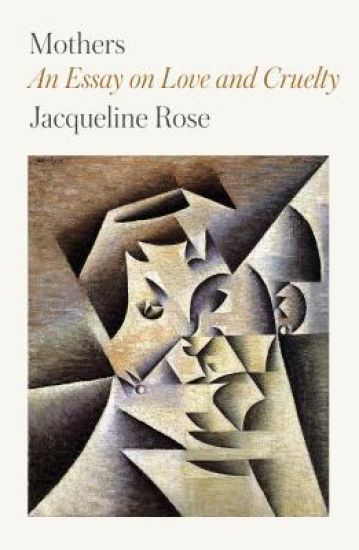
A daring and provocative book-length essay on why we both romanticize and vilify mothers A simple argument guides this book: motherhood is the place in our culture where we lodge, or rather bury, the reality of our own conflicts. By making mothers the objects of both licensed idealization and cruelty, we blind ourselves to the world's iniquities and shut down the portals of the heart. Mothers are the ultimate scapegoat for our personal and political failings, for everything that is wrong with the world, which becomes their task (unrealizable, of course) to repair. Moving commandingly between pop cultural references such as Roald Dahl's Matilda to insights on motherhood in the ancient world and the contemporary stigmatization of single mothers, Jacqueline Rose delivers a groundbreaking report into something so prevalent we hardly notice. Mothers is an incisive, rousing call to action from one of our most important contemporary thinkers.

From one of the most important contemporary thinkers we have, a compelling, forceful tract about women and motherhood that demands immediate attention. Moving commandingly between pop cultural references such as Roald Dahl's 'Matilda' to observations about motherhood in the ancient world, from and thoughts about the stigmatization of single mothers in the UK, Mothers delivers a groundbreaking report into something so prevalent we hardly notice.
In this groundbreaking book, leading Arab and Jewish intellectuals examine how and why the Holocaust and the Nakba are interlinked without blurring fundamental differences between them. While these two foundational tragedies are often discussed separately and in abstraction from the constitutive historical global contexts of nationalism and colonialism, The Holocaust and the Nakba explores the historical, political, and cultural intersections between them. The majority of the contributors argue that these intersections are embedded in cultural imaginations, colonial and asymmetrical power relations, realities, and structures. Focusing on them paves the way for a new political, historical, and moral grammar that enables a joint Arab-Jewish dwelling and supports historical reconciliation in Israel/Palestine.This book does not seek to draw a parallel or comparison between the Holocaust and Nakba or to merely inaugurate a “dialogue” between them. Instead, it searches for a new historical and political grammar for relating and narrating their complicated intersections. The book features prominent international contributors, including a foreword by Lebanese novelist Elias Khoury on the centrality of the Holocaust and Nakba in the essential struggle of humanity against racism, and an afterword by literary scholar Jacqueline Rose on the challenges and contributions of the linkage between the Holocaust and Nakba for power to shift and a world of justice and equality to be created between the two peoples. The Holocaust and the Nakba is the first extended and collective scholarly treatment in English of these two constitutive traumas together.

In this groundbreaking book, leading Arab and Jewish intellectuals examine how and why the Holocaust and the Nakba are interlinked without blurring fundamental differences between them. While these two foundational tragedies are often discussed separately and in abstraction from the constitutive historical global contexts of nationalism and colonialism, The Holocaust and the Nakba explores the historical, political, and cultural intersections between them. The majority of the contributors argue that these intersections are embedded in cultural imaginations, colonial and asymmetrical power relations, realities, and structures. Focusing on them paves the way for a new political, historical, and moral grammar that enables a joint Arab-Jewish dwelling and supports historical reconciliation in Israel/Palestine.This book does not seek to draw a parallel or comparison between the Holocaust and Nakba or to merely inaugurate a “dialogue” between them. Instead, it searches for a new historical and political grammar for relating and narrating their complicated intersections. The book features prominent international contributors, including a foreword by Lebanese novelist Elias Khoury on the centrality of the Holocaust and Nakba in the essential struggle of humanity against racism, and an afterword by literary scholar Jacqueline Rose on the challenges and contributions of the linkage between the Holocaust and Nakba for power to shift and a world of justice and equality to be created between the two peoples. The Holocaust and the Nakba is the first extended and collective scholarly treatment in English of these two constitutive traumas together.
Conversations with Jacqueline Rose
Supriya Chaudhuri; Aveek Sen; Rosemary Bechler; Henrietta L. Moore; Stephen Frosh; Anthony Lerman; Jacqueline Rose
Seagull Books London Ltd
2018
nidottu
In this collection of conversations that were conducted in Calcutta, at the London School of Economics, through Jewish Book Week, and on the radical website openDemocracy, internationally renowned Jewish scholar Jacqueline Rose explores the debates that have fueled her writing and thinking over three decades. Drawn out by her interlocutors, Rose discusses the difference between political and sexual identity and inquires whether psychoanalysis can be considered a radical form of thought that can be used fruitfully in dialogue about political struggle. Most significantly—since each of these conversations were sparked by her recent and controversial writing on Zionism, Israel, and Palestine—Rose reflects on the role of Jewish dissent in our time. In these conversations, Rose appears courageous, passionate, ethical, and never afraid to engage politically on issues that are of human concern in the ongoing Middle and Near East crisis.
In The Last Resistance, Jacqueline Rose explores the power of writing to create and transform our political lives. In particular, she examines the role of literature in the Zionist imagination: here, literature is presented as a unique form of dissidence, with the power to expose the unconscious of nations, and often proposing radical alternatives totheir dominant pathways and beliefs.While Israel-Palestine is the repeated focus, The Last Resistance also turns to post-apartheid South Africa, to American national fantasy post-9/11, and to key moments for the understanding of Jewish culture and memory. Rose also underscores the importance of psychoanalysis, both historically in relation to the unfolding of world events, and as a tool of political understanding.Examining topics ranging from David Grossman, through W.G. Sebald, Freud, Nadine Gordimer, the concept of evil, and suicide bombers, The Last Resistance offers a unique way of responding to the crises of the times.
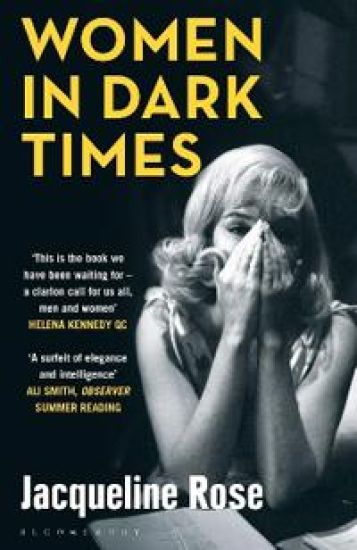
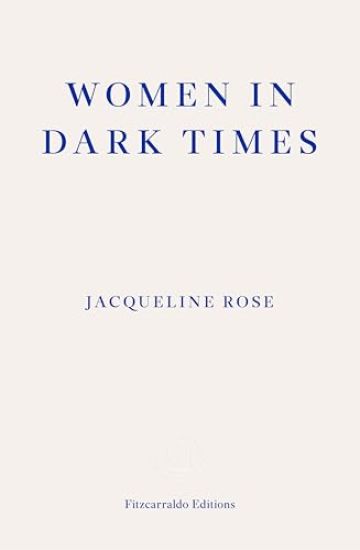
Jacqueline Rose’s new book begins with three remarkable women: revolutionary socialist Rosa Luxemburg; German–Jewish painter Charlotte Salomon, persecuted by family tragedy and Nazism; film icon and consummate performer Marilyn Monroe. Together these women have a shared story to tell, as they blaze a trail across some of the most dramatic events of the last century – revolution, totalitarianism, the American dream. Enraged by injustice, they are each in touch with what is most painful about being human, bound together by their willingness to bring the unspeakable to light. Taking the argument into the present are today’s women, courageous individuals involved in some of the cruellest realities of our times. Grappling with the reality of honour killing – notably through the stories of Shafilea Ahmed, Fadime Sahindal and Heshu Yones – Rose argues that the work of feminism is far from done. In the final three chapters, she celebrates the work of three brilliant contemporary artists – Esther Shalev-Gerz, Yael Bartana and Thérèse Oulton – whose work grows out of an unflinching engagement with all that is darkest in the modern world. Women in Dark Times shows us how these visionary women offer a new template for feminism. Taking their stand against the iniquities of our times, they tread a path between public and private pain, confronting us with what we need most urgently, but also often, cannot bear to see.
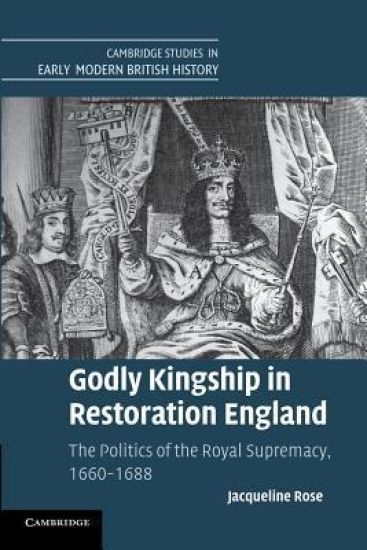
The position of English monarchs as supreme governors of the Church of England profoundly affected early modern politics and religion. This innovative book explores how tensions in church-state relations created by Henry VIII's Reformation continued to influence relationships between the crown, Parliament and common law during the Restoration, a distinct phase in England's 'long Reformation'. Debates about the powers of kings and parliaments, the treatment of Dissenters and emerging concepts of toleration were viewed through a Reformation prism where legitimacy depended on godly status. This book discusses how the institutional, legal and ideological framework of supremacy perpetuated the language of godly kingship after 1660 and how supremacy was complicated by the ambivalent Tudor legacy. It was manipulated by not only Anglicans, but also tolerant kings and intolerant parliaments, Catholics, Dissenters and radicals like Thomas Hobbes. Invented to uphold the religious and political establishments, supremacy paradoxically ended up subverting them.
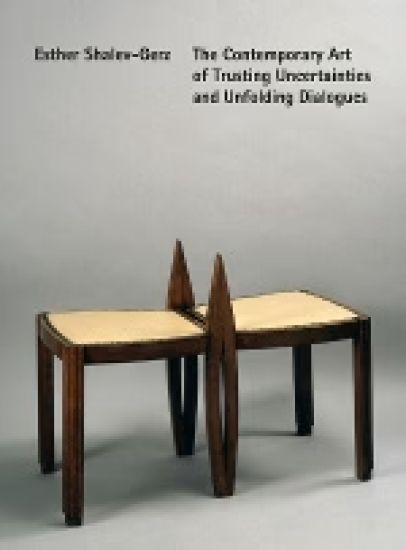
The contemporary art of trusting uncertainities and unfolding dialogues
Esther Shalev-Gerz; Jason E. Bowman; Stefanie Baumann; George Didi-Huberman; Lisa Le Feuvre; Andrea Phillips; Jacques Rancière; Jacqueline Rose; Annika Wik; James E. Young
Art and Theory
2013
nidottu
Esther Shalev-Gerzs art has long been at the forefront of debates regarding participation, citizenship, cultural memory, and the role of the artist in society. Her practice has consistently confronted many of the most profound ethical questions of our time regarding the politics of representation, memorialization, and the narration of our histories. Through the artworks and methods of Esther Shalev-Gerz, this book seeks to provide a platform for a debate on trust and dialogue and to act as a catalyst for reflection on the relativity of these two concepts when characterized by, and as, art. This is the first illustrated anthology to be published on Shalev-Gerzs work. It brings together some of the most significant thinkers, writers, and curators of our time to stimulate debate on notions of trust and dialogue and their interrelations as exemplified through her oeuvre. Edited by Jason E. Bowman Contributing writers: Stefanie Baumann, Jason E. Bowman, George Didi-Huberman, Lisa Le Feuvre, Andrea Phillips, Jacques Rancière, Jacqueline Rose, Esther Shalev-Gerz, Annika Wik, James E. Young
Since her suicide in 1963 at the age of 30, Sylvia Plath has become a strange icon. This book addresses why this is the case and what this tells us about the way culture picks out important writers. The author argues that without a concept of fantasy we can understand neither Plath's work nor what she has come to represent. She proposes that no writer demonstrates more forcefully than Plath the importance of inner psychic life for the wider sexual and political world. By the author of Sexuality in the Field of Vision.