Kirjojen hintavertailu. Mukana 12 595 353 kirjaa ja 12 kauppaa.

Kirjailija

Jacques Bouveresse

Kirjat ja teokset yhdessä paikassa: 3 kirjaa, julkaisuja vuosilta 1996-2015, suosituimpien joukossa Philosophy of Perception: Phenomenology, Grammar and the Cognitive Sciences / Philosophies de la perception: Phénoménologie, grammaire et scienc. Vertaile teosten hintoja ja tarkista saatavuus suomalaisista kirjakaupoista.

3 kirjaa

Kirjojen julkaisuhaarukka 1996-2015.

The Earth

The Earth

Hubert Krivine; Tariq Ali; Jacques Bouveresse

Verso Books
2015
sidottu
Our planet's elliptical orbit around the Sun and its billions-of-years existence are facts we take for granted, matters every literate high school student is expected to grasp. But humanity's struggle towards these scientific truths lasted millennia. Few of us have more than the faintest notion of the path we have travelled. Hubert Krivine tells the story of the thinkers and scientists whose work allowed our species to put an age to the planet and pinpoint our place in the solar system. It is a history of bold innovators, with a broad cast of contributors - not only Copernicus, Galileo and Kepler, but Halley, Kelvin, Darwin and Rutherford, among many others. Courage, iniquity, religious dogmatism, genius and blind luck all played a part. This was an epic struggle to free the mind from the constraints of cant, ideology and superstition. From this history, Krivine delineates an invaluable philosophy of science, one today under threat from irrationalism and the fundamentalist movements of East and West, which threaten both what we have attained at great cost and what we still have to learn. Scientific progress is not a sufficient condition for social progress; but it is a necessary one. The Earth is not merely a history of scientific learning, but a stirring defence of Enlightenment values in the quest for human advancement.
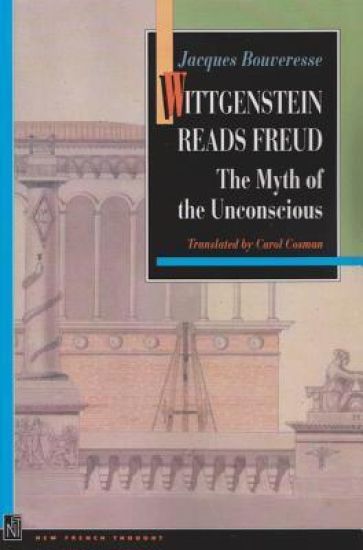
Wittgenstein Reads Freud

Wittgenstein Reads Freud

Jacques Bouveresse; Vincent Descombes

Princeton University Press
1996
pokkari
Did Freud present a scientific hypothesis about the unconscious, as he always maintained and as many of his disciples keep repeating? This question has long prompted debates concerning the legitimacy and usefulness of psychoanalysis, and it is of utmost importance to Lacanian analysts, whose main project has been to stress Freud's scientific grounding. Here Jacques Bouveresse, a noted authority on Ludwig Wittgenstein, contributes to the debate by turning to this Austrian-born philosopher and contemporary of Freud for a candid assessment of the early issues surrounding psychoanalysis. Wittgenstein, who himself had delivered a devastating critique of traditional philosophy, sympathetically pondered Freud's claim to have produced a scientific theory in proposing a new model of the human psyche. What Wittgenstein recognized--and what Bouveresse so eloquently stresses for today's reader--is that psychoanalysis does not aim to produce a change limited to the intellect but rather seeks to provoke an authentic change of human attitudes. The beauty behind the theory of the unconscious for Wittgenstein is that it breaks away from scientific, causal explanations to offer new forms of thinking and speaking, or rather, a new mythology. Offering a critical view of all the texts in which Wittgenstein mentions Freud, Bouveresse immerses us in the intellectual climate of Vienna in the early part of the twentieth century. Although we come to see why Wittgenstein did not view psychoanalysis as a science proper, we are nonetheless made to feel the philosopher's sense of wonder and respect for the cultural task Freud took on as he found new ways meaningfully to discuss human concerns. Intertwined in this story of Wittgenstein's grappling with the theory of the unconscious is the story of how he came to question the authority of science and of philosophy itself. While aiming primarily at the clarification of Wittgenstein's opinion of Freud, Bouveresse's book can be read as a challenge to the French psychoanalytic school of Lacan and as a provocative commentary on cultural authority.