Kirjojen hintavertailu. Mukana 12 290 406 kirjaa ja 12 kauppaa.

Kirjailija

Jacques Derrida

Kirjat ja teokset yhdessä paikassa: 171 kirjaa, julkaisuja vuosilta 1982-2027, suosituimpien joukossa Given Time II. Vertaile teosten hintoja ja tarkista saatavuus suomalaisista kirjakaupoista.

171 kirjaa

Kirjojen julkaisuhaarukka 1982-2027.

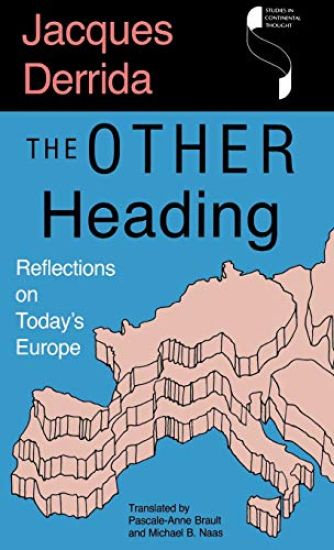
The Other Heading

The Other Heading

Jacques Derrida

Indiana University Press
1992
sidottu
Prompted by the unification of Europe in 1992 and by recent events in Eastern Europe and the Soviet Union, Jacques Derrida begins this compelling essay on contemporary world politics with the issue of European identity. What, he asks, is Europe? How has Europe traditionally been defined and how is the current world situation changing that definition? Might the prospects of a New Europe demand not only a new definition of European identity but also a new way of thinking identity itself? Navigating in and through texts of Marx, Husserl, and especially Valéry, Derrida seeks a redefinition of European identity that includes respect both for difference and for universal values. The Other Heading appeals eloquently for a sustained effort at thinking through the complexity and the multiple dangers and opportunities of the contemporary world situation without resorting to easy or hasty solutions.
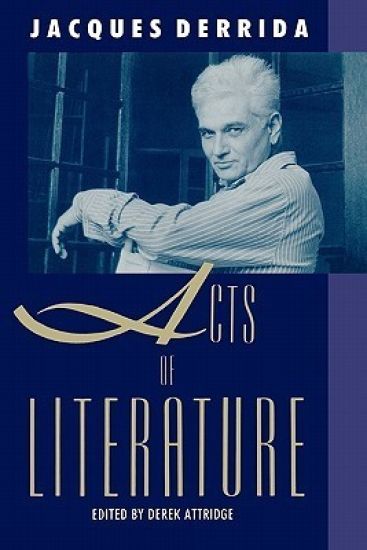
Acts of Literature

Acts of Literature

Jacques Derrida

Routledge
1991
nidottu
First published in 1992. "Acts of Literature", compiled in close association with Derrida, brings together for the first time a number of Derrida's writings on literary texts on the question of literature. The essays discuss literary figures such as Rousseau, Mallarme, Joyce, Shakespeare and Kafka. Comprising pieces spanning Derrida's career, the collection includes a substantial new interview with him on questions of literature, deconstruction, politics, feminism and history. Derek Attridge provides an introductory essay on deconstruction and the question of literature, and offers suggestions for further reading. These essays examine the place and function of literature in Western culture. They highlight Derrida's interest in literature as a significant cultural institution and as a peculiarly challenging form of writing, with inescapable consequences for our thinking about philosophy, politics and ethics. This book should be of interest to undergraduates and academics in the field of literary theory and criticism and continental philosophy.
A Derrida Reader

A Derrida Reader

Jacques Derrida

Columbia University Press
1991
pokkari
Jacques Derrida is one of the most prolific and influential contemporary French intellectuals. Twenty-two essays and excerpts from Derrida's writings over the last twenty-five years are gathered in this accessible introduction, A Derrida Reader. The book's five sections are carefully introduced by the editor, and each selection of Derrida's work is presented succinctly in context. A general introduction to the volume by Peggy Kamuf provides an original interpretation and overview of Derrida's work and philosophy.
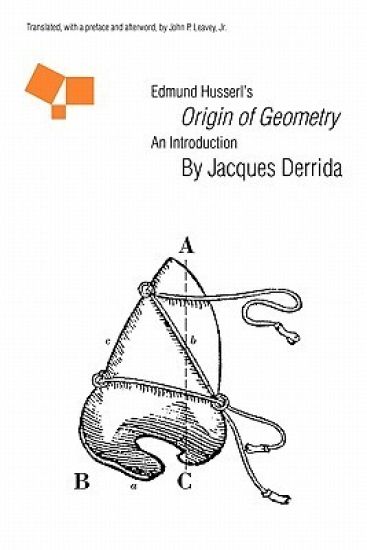
Edmund Husserl's "Origin of Geometry"

Edmund Husserl's "Origin of Geometry"

Jacques Derrida

University of Nebraska Press
1989
pokkari
Edmund Husserl's Origin of Geometry": An Introduction (1962) is Jacques Derrida's earliest published work. In this commentary-interpretation of the famous appendix to Husserl's The Crisis of European Sciences and Transcendental Phenomenology, Derrida relates writing to such key concepts as differing, consciousness, presence, and historicity. Starting from Husserl's method of historical investigation, Derrida gradually unravels a deconstructive critique of phenomenology itself, which forms the foundation for his later criticism of Western metaphysics as a metaphysics of presence. The complete text of Husserl's Origin of Geometry is included.
The Ear of the Other

The Ear of the Other

Jacques Derrida

University of Nebraska Press
1988
nidottu
"Originally published in French in 1982, this collection is a good representation of the range of Derrida's working styles."-South Atlantic Review "No writer has probed the riddle of the Other with more patience and insight than Jacques Derrida. . . . By rigorously interrogating the writings of major Western figures, Derrida not only forces a rethinking of the nature of reading and writing but calls into question basic as-sumptions about ourselves and our world. . . . The Ear of the Other will be especially useful to people who have little or no prior acquaintance with Derrida's work. . . . Through a careful reexamination of Nietzsche's autobiography Ecce Homo, Derrida elaborates some of the far-reaching implications of twentieth-century reinterpretations of human subjectivity."-Mark C. Taylor, Los Angeles Times Book Review. "Ably translated. . . . The long 'Roundtable on Autobiography' . . . is authentic philosophical discussion, illuminating not only the preceding lecture but Derrida's work as well."-Choice.
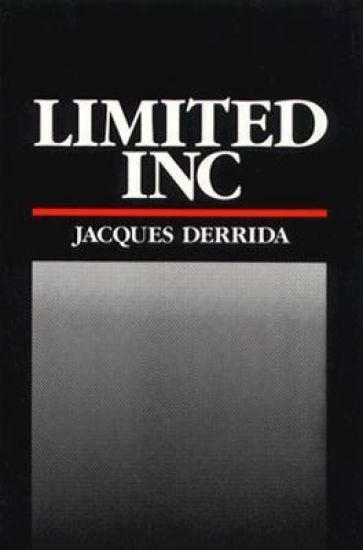
Limited Inc

Limited Inc

Jacques Derrida

Northwestern University Press
1988
nidottu
Limited Inc is a major work in the philosophy of language by the celebrated French thinker Jacques Derrida. The book's two essays, "Limited Inc" and "Signature Event Context," constitute key statements of the Derridean theory of deconstruction. They are the clearest exposition to be found of Derrida's most controversial idea, that linguistic meaning is fundamentally indeterminate because the contexts that fix meaning are never stable. Limited Inc includes an important new afterword by the author.
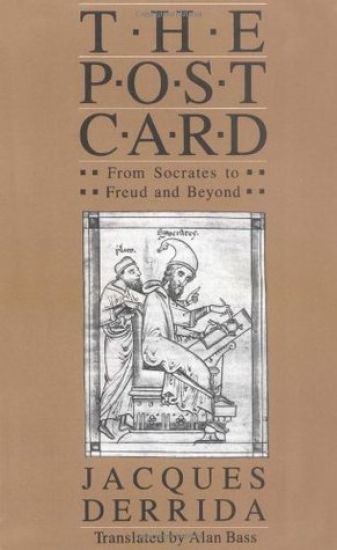
The Post Card

The Post Card

Jacques Derrida

University of Chicago Press
1987
nidottu
17 November 1979You were reading a somewhat retro loveletter, the last in history. But you have not yet received it. Yes, its lack or excess of address prepares it to fall into all hands: a post card, an open letter in which the secret appears, but indecipherably. What does a post card want to say to you? On what conditions is it possible? Its destination traverses you, you no longer know who you are. At the very instant when from its address it interpellates, you, uniquely you, instead of reaching you it divides you or sets you aside, occasionally overlooks you. And you love and you do not love, it makes of you what you wish, it takes you, it leaves you, it gives you. On the other side of the card, look, a proposition is made to you, S and p, Socrates and plato. For once the former seems to write, and with his other hand he is even scratching. But what is Plato doing with his outstretched finger in his back? While you occupy yourself with turning it around in every direction, it is the picture that turns you around like a letter, in advance it deciphers you, it preoccupies space, it procures your words and gestures, all the bodies that you believe you invent in order to determine its outline. You find yourself, you, yourself, on its path. The thick support of the card, a book heavy and light, is also the specter of this scene, the analysis between Socrates and Plato, on the program of several others. Like the soothsayer, a "fortune-telling book" watches over and speculates on that-which-must-happen, on what it indeed might mean to happen, to arrive, to have to happen or arrive, to let or to make happen or arrive, to destine, to address, to send, to legate, to inherit, etc., if it all still signifies, between here and there, the near and the far, da und fort, the one or the other. You situate the subject of the book: between the posts and the analytic movement, the pleasure principle and the history of telecommunications, the post card and the purloined letter, in a word the transference from Socrates to Freud, and beyond. This satire of epistolary literature had to be farci, stuffed with addresses, postal codes, crypted missives, anonymous letters, all of it confided to so many modes, genres, and tones. In it I also abuse dates, signatures, titles or references, language itself.J. D."With The Post Card, as with Glas, Derrida appears more as writer than as philosopher. Or we could say that here, in what is in part a mock epistolary novel (the long section is called "Envois," roughly, "dispatches" ), he stages his writing more overtly than in the scholarly works. . . . The Post Card also contains a series of self-reflective essays, largely focused on Freud, in which Derrida is beautifully lucid and direct."—Alexander Gelley, Library Journal
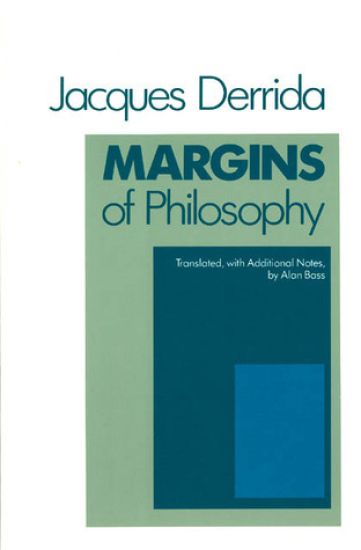
Margins of Philosophy

Margins of Philosophy

Jacques Derrida

University of Chicago Press
1984
nidottu
"In this densely imbricated volume Derrida pursues his devoted, relentless dismantling of the philosophical tradition, the tradition of Plato, Kant, Hegel, Nietzsche, Husserl, Heidegger—each dealt with in one or more of the essays. There are essays too on linguistics (Saussure, Benveniste, Austin) and on the nature of metaphor ("White Mythology"), the latter with important implications for literary theory. Derrida is fully in control of a dazzling stylistic register in this book—a source of true illumination for those prepared to follow his arduous path. Bass is a superb translator and annotator. His notes on the multilingual allusions and puns are a great service."—Alexander Gelley, Library Journal
Positions

Positions

Jacques Derrida

University of Chicago Press
1982
nidottu
Positions is a collection of three interviews with Jacques Derrida that illuminate and make more accessible the complex concepts and terms treated extensively in such works as Writing and Difference and Dissemination. Derrida takes positions on his detractors, his supporters, and the two major preoccupations of French intellectual life, Marxism and psychoanalysis. The interviews included in this volume offer a multifaceted view of Derrida. "Implications: Interview with Henri Ronse" contains a succinct statement of principles. "Seminology and Grammatology: Interview with Julia Kristeva" provides important clarifications of the role played by linguistics in Derrida's work. "Positions: Interview with Jean-Louis Houdebine and Guy Scarpetta" is a wide-ranging discussion that touches on many of the polemics that Derrida's work has provoked. Alan Bass, whose translation of Writing and Difference was highly praised for its clarity, accuracy, and readability, has provided extremely useful critical notes, full of vital information, including historical background.