Kirjojen hintavertailu. Mukana 12 390 323 kirjaa ja 12 kauppaa.

Kirjailija

Jacques Le Goff

Kirjat ja teokset yhdessä paikassa: 29 kirjaa, julkaisuja vuosilta 1982-2023, suosituimpien joukossa Rozhdenie Evropy. Vertaile teosten hintoja ja tarkista saatavuus suomalaisista kirjakaupoista.

29 kirjaa

Kirjojen julkaisuhaarukka 1982-2023.

My Quest for the Middle Ages

My Quest for the Middle Ages

Jacques Le Goff

Edinburgh University Press
2005
sidottu
In this fascinating book, which takes the form of a series of edited interviews with noted journalist Jean-Maurice de Montremy, Jacques Le Goff offers us a synthesis of his work. In the course of these conversations he explains how he came to write his books and how an overall view of the civilisation of the Middle Ages gradually emerged; a civilisation which shaped 'western' culture both for better and for worse. Each conversation touches upon one of the major themes of his work and the book as a whole presents the reader with a fascinating attempt to recover, define, and understand the Middle Ages.
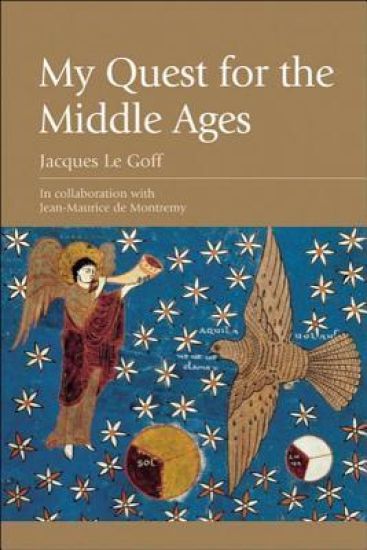
My Quest for the Middle Ages

My Quest for the Middle Ages

Jacques Le Goff

Edinburgh University Press
2005
nidottu
In this fascinating book, which takes the form of a series of edited interviews with noted journalist Jean-Maurice de Montremy, Jacques Le Goff offers us a synthesis of his work. In the course of these conversations he explains how he came to write his books and how an overall view of the civilisation of the Middle Ages gradually emerged; a civilisation which shaped 'western' culture both for better and for worse. Each conversation touches upon one of the major themes of his work and the book as a whole presents the reader with a fascinating attempt to recover, define, and understand the Middle Ages.

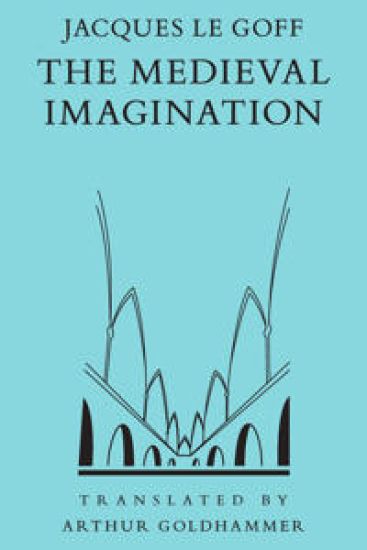
The Medieval Imagination

The Medieval Imagination

Jacques Le Goff; Arthur Goldhammer

University of Chicago Press
1992
nidottu
To write this history of the imagination, Le Goff has recreated the mental structures of medieval men and women by analyzing the images of man as microcosm and the Church as mystical body; the symbols of power such as flags and oriflammes; and the contradictory world of dreams, marvels, devils, and wild forests. "Le Goff is one of the most distinguished of the French medieval historians of his generation ...he has exercised immense influence."--Maurice Keen, New York Review of Books "The whole book turns on a fascinating blend of the brutally materialistic and the generously imaginative."--Tom Shippey, London Review of Books "The richness, imaginativeness and sheer learning of Le Goff's work ...demand to be experienced."--M. T. Clanchy, Times Literary Supplement
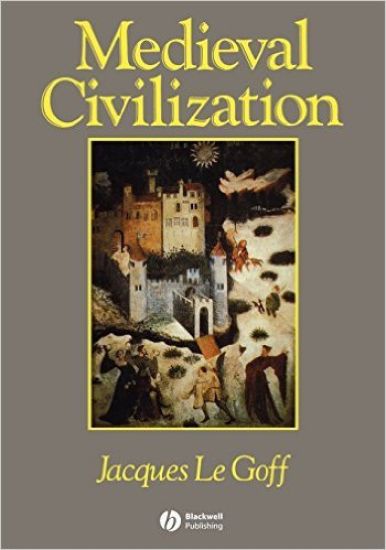
Medieval Civilization 400 - 1500

Medieval Civilization 400 - 1500

Jacques Le Goff

JOHN WILEY AND SONS LTD
1990
nidottu
This one thousand year history of the civilization of western Europe has already been recognized in France as a scholarly contribution of the highest order and as a popular classic. Jacques Le Goff has written a book which will not only be read by generations of students and historians, but which will delight and inform all those interested in the history of medieval Europe. Part one, Historical Evolution , is a narrative account of the entire period, from the barbarian settlement of Roman Europe in the fifth, sixth and seventh centuries to the war-torn crises of Christian Europe in the fourteenth and fifteenth centuries. Part two, Medieval Civilization , is analytical, concerned with the origins of early medieval ideas of culture and religion, the constraints of time and space in a pre-industrial world and the reconstruction of the lives and sensibilities of the people during this long period. Medieval Civilization combines the narrative and descriptive power characteristic of Anglo-Saxon scholarship with the sensitivity and insight of the French historical tradition.
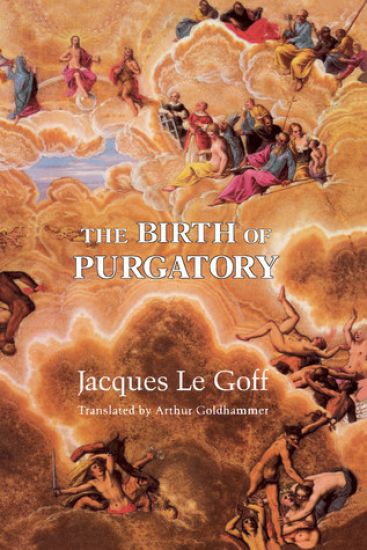
The Birth of Purgatory

The Birth of Purgatory

Jacques Le Goff

University of Chicago Press
1986
nidottu
Noting that the doctrine of Purgatory does not appear in the Latin theology of the West before the late twelfth century, the author identifies the profound social and intellectual changes which caused its widespread acceptance