Kirjojen hintavertailu. Mukana 12 595 353 kirjaa ja 12 kauppaa.

Kirjailija

Jacqui True

Kirjat ja teokset yhdessä paikassa: 12 kirjaa, julkaisuja vuosilta 2003-2025, suosituimpien joukossa Women, Peace, and Security in Afghanistan. Vertaile teosten hintoja ja tarkista saatavuus suomalaisista kirjakaupoista.

12 kirjaa

Kirjojen julkaisuhaarukka 2003-2025.

Women, Peace, and Security in Afghanistan

Women, Peace, and Security in Afghanistan

Farkhondeh Akbari; Jacqui True

De Gruyter
2025
sidottu
Women, Peace and Security in Afghanistan analyses the opportunities and limitations of the WPS agenda in the context of the world’s worst erasure of women’s rights. Afghan women have long resisted war, violence and political exclusion, yet their struggles remain largely overlooked in global peace and security debates. This book examines how Afghan women’s activism has reshaped the fight for rights and freedom. Through feminist pragmatist grounded normative theorising, Afghan women’s diverse voices, strategies, and lived realities are made visible across war, peace and politics. From international military intervention and peacemaking deals to current engagement and non-engagement with the Taliban, this book is an urgent call to recognise and support women’s agency in the face of oppression.
Hidden Wars

Hidden Wars

Sara E. Davies; Jacqui True

OXFORD UNIVERSITY PRESS INC
2024
nidottu
Sexual and gender-based violence (SGBV) has always been a part of warfare. In Asia, testimonies of egregious rape and sexual violence extend back to the Rape of Nanjing, to the experience of the Korean comfort women in World War II, and to forced marriages and sexual slavery during the Cambodian genocide. The past two decades have yielded crucial new insights about SGBV, but scholars and researchers still struggle to explain why and when this violence occurs. A major problem is that incidences of SGBV are vastly underreported; reliable data is especially scarce in Asia, where demographic and health surveys are infrequent and national reporting systems are underdeveloped relative to other parts of the globe. Asia also has some of the most protracted conflicts in the world but the complexity of subnational conflicts in Asia often masks the gendered dimensions of violence. In Hidden Wars, Sara E. Davies and Jacqui True examine the relationship between reports of SGBV and structural gender inequality in three conflict-affected societies in Asia--Burma, the Philippines, and Sri Lanka. Based on extensive field research and an original dataset on conflict-related SGBV, Davies and True show how reporting is significantly constrained by a variety of factors, including normalized gendered violence as well as political dynamics affecting local civil society, humanitarian, and international organizations. They address the real-world limitations of data collection and argue that these constraints reinforce a culture of silence and impunity that perpetuates SGBV and permits governments to abrogate their responsibility for this violence. Hidden Wars breaks new methodological ground in showing that what we know about SGBV can be understood fully only if the politicized context of reporting SGBV and data collection is taken into consideration.
Hidden Wars

Hidden Wars

Sara E. Davies; Jacqui True

OXFORD UNIVERSITY PRESS INC
2024
sidottu
Sexual and gender-based violence (SGBV) has always been a part of warfare. In Asia, testimonies of egregious rape and sexual violence extend back to the Rape of Nanjing, to the experience of the Korean comfort women in World War II, and to forced marriages and sexual slavery during the Cambodian genocide. The past two decades have yielded crucial new insights about SGBV, but scholars and researchers still struggle to explain why and when this violence occurs. A major problem is that incidences of SGBV are vastly underreported; reliable data is especially scarce in Asia, where demographic and health surveys are infrequent and national reporting systems are underdeveloped relative to other parts of the globe. Asia also has some of the most protracted conflicts in the world but the complexity of subnational conflicts in Asia often masks the gendered dimensions of violence. In Hidden Wars, Sara E. Davies and Jacqui True examine the relationship between reports of SGBV and structural gender inequality in three conflict-affected societies in Asia--Burma, the Philippines, and Sri Lanka. Based on extensive field research and an original dataset on conflict-related SGBV, Davies and True show how reporting is significantly constrained by a variety of factors, including normalized gendered violence as well as political dynamics affecting local civil society, humanitarian, and international organizations. They address the real-world limitations of data collection and argue that these constraints reinforce a culture of silence and impunity that perpetuates SGBV and permits governments to abrogate their responsibility for this violence. Hidden Wars breaks new methodological ground in showing that what we know about SGBV can be understood fully only if the politicized context of reporting SGBV and data collection is taken into consideration.
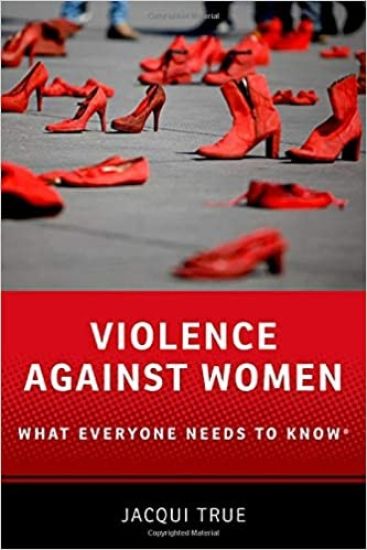
Violence against Women

Violence against Women

Jacqui True

Oxford University Press Inc
2021
sidottu
Violence against women and girls (VAWG) is a longstanding problem that has increasingly come to the forefront of international and national policy debates and news: from the US reauthorization of the Violence against Women Act and a United Nations declaration to end sexual violence in war, to coverage of gang rapes in India, cyberstalking and "revenge porn", honor killings, female genital mutilation, and international trafficking. Yet, while we frequently read or learn about particular experiences or incidents of VAWG, we are often unaware of the full picture. Jacqui True, an internationally renowned scholar of globalization and gender, provides an expansive frame for understanding VAWG in this book. Among the questions she addresses include: What are we talking about when we discuss VAWG? What kinds of violence does it encompass? Who does it affect most and why? What are the risk factors for victims and perpetrators? Does VAWG occur at the same level in all societies? Are there cultural explanations for it? What types of legal redress do victims have? How reliable are the statistics that we have? Are men and boys victims of gender-based violence? What is the role of the media in exacerbating VAWG? And, what sorts of policy and advocacy routes exist to end VAWG? This volume addresses the current state of knowledge and research on these questions. True surveys our best understanding of the causes and consequences of violence against women in the home, local community, workplace, public, and transnationally. In so doing, she brings together multidisciplinary perspectives on the problem of violence against women and girls, and sets out the most promising policy and advocacy frameworks to end this violence.
Gender, Globalization, and Postsocialism

Gender, Globalization, and Postsocialism

Jacqui True

Columbia University Press
2003
sidottu
How are changing gender relations shaping and being shaped by post-socialist marketization and liberalization? Do new forms of economic and cultural globalization open spaces for women's empowerment and feminist politics? The rapid social transformations experienced by the people of the Czech Republic in the wake of the collapse of communism in 1989 afford political scientist Jacqui True with an opportunity to answer these questions by examining political and gendered identities in flux. She argues that the privatization of a formerly state economy and the adoption of consumer-oriented market practices were shaped by ideas and attitudes about gender roles. Though finely tuned to the particular, local traditions that have defined the boundaries of globalization for Czech men and women, Gender, Globalization, and Postsocialism also offers a provocative general thesis about the inextricable linkages between political and economic changes and gender identities.
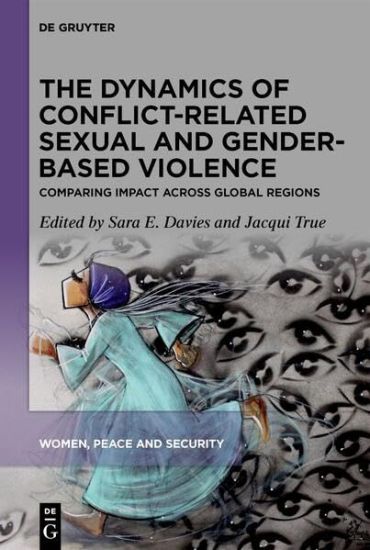
The Dynamics of Conflict-Related Sexual and Gender-Based Violence

The Dynamics of Conflict-Related Sexual and Gender-Based Violence

Sara E. Davies; Jacqui True; Yolanda Riveros Morales; Phyu Phyu Oo; Joana Osei-Tutu; Rachel Banfield

De Gruyter
2024
sidottu
Due to the international importance attached to the reporting of conflict-related sexual and gender-based violence (SGBV) over the last two decades, scholars have been able to examine the magnitude of the problem across different situations and types of conflict. But what changes to intensity and type of violence occur during different phrases of conflict intensity? Is reporting consistent across different conflicts and different regional experiences of conflict-related SGBV? This book examines different conflict situations in Africa, Latin America, the Middle East, and Asia over the past decade, 2010–2020. The chapters in the book use a mixed-method approach to explore the patterns of violence in situations of one-sided violence, state-led violence, non-state-led violence, low intensity violence, terrorism and fragility. They investigate the trajectory of international and prevention efforts, and the development of country-level responses to reports of sexual and gender-based violence in these various conflict situations. The book explains how and why these responses were mobilised in response to reports and considers the conditions for effective reporting in real time considering the patterns and the structural root causes of the violence.
Violence against Women

Violence against Women

Jacqui True

Oxford University Press Inc
2021
nidottu
Violence against women and girls (VAWG) is a longstanding problem that has increasingly come to the forefront of international and national policy debates and news: from the US reauthorization of the Violence against Women Act and a United Nations declaration to end sexual violence in war, to coverage of gang rapes in India, cyberstalking and "revenge porn", honor killings, female genital mutilation, and international trafficking. Yet, while we frequently read or learn about particular experiences or incidents of VAWG, we are often unaware of the full picture. Jacqui True, an internationally renowned scholar of globalization and gender, provides an expansive frame for understanding VAWG in this book. Among the questions she addresses include: What are we talking about when we discuss VAWG? What kinds of violence does it encompass? Who does it affect most and why? What are the risk factors for victims and perpetrators? Does VAWG occur at the same level in all societies? Are there cultural explanations for it? What types of legal redress do victims have? How reliable are the statistics that we have? Are men and boys victims of gender-based violence? What is the role of the media in exacerbating VAWG? And, what sorts of policy and advocacy routes exist to end VAWG? This volume addresses the current state of knowledge and research on these questions. True surveys our best understanding of the causes and consequences of violence against women in the home, local community, workplace, public, and transnationally. In so doing, she brings together multidisciplinary perspectives on the problem of violence against women and girls, and sets out the most promising policy and advocacy frameworks to end this violence.
Doing Feminist Research in Political and Social Science

Doing Feminist Research in Political and Social Science

Brooke A. Ackerly; Jacqui True

Red Globe Press
2020
sidottu
Guiding students step-by-step through the research process while simultaneously introducing a range of debates, challenges and tools that feminist scholars use, the second edition of this popular textbook provides a vital resource to those students and researchers approaching their studies from a feminist perspective. Interdisciplinary in its approach, the book covers everything from research design, analysis and presentation, to formulating research questions, data collection and publishing research. Offering the most comprehensive and practical guide to the subject available, the text is now also fully updated to take account of recent developments in the field, including participatory action research, new technologies and methods for working with big data and social media.Doing Feminist Research is required reading for undergraduate and postgraduate courses taking a feminist approach to social science methodology, research design and methods. It is the ideal guide for all students and scholars carrying out feminist research, whether in the fields of international relations, political science, interdisciplinary international and global studies, development studies or gender and women’s studies.New to this Edition:- New discussions of contemporary research methods, including participatory action research, survey research and technology, and methods for big data and social media.- Updated to reflect recent developments in feminist and gender theory, with references to the latest research examples and new boxes considering recent shifts in the social and political sciences.- Brand new boxed examples throughout covering topics including collaborations, femicide, negotiating changing research environments and the pros and cons of feminist participatory action research.- The text is now written in the first (authors) and second (readers) person making the text clearer, more consistent and inclusive from the reader point of view.Accompanying online resources for this title can be found at bloomsburyonlineresources.com/doing-feminist-research-in-political-and-social-science. These resources are designed to support teaching and learning when using this textbook and are available at no extra cost.
Doing Feminist Research in Political and Social Science

Doing Feminist Research in Political and Social Science

Brooke A. Ackerly; Jacqui True

Red Globe Press
2019
nidottu
Guiding students step-by-step through the research process while simultaneously introducing a range of debates, challenges and tools that feminist scholars use, the second edition of this popular textbook provides a vital resource to those students and researchers approaching their studies from a feminist perspective. Interdisciplinary in its approach, the book covers everything from research design, analysis and presentation, to formulating research questions, data collection and publishing research. Offering the most comprehensive and practical guide to the subject available, the text is now also fully updated to take account of recent developments in the field, including participatory action research, new technologies and methods for working with big data and social media.Doing Feminist Research is required reading for undergraduate and postgraduate courses taking a feminist approach to social science methodology, research design and methods. It is the ideal guide for all students and scholars carrying out feminist research, whether in the fields of international relations, political science, interdisciplinary international and global studies, development studies or gender and women’s studies.New to this Edition:- New discussions of contemporary research methods, including participatory action research, survey research and technology, and methods for big data and social media.- Updated to reflect recent developments in feminist and gender theory, with references to the latest research examples and new boxes considering recent shifts in the social and political sciences.- Brand new boxed examples throughout covering topics including collaborations, femicide, negotiating changing research environments and the pros and cons of feminist participatory action research.- The text is now written in the first (authors) and second (readers) person making the text clearer, more consistent and inclusive from the reader point of view.
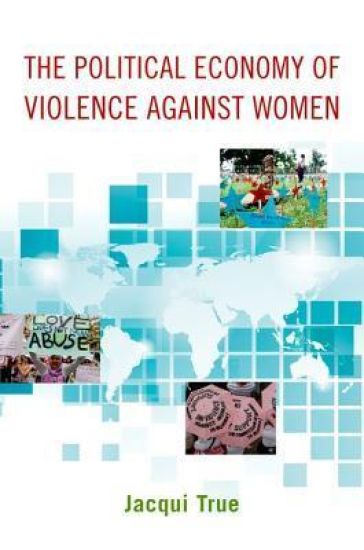
The Political Economy of Violence against Women

The Political Economy of Violence against Women

Jacqui True

Oxford University Press Inc
2012
sidottu
Violence against women is a major problem in all countries, affecting women in every socio-economic group and at every life stage. Nowhere in the world do women share equal social and economic rights with men or the same access as men to productive resources. Economic globalization and development are creating new challenges for women's rights as well as some new opportunities for advancing women's economic independence and gender equality. Yet, when women have access to productive resources and they enjoy social and economic rights they are less vulnerable to violence across all societies. The Political Economy of Violence against Women develops a feminist political economy approach to identify the linkages between different forms of violence against women and macro structural processes in strategic local and global sites - from the household to the transnational level. In doing so, it seeks to account for the globally increasing scale and brutality of violence against women. These sites include economic restructuring and men's reaction to the loss of secure employment, the abusive exploitation associated with the transnational migration of women workers, the growth of a sex trade around the creation of free trade zones, the spike in violence against women in financial liberalization and crises, the scourge of sexual violence in armed conflict and post-crisis peacebuilding or reconstruction efforts and the deleterious gendered impacts of natural disasters. Examples are drawn from South Africa, Kenya, the Democratic Republic of Congo, China, Ciudad Juarez in Mexico, the Pacific Islands, Argentina, Eastern Europe, Central Asia, Haiti, Sri Lanka, Indonesia, New Zealand, Ireland, the United Kingdom, the United States and Iceland.
The Political Economy of Violence against Women

The Political Economy of Violence against Women

Jacqui True

Oxford University Press Inc
2012
nidottu
Violence against women is a major problem in all countries, affecting women in every socio-economic group and at every life stage. Nowhere in the world do women share equal social and economic rights with men or the same access as men to productive resources. Economic globalization and development are creating new challenges for women's rights as well as some new opportunities for advancing women's economic independence and gender equality. Yet, when women have access to productive resources and they enjoy social and economic rights they are less vulnerable to violence across all societies. The Political Economy of Violence against Women develops a feminist political economy approach to identify the linkages between different forms of violence against women and macro structural processes in strategic local and global sites - from the household to the transnational level. In doing so, it seeks to account for the globally increasing scale and brutality of violence against women. These sites include economic restructuring and men's reaction to the loss of secure employment, the abusive exploitation associated with the transnational migration of women workers, the growth of a sex trade around the creation of free trade zones, the spike in violence against women in financial liberalization and crises, the scourge of sexual violence in armed conflict and post-crisis peacebuilding or reconstruction efforts and the deleterious gendered impacts of natural disasters. Examples are drawn from South Africa, Kenya, the Democratic Republic of Congo, China, Ciudad Juarez in Mexico, the Pacific Islands, Argentina, Eastern Europe, Central Asia, Haiti, Sri Lanka, Indonesia, New Zealand, Ireland, the United Kingdom, the United States and Iceland.
Gender, Globalization, and Postsocialism

Gender, Globalization, and Postsocialism

Jacqui True

Columbia University Press
2003
pokkari
How are changing gender relations shaping and being shaped by post-socialist marketization and liberalization? Do new forms of economic and cultural globalization open spaces for women's empowerment and feminist politics? The rapid social transformations experienced by the people of the Czech Republic in the wake of the collapse of communism in 1989 afford political scientist Jacqui True with an opportunity to answer these questions by examining political and gendered identities in flux. She argues that the privatization of a formerly state economy and the adoption of consumer-oriented market practices were shaped by ideas and attitudes about gender roles. Though finely tuned to the particular, local traditions that have defined the boundaries of globalization for Czech men and women, Gender, Globalization, and Postsocialism also offers a provocative general thesis about the inextricable linkages between political and economic changes and gender identities.