Kirjojen hintavertailu. Mukana 12 595 353 kirjaa ja 12 kauppaa.

Kirjailija

Jae Wook Chung

Kirjat ja teokset yhdessä paikassa: 2 kirjaa, julkaisuja vuosilta 2016-2018, suosituimpien joukossa Pathogen removal using saturated sand columns supplemented with hydrochar. Vertaile teosten hintoja ja tarkista saatavuus suomalaisista kirjakaupoista.

2 kirjaa

Kirjojen julkaisuhaarukka 2016-2018.

Pathogen removal using saturated sand columns supplemented with hydrochar
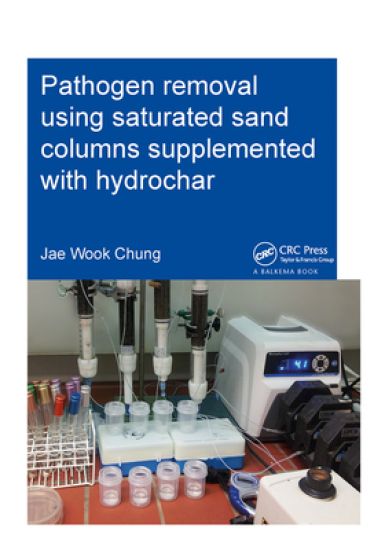
Lack of clean water is one of the most important public health challenges in less developed communities. Due to insufficient financial and technical resources in places in need, development of low-cost water treatment technologies can play a key role in sustainable water provision. In this context, this PhD research investigated the removal of pathogenic microorganisms in simple sand filtration set-ups supplemented with low-cost adsorbents (hydrochar) produced via hydrothermal carbonization of biowastes. Two types of hydrochar, derived from hydrothermal carbonization of agricultural residue of maize and stabilized sewage sludge from wastewater treatment plant, were evaluated as adsorbents for Escherichia coli removal in saturated sand columns. The removal efficiency of sand columns amended with these adsorbents improved from 20-70% to ~90 % by alkali activation carried out in room temperatures using 1 M potassium hydroxide solution. This PhD research also demonstrates the removal of human pathogenic viruses in sand columns supplemented with hydrochar adsorbents derived from stabilized sewage sludge and fresh swine waste. In order to enumerate human pathogenic rotavirus and adenovirus in virus removal experiments, low-cost polymerase chain reaction assays were developed under this PhD study. These assays show a competent performance in analyzing virus concentrations in both laboratory and environmental samples. Amendment with either hydrochar (without alkali activation) in sand columns was able to remove more than 99% of both viruses.
Pathogen removal using saturated sand columns supplemented with hydrochar
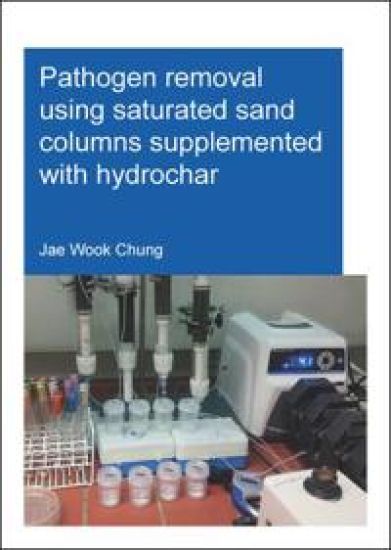
Lack of clean water is one of the most important public health challenges in less developed communities. Due to insufficient financial and technical resources in places in need, development of low-cost water treatment technologies can play a key role in sustainable water provision. In this context, this PhD research investigated the removal of pathogenic microorganisms in simple sand filtration set-ups supplemented with low-cost adsorbents (hydrochar) produced via hydrothermal carbonization of biowastes. Two types of hydrochar, derived from hydrothermal carbonization of agricultural residue of maize and stabilized sewage sludge from wastewater treatment plant, were evaluated as adsorbents for Escherichia coli removal in saturated sand columns. The removal efficiency of sand columns amended with these adsorbents improved from 20-70% to ~90 % by alkali activation carried out in room temperatures using 1 M potassium hydroxide solution. This PhD research also demonstrates the removal of human pathogenic viruses in sand columns supplemented with hydrochar adsorbents derived from stabilized sewage sludge and fresh swine waste. In order to enumerate human pathogenic rotavirus and adenovirus in virus removal experiments, low-cost polymerase chain reaction assays were developed under this PhD study. These assays show a competent performance in analyzing virus concentrations in both laboratory and environmental samples. Amendment with either hydrochar (without alkali activation) in sand columns was able to remove more than 99% of both viruses.