

Kirjailija
Jaime Harker
Kirjat ja teokset yhdessä paikassa: 5 kirjaa, julkaisuja vuosilta 2007-2027, suosituimpien joukossa Sapphfic. Vertaile teosten hintoja ja tarkista saatavuus suomalaisista kirjakaupoista.
5 kirjaa
Kirjojen julkaisuhaarukka 2007-2027.

Clenched Fists, Burning Crosses
Cris South; Jaime Harker
THE UNIVERSITY OF NORTH CAROLINA PRESS
2025
pokkari
Inspired by the horrors of the Greensboro Massacre, Cris South penned Clenched Fists, Burning Crosses as part of the noted Feminary collective. The book, a thinly fictionalized representation of her own life and activism, centers on Jessie, a working-class printer whose antiracist and anti-Klan activism come to the attention of Klan members, with harrowing results. Jessie's story mirrors that of the author's and offers a vision of what multiple intersectional coalitions of oppressed people look like: lesbian feminists, Black activists, and, perhaps most memorably, a woman who confronts her abuser swinging an axe, Lizzie Borden style, to reclaim her agency.Although Jessie's suffering —and the suffering of the women around her— is stark in its realism, the book ends with a celebration of both resistance and love. This is the novel's distinctive contribution: it refuses abjection and claims the healing power of political resistance and coalition.

Clenched Fists, Burning Crosses
Cris South; Jaime Harker
THE UNIVERSITY OF NORTH CAROLINA PRESS
2025
sidottu
Inspired by the horrors of the Greensboro Massacre, Cris South penned Clenched Fists, Burning Crosses as part of the noted Feminary collective. The book, a thinly fictionalized representation of her own life and activism, centers on Jessie, a working-class printer whose antiracist and anti-Klan activism come to the attention of Klan members, with harrowing results. Jessie's story mirrors that of the author's and offers a vision of what multiple intersectional coalitions of oppressed people look like: lesbian feminists, Black activists, and, perhaps most memorably, a woman who confronts her abuser swinging an axe, Lizzie Borden style, to reclaim her agency.Although Jessie 's suffering —and the suffering of the women around her— is stark in its realism, the book ends with a celebration of both resistance and love. This is the novel's distinctive contribution: it refuses abjection and claims the healing power of political resistance and coalition.
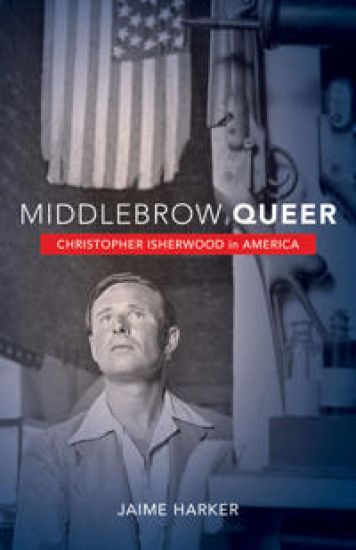
How could one write about gay life for the mainstream public in Cold War America? Many midcentury gay American writers, hampered by external and internal censors, never managed to do it. But Christopher Isherwood did, and what makes his accomplishment more remarkable is that while he was negotiating his identity as a gay writer, he was reinventing himself as an American one. Jaime Harker shows that Isherwood refashioned himself as an American writer following his emigration from England by immersing himself in the gay reading, writing, and publishing communities in Cold War America. Drawing extensively on Isherwood’s archives, including manuscript drafts and unpublished correspondence with readers, publishers, and other writers, Middlebrow Queer demonstrates how Isherwood mainstreamed gay content for heterosexual readers in his postwar novels while also covertly writing for gay audiences and encouraging a symbiotic relationship between writer and reader. The result-in such novels as The World in the Evening, Down There on a Visit, A Single Man, and A Meeting by the River-was a complex, layered form of writing that Harker calls “middlebrow camp,” a mode that extended the boundaries of both gay and middlebrow fiction.Weaving together biography, history, and literary criticism, Middlebrow Queer traces the continuous evolution of Isherwood’s simultaneously queer and American postwar authorial identity. In doing so, the book illuminates many aspects of Cold War America’s gay print cultures, from gay protest novels to “out” pulp fiction.
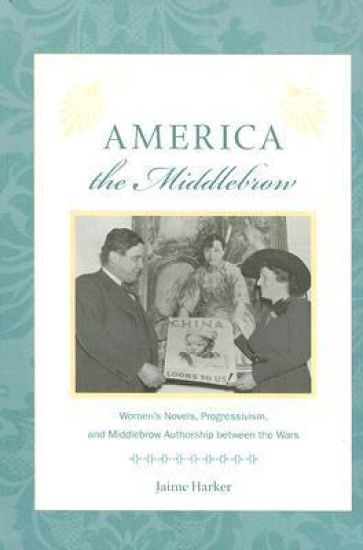
Between the two world wars, American publishing entered a ""golden age"" characterized by an explosion of new publishers, authors, audiences, distribution strategies, and marketing techniques. The period was distinguished by a diverse literary culture, ranging from modern cultural rebels to working-class laborers, political radicals, and progressive housewives. In ""America the Middlebrow"", Jaime Harker focuses on one neglected mode of authorship in the interwar period - women's middlebrow authorship and its intersection with progressive politics. With the rise of middlebrow institutions and readers came the need for the creation of the new category of authorship. Harker contends that these new writers appropriated and adapted a larger tradition of women's activism and literary activity to their own needs and practices. Like sentimental women writers and readers of the 1850s, these authors saw fiction as a means of reforming and transforming society. Like their Progressive Era forebears, they replaced religious icons with nationalistic images of progress and pragmatic ideology. In the interwar period, this mode of authorship was informed by Deweyan pragmatist aesthetics, which insisted that art provided vicarious experience that could help create humane, democratic societies. Drawing on letters from publishers, editors, agents, and authors, ""America the Middlebrow"" traces four key moments in this distinctive culture of letters through the careers of Dorothy Canfield, Jessie Fauset, Pearl Buck, and Josephine Herbst. Both an exploration of a virtually invisible culture of letters and a challenge to monolithic paradigms of modernism, the book offers fresh insight into the ongoing tradition of political domestic fiction that flourished between the wars.