Kirjojen hintavertailu. Mukana 12 546 882 kirjaa ja 12 kauppaa.

Kirjailija

Jaleh Mansoor

Kirjat ja teokset yhdessä paikassa: 6 kirjaa, julkaisuja vuosilta 2006-2025, suosituimpien joukossa Dana Claxton. Vertaile teosten hintoja ja tarkista saatavuus suomalaisista kirjakaupoista.

6 kirjaa

Kirjojen julkaisuhaarukka 2006-2025.

Dana Claxton

Dana Claxton

Grant Arnold; Monika Kin Gagnon; Olivia Michiko Gagnon; Jaleh Mansoor

Figure 1 Publishing
2019
sidottu
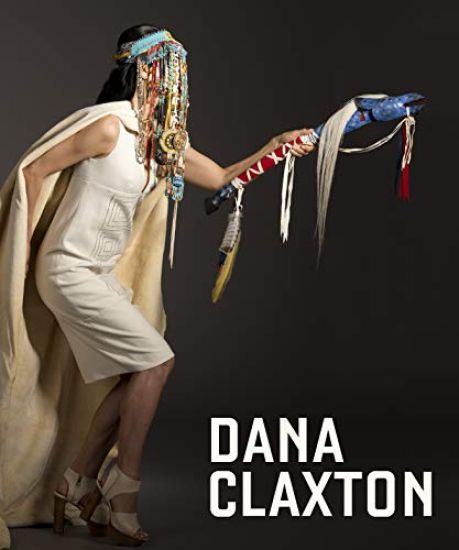
Known for her expansive multidisciplinary approach to art making Vancouver-based Dana Claxton, who is Hunkpapa Lakota (Sioux), has investigated notions of Indigenous identity, beauty, gender and the body, as well as broader social and political issues through a practice which encompasses photography, film, video and performance. Rooted in contemporary art strategies, her practice critiques the representations of Indigenous people that circulate in art, literature and popular culture in general. In doing so, Claxton regularly combines Lakota traditions with “Western” influences, using a powerful and emotive “mix, meld and mash” approach to address the oppressive legacies of colonialism and to articulate Indigenous world views, histories and spirituality. This timely catalogue will be the first monograph to examine the full breadth and scope of Claxton’s practice. It will be extensively illustrated and will include essays by Claxton’s colleague Jaleh Mansoor, Associate Professor in the Department of Art History, Visual Art & Theory at the University of British Columbia; Monika Kin Gagnon, Professor in the Communications Department at Concordia University, who has followed Claxton’s work for 25 years; Olivia Michiko Gagnon, a New York–based scholar and doctoral student in Performance Studies; and Grant Arnold, Audain Curator of British Columbia Art at the Vancouver Art Gallery.
Universal Prostitution and Modernist Abstraction

Universal Prostitution and Modernist Abstraction

Jaleh Mansoor

DUKE UNIVERSITY PRESS
2025
pokkari
In Universal Prostitution and Modernist Abstraction, Jaleh Mansoor provides a counternarrative of modernism and abstraction and a reexamination of Marxist aesthetics. Mansoor draws on Marx’s concept of prostitution-a conceptual device through which Marx allegorized modern labor-to think about the confluences of generalized and gendered labor in modern art. Analyzing works ranging from Édouard Manet’s Olympia and Georges Seurat’s The Models to contemporary work by Hito Steyerl and Hannah Black, she shows how avant-garde artists can detect changing modes of production and capitalist and biopolitical processes of abstraction that assign identities to subjects in the interest of value’s impersonal circulation. She demonstrates that art and abstraction resist modes of production and subjugation at the level of process and form rather than through referential representation. By studying gendered and generalized labor, abstraction, automation, and the worker, Mansoor shifts focus away from ideology, superstructure, and culture toward the ways art indexes crisis and transformation in the political economic base. Ultimately, she traces the outlines of a counterpraxis to capital while demonstrating how artworks give us a way to see through the abstractions of everyday life.
Universal Prostitution and Modernist Abstraction

Universal Prostitution and Modernist Abstraction

Jaleh Mansoor

DUKE UNIVERSITY PRESS
2025
sidottu
In Universal Prostitution and Modernist Abstraction, Jaleh Mansoor provides a counternarrative of modernism and abstraction and a reexamination of Marxist aesthetics. Mansoor draws on Marx’s concept of prostitution-a conceptual device through which Marx allegorized modern labor-to think about the confluences of generalized and gendered labor in modern art. Analyzing works ranging from Édouard Manet’s Olympia and Georges Seurat’s The Models to contemporary work by Hito Steyerl and Hannah Black, she shows how avant-garde artists can detect changing modes of production and capitalist and biopolitical processes of abstraction that assign identities to subjects in the interest of value’s impersonal circulation. She demonstrates that art and abstraction resist modes of production and subjugation at the level of process and form rather than through referential representation. By studying gendered and generalized labor, abstraction, automation, and the worker, Mansoor shifts focus away from ideology, superstructure, and culture toward the ways art indexes crisis and transformation in the political economic base. Ultimately, she traces the outlines of a counterpraxis to capital while demonstrating how artworks give us a way to see through the abstractions of everyday life.
Marshall Plan Modernism

Marshall Plan Modernism

Jaleh Mansoor

Duke University Press
2016
pokkari
Focusing on artwork by Lucio Fontana, Alberto Burri, and Piero Manzoni, Jaleh Mansoor demonstrates and reveals how abstract painting, especially the monochrome, broke with fascist-associated futurism and functioned as an index of social transition in postwar Italy. Mansoor refuses to read the singularly striking formal and procedural violence of Fontana's slit canvasses, Burri's burnt and exploded plastics, and Manzoni's "achromes" as metaphors of traumatic memories of World War II. Rather, she locates the motivation for this violence in the history of the medium of painting and in the economic history of postwar Italy. Reconfiguring the relationship between politics and aesthetics, Mansoor illuminates how the monochrome's reemergence reflected Fontana, Burri, and Manzoni's aesthetic and political critique of the Marshall Plan's economic warfare and growing American hegemony. It also anticipated the struggles in Italy's factories, classrooms, and streets that gave rise to Autonomia in the 1960s. Marshall Plan Modernism refigures our understanding of modernist painting as a project about labor and the geopolitics of postwar reconstruction during the Italian Miracle.
Marshall Plan Modernism

Marshall Plan Modernism

Jaleh Mansoor

Duke University Press
2016
sidottu
Focusing on artwork by Lucio Fontana, Alberto Burri, and Piero Manzoni, Jaleh Mansoor demonstrates and reveals how abstract painting, especially the monochrome, broke with fascist-associated futurism and functioned as an index of social transition in postwar Italy. Mansoor refuses to read the singularly striking formal and procedural violence of Fontana's slit canvasses, Burri's burnt and exploded plastics, and Manzoni's "achromes" as metaphors of traumatic memories of World War II. Rather, she locates the motivation for this violence in the history of the medium of painting and in the economic history of postwar Italy. Reconfiguring the relationship between politics and aesthetics, Mansoor illuminates how the monochrome's reemergence reflected Fontana, Burri, and Manzoni's aesthetic and political critique of the Marshall Plan's economic warfare and growing American hegemony. It also anticipated the struggles in Italy's factories, classrooms, and streets that gave rise to Autonomia in the 1960s. Marshall Plan Modernism refigures our understanding of modernist painting as a project about labor and the geopolitics of postwar reconstruction during the Italian Miracle.