Kirjojen hintavertailu. Mukana 12 595 353 kirjaa ja 12 kauppaa.

Kirjailija

James A. Baker

Kirjat ja teokset yhdessä paikassa: 10 kirjaa, julkaisuja vuosilta 2004-2017, suosituimpien joukossa Enduring Legacy. Vertaile teosten hintoja ja tarkista saatavuus suomalaisista kirjakaupoista.

Mukana myös kirjoitusasut: James A Baker

10 kirjaa

Kirjojen julkaisuhaarukka 2004-2017.

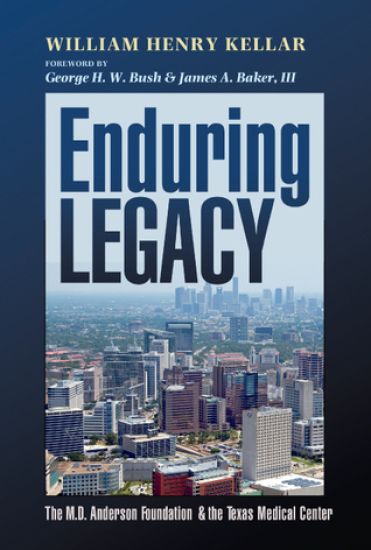
Enduring Legacy

Enduring Legacy

William Henry Kellar; George H. W. Bush; James A. Baker

Texas A M University Press
2014
sidottu
At the heart of Houston stands the Texas Medical Center. This dense complex of educational, clinical, and hospital facilities offers state-of-the-art patient care, basic science, and applied research in more than fifty medicine-related institutions. Three medical schools, four schools of nursing, and schools of dentistry, public health, and pharmacology occupy the thousand-acre campus. But none of this would exist if not for the generosity and vision of Monroe Dunaway Anderson, who, in 1936, established the foundation that bears his name. The M. D. Anderson Foundation ultimately became the driving force behind creating and shaping this leading-edge medical complex into what it is today. Enduring Legacy: The M. D. Anderson Foundation and the Texas Medical Center provides a unique perspective on the indispensable role the foundation played in the creation of the Texas Medical Center. It also offers a case study of how public and private institutions worked together to create this veritable city of health that has since become the largest medical complex in human history. Historian William Henry Kellar caps off a decade of research on institutions and characters associated with the Texas Medical Center. He draws on oral histories, extensive archival work, and a growing secondary literature to provide an absorbing account of this leading institution of modern medicine and the philanthropy that made it possible.

Life Behind A Poet: Dedications

Life Behind A Poet: Dedications

James A. Baker

Createspace Independent Publishing Platform
2017
nidottu
A collection of poems dedicated to very special people in my life. Some have been called home by our Lord, and Savior. Others are the collection of poems from poetry challenges either by photo or title request.
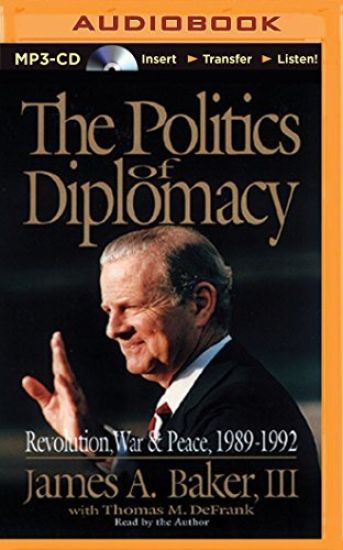
The Politics of Diplomacy: Revolution, War & Peace, 1989-1992
Few men have played such a critical role in the most pivotal events of the second half of the twentieth century. In this audio presentation - in his own words and his own voice - James A. Baker, III uses his unique perspective to take us inside those events and the personalities involved in them: the collapse of Communism, the Berlin Wall, and the Soviet Union itself; the reunification of Germany; the remarkable negotiations behind the coalition-building of the Gulf War; and the even more remarkable talks that led Israelis and Arabs to the same conference table for the first time in decades.But as the title indicates, this is also the story of the rough-and-tumble politics of diplomacy and the personalities who have shaped the world at the end of the century: Gorbachev, Yeltsin, Thatcher, Mitterrand, Kohl, Shamir, Mubarak, Assad, Kings Fahd and Hussein, and Baker's friend, George Herbert Walker Bush, the 41st President of the United States.
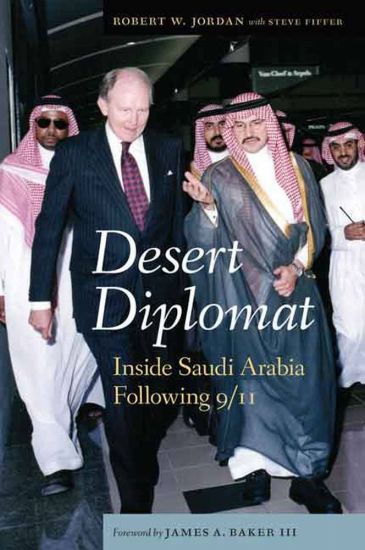
Desert Diplomat

Desert Diplomat

Robert W. Jordan; Steve Fiffer; James A. Baker

Potomac Books Inc
2015
sidottu
In the spring of 2001, George W. Bush selected Dallas attorney Robert W. Jordan as the ambassador to Saudi Arabia. Jordan's nomination sped through Congress in the wake of the terrorist attacks on 9/11, and he was at his post by early October, though with no prior diplomatic experience, as Saudi Arabia mandates that the U.S. Ambassador be a political appointee with the ear of the president. Hence Jordan had to learn on the job how to run an embassy, deal with a foreign culture, and protect U.S. interests, all following the most significant terrorist attacks on the United States in history.From 2001 through 2003, Jordan worked closely with Crown Prince Abdullah and other Saudi leaders on sensitive issues of terrorism and human rights, all the while trying to maintain a positive relationship to ensure their cooperation with the war in Afghanistan and the invasion of Iraq. At the same time he worked with top officials in Washington, including President Bush, Dick Cheney, Colin Powell, Donald Rumsfeld, Condoleezza Rice, George Tenet, and Tommy Franks. Desert Diplomat discusses these relationships as well as the historic decisions of Jordan's tenure and provides a candid and thoughtful assessment of the sometimes distressing dysfunction in the conduct of American foreign policy, warfare, and intelligence gathering. Still involved in the Middle East, Jordan also offers important insights into the political, economic, and social changes occurring in this critical region, particularly Saudi Arabia.
Ben Love

Ben Love

Ben F. Love; James A. Baker

Texas A M University Press
2008
nidottu
In a city known for its powerful business leaders, Ben Love towered as one of the most influential. Under his competent management as CEO of Texas Commerce Bancshares in the 1980s, TCB was the only ""Big Five"" Texas bank to survive that decade's collapse of the Texas banking industry. Love's story provides an insightful perspective on the evolution of Texas banks after World War II, their decline, and their subsequent recovery. It also offers a glimpse into the kind of character that creates men of power.
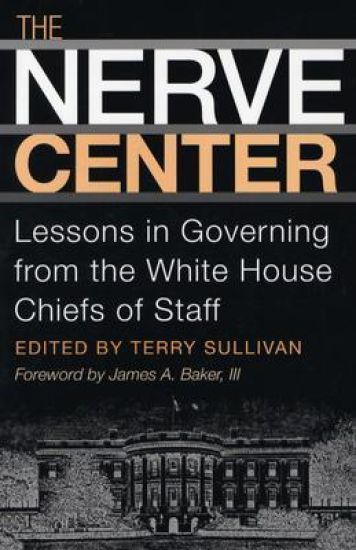
The Nerve Center

The Nerve Center

James A. Baker

Texas A M University Press
2004
sidottu
In what James A. Baker III has called the ""worst job in Washington,"" the chief of staff orchestrates the president's conduct of the U.S. government. He holds the unique responsibility to magnify the time, reach, and voice of the president of the United States. ""You need a filter, a person that you have total confidence in who works so closely with you that in effect he is almost an alter ego,"" Gerald Ford has said. In this volume, resulting from the Washington Forum on the Role of the White House Chief of Staff, held in 2000 in Washington, D.C., twelve of the fifteen men who have held the office of chief of staff discuss among themselves and with a select group of participants the challenges, achievements, and failures of their time in that role. Their purpose is to find lessons in governing that will help future chiefs of staff prepare to assume the office and organize the staffs they will lead. These pages of frank and uncensored discussion present in question-and-answer format the voices of the chiefs of staff as they discuss the transition from campaign to governance, the reelection drive every four years, and ultimately, the closing out of an administration. The group also addresses the place of the White House chief of staff within the larger governing community of the Executive Branch, Congress, interest groups, and the press. The American White House sits at the nerve center of world history, and at the core of this nerve center, a massive bureaucratic operation exists to process the flow of information and policy. Because the White House chief of staff manages that operation, to ignore its requirements risks presidential fate itself and indeed, the fate of the republic.