Kirjojen hintavertailu. Mukana 12 390 323 kirjaa ja 12 kauppaa.

Kirjailija

James A. Bellanca

Kirjat ja teokset yhdessä paikassa: 15 kirjaa, julkaisuja vuosilta 1995-2025, suosituimpien joukossa Shifting to Digital: A Guide to Engaging, Teaching, and Assessing Remote Learners (Create Synchronous Instruction for Student Engagement and Enrichmen. Vertaile teosten hintoja ja tarkista saatavuus suomalaisista kirjakaupoista.

15 kirjaa

Kirjojen julkaisuhaarukka 1995-2025.

Who Says I Can't?: A Four-Year Plan to Erase the Reading Gap and Achieve Proficiency by Fourth Grade (Eliminate the Reading Gap for Marginalized Child
Eliminating the reading achievement gap is essential for long-term school success. In Who Says I Can't?, the authors explain how to close the third-grade reading gap for marginalized students. They supply educators with research, strategies, structure, and support necessary to revise current practices so that all children, regardless of ethnic, racial, or socioeconomic deterrents, will read for meaning before grade 4. K-4 educators can use this book to: Learn current research on the third-grade reading gap and why it matters Understand the importance of teaching phonics and phonemics in the early grades Explore how to expand vocabulary for students below target levels Guide students on forming meaning in cognitive and metacognitive ways Provide reading material with diverse characters to encourage investment and belonging Contents: Foreword Introduction: A Necessary Pathway Chapter 1: Engage With the Learning-to-Read Challenge Chapter 2: Acknowledge That Yes, It Is About the Brain Chapter 3: Make Meaning Visible Chapter 4: Use the Reciprocal Teacher's Playbook Chapter 5: Hear It First With Phonemics and Ensure Mastery Chapter 6: Make the Phonics Connection Chapter 7: Use Patterns to Achieve Vocabulary Fluency Chapter 8: Learn to Read for Meaning Chapter 9: Prioritize Equity Epilogue: A Dream Revisited Appendix: Lesson Design Templates and Further Reading References and Resources Index
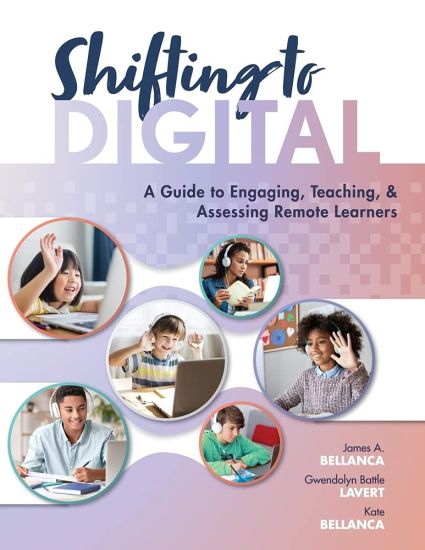
Shifting to Digital: A Guide to Engaging, Teaching, and Assessing Remote Learners (Create Synchronous Instruction for Student Engagement and Enrichmen
Rely on Shifting to Digital to deliver clear and concise answers to all of your remote teaching questions. This comprehensive guide provides specific strategies for planning high-engagement instruction, handling technology, assessing collaboration and assignments, and more. You'll also gain access to a helpful list of digital tools, along with online-specific lessons and projects for various subjects. Learn how to engage and manage multiple students online at one time. Create effective lesson plans that incorporate synchronous and asynchronous instruction based on best-practice cooperative learning and project-based learning. Gauge students' executive function and increase their self-direction--a crucial part of online learning. Understand how to best teach and support English learners and students with special needs. Plan communications for students, parents, and guardians that address technology procedures, expectations, and privacy. Contents: Introduction Chapter 1: Technology Chapter 2: Instructional Planning Chapter 3: Document Handling Chapter 4: Mindful Engagement Chapter 5: Positive Interaction and Social-Emotional Learning Chapter 6: Feedback Chapter 7: Assessment Chapter 8: Students With Special Needs Chapter 9: Communication With Parents and Guardians Epilogue Appendix: Distance Learning Lesson and Project Designs References and Resources Index
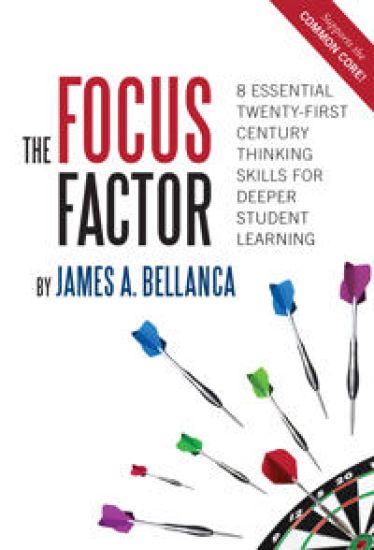
The Focus Factor

The Focus Factor

James A. Bellanca

Teachers' College Press
2013
nidottu
Featuring practical ''how to'' classroom examples, this teacher-friendly introduction examines the importance of an essential set of thinking skills that supports the Common Core State Standards and future success for students in 21st-century life, school, and work. Starting with cognitive psychologist Reuven Feuerstein's pioneering Theory of Mediated Learning, the author provides a rationale for teaching skills that focuses on deeper learning and connects to CCSSs. These include distinguishing what is important from what is not, thinking critically and creatively, sorting and searching information, connecting ideas, and problem solving. Each chapter introduces the what, the why, and the how to do it for explicit, intentional incorporation of specific content-crossing competencies. The text is designed to make it easy for teachers to integrate the development of important cognitive functions into their daily lessons.
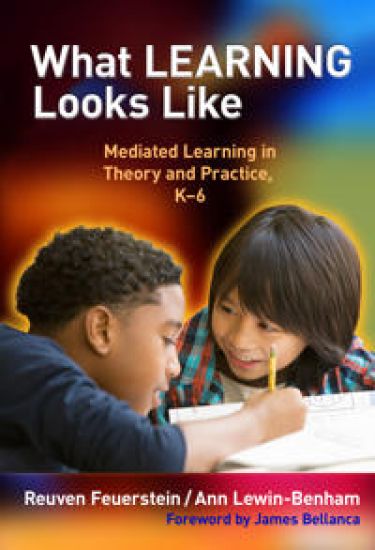
What Learning Looks Like

What Learning Looks Like

Reuven Feuerstein; Ann Lewin-Benham; James A. Bellanca

Teachers' College Press
2012
nidottu
Brings to life the theory of mediated learning. Through numerous examples and scenarios from classrooms and museums, they show how mediated learning helps children to become more effective learners. Readers learn the steps in the process, including analysing the child’s problem, teaching the child to focus on the difficulty, and using the techniques of mediated learning to enable the child to overcome the learning challenge.
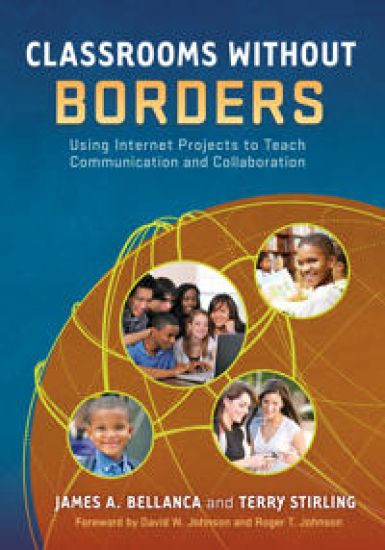
Classrooms Without Borders

Classrooms Without Borders

James A. Bellanca; Terry Stirling

Teachers' College Press
2011
nidottu
This practical resource shows educators how to use the Internet to help students communicate electronically, reaching beyond the borders of traditional classroom walls. The authors—a lifelong professional developer and a dedicated facilitator of improved K–12 education through her work with graduate students in school leadership—provide the how-to for teaching essential foundation elements, including teamwork, Internet research, evaluation of information sources, cross-cultural communication, and thinking skills. Emphasizing practical tools and techniques, their model integrates the internet, common school software, and free online technology tools to create engaging projects that advance 21st-century skills.Book Features: Clear steps for teaching Internet-infused projects that meet content standards, while also targeting issues that students find relevant. Examples of project collaborations that link students with classrooms across districts, states, and nations. A user-friendly format with checklists, resources, and sample lesson templates to help teachers design their own projects.
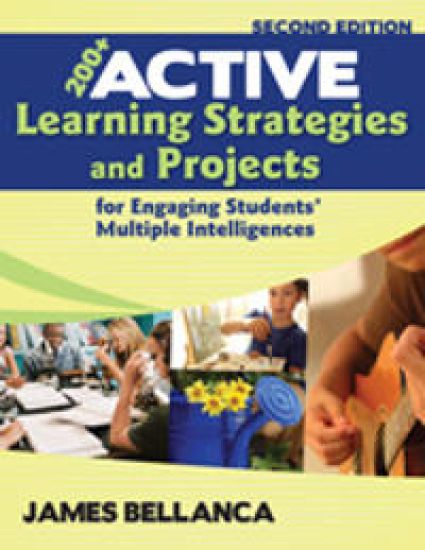
200+ Active Learning Strategies and Projects for Engaging Students’ Multiple Intelligences
'I loved the book! Well-written, well-focused, well-thought out. The best part is the reproducibles, which are a wonderful follow-up for using the strategies in your classroom' —Pam Jackson, Alternative Seventh-Grade Teacher Elkhorn Middle School, Frankfort, KY 'The many lessons and ideas are a treasure trove for teachers. I am keeping the book on my desk for ideas throughout the school year' —Julie Steimel, Teacher Eleanor Roosevelt High School, Greenbelt, MD Teach to students' strengths with new and enhanced activities that engage their multiple intelligences! Tired of repetitious lessons that ignore the power of student curiosity? Need an easy-to-use guide full of high-impact strategies designed to engage students' minds? This updated edition of Active Learning Handbook for the Multiple Intelligences Classroom presents more than 200 research-based, easy-to-implement activities and brain-compatible projects for increasing students' motivation and on-task learning in K–12 classrooms. Using Howard Gardner's theory of multiple intelligences as a framework, the author provides engaging lessons that target a single intelligence while still developing other cognitive domains. Organized and cross-referenced for easy and immediate use in multiple subject areas, this resource allows teachers to access: Step-by-step directions for each activity, with an identified purpose, a targeted multiple intelligence, appropriate grade ranges, and materials needed Checklists of important procedures and tips to help teachers modify or design tactics to meet students' varied needs Reproducibles to reinforce student understanding Research illustrating what works for promoting student achievement Cooperative learning strategies for building a community of learners 200+ Active Learning Strategies and Projects for Engaging Students' Multiple Intelligences, Second Edition helps teachers transform students from passive acquirers of information into active producers of knowledge.
Designing Professional Development for Change

Designing Professional Development for Change

James A. Bellanca

SAGE Publications Inc
2008
sidottu
This compact resource highlights the essential role of professional development in bringing about systemic change that benefits student achievement. The book offers practical methods for designing, promoting, and assessing change and stresses the important role that learning transfer plays in academic improvement and lifelong learning. The new features in this substantially updated revision include: a focus on the site-based professional developer's role as a champion for change in a student-centered learning community; a framework that guides professional developers through three stages of implementation; attention on assessing low-performing students' learning needs as the starting point for creating sustainable change that improves academic achievement schoolwide; emphasis on mediated learning experiences and skillful coaching for adult learners as they gather information and implement new approaches
Designing Professional Development for Change

Designing Professional Development for Change

James A. Bellanca

SAGE Publications Inc
2008
nidottu
This compact resource highlights the essential role of professional development in bringing about systemic change that benefits student achievement. The book offers practical methods for designing, promoting, and assessing change and stresses the important role that learning transfer plays in academic improvement and lifelong learning. The new features in this substantially updated revision include: a focus on the site-based professional developer's role as a champion for change in a student-centered learning community; a framework that guides professional developers through three stages of implementation; attention on assessing low-performing students' learning needs as the starting point for creating sustainable change that improves academic achievement schoolwide; emphasis on mediated learning experiences and skillful coaching for adult learners as they gather information and implement new approaches
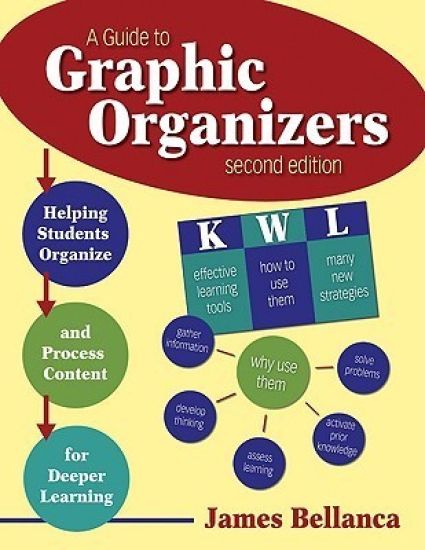
A Guide to Graphic Organizers

A Guide to Graphic Organizers

James A. Bellanca

SAGE Publications Inc
2007
sidottu
Using Graphic Organizers to Increase Learning: A Step by Step Guide, Second Edition offers teachers of all grade levels and content areas a collection of 24 ready-to-use graphic organizers to help students organize their thinking, process content, and work cooperatively. In the bookAes first section, each graphic organizer is featured in its own chapter, providing:A lesson for introducing the organizer to studentsIdeas for using the organizer in different subject areas and grade levelsTips for using the organizer to maximize student learningThe second section provides strategies for using graphic organizers with cooperative learning groups, exploration of the role of graphic organizers in developing thinking processes, and suggestions for using them as assessment tools. This revised edition has been updated with current research, several new graphic organizers, a streamlined format, and an expanded collection of examples.
A Guide to Graphic Organizers

A Guide to Graphic Organizers

James A. Bellanca

SAGE Publications Inc
2007
nidottu
Using Graphic Organizers to Increase Learning: A Step by Step Guide, Second Edition offers teachers of all grade levels and content areas a collection of 24 ready-to-use graphic organizers to help students organize their thinking, process content, and work cooperatively. In the bookAEs first section, each graphic organizer is featured in its own chapter, providing:A lesson for introducing the organizer to studentsIdeas for using the organizer in different subject areas and grade levelsTips for using the organizer to maximize student learningThe second section provides strategies for using graphic organizers with cooperative learning groups, exploration of the role of graphic organizers in developing thinking processes, and suggestions for using them as assessment tools. This revised edition has been updated with current research, several new graphic organizers, a streamlined format, and an expanded collection of examples.
The Best of SkyLight

The Best of SkyLight

James A. Bellanca

Corwin Press Inc
2001
nidottu
This book features key information, activities, and strategies from SkyLight's most popular books, including new works addressing technology and literacy. Novice and seasoned educators will find ready-to-use assessment and cognitive tools for teaching in today's classrooms. Selections from If Minds Matter, Teaching in the Cyberage, What Is It About Me You Can't Teach?, How to Grade for Learning, and a dozen other titles are included.
Blueprints for Achievement in the Cooperative Classroom

Blueprints for Achievement in the Cooperative Classroom

James A. Bellanca; Fogarty Robin J.

Corwin Press Inc
2001
nidottu
This step-by-step classic, Blueprints for Achievement in the Cooperative Classroom, embeds the teaching of critical thinking within the cooperative setting to support learning for life, rather than learning just for tests. Thousands of teachers are currently using the guidelines and sample lessons from this text to apply the tools of cooperative learning and thinking in their classrooms. This updated edition clarifies the role of standards in the assessment process to further support student achievement.
Multiple Assessments for Multiple Intelligences

Multiple Assessments for Multiple Intelligences

James A. Bellanca; Carolyn M. Chapman; Elizabeth Swartz

Corwin Press Inc
1997
nidottu
Three of the most respected minds in education today have come together to assist teachers in modifying assessment practices by laying out a road map that guides readers through multiple intelligences and assessment practices. In this updated edition of Multiple Assessments for Multiple Intelligences, authors James Bellanca, Carolyn Chapman, and Elizabeth Swartz show how to devise specific performance standards for each intelligence and easily apply them directly in the classroom. They also demonstrate why each intelligence is important to a curriculum and offer ways to strengthen each intelligence. This resource includes: Definitions of the intelligences Examples of the best teaching methods for developing each intelligence Useful standards for creating a rubric for each intelligence An example of an appropriate measurement tool and discussions on various alternatives Sample lessons that target the intelligence