Kirjojen hintavertailu. Mukana 12 595 353 kirjaa ja 12 kauppaa.

Kirjailija

James A. Blackburn

Kirjat ja teokset yhdessä paikassa: 4 kirjaa, julkaisuja vuosilta 2000-2012, suosituimpien joukossa Modern Instrumentation for Scientists and Engineers. Vertaile teosten hintoja ja tarkista saatavuus suomalaisista kirjakaupoista.

4 kirjaa

Kirjojen julkaisuhaarukka 2000-2012.

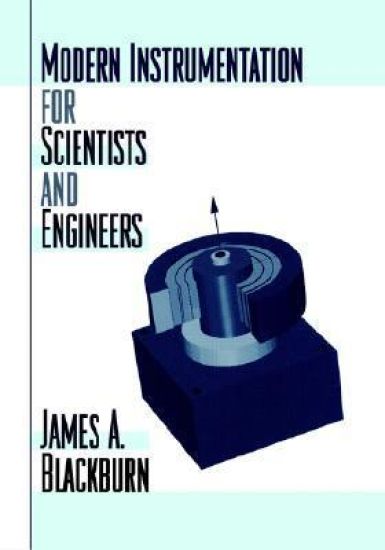
Modern Instrumentation for Scientists and Engineers

Modern Instrumentation for Scientists and Engineers

James A. Blackburn

Springer-Verlag New York Inc.
2012
nidottu
Knowledge of instrumentation is for experimentalists a kind of fluency in the language of measurement. But it is a fluency not so commonly possessed, and without which much of the experimental process remains hidden and mysterious. The basic goal in writing this book is to provide a treatment of useful depth of the basic elements of the instrumentation "language," namely electronics, sensors, and measurement. The present epoch is arguably a golden age for instrumentation. The crucial ingredient has been the exceptional development of semiconductor fabrication technology, and this has led to the present richness in both analog and digital inte­ grated circuits. The former provide relatively inexpensive but high-performance electronic modules (such as the operational amplifier) which can serve as build­ ing blocks for more complex circuits, whereas the latter have culminated in the desktop computer, which has permeated modem life generally and revolu­ tionized the instrumentation world with its capacity to act as a measurement controller and data storage center. Finally, silicon micromachining is creating a host of new sensors for such quantities as acceleration and pressure.
The Pendulum

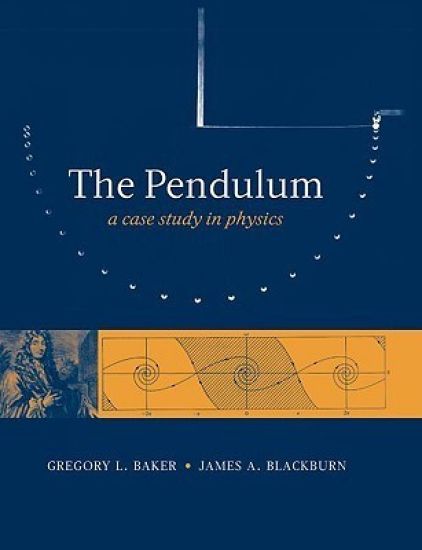
The Pendulum

Gregory L. Baker; James A. Blackburn

Oxford University Press
2008
nidottu
The pendulum: a case study in physics is a unique book in several ways. Firstly, it is a comprehensive quantitative study of one physical system, the pendulum, from the viewpoint of elementary and more advanced classical physics, modern chaotic dynamics, and quantum mechanics. In addition, coupled pendulums and pendulum analogs of superconducting devices are also discussed. Secondly, this book treats the physics of the pendulum within a historical and cultural context, showing, for example, that the pendulum has been intimately connected with studies of the earth's density, the earth's motion, and timekeeping. While primarily a physics book, the work provides significant added interest through the use of relevant cultural and historical vignettes. This approach offers an alternative to the usual modern physics courses. The text is amply illustrated and augmented by exercises at the end of each chapter.
The Pendulum

The Pendulum

Gregory L. Baker; James A. Blackburn

Oxford University Press
2005
sidottu
The pendulum: a case study in physics is a unique book in several ways. Firstly, it is a comprehensive quantitative study of one physical system, the pendulum, from the viewpoint of elementary and more advanced classical physics, modern chaotic dynamics, and quantum mechanics. In addition, coupled pendulums and pendulum analogs of superconducting devices are also discussed. Secondly, this book treats the physics of the pendulum within a historical and cultural context, showing, for example, that the pendulum has been intimately connected with studies of the earth's density, the earth's motion, and timekeeping. While primarily a physics book, the work provides significant added interest through the use of relevant cultural and historical vignettes. This approach offers an alternative to the usual modern physics courses. The text is amply illustrated and augmented by exercises at the end of each chapter.
Modern Instrumentation for Scientists and Engineers

Modern Instrumentation for Scientists and Engineers

James A. Blackburn

Springer-Verlag New York Inc.
2000
sidottu
Knowledge of instrumentation is for experimentalists a kind of fluency in the language of measurement. But it is a fluency not so commonly possessed, and without which much of the experimental process remains hidden and mysterious. The basic goal in writing this book is to provide a treatment of useful depth of the basic elements of the instrumentation "language," namely electronics, sensors, and measurement. The present epoch is arguably a golden age for instrumentation. The crucial ingredient has been the exceptional development of semiconductor fabrication technology, and this has led to the present richness in both analog and digital inte­ grated circuits. The former provide relatively inexpensive but high-performance electronic modules (such as the operational amplifier) which can serve as build­ ing blocks for more complex circuits, whereas the latter have culminated in the desktop computer, which has permeated modem life generally and revolu­ tionized the instrumentation world with its capacity to act as a measurement controller and data storage center. Finally, silicon micromachining is creating a host of new sensors for such quantities as acceleration and pressure.