Kirjojen hintavertailu. Mukana 12 390 323 kirjaa ja 12 kauppaa.
Kirjailija
James A. Holstein
Kirjat ja teokset yhdessä paikassa: 13 kirjaa, julkaisuja vuosilta 1993-2017, suosituimpien joukossa Constructing the Life Course. Vertaile teosten hintoja ja tarkista saatavuus suomalaisista kirjakaupoista.
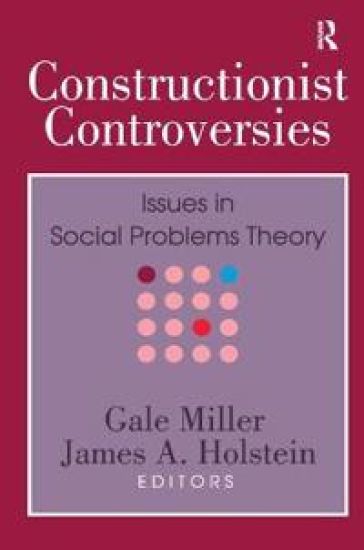
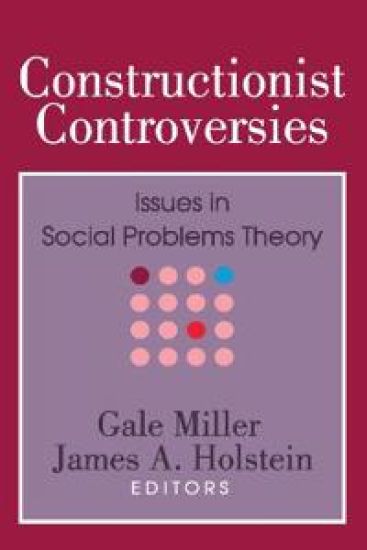
"Constructionist Controversies" reviews the substantial contributions to social problems theory that have been made by social constructionist theorists and examines debates about the future of this perspective. Intended for the student, the volume provides a succinct formulation of all the major issues of social constructionism by contributors who are well recognized within the field for the strength with which they articulate their own widely varied viewpoints.
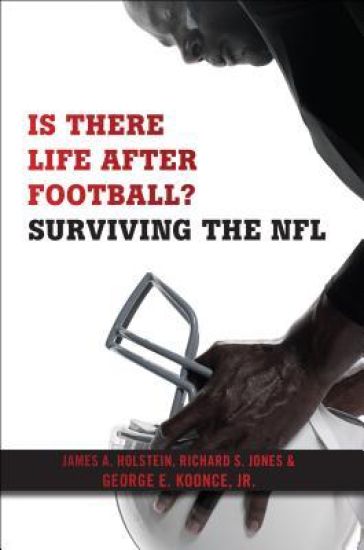
2016 Best Book Award, North American Society for the Sociology of Sport A human face on the realities of professional football, from the challenges players face after leaving the NFL to the factors that can enable them to continue to find success Is There Life After Football? draws upon the experiences of hundreds of former players as they describe their lives playing the sport and after their football days are over. The "bubble"-like conditions of privilege that NFL players experience while playing, often leave players unprepared for the real world once they retire and must manage their own lives. The book also reveals the difficulties affecting former NFL players in retirement: social isolation, financial concerns, inadequate career planning, psychological challenges, and physical injuries. From players who make reckless and unsustainable financial investments during their very few high-earning years, to players who struggle to form personal and professional relationships outside of football, the stories in the book put a very human face on the realities of professional football. George Koonce Jr., a former NFL player himself, weaves in his own story throughout, explaining the challenges he encountered and decisions that helped him succeed after leaving the sport. Ultimately, Is There Life After Football? concludes that, despite the challenges players face, it is possible for players to find success after leaving the NFL if they have the right support, education, and awareness of what might await them.
2016 Best Book Award, North American Society for the Sociology of Sport A human face on the realities of professional football, from the challenges players face after leaving the NFL to the factors that can enable them to continue to find success Is There Life After Football? draws upon the experiences of hundreds of former players as they describe their lives playing the sport and after their football days are over. The "bubble"-like conditions of privilege that NFL players experience while playing, often leave players unprepared for the real world once they retire and must manage their own lives. The book also reveals the difficulties affecting former NFL players in retirement: social isolation, financial concerns, inadequate career planning, psychological challenges, and physical injuries. From players who make reckless and unsustainable financial investments during their very few high-earning years, to players who struggle to form personal and professional relationships outside of football, the stories in the book put a very human face on the realities of professional football. George Koonce Jr., a former NFL player himself, weaves in his own story throughout, explaining the challenges he encountered and decisions that helped him succeed after leaving the sport. Ultimately, Is There Life After Football? concludes that, despite the challenges players face, it is possible for players to find success after leaving the NFL if they have the right support, education, and awareness of what might await them.
Analyzing Narrative Reality offers a comprehensive framework for analyzing the construction and use of stories in society. This centers on the interplay of narrative work and narrative environments, viewed as reflexively related. Topics dealing with narrative work include activation, linkage, composition, performance, collaboration, and control. Those dealing with narrative environments include close relationships, local culture, status, jobs, organizations, and intertextuality. Both the texts and everyday contexts of the storying process are considered, with accompanying guidelines for analysis and illustrations from empirical material. Methodological procedures feature interviewing, ethnographic fieldwork, and conversational and textual analysis. The conclusion raises the issue of narrative adequacy, addressing the questions of what is a good story and who is a good storyteller. Analyzing Narrative Reality is truly multidisciplinary and should appeal to researchers working across the social and behavioral sciences and humanities, as well as to narratively focused researchers in nursing, education, allied and public health, social work, law, counseling, and management/organization studies.
This book, the first in the series Social Worlds from the Inside Out, introduces undergraduates to the study of the family (one of the largest courses taken on sociological institutions) through a series of original chapters commissioned for this volume. The book presents the social world of the family "from the inside out" through the lived experiences of its participants, thereby supplementing core texts for this course with multi-faceted descriptions of real-life experiences.
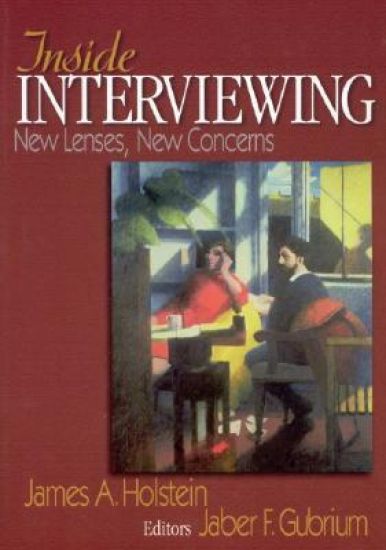
Interview books typically stress the need for establishing rapport with respondents and asking questions that don't influence the responses. Until now, no text has seriously explored who the subjects are behind interview participants. Inside Interviewing showcases the fluctuating and diverse moral worlds put into place during interview research when gender, race, culture, age, and other subject positions are brought narratively to the foreground. It explores the communicative contexts of respondents' thoughts, feelings, and actions, and how meaning is not merely elicited by apt questioning nor transported through clear respondent replies, but actively and socially assembled in the interview encounter, along with changing understandings of what it means to be a particular subject. Topics explored include: The varied roles that interview participants play, alerting readers to the theoretical dimensions of subjectivity, and how this awareness can affect the interview process The interpretive challenges researchers face in analyzing data collected from interview respondents and their representational positions concerning the subject matter in question Methods for describing lives that incorporate the representational sensibilities of both interviewees and interview researchers Inside Interviewing explores the representational complexities that emerge when research participation is scrutinized, as well as the technical concerns and analytic options that derive from new lenses for viewing the interview process. These new lenses provide readers with theoretically informed direction for figuring how interview participants relate to each other, how to elicit interview data, and how to select alternative ways of representing interview material. This volume is comprised of chapters from the Handbook of Interview Research (Gubrium and Holstein, SAGE, 2001). The companion volume, Postmodern Interviewing (SAGE, 2003), is also comprised of chapters from the Handbook.
Constructing the Life Course offers a social constructionist perspective on personal experience through time. The text shows the variety of ways people use life course imagery in their everyday lives and makes a useful addition to family studies or gerontology courses.
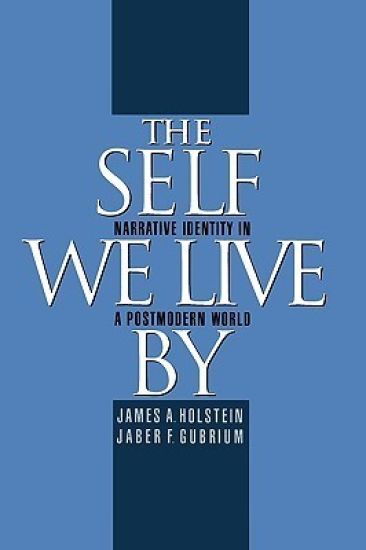
The story of the self is big story. For at least a century, the concept of the empirical self has been an important, if not our most central, social structure. The early pragmatists William James, Charles Horton Cooley, and George Herbert Mead, among others, turned away from the transcendental self of philosophical reflection to formulate a concept that extended to every individual's consideration who and what they were. The democratized the self and set the stage for social psychological commentary for decades to come. Now, according to some postmodern voices, the self does not amount to much anymore on the brink of the 21st century. its narrative has fizzled. The self is a mere shadow of what is was, now communicated in evanescent images of identity. The Self We Live By resurrects the big story by taking issue with this account. Holstein and Gubrium have crafted an accessible, comprehensive discussion which traces a different course of developmetn, from the early pragmatists to contemporary constructionist considerations. Glimpses of renewal are located in a new kind of ending, one centered in an institutional landscape of diverse naratives of the self. Not only is there a new story of the self, but we're told that the self, itself, is narratively constructed. Yet, as varied and plentiful as narrative identity has become, it's disciplined by its social practices, which the authors discuss and illustrate in terms of the "everyday technology of self construction." The empirical self, its turns out, has become more complex and varied than its formulators could have ever imagined it to be. The book is written at a level suitable for advanced undergraduates and graduate students in psychology, sociology, and related social sciences.
In recent years, scholars and researchers have moved away from quantitative methods of research and toward qualitative methods, which emphasize questions of meaning and interpretation. Gubrium and Holstein offer a new theoretical view which reintegrates the traditional emphasis on the "how" and "what" of social life with a contemporary understanding of the "why". The authors demonstrate how their approach may be put into practice in research on family, aging, deviance and social problems, and organizations and institutions.
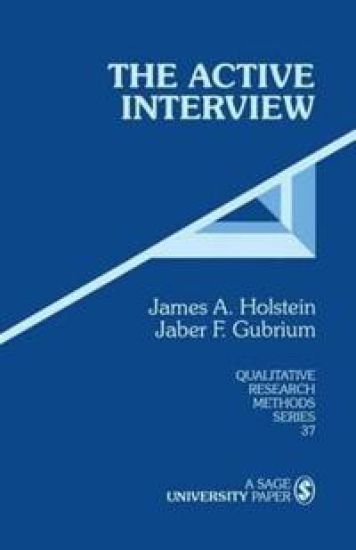
"The book provides an academic basis for discussion and development of active interviewing methods. . . . The ideas raised. . . will be interesting and valuable to those involved in developing new methodologies in qualitative research and interviewing." --Helen Masey in Social Research Association News The interpretive turn in social science has taken the interview and turned it upside down. Once thought to be the pipeline through which information was transmitted from a passive subject to an omniscient researcher, the new "active interview" considers the interviewer and interviewee as equal partners in constructing meaning around an interview event. This changes everything - from the way of conceiving a sample to the ways in which the interview may be conducted and the results analyzed. In this brief volume, James A. Holstein and Jaber F. Gubrium outline the differences between the active interview and the traditional interview and give novice researchers clear guidance on conducting an interview that is the rich product of both parties. Students and professionals who use qualitative methods in the fields of sociology, anthropology, communication, psychology, education, social work, gerontology, and management will find The Active Interview to be a helpful and cogent guidebook.
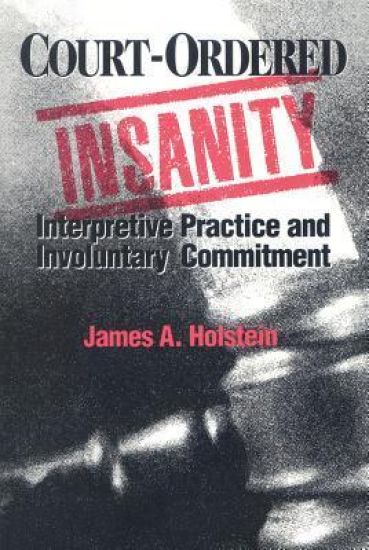
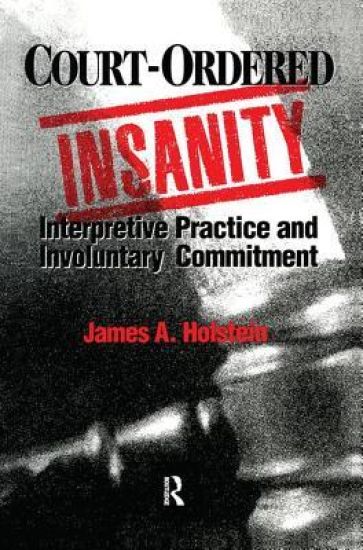
This book analyzes how hearing participants construct and organize arguments that are legally, psychiatrically, and practically accountable. It argues that commitment decisions orient to the "tenability" of situations that patients pose as alternatives to hospitalization.
"Constructionist Controversies" reviews the substantial contributions to social problems theory that have been made by social constructionist theorists and examines debates about the future of this perspective. Intended for the student, the volume provides a succinct formulation of all the major issues of social constructionism by contributors who are well recognized within the field for the strength with which they articulate their own widely varied viewpoints.
This book, about involuntary commitment proceedings, focuses on interpretive practice at the nexus of legal, psychiatric, and practical reasoning. It describes the interactional dynamics through which legally and psychiatrically warranted decisions are publicly argued, negotiated, and justified.