Kirjojen hintavertailu. Mukana 12 595 353 kirjaa ja 12 kauppaa.

Kirjailija

James B. Steele

Kirjat ja teokset yhdessä paikassa: 5 kirjaa, julkaisuja vuosilta 1994-2020, suosituimpien joukossa Forevermore, Nuclear Waste in America. Vertaile teosten hintoja ja tarkista saatavuus suomalaisista kirjakaupoista.

5 kirjaa

Kirjojen julkaisuhaarukka 1994-2020.

America: What Went Wrong? The Crisis Deepens

America: What Went Wrong? The Crisis Deepens

Donald L. Barlett; James B. Steele

Mission Point Press
2020
nidottu
The downward spiral of America's middle class is no accident: This book explains in vivid detail how Washington and Wall Street have made decisions that enrich the wealthy at the expense of everyone else. Pulitzer Prize-winning reporters Donald L. Barlett and James B. Steele document the specific acts of Congresses and presidents that have caused soaring economic inequality and enable corporations to pay low wages, owe no taxes and raid the retirement plans of their employees.This book, updated in 2020, is an expanded edition of the bestselling America: What Went Wrong?, which caused a sensation when it exposed the causes of the middle-class crisis. This new edition reveals how new policies are launching a fresh assault on the average American. Middle-class Americans know that their way of life is under attack. This book explains how it happened and how we can make it right.
Forevermore, Nuclear Waste in America

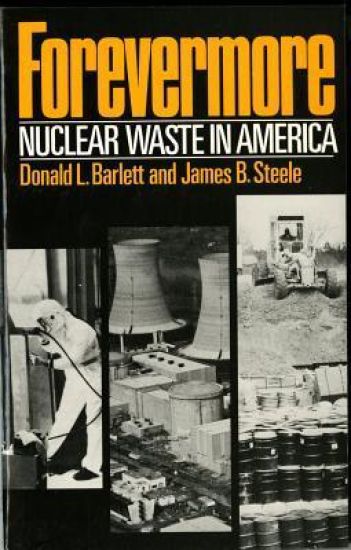
Forevermore, Nuclear Waste in America

Donald L. Barlett; James B. Steele

WW Norton Co
2007
nidottu
Selected by Library Journal as one of the hundred best books in science and technology for 1985. This book is an outgrowth of a series of articles that appeared in the Philadelphia Inquirer in November 1983. For eighteen months, the authors traveled some 20,000 miles, interviewing dozens of people and assembling more than 125,000 pages of documents. These included local, state, and federal government reports, state and federal court records, corporate files, congressional hearing transcripts, scientific studies, and internal memoranda of public agencies and private businesses. The resulting newspaper series provoked a much broader reaction than we had anticipated. In response to requests for copies of the articles, more than 25,000 reprints were sent to individuals and organizations in more than forty states and several foreign countries. Many of those who wrote urged the authors to expand the newspaper series into a book. In doing so, they updated the material and added new information, including sections on military waste, foreign reprocessing, and uranium mill tailings. We were tempted to delve into other areas, such as the design and construction of reactors and the economics of nuclear power. But we focused instead on waste—the amount produced, past efforts to manage it, and the politics of its disposal.
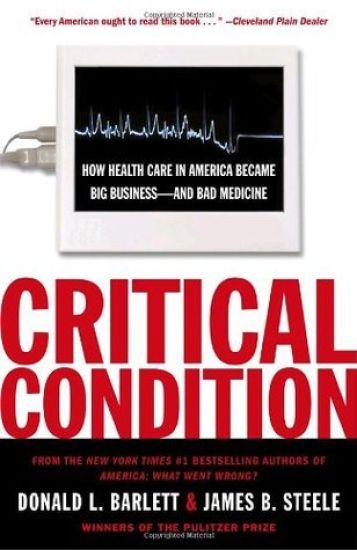
Critical Condition: How Health Care in America Became Big Business--And Bad Medicine

Critical Condition: How Health Care in America Became Big Business--And Bad Medicine

Donald L. Barlett; James B. Steele

Crown Publishing Group (NY)
2005
nidottu
Award-winning journalists expose the horrific practices within America's health care system, profiling patients and doctors and offering startling personal stories to illuminate what's gone wrong. "Every American ought to read this book."--The Plain Dealer Tens of millions of people with inadequate or no medical coverage . . . dirty examination and operating rooms in doctors' offices and hospitals . . . more people killed by mistakes than by many diseases. This may sound like the predicament of a failed state, but this is America's health care reality today. The United States spends more per capita on health care than any other nation, yet benefits are shrinking and life expectancy here is shorter than in countries that spend significantly less. Meanwhile, HMOs, pharmaceutical companies, and hospital chains reap tremendous profits, as our elected politicians, beholden to these same companies, enact piecemeal measures that lead to needless deaths, refusing to come to grips with a system on the verge of collapse. A superb investigative work that is enormously compelling and addresses the concerns of every American, Critical Condition offers an insightful prescription for getting the system back on the right track.
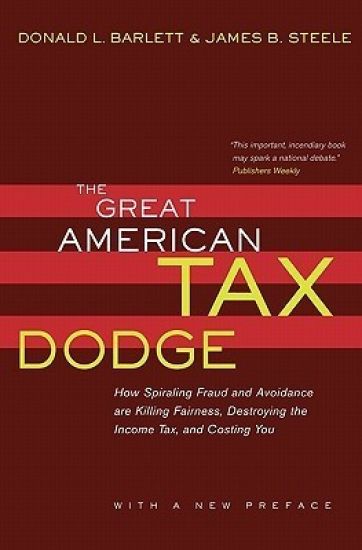
The Great American Tax Dodge

The Great American Tax Dodge

Donald L. Barlett; James B. Steele

University of California Press
2002
pokkari
In The Great American Tax Dodge, a book that should infuriate and galvanize citizens everywhere, the best-selling authors of America: What Went Wrong? expose the millions of Americans who are dodging their income taxes at every honest taxpayer's expense. With the clarity, insight, and readability that earned them two Pulitzer Prizes, Donald Barlett and James Steele explain how Americans are cheating as never before, and why most are getting away with it. The authors relate the stories of a Manhattan couple who spent $1 million a month to maintain their lifestyle yet never paid income tax, a California couple who provided sport utility vehicles for their children at taxpayers' expense, an entrepreneur in Costa Rica who shows Americans how to hide their money in clandestine accounts offshore, and computer technicians at America's largest corporations who live tax-free. Barlett and Steele describe how the Internet has democratized tax cheating, as proliferating Web sites and their often mysterious operators offer every service imaginable to escape taxes.They discuss the double standard the IRS employs in tax audits--one for the rich and well-connected and another for everyone else--and how the Justice Department tries to jail powerless citizens accused of tax law violations while allowing the wealthy and influential to go free. This book also documents how Congress is deliberately undermining the income tax in order to replace it with a system that will provide the largest windfall ever for the richest Americans--and increase the burden on everyone else. And it spells out how executives like Kenneth L. Lay bankrolled campaigns to institute such a tax system, based on accounting principles eerily similar to those employed at Lay's Enron Corporation. Finally, the authors consider our chances for reestablishing what was once the fairest tax system in the world.