Kirjojen hintavertailu. Mukana 12 390 323 kirjaa ja 12 kauppaa.

Kirjailija

James Boyle

Kirjat ja teokset yhdessä paikassa: 17 kirjaa, julkaisuja vuosilta 1997-2025, suosituimpien joukossa Keith Aoki: 1955-2011 Life as the Art of Kindness, A Remembrance. Vertaile teosten hintoja ja tarkista saatavuus suomalaisista kirjakaupoista.

17 kirjaa

Kirjojen julkaisuhaarukka 1997-2025.

The Line

The Line

James Boyle

MIT PRESS LTD
2024
sidottu
How AI will challenge our ideas about personhood. Chatbots like ChatGPT have challenged human exceptionalism: we are no longer the only beings capable of generating language and ideas fluently. But is ChatGPT conscious? Or is it merely engaging in sophisticated mimicry? And what happens in the future if the claims to consciousness are more credible? In The Line, James Boyle explores what these changes might do to our concept of personhood, to 'the line' we believe separates our species from the rest of the world, but also separates 'persons' with legal rights from objects. The personhood wars over the rights of corporations, animals, over the question of when life begins and ends have always been contentious. We ve even denied the personhood of members of our own species. How will those old fights affect the new ones, and vice versa? Boyle pursues those questions across a dizzying array of fields. He discusses moral philosophy and science fiction, transgenic species, nonhuman animals, the surprising history of corporate personality, and AI itself. Engaging with empathy and anthropomorphism, courtroom battles on behalf of chimps, and doom-laden projections about the threat of AI, The Line offers fascinating and thoughtful answers to questions about our future that are arriving sooner than we think.
Uncle Sam (Edition1)

Uncle Sam (Edition1)

James Boyle

Alpha Editions
2024
nidottu
The Public Domain: Enclosing the Commons of the Mind, est un livre classique et a t consid r comme important tout au long de l'histoire de l'humanit . Afin que ce livre ne soit jamais oubli , chez Alpha Editions, nous avons fait des efforts pour le pr server en le r ditant dans un format moderne pour les g n rations pr sentes et futures. Tout ce livre a t reformat , retap et con u. Ces livres ne sont pas constitu s de copies num ris es de leur oeuvre originale et le texte est donc clair et lisible.
The Opposite of Echo

The Opposite of Echo

James Boyle

Createspace Independent Publishing Platform
2018
nidottu
David Shaw wakes in the hospital with a skull fracture and no memory of the previous week. But that is the least of his problems. His wife and teen stepdaughter are missing. As David works with police to recover memories of the crime and find his family, he has to regard everyone in his life as a possible suspect: his philandering law partner; his drug-dealing brother-in-law; the ex-con father of his step-daughter; the Russian mob. Any of them could be involved. One of them knows where David's family is. Will he be able to find them before it's too late?
Nothing But A Blaze: The Indian War on the Lower Rogue, 1856

Nothing But A Blaze: The Indian War on the Lower Rogue, 1856

James Boyle

Createspace Independent Publishing Platform
2018
nidottu
On the night of February 22, 1856, the Tututni Indians and their allies launched a surprise attack against the white miners along the entire south coast of Oregon. The settlement of Ellensburg, forerunner of today's Gold Beach, is burned to the ground and dozens of people killed. Thus began the war on the lower Rogue River, in terms of the populations involved, the bloodiest of all the conflicts between the American Indians and the Americans. This volume traces the causes of the conflict and the sequence of events that led to the destruction of the Tututnis and the American possession of the southern coast of Oregon.
Deception Island

Deception Island

James Boyle

Independently Published
2015
nidottu
The authorities say Jason Reynold's father drowned in a boating accident on Puget Sound, but Jason doesn't believe it. His father was a fishing guide. An accident wasn't likely. Once in town, he quickly finds evidence that supports his suspicions: files missing from his father's office; a mysterious photo of an Asian man; and a letter threatening to evict his father unless he stops: "acting against the interests of The Lundgren Corporation."Lundgren Corporation. The company behind the company town.And now they turn their attention to Jason.What follows is a chess match of move and counter-move, pitting Jason and his friends against the security forces of Lundgren. The stakes couldn't be higher because Lundgren had proven they will do whatever is necessary to protect the secret on Deception Island
The Public Domain

The Public Domain

James Boyle

Yale University Press
2010
pokkari
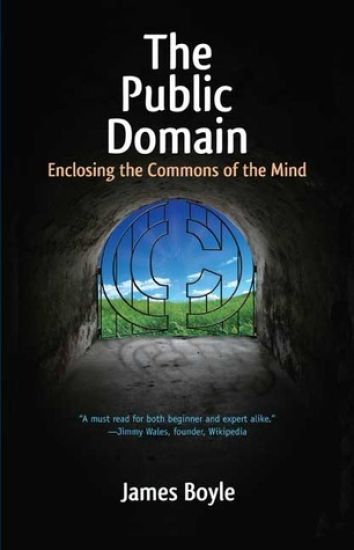
Why the public domain is vitally important and what we must do to protect it In this enlightening book James Boyle describes what he calls the range wars of the information age—today’s heated battles over intellectual property. Boyle argues that just as every informed citizen needs to know at least something about the environment or civil rights, every citizen should also understand intellectual property law. Why? Because intellectual property rights mark out the ground rules of the information society, and today’s policies are unbalanced, unsupported by evidence, and often detrimental to cultural access, free speech, digital creativity, and scientific innovation. Boyle identifies as a major problem the widespread failure to understand the importance of the public domain—the realm of material that everyone is free to use and share without permission or fee. The public domain is as vital to innovation and culture as the realm of material protected by intellectual property rights, he asserts, and he calls for a movement akin to the environmental movement to preserve it. With a clear analysis of issues ranging from Jefferson’s philosophy of innovation to musical sampling, synthetic biology and Internet file sharing, this timely book brings a positive new perspective to important cultural and legal debates. If we continue to enclose the “commons of the mind,” Boyle argues, we will all be the poorer.
Bound by Law?

Bound by Law?

Keith Aoki; James Boyle; Jennifer Jenkins

Duke University Press
2008
pokkari
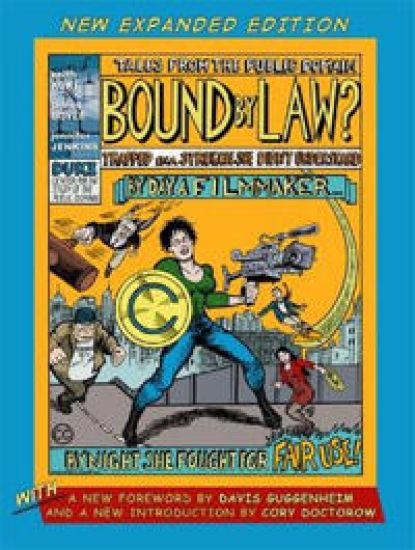
A documentary is being filmed. A cell phone rings, playing the Rocky theme song. The filmmaker is told she must pay $10,000 to clear the rights to the song. Can this be true? Eyes on the Prize, the great civil rights documentary, was pulled from circulation because the filmmakers’ rights to music and footage had expired. What’s going on here? It’s the collision of documentary filmmaking and intellectual property law, and it’s the inspiration for this comic book. Follow its heroine Akiko as she films her documentary and navigates the twists and turns of intellectual property. Why do we have copyrights? What’s “fair use”? Bound by Law? reaches beyond documentary film to provide a commentary on the most pressing issues facing law, art, property, and an increasingly digital world of remixed culture.Readers can download a pdf of the book here.
Educational Testing

Educational Testing

James Boyle; Stephen Fisher

Wiley-Blackwell (an imprint of John Wiley Sons Ltd)
2006
nidottu
Educational Testing provides support for those undertaking training in, and for training providers of, the Certificate of Competence in Educational Testing (CCET) (Level A). Developed by the British Psychological Society (BPS) the CCET aims to meet a need for standards for the use of tests in education in the UK, to encourage responsible test use by psychologists and non-psychologists alike. Written by the designers of the certificate and endorsed by the BPS's Steering Committee on Test Standards, Educational Testing is the only book of its kind available: Covers the 71 elements of the CCET in detail and acts as a ‘course text’ for those in trainingDescribes each core competenceProvides model answers and examplesOffers an indication of the range of ways in which the core competences may be assessed by the Assessor, based upon the existing BPS Guidance for Assessors documentAppendices offer guidance on BPS Standards, a glossary of technical terms, useful web-sites and on-line resources and Test Publishers Addresses.
Shamans, Software, and Spleens

Shamans, Software, and Spleens

James Boyle

Harvard University Press
1997
nidottu
Who owns your genetic information? Might it be the doctors who, in the course of removing your spleen, decode a few cells and turn them into a patented product? In 1990 the Supreme Court of California said yes, marking another milestone on the information superhighway. This extraordinary case is one of the many that James Boyle takes up in Shamans, Software, and Spleens, a timely look at the infinitely tricky problems posed by the information society. Discussing topics ranging from blackmail and insider trading to artificial intelligence (with good-humored stops in microeconomics, intellectual property, and cultural studies along the way), Boyle has produced a work that can fairly be called the first social theory of the information age.Now more than ever, information is power, and questions about who owns it, who controls it, and who gets to use it carry powerful implications. These are the questions Boyle explores in matters as diverse as autodialers and direct advertising, electronic bulletin boards and consumer databases, ethno-botany and indigenous pharmaceuticals, the right of publicity (why Johnny Carson owns the phrase "Here's Johnny!"), and the right to privacy (does J. D. Salinger "own" the letters he's sent?). Boyle finds that our ideas about intellectual property rights rest on the notion of the Romantic author--a notion that Boyle maintains is not only outmoded but actually counterproductive, restricting debate, slowing innovation, and widening the gap between rich and poor nations. What emerges from this lively discussion is a compelling argument for relaxing the initial protection of authors' works and expanding the concept of the fair use of information. For those with an interest in the legal, ethical, and economic ramifications of the dissemination of information--in short, for every member of the information society, willing or unwilling--this book makes a case that cannot be ignored.