
Kirjailija
James C. Howell
Kirjat ja teokset yhdessä paikassa: 31 kirjaa, julkaisuja vuosilta 1997-2026, suosituimpien joukossa Heart of the Psalms Leader Guide, The. Vertaile teosten hintoja ja tarkista saatavuus suomalaisista kirjakaupoista.
Mukana myös kirjoitusasut: James C Howell
31 kirjaa
Kirjojen julkaisuhaarukka 1997-2026.



Location matters. The Leader Guide contains discussion questions and session plans for a six-week study of Everywhere Is Jerusalem, by James C. Howell. It includes opening and closing prayers, optional activities, and session goals for each week and is designed to be used with the book and DVD. Christianity isn't a batch of spiritual thoughts or metaphysical truths. It's a journey of real people with their feet on the ground in real places. In Everywhere Is Jerusalem, James Howell takes you on a spiritual pilgrimage to significant places in the ongoing story of the Christian faith. You'll go from Bethlehem to Jerusalem, from the Jordan River to Assisi, and from the Sea of Galilee to Montgomery, Alabama. Along the way, you'll discover the profound connections between biblical stories and the places they happened. You'll see how Christians throughout history have brought their faith to life worldwide, in their own cities and communities. And you'll find God calling you to bring your own faith to life right where you are, right now. Part travelogue, part Bible study, this book will take you on a spiritual journey to the places that are most important in our faith, and you'll discover that the most important place of all is the place where you are, right now.
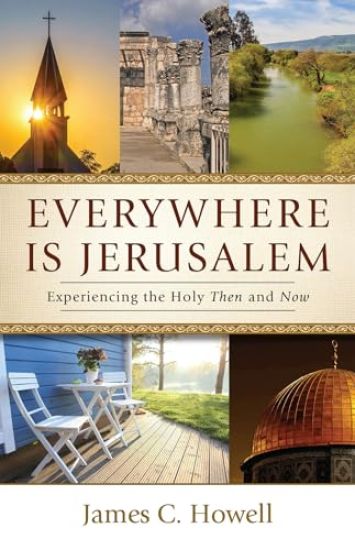
Location matters. Christianity isn't a batch of spiritual thoughts or metaphysical truths. It's a journey of real people with their feet on the ground in real places. In Everywhere Is Jerusalem, James Howell takes you on a spiritual pilgrimage to significant places in the ongoing story of the Christian faith. You'll go from Bethlehem to Jerusalem, from the Jordan River to Assisi, and from the Sea of Galilee to Montgomery, Alabama. Along the way, you'll discover the profound connections between biblical stories and the places they happened. You'll see how Christians throughout history have brought their faith to life worldwide, in their own cities and communities. And you'll find God calling you to bring your own faith to life right where you are, right now. Part travelogue, part Bible study, this book will take you on a spiritual journey to the places that are most important in our faith, and you'll discover that the most important place of all is the place where you are, right now. Other study components include a Leader Guide and video available on DVD.


A Handbook for Evidence-Based Juvenile Justice Systems
James C. Howell; Mark W. Lipsey; John J. Wilson; Megan Q. Howell; Nancy J. Hodges
BLOOMSBURY PUBLISHING PLC
2023
nidottu
This revised edition features updated research, new developments in technology, and recent policy on juvenile delinquency and youth violence. The authors underscore the enormous payoff in targeting potential serious, violent, and chronic juvenile offenders at the earliest opportunity and provide a framework for evidence-informed state juvenile justice systems: the Comprehensive Strategy for Serious, Violent, and Chronic Juvenile Offenders. This strategy recognizes, first, that a relatively small proportion of those who enter the juvenile justice system will prove to be serious, violent, or chronic offenders, but that group accounts for a large proportion of overall delinquency. Second, this strategy builds on the fact that serious, violent, or chronic delinquency emerges along developmental pathways, allowing earlier identification of juveniles most at risk for later serious offending. A third component of this approach is effective intervention capable of reducing the recidivism of those juveniles most at risk for further delinquency. This framework emphasizes an evidence-based approach to reducing the recidivism of those juveniles most likely to reoffend from intake onward to probation, community programs, confinement, and reentry.

Unrevealed Until Its Season: A Lenten Journey with Hymns
James C. Howell
Upper Room Books
2021
nidottu
Long Catalog Copy-144 words] Author James Howell believes in the power of song to teach spiritual truths. "Hymns embed faith into the marrow of the soul," he writes. In Unrevealed Until Its Season, Howell takes us on a 40-day journey through well-loved hymns. A meaningful Lenten devotional guide for individuals and small groups, Unrevealed Until Its Season is also a valuable resource-and perfect gift-for musicians as they prepare for worship, and for ministers as they lead worship. Weekly themes include Praising God, Hymns About Jesus, Hymns of Forgiveness, Hymns of Vision, Hymns of Beauty, Hymns of Holy Week, and Hymns of Easter. Howell ponders phrases from old and new hymns, such as "Be Thou My Vision," "Hymn of Promise," "All Creatures of Our God and King," "For Everyone Born," "Come, Thou Fount of Every Blessing," "Lift High the Cross," and "When I Survey the Wondrous Cross."
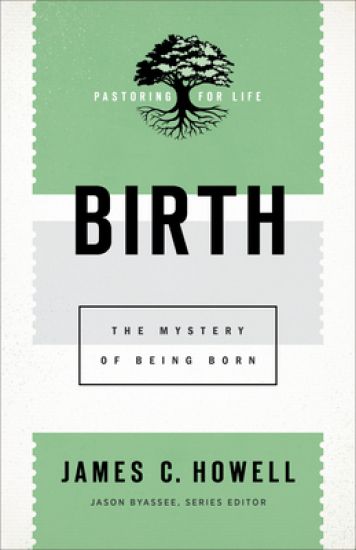
This volume explores the connections between our own birth, the experience of having children, and the new birth of the Christian life. Seasoned pastor James Howell offers theological perspectives on a variety of themes associated with birth, such as who we are in light of having once lived in utero, why people might have children, infertility, adoption, baptism, and how to make sense of it all in light of God coming to us first in Mary's womb and then as an infant. The book includes paintings, photos, and drawings. About the Series Pastors are called to help people navigate the profound mysteries of being human, from birth to death and everything in between. This series, edited by leading pastoral theologian Jason Byassee, provides pastors and pastors-in-training with rich theological reflection on the various seasons that make up a human life, helping them minister with greater wisdom and joy.

A Handbook for Evidence-Based Juvenile Justice Systems
James C. Howell; Mark W. Lipsey; John J. Wilson; Megan Q. Howell; Nancy J. Hodges
Lexington Books
2019
sidottu
This revised edition features updated research, new developments in technology, and recent policy on juvenile delinquency and youth violence. The authors underscore the enormous payoff in targeting potential serious, violent, and chronic juvenile offenders at the earliest opportunity and provide a framework for evidence-informed state juvenile justice systems: the Comprehensive Strategy for Serious, Violent, and Chronic Juvenile Offenders. This strategy recognizes, first, that a relatively small proportion of those who enter the juvenile justice system will prove to be serious, violent, or chronic offenders, but that group accounts for a large proportion of overall delinquency. Second, this strategy builds on the fact that serious, violent, or chronic delinquency emerges along developmental pathways, allowing earlier identification of juveniles most at risk for later serious offending. A third component of this approach is effective intervention capable of reducing the recidivism of those juveniles most at risk for further delinquency. This framework emphasizes an evidence-based approach to reducing the recidivism of those juveniles most likely to reoffend from intake onward to probation, community programs, confinement, and reentry.

Gangs in America's Communities
James C. Howell; Elizabeth A. Griffiths
SAGE Publications Inc
2018
nidottu
"[Gangs in America's Communities] is one of the most comprehensive treatments of gangs in the marketplace. . . . I highly recommend its adoption as you will not be disappointed and, most importantly, neither will your students." —Elvira White-Lewis, Texas A&M University-Commerce Gangs in America's Communities, Third Edition blends theory with current research to help readers identify essential features associated with youth violence and gangs, as well as apply strategies for gang control and prevention. Authors Dr. James C. Howell and Dr. Elizabeth Griffiths introduce readers to theories of gang formation, illustrate various ways of defining and classifying gangs, and discuss national trends in gang presence and gang-related violence across American cities. They also offer evidence-based strategies for positioning communities to prevent, intervene, and address gang activity. New to the Third Edition: A series of new case studies document the evolution of numerous gangs in large cities, including the community aspect, evolutionary nature, and how cities influence levels of violence. New discussions highlighting the role of social media, insights into how gangs use it to recruit members, and the response from law enforcement. Current nationwide gang trends are discussed to encourage readers to analyze and interpret the most recent statistics for which representative data is available. Updated macro and micro gang theories enable readers to explore a recent encapsulation of leading developmental models. New discussions around female gang members offer readers potentially effective programs for discouraging females from joining gangs—along with highly regarded delinquency prevention and reduction programs that have the potency to be effective in reducing gang crimes among young women. A comprehensive gang prevention, intervention, and suppression program in Multnomah County, Oregon shows how theory was successfully applied to reduce gang activity in a local community. New research on "gang structures" and their rates of crime illustrate the connections between violent crimes and the amount of violent offenders within a gang. Additional discussion of distinguishing features (e.g., typologies) of major gangs, and numerous examples of gang symbols, tattoos, and graffiti has been added to help readers identify and differentiate various types of gangs.

This book is an historical account of the emergence of youth gangs and the transformation of these into street gangs in the United States. The author traces the emergence of these gangs in the four major geographical regions over the span of two centuries, from the early 1800s to 2012. The author’s authoritative analysis explains gang emergence and expansion from play groups to heavily armed street gangs responsible for a large proportion of urban crimes, including drive-by shootings that often kill innocent bystanders. Nationwide, street gangs now account for 1 in 6 homicides each year, and for 1 in 4 in very large cities. In recent years, the number of gangs, gang members, and gang homicides increased, even though the U.S. has seen a sharp drop in violent and property crimes over the past decade. The author’s historical analysis reveals the key contributing factors to transformation of youth gangs, including social disorganization that occurred following large-scale immigration early in American history and urban policies that pushed minorities to inner city areas and public housing projects. This analysis includes the influence of prison gangs on street gangs. The first generation of prison gangs emerged spontaneously in response to dangers inside prisons. The second generation was for many years extensions of street gangs that grew enormously during the 1980s and 1990s, particularly in large urban areas in which public housing projects have served as incubators for street gangs. The third generation of prison gangs is extremely active in street-level criminal enterprises in varied forms, often highly structured and well managed organizations that are actively involved in drug trafficking. In recent years, returning inmates are a predominant influence on local gang violence. Now, prison gangs and street gangs often work together in street-level criminal enterprises. This book identifies the most promising ways that gang violence can be reduced. The best long-term approach is a combination of gang prevention, intervention, and suppression strategies and programs. Targeted suppression of gang violence is imperative. Street-workers that serve as violence interrupters can break the cycle of contagious gang violence.
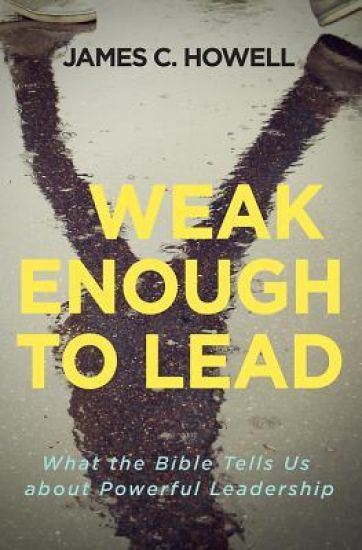
The Bible's version of leadership is pretty different from--and sometimes alien to--that of the business world. It is also dissimilar from our usual assumptions about what makes a great leader in the church, where we tend to focus on preaching ability, strategic hutzpah, and managerial savvy.But what if the Bible actually points toward a different set of characteristics necessary for leadership? What if our weakness is an essential qualification? Do we know our limitations, our inabilities? Do we see clearly our vulnerable, broken selves? Do we really believe that God's strength is perfected in our weakness, and do we lead with that as a core belief?James Howell's Weak Enough to Lead is not a list of "leadership principles" from the Bible. This book is an examination of stories about leaders from the Old Testament, where we discover not only them but ourselves. How does family dysfunction or depression or tragic bad luck or larger historical forces figure into the leadership equation? How do biblical characters prosper despite themselves or stumble even while being holy? Can we get inside the head, heart, and the actual administration of King David and reckon with his strength and foibles? How is strength in leadership almost always the downfall of the biblical leader? What kind of leader would Jesus, Esther, Moses, Jeremiah, or Paul be today?Howell explores the careers, struggles, joys, and devastations of various biblical leaders, believing that immersion in scripture's stories is what modern Christian leaders need--not to succeed so much as to be God's people in the world. He roots this unique exploration of leadership in a prayer of Jehoshaphat: "We do not know what to do, but our eyes are upon you."

A Handbook for Evidence-Based Juvenile Justice Systems
James C. Howell; Mark W. Lipsey; John J. Wilson
Lexington Books
2015
nidottu
This handbook promotes a comprehensive strategy founded on evidence-based programming for juvenile justice systems to adopt or enhance their current system. The comprehensive strategy is supported strongly by the broad research base that is now available. This strategy recognizes, first, that a relatively small proportion of the juveniles who initially enter the juvenile justice system will prove to be serious, violent, or chronic offenders, but that group accounts for a large proportion of the overall amount of delinquency. An important component of a comprehensive evidence-based juvenile justice system, therefore, is distinguishing these offenders from others and focusing attention and resources on that smaller group. Second, a comprehensive strategy recognizes that serious, violent, or chronic delinquency emerges along developmental pathways that progress from less to more serious profiles of offending. Priority must be given to interrupting these offender careers by calibrating the level of supervision and control of the juveniles’ behavior to their level of risk. The third major component of a comprehensive strategy, therefore, is effective intervention programs that are capable of reducing the recidivism of those juveniles at risk for further delinquency. The Comprehensive Strategy for Serious, Violent, and Chronic Juvenile Offenders is an administrative framework that supports a continuum of services that parallel the development of offender careers. This framework emphasizes evidence-based programming specifically on recidivism reduction, and supports protocols for developing comprehensive treatment plans that match effective services with offender treatment needs along the life-course of delinquent careers, as they move from intake onward, to probation, community programs, confinement, and reentry. Juvenile justice systems will benefit from incorporation of a comprehensive strategy as provided in the handbook.

Why This Jubilee?: Advent Reflections on Songs of the Season
James C. Howell
Upper Room Books
2015
nidottu
Music is such an important part of Advent and Christmas. Can you imagine Advent without "O Come, O Come, Emmanuel"? How about Christmas without carols like "O Little Town of Bethlehem," "Silent Night," and "Joy to the World"?It pleases the Lord Jesus when we sing of his coming with carols we know by heart. It pleases him even more when we think about the words we are singing.In 24 reflections on well-known carols and Christmas songs, James Howell explores the birth of Jesus. He ponders the meaning of certain phrases from these songs and relates them to our daily lives.The four weeks of devotions are arranged by topic: The Place The Men (Joseph, shepherds, magi) The Mother The Child A guide for weekly discussion is included.Join Howell in this rich remembrance for the Advent and Christmas seasons.

This book is an historical account of the emergence of youth gangs and the transformation of these into street gangs in the United States. The author traces the emergence of these gangs in the four major geographical regions over the span of two centuries, from the early 1800s to 2012. The author’s authoritative analysis explains gang emergence and expansion from play groups to heavily armed street gangs responsible for a large proportion of urban crimes, including drive-by shootings that often kill innocent bystanders. Nationwide, street gangs now account for 1 in 6 homicides each year, and for 1 in 4 in very large cities. In recent years, the number of gangs, gang members, and gang homicides increased, even though the U.S. has seen a sharp drop in violent and property crimes over the past decade. The author’s historical analysis reveals the key contributing factors to transformation of youth gangs, including social disorganization that occurred following large-scale immigration early in American history and urban policies that pushed minorities to inner city areas and public housing projects. This analysis includes the influence of prison gangs on street gangs. The first generation of prison gangs emerged spontaneously in response to dangers inside prisons. The second generation was for many years extensions of street gangs that grew enormously during the 1980s and 1990s, particularly in large urban areas in which public housing projects have served as incubators for street gangs. The third generation of prison gangs is extremely active in street-level criminal enterprises in varied forms, often highly structured and well managed organizations that are actively involved in drug trafficking. In recent years, returning inmates are a predominant influence on local gang violence. Now, prison gangs and street gangs often work together in street-level criminal enterprises. This book identifies the most promising ways that gang violence can be reduced. The best long-term approach is a combination of gang prevention, intervention, and suppression strategies and programs. Targeted suppression of gang violence is imperative. Street-workers that serve as violence interrupters can break the cycle of contagious gang violence.
A Handbook for Evidence-Based Juvenile Justice Systems
James C. Howell; Mark W. Lipsey; John J. Wilson
Lexington Books
2014
sidottu
This handbook promotes a comprehensive strategy founded on evidence-based programming for juvenile justice systems to adopt or enhance their current system. The comprehensive strategy is supported strongly by the broad research base that is now available. This strategy recognizes, first, that a relatively small proportion of the juveniles who initially enter the juvenile justice system will prove to be serious, violent, or chronic offenders, but that group accounts for a large proportion of the overall amount of delinquency. An important component of a comprehensive evidence-based juvenile justice system, therefore, is distinguishing these offenders from others and focusing attention and resources on that smaller group. Second, a comprehensive strategy recognizes that serious, violent, or chronic delinquency emerges along developmental pathways that progress from less to more serious profiles of offending. Priority must be given to interrupting these offender careers by calibrating the level of supervision and control of the juveniles’ behavior to their level of risk. The third major component of a comprehensive strategy, therefore, is effective intervention programs that are capable of reducing the recidivism of those juveniles at risk for further delinquency. The Comprehensive Strategy for Serious, Violent, and Chronic Juvenile Offenders is an administrative framework that supports a continuum of services that parallel the development of offender careers. This framework emphasizes evidence-based programming specifically on recidivism reduction, and supports protocols for developing comprehensive treatment plans that match effective services with offender treatment needs along the life-course of delinquent careers, as they move from intake onward, to probation, community programs, confinement, and reentry. Juvenile justice systems will benefit from incorporation of a comprehensive strategy as provided in the handbook.