Kirjojen hintavertailu. Mukana 12 390 323 kirjaa ja 12 kauppaa.

Kirjailija

James Caulfield

Kirjat ja teokset yhdessä paikassa: 14 kirjaa, julkaisuja vuosilta 2008-2024, suosituimpien joukossa The History of the Gun-Powder Plot. Vertaile teosten hintoja ja tarkista saatavuus suomalaisista kirjakaupoista.

14 kirjaa

Kirjojen julkaisuhaarukka 2008-2024.

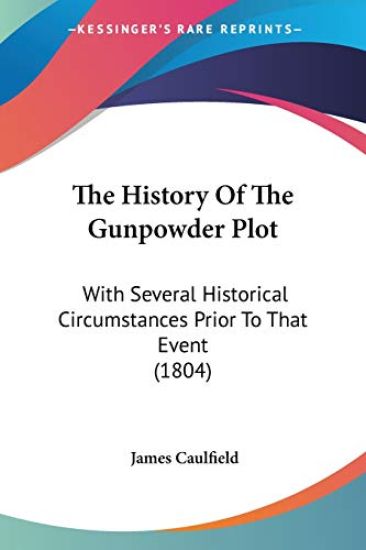
The History of the Gun-Powder Plot

The History of the Gun-Powder Plot

James Caulfield

Spradabach Publishing
2024
sidottu
'Remember, remember The fifth of November, the gunpower treason and plot; I know no reason why the gunpowder treason should ever be forgot'-thus goes the popular rhyme commemorating the discovery and foiling of the plot led by Guy Fawkes. In compact with his enraged Catholic co-conspirators, the aim was to strike at the heart of the Protestant leadership in hopes of re-establishing the old faith of Rome. Alas, he was caught in a cellar below the House of Lords, among kegs of gun powder, literally match in hand. Ever since, the flames of Bonfire Night have blazed annually in celebration of the King's deliverance. First published in 1804, James Caulfield's The History of the Gun-Powder Plot is the first standalone, comprehensive treatment of this perilous affair-a work neither shaped by royal decree, nor envenomed by partisan satire, nor subordinate to a broader political or religious history. Instead of tedious sermonising, the author unrolls the tale through vivid portraits, starting with the tumultuous Henry VIII, whose reign sowed the seeds of future discord. Here, we meet each actor in turn-the known and the obscure-their ambitions, their grievances, and the choices that led them to the brink of treason. This is no simple retelling, but a deeply personal journey into the lives of those whose fates were tied to one of England's most enduring tragedies.
Arise Ye Sleeping Christians

Arise Ye Sleeping Christians

James Caulfield

TRAFFORD PUBLISHING
2021
pokkari
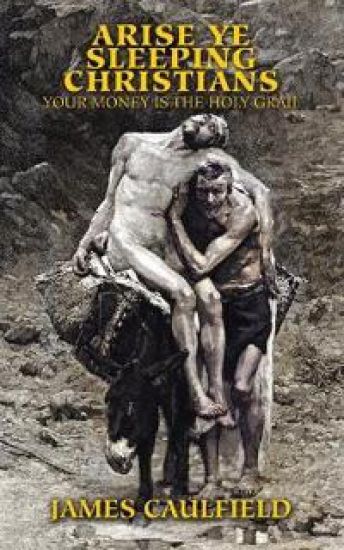
Excerpt from the 'Protocols of the Elders of Zion' All people are chained down to heavily toil by poverty more firmly than ever they were chained by slavery and serfdom; from these, one way and another, they might free themselves, these could be settled with, but from want they will never get away. We have included in the constitution such rights as to the masses appear fictitious and not actual rights. All these so-called "People's Rights" can exist only in idea, an idea which can never be realized in practical life. What is it to the proletariat labourer, bowed double over his heavy toll, crushed by his lot in life, if talkers get the right to bable, if journalists get the right to scribble any nonsense side by side with good stuff, once the proletariat has no other profit out of the constitution save only those pitiful crumbs which we fling them from our table in return for their voting in favour of what we dictate, in favour of the men we place in power, the servants of our agentur.(agenda). We appear on the scene as alleged saviours of the worker from this oppression when we propose to him to enter the ranks of our fighting forces - Socialists, Anarchists, Communists - to whom we always give support in accordance with an alleged brotherly rule (of the solidarity of all humanity) of our social masonry. The aristocracy, which enjoyed by the law the labour of the workers, was interested in seeing that the workers were well fed, healthy and strong. We are interested in just the opposite - in the diminution, the killing out of the GOYIM (Christian). Our power is in the chronic shortness of food and physical weakness of the worker because by all that this implies he is made the slave of our will, and he will not find in his own authorities either strength or energy to set against our will.
The High Court Of Justice; Comprising Memoirs Of The Principal Persons, Who Sat In Judgment On King Charles The First, And Signed His Death-Warrant, Together With Those Accessaries, Excepted By Parliament In The Bill Of Indemnity
The High Court Of Justice; Comprising Memoirs Of The Principal Persons, Who Sat In Judgment On King Charles The First, And Signed His Death-Warrant, Together With Those Accessaries, Excepted By Parliament In The Bill Of Indemnity has been considered by academicians and scholars of great significance and value to literature. This forms a part of the knowledge base for future generations. So that the book is never forgotten we have represented this book in a print format as the same form as it was originally first published. Hence any marks or annotations seen are left intentionally to preserve its true nature.
Blackguardiana

Blackguardiana

James Caulfield

Gale Ecco, Print Editions
2018
sidottu
The 18th century was a wealth of knowledge, exploration and rapidly growing technology and expanding record-keeping made possible by advances in the printing press. In its determination to preserve the century of revolution, Gale initiated a revolution of its own: digitization of epic proportions to preserve these invaluable works in the largest archive of its kind. Now for the first time these high-quality digital copies of original 18th century manuscripts are available in print, making them highly accessible to libraries, undergraduate students, and independent scholars.The Age of Enlightenment profoundly enriched religious and philosophical understanding and continues to influence present-day thinking. Works collected here include masterpieces by David Hume, Immanuel Kant, and Jean-Jacques Rousseau, as well as religious sermons and moral debates on the issues of the day, such as the slave trade. The Age of Reason saw conflict between Protestantism and Catholicism transformed into one between faith and logic -- a debate that continues in the twenty-first century.++++The below data was compiled from various identification fields in the bibliographic record of this title. This data is provided as an additional tool in helping to insure edition identification: ++++British LibraryT095154Attributed to James Caulfield. The imprint is false. London]: Printed for, and sold by John Shepherd, at the Golden Farmer, Bagshot; Sir John Falstaff; Sir Henry Morgan; Charles Maclean; Mary Cut-Purse; Mary Flanders; Mary Carleton and Betty Ireland, 1793?]. 2], vii, 235]p., plates; 8
Portraits, Memoirs And Characters Of Remarkable Persons From The Reign Of Edward Ii. To The Revolution; Volume 1
This work has been selected by scholars as being culturally important, and is part of the knowledge base of civilization as we know it. This work was reproduced from the original artifact, and remains as true to the original work as possible. Therefore, you will see the original copyright references, library stamps (as most of these works have been housed in our most important libraries around the world), and other notations in the work.This work is in the public domain in the United States of America, and possibly other nations. Within the United States, you may freely copy and distribute this work, as no entity (individual or corporate) has a copyright on the body of the work.As a reproduction of a historical artifact, this work may contain missing or blurred pages, poor pictures, errant marks, etc. Scholars believe, and we concur, that this work is important enough to be preserved, reproduced, and made generally available to the public. We appreciate your support of the preservation process, and thank you for being an important part of keeping this knowledge alive and relevant.
The Book of Wonderful Characters

The Book of Wonderful Characters

Henry Wilson; James Caulfield

Cambridge University Press
2012
pokkari
Printmaker James Caulfield (1764–1826) spent much of his career publishing illustrated books about 'remarkable persons'. He began his first series around 1788 and continued it sporadically from 1790 to 1795, with books on a similar theme continuing to appear in the first decades of the nineteenth century. More than forty years after his death, this collection of biographies (produced in collaboration with Henry Wilson (fl. 1820–30)) was republished in 1869. The edition's introduction explains that the renewed interest in these characters comes from the fact that 'we have nearly lost all, and are daily losing what little remains of, our individuality'. The vignettes, accompanied by engravings of each individual, describe a wide-ranging group - from the man who died aged 152 to a 'remarkable glutton' to a woman who lived on the smell of flowers - their only common factor being that they were in some way 'wonderful'.