Kirjojen hintavertailu. Mukana 12 473 932 kirjaa ja 12 kauppaa.

Kirjailija

James Coyne

Kirjat ja teokset yhdessä paikassa: 5 kirjaa, julkaisuja vuosilta 2016-2022, suosituimpien joukossa Drones in Society. Vertaile teosten hintoja ja tarkista saatavuus suomalaisista kirjakaupoista.

5 kirjaa

Kirjojen julkaisuhaarukka 2016-2022.

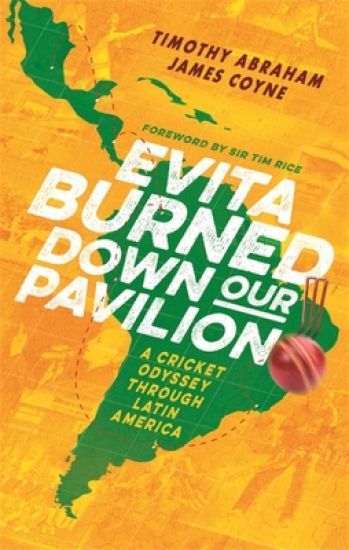
Evita Burned Down Our Pavilion

Evita Burned Down Our Pavilion

Timothy Abraham; James Coyne

Little, Brown Book Group
2022
pokkari
'A highly entertaining read, deftly melding social history with sporting memoir and travelogue' Mail on SundayA history of Latin America through cricketCricket was the first sport played in almost every country of the Americas - earlier than football, rugby or baseball. In 1877, when England and Australia played the inaugural Test match at the MCG, Uruguay and Argentina were already ten years into their derby played across the River Plate.The visionary cricket historian Rowland Bowen said that, during the highpoint of cricket in South America between the two World Wars, the continent could have provided the next Test nation. In Buenos Aires, where British engineers, merchants and meatpackers flocked to make their fortune, the standard of cricket was high: towering figures like Lord Hawke and Plum Warner took star-studded teams of Test cricketers to South America, only to be beaten by Argentina. A combined Argentine, Brazilian and Chilean team took on the first-class counties in England in 1932. The notion of Brazilians and Mexicans playing T20 at the Maracana or the Azteca today is not as far-fetched as it sounds.But Evita Burned Down Our Pavilion is also a social history of grit, industry and nation-building in the New World. West Indian fruit workers battled yellow fever and brutal management to carve out cricket fields next to the railway lines in Costa Rica. Cricket was the favoured sport of Chile's Nitrate King. Emperors in Brazil and Mexico used the game to curry favour with Europe. The notorious Pablo Escobar even had a shadowy connection to the game. The fate of cricket in South America was symbolised by Eva Peron ordering the burning down of the Buenos Aires Cricket Club pavilion when the club refused to hand over their premises to her welfare scheme.Cricket journalists Timothy Abraham and James Coyne take us on a journey to discover this largely untold story of cricket's fate in the world's most colourful continent. Fascinating and surprising, Evita Burned Down Our Pavilion is a valuable addition to cricketing and social history.
Evita Burned Down Our Pavilion

Evita Burned Down Our Pavilion

Timothy Abraham; James Coyne

Constable
2021
sidottu
'A highly entertaining read, deftly melding social history with sporting memoir and travelogue' Mail on SundayA history of Latin America through cricketCricket was the first sport played in almost every country of the Americas - earlier than football, rugby or baseball. In 1877, when England and Australia played the inaugural Test match at the MCG, Uruguay and Argentina were already ten years into their derby played across the River Plate.The visionary cricket historian Rowland Bowen said that, during the highpoint of cricket in South America between the two World Wars, the continent could have provided the next Test nation. In Buenos Aires, where British engineers, merchants and meatpackers flocked to make their fortune, the standard of cricket was high: towering figures like Lord Hawke and Plum Warner took star-studded teams of Test cricketers to South America, only to be beaten by Argentina. A combined Argentine, Brazilian and Chilean team took on the first-class counties in England in 1932. The notion of Brazilians and Mexicans playing T20 at the Maracana or the Azteca today is not as far-fetched as it sounds.But Evita Burned Down Our Pavilion is also a social history of grit, industry and nation-building in the New World. West Indian fruit workers battled yellow fever and brutal management to carve out cricket fields next to the railway lines in Costa Rica. Cricket was the favoured sport of Chile's Nitrate King. Emperors in Brazil and Mexico used the game to curry favour with Europe. The notorious Pablo Escobar even had a shadowy connection to the game. The fate of cricket in South America was symbolised by Eva Peron ordering the burning down of the Buenos Aires Cricket Club pavilion when the club refused to hand over their premises to her welfare scheme.Cricket journalists Timothy Abraham and James Coyne take us on a journey to discover this largely untold story of cricket's fate in the world's most colourful continent. Fascinating and surprising, Evita Burned Down Our Pavilion is a valuable addition to cricketing and social history.

Drones in Society

Drones in Society

Ron Bartsch; James Coyne; Katherine Gray

Routledge
2018
nidottu
The integration of drones into society has attracted unprecedented attention throughout the world. The change, for aviation, has been described as being equally as big as the arrival of the jet engine. This book examines the issues that surround this change, for our society and the legal frameworks that preserve our way of life. Drones in Society takes the uninitiated on a journey to understand the history of drones, the present day and the potential future in order to demystify the media hype.Written in an accessible style, Drones in Society will appeal to a broad range of interested readerships, among them students, safety regulators, government employees, airspace regulators, insurance brokers and underwriters, risk managers, lawyers, privacy groups and the Remotely Piloted Aircraft System (RPAS) industry generally. In a world first, this book is a light and interesting read; being both relatable and memorable while discussing complex matters of privacy, international law and the challenges ahead for us all.
Drones in Society

Drones in Society

Ron Bartsch; James Coyne; Katherine Gray

Routledge
2016
sidottu
The integration of drones into society has attracted unprecedented attention throughout the world. The change, for aviation, has been described as being equally as big as the arrival of the jet engine. This book examines the issues that surround this change, for our society and the legal frameworks that preserve our way of life. Drones in Society takes the uninitiated on a journey to understand the history of drones, the present day and the potential future in order to demystify the media hype.Written in an accessible style, Drones in Society will appeal to a broad range of interested readerships, among them students, safety regulators, government employees, airspace regulators, insurance brokers and underwriters, risk managers, lawyers, privacy groups and the Remotely Piloted Aircraft System (RPAS) industry generally. In a world first, this book is a light and interesting read; being both relatable and memorable while discussing complex matters of privacy, international law and the challenges ahead for us all.