Kirjojen hintavertailu. Mukana 12 657 676 kirjaa ja 12 kauppaa.

Kirjailija

James D. Savage

Kirjat ja teokset yhdessä paikassa: 8 kirjaa, julkaisuja vuosilta 1999-2021, suosituimpien joukossa Vengeance is Mine. Vertaile teosten hintoja ja tarkista saatavuus suomalaisista kirjakaupoista.

Mukana myös kirjoitusasut: James D Savage

8 kirjaa

Kirjojen julkaisuhaarukka 1999-2021.

Comparative Public Budgeting

Comparative Public Budgeting

George M. Guess; James D. Savage

Cambridge University Press
2021
sidottu
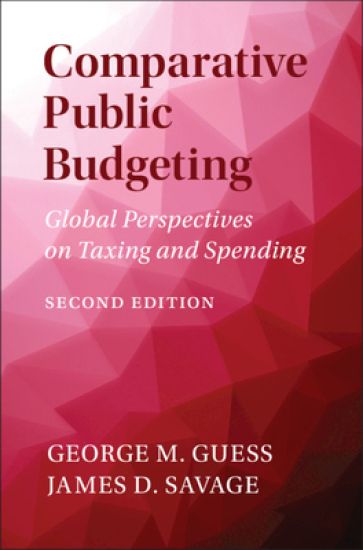
Every government engages in budgeting and public financial management to run the affairs of state. Effective budgeting empowers states to prioritize policies, allocate resources, and discipline bureaucracies, and it contributes to efficacious fiscal and macroeconomic policies. Budgeting can be transparent, participatory, and promote democratic decision-making, or it can be opaque, hierarchical, and encourage authoritarian rule. This book compares budgetary systems around the world by examining the economic, political, cultural, and institutional contexts in which they are formulated, adopted, and executed. The second edition has been updated with new data to offer a more expansive set of national case studies, with examples of budgeting in China, India, Indonesia, Iraq, and Nigeria. Chapters also discuss Brexit and the European Union's struggle to require balances budgets during the Euro Debt Crisis. Additionally, the authors provide a deeper analysis of developments in US budgetary policies from the Revolutionary War through the Trump presidency.
Comparative Public Budgeting

Comparative Public Budgeting

George M. Guess; James D. Savage

Cambridge University Press
2021
pokkari
Every government engages in budgeting and public financial management to run the affairs of state. Effective budgeting empowers states to prioritize policies, allocate resources, and discipline bureaucracies, and it contributes to efficacious fiscal and macroeconomic policies. Budgeting can be transparent, participatory, and promote democratic decision-making, or it can be opaque, hierarchical, and encourage authoritarian rule. This book compares budgetary systems around the world by examining the economic, political, cultural, and institutional contexts in which they are formulated, adopted, and executed. The second edition has been updated with new data to offer a more expansive set of national case studies, with examples of budgeting in China, India, Indonesia, Iraq, and Nigeria. Chapters also discuss Brexit and the European Union's struggle to require balances budgets during the Euro Debt Crisis. Additionally, the authors provide a deeper analysis of developments in US budgetary policies from the Revolutionary War through the Trump presidency.

Reconstructing Iraq's Budgetary Institutions

Reconstructing Iraq's Budgetary Institutions

James D. Savage

Cambridge University Press
2013
pokkari
Consistent with the literature on state building, failed states, peacekeeping and foreign assistance, this book argues that budgeting is a core state activity necessary for the operation of a functional government. Employing a historical institutionalist approach, this book first explores the Ottoman, British and Ba'athist origins of Iraq's budgetary institutions. The book next examines American pre-war planning, the Coalition Provisional Authority's rule-making and budgeting following the invasion of Iraq in 2003, and the mixed success of the Coalition's capacity-building programs initiated throughout the occupation. This book sheds light on the problem of 'outsiders' building states, contributes to a more comprehensive evaluation of the Coalition in Iraq, addresses the question of why Iraqis took ownership of some Coalition-generated institutions, and helps explain the nature of institutional change.
Making the EMU

Making the EMU

James D. Savage

Oxford University Press
2007
nidottu
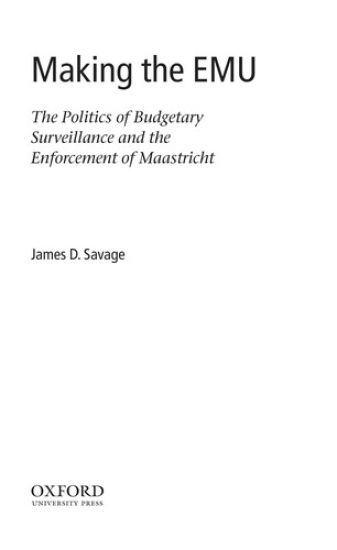
The Maastricht Treaty and the Stability Growth Pact demand that EU member states comply with their famous deficit and debt requirements of three and sixty per cent of GDP. Yet, how can the EU's leaders be certain that these targets are met? Is a three per cent deficit in Belgium equivalent to one in Italy or France? Making the EMU explores how the Treaty's budgetary surveillance procedure monitors member state budgetary policies, harmonizes their budgetary data, and effectively determines which member states qualified for member status and are subject to the Pact's sanctions. This book provides the first examination of how the EU entrusted the credibility of these critical budgetary figures to a relatively minor European Commission agency, and what effect the surveillance procedure has on the making of the EMU and the enforcement of Maastricht.
Making the EMU

Making the EMU

James D. Savage

Oxford University Press
2004
sidottu
The Maastricht Treaty and the Stability Growth Pact demand that EU member states comply with their famous deficit and debt requirements of 3 and 60 per cent of GDP. Yet, how can the EU's leaders be certain that these targets are met? Is a 3 per cent deficit in Belgium equivalent to one in Italy or France? Making the EMU explores how the Treaty's budgetary surveillance procedure monitors member state budgetary policies, harmonizes their budgetary data, and effectively determines which member states qualified for member status and are subject to the Pact's sanctions. This book provides the first examination of how the EU entrusted the credibility of these critical budgetary figures to a relatively minor European Commission agency, and what effect the surveillance proceudre has on the making of the EMU and the enforcement of Maastricht.
Funding Science in America

Funding Science in America

James D. Savage

Cambridge University Press
2000
pokkari
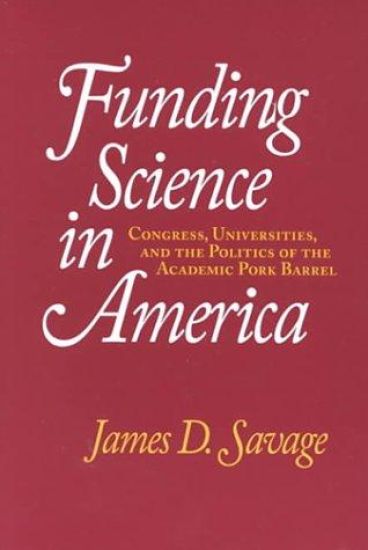
Since the 1950s, the federal government has relied on the peer review system for funding high quality academic science. Yet, despite the success of American science, peer review is under attack for being a biased ‘good old boy’ network that helps rich research universities get richer. As a remedy for these biases, university presidents and members of Congress have turned to the earmarking of science projects and facilities in the federal budget. This earmarking of funds, however, brings with it new areas of tension and suspicion. Funding Science in America is the first book to explore both the pros and the cons of the controversial academic earmarking issue. Savage analyzes the earmarking decision of both university presidents and members of Congress, identifies those universities that have benefited most from earmarking, as well as examining the question of whether earmarking improves their ability to compete for research.
Funding Science in America

Funding Science in America

James D. Savage

Cambridge University Press
1999
sidottu
Since the 1950s, the federal government has relied on the peer review system for funding high quality academic science. Yet, despite the success of American science, peer review is under attack for being a biased ‘good old boy’ network that helps rich research universities get richer. As a remedy for these biases, university presidents and members of Congress have turned to the earmarking of science projects and facilities in the federal budget. This earmarking of funds, however, brings with it new areas of tension and suspicion. Funding Science in America is the first book to explore both the pros and the cons of the controversial academic earmarking issue. Savage analyzes the earmarking decision of both university presidents and members of Congress, identifies those universities that have benefited most from earmarking, as well as examining the question of whether earmarking improves their ability to compete for research.