Kirjojen hintavertailu. Mukana 12 595 353 kirjaa ja 12 kauppaa.

Kirjailija

James Dickins

Kirjat ja teokset yhdessä paikassa: 7 kirjaa, julkaisuja vuosilta 1998-2022, suosituimpien joukossa Thinking Arabic Translation. Vertaile teosten hintoja ja tarkista saatavuus suomalaisista kirjakaupoista.

7 kirjaa

Kirjojen julkaisuhaarukka 1998-2022.

Thematic Structure and Para-Syntax: Arabic as a Case Study
Thematic Structure and Para-Syntax: Arabic as a Case Study presents a structural analysis of Arabic, providing an alternative to the traditional notions of theme and rheme.Taking Arabic as a case study, this book claims that approaches to thematic structure propounded in universalist linguistic theories, of which Hallidayan systemic functional linguistics is taken as an illustrative example, are profoundly wrong. It argues that in order to produce an analysis of thematic structure and similar phenomena which is not undermined by its own theoretical presuppositions, it is necessary to remove such notions from the domain of linguistic and semiotic theory. The book initially focuses on Sudanese Arabic, because this allows for a beautifully clear exposition of general principles, before applying these principles to Modern Standard Arabic, and some other Arabic varieties.This book will be of interest to scholars in Arabic linguistics, linguistic theory, and information structure.
Thematic Structure and Para-Syntax: Arabic as a Case Study
Thematic Structure and Para-Syntax: Arabic as a Case Study presents a structural analysis of Arabic, providing an alternative to the traditional notions of theme and rheme.Taking Arabic as a case study, this book claims that approaches to thematic structure propounded in universalist linguistic theories, of which Hallidayan systemic functional linguistics is taken as an illustrative example, are profoundly wrong. It argues that in order to produce an analysis of thematic structure and similar phenomena which is not undermined by its own theoretical presuppositions, it is necessary to remove such notions from the domain of linguistic and semiotic theory. The book initially focuses on Sudanese Arabic, because this allows for a beautifully clear exposition of general principles, before applying these principles to Modern Standard Arabic, and some other Arabic varieties.This book will be of interest to scholars in Arabic linguistics, linguistic theory, and information structure.
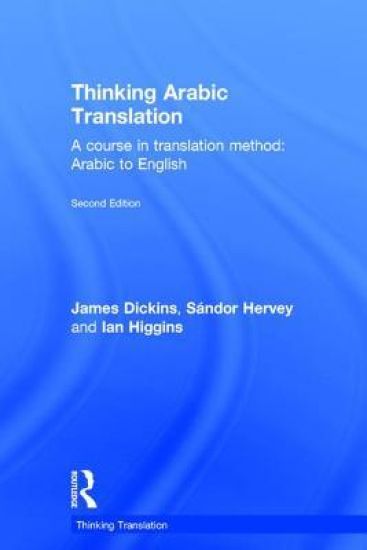
Thinking Arabic Translation

Thinking Arabic Translation

James Dickins; Sándor Hervey; Ian Higgins

Routledge
2016
nidottu
Thinking Arabic Translation is an indispensable book for linguists who want to develop their Arabic-to-English translation skills. Clear explanations, discussions, examples and exercises enable students to acquire the skills necessary for tackling a broad range of translation problems.The book has a practical orientation, addressing key issues for translators, such as cultural differences, genre, and revision and editing. It is a book on translation method, drawing on a range of notions from linguistics and translation theory to encourage thoughtful consideration of possible solutions to practical problems.This new edition includes:• new material in almost all chapters• a new chapter on parallelism• two new chapters on technical translation: botanical and Islamic finance texts• new and up-to-date examples from all types of translation, covering broad issues that have emerged in the Arab world in recent years• texts drawn from a wide variety of writing types, including newspapers, prose fiction, poetry, tourist material, scientific texts, financial texts, recipes, academic writing, constitutions and political speeches• at least three full-length practical translation exercises in each chapter to complement the discussions and consolidate learning.In addition to the updated Tutor’s Handbook, a Supplement, containing textual material and practical exercises aimed at further developing the translation issues discussed in the main text, and a Tutor’s Handbook to the Supplement, are available at www.routledgetextbooks.com/textbooks/_author/thinkingtranslation/.Thinking Arabic Translation is key reading for advanced students wishing to perfect their language skills or considering a career in translation.
Thinking Arabic Translation

Thinking Arabic Translation

James Dickins; Sándor Hervey; Ian Higgins

Routledge
2016
sidottu
Thinking Arabic Translation is an indispensable book for linguists who want to develop their Arabic-to-English translation skills. Clear explanations, discussions, examples and exercises enable students to acquire the skills necessary for tackling a broad range of translation problems.The book has a practical orientation, addressing key issues for translators, such as cultural differences, genre, and revision and editing. It is a book on translation method, drawing on a range of notions from linguistics and translation theory to encourage thoughtful consideration of possible solutions to practical problems.This new edition includes:• new material in almost all chapters• a new chapter on parallelism• two new chapters on technical translation: botanical and Islamic finance texts• new and up-to-date examples from all types of translation, covering broad issues that have emerged in the Arab world in recent years• texts drawn from a wide variety of writing types, including newspapers, prose fiction, poetry, tourist material, scientific texts, financial texts, recipes, academic writing, constitutions and political speeches• at least three full-length practical translation exercises in each chapter to complement the discussions and consolidate learning.In addition to the updated Tutor’s Handbook, a Supplement, containing textual material and practical exercises aimed at further developing the translation issues discussed in the main text, and a Tutor’s Handbook to the Supplement, are available at www.routledgetextbooks.com/textbooks/_author/thinkingtranslation/.Thinking Arabic Translation is key reading for advanced students wishing to perfect their language skills or considering a career in translation.
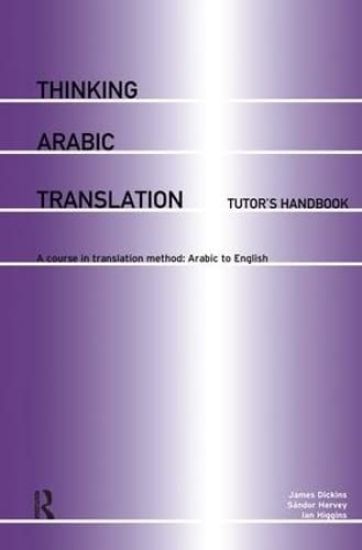
Thinking Arabic Translation: Tutor's Handbook

Thinking Arabic Translation: Tutor's Handbook

James Dickins; Sándor Hervey; Ian Higgins

Routledge
2016
sidottu
Thinking Arabic Translation is a comprehensive and practical 24-week course in translation method. Clear explanations, discussion, examples and exercises enable students to acquire the skills necessary for tackling a broad range of translation problems. Examples are drawn from a variety of sources, including journalism and politics, legal and technical texts and literary and consumer-orientated texts. This Tutor's Handbook complements the Thinking Arabic Translation Coursebook for students. It provides invaluable guidance on using the course and includes specimen answers and photocopiable class handouts.
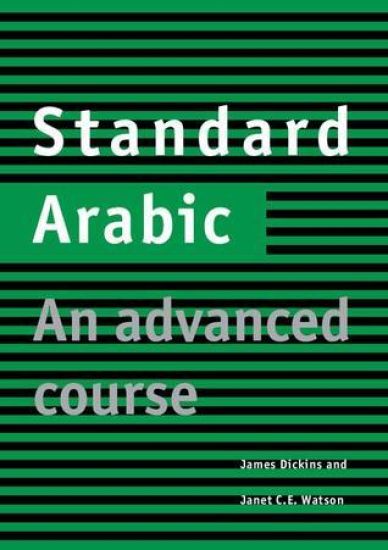
Standard Arabic Student's book

Standard Arabic Student's book

James Dickins; Watson Janet C. E.

Cambridge University Press
1999
pokkari
This course is designed for students who have completed a first-level course in Arabic and wish to pursue the subject to degree level. It aims to develop thoroughly the four basic language skills of reading, writing, speaking and listening, making extensive use of authentic Arabic materials. Each of the twenty chapters is based around a particular topic relating to the culture, history, politics, geography or society of the Arab Middle East, to give students an insight into important aspects of the region. This topic-based approach allows students to tackle vocabulary and structures in a coherent and concentrated manner. Each chapter contains materials for translation into and from Arabic, aural texts, précis passages, suggested oral discussion topics, and a variety of exercises including comprehension in English and Arabic. Accompanying cassettes and a teacher’s handbook are available.
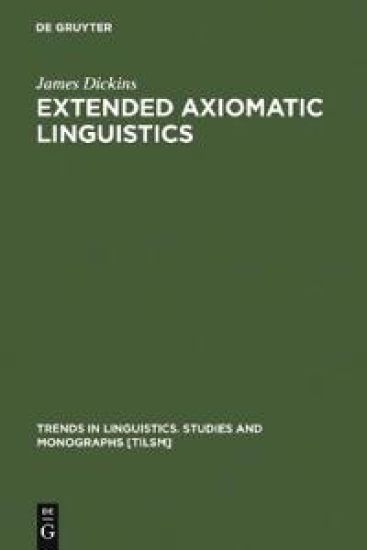
Extended Axiomatic Linguistics

Extended Axiomatic Linguistics

James Dickins

De Gruyter Mouton
1998
sidottu
TRENDS IN LINGUISTICS is a series of books that open new perspectives in our understanding of language. The series publishes state-of-the-art work on core areas of linguistics across theoretical frameworks, as well as studies that provide new insights by approaching language from an interdisciplinary perspective. TRENDS IN LINGUISTICS considers itself a forum for cutting-edge research based on solid empirical data on language in its various manifestations, including sign languages. It regards linguistic variation in its synchronic and diachronic dimensions as well as in its social contexts as important sources of insight for a better understanding of the design of linguistic systems and the ecology and evolution of language. TRENDS IN LINGUISTICS publishes monographs and outstanding dissertations as well as edited volumes, which provide the opportunity to address controversial topics from different empirical and theoretical viewpoints. High quality standards are ensured through anonymous reviewing. To discuss your book idea or submit a proposal, please contact Birgit Sievert.