Kirjojen hintavertailu. Mukana 12 215 172 kirjaa ja 12 kauppaa.

Kirjailija

James Dobbins

Kirjat ja teokset yhdessä paikassa: 23 kirjaa, julkaisuja vuosilta 2003-2022, suosituimpien joukossa America's Strategy-Resource Mismatch. Vertaile teosten hintoja ja tarkista saatavuus suomalaisista kirjakaupoista.

23 kirjaa

Kirjojen julkaisuhaarukka 2003-2022.

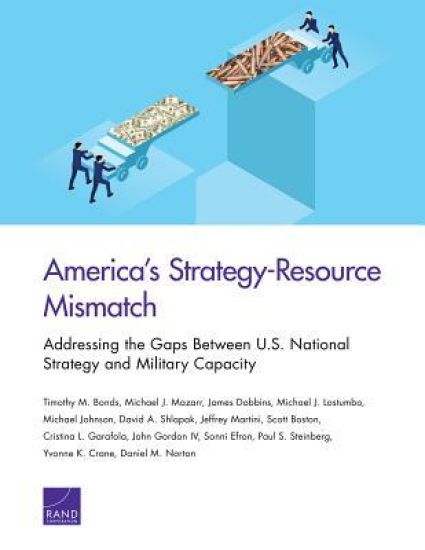
America's Strategy-Resource Mismatch

America's Strategy-Resource Mismatch

Timothy M Bonds; Michael J Mazarr; James Dobbins; Michael J Lostumbo; Michael Johnson; David A Shlapak; Jeffrey Martini; Scott Boston; Cristina L Garafola; John Gordon; Sonni Efron; Paul S Steinberg; Yvonne K Crane; Daniel M Norton

RAND
2019
nidottu
In order to defend itself and its national interests, and to maintain the trust of allies as a reliable security guarantor, the United States must match its national security policies with the resources available to support them. This report discusses the specific gaps between the stated strategic and defense policies of the United States and the resources and capabilities that would be required to implement those policies successfully.
The U.S. Army in Asia, 2030-2040

The U.S. Army in Asia, 2030-2040

Terrence K. Kelly; James Dobbins; David A. Shlapak; David C. Gompert; Eric Heginbotham; Peter Chalk; Lloyd Thrall

RAND
2015
pokkari
Looking to the 2030 2040 time frame, U.S. policy and military strategy will need to strike a balance among maintaining a cooperative relationship with China, deterring Chinese aggression in regional disputes, and preparing for the possibility that China could become more assertive. The U.S. Army will have an important role to play in preparing for these developments and for protecting and furthering U.S. interests in the region."
The Beginner's Guide to Nation-building

The Beginner's Guide to Nation-building

James Dobbins; Seth G. Jones; Keith Crane; Beth Degrasse

RAND
2007
pokkari
Defining "nation-building" as the use of armed forces after a conflict to promote democracy, a practice outlined in two earlier volumes including The UN's Role in Nation-Building, a critical assessment of America's failure to nation-build in Iraq makes recommendations for economic stabilization, relief efforts, civil administration, and more. Original.
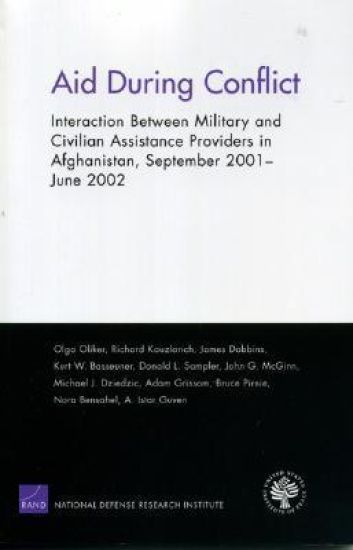
Aid During Conflict

Aid During Conflict

Olga Oliker; Richard Kauzlarich; James Dobbins; Kurt W. Basseuner; Donald L. Sampler; John G. McGinn; Michael J. Dziedzic; Adam Grissom; Bruce R. Pirnie; Nora Bensahel; A.Istar Guven

RAND
2004
pokkari
An assessment of humanitarian-assistance efforts by and interaction between civilian and military providers in the early phases of Operation Enduring Freedom in Afghanistan Description and evaluation of relief, reconstruction, humanitarian, and humanitarian-type aid efforts in Afghanistan during the most intense phase of military operations, from September 2001 to June 2002. The efforts were generally successful, but there were serious coordination problems among the various civilian and military aid providers. Critical issues, both positive and negative, are identified, and a list of recommendations is provided for policymakers, implementers, and aid providers, based on lessons learned.
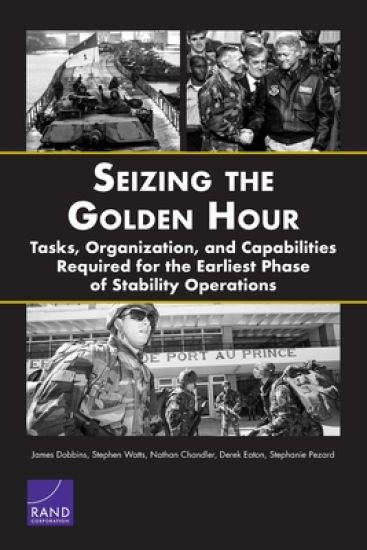
Seizing the Golden Hour

Seizing the Golden Hour

James Dobbins; Stephen Watts; Nathan Chandler

RAND
2020
nidottu
This report analyzes the golden hour-the early phase of a postconflict stability operation-and the actions, organization, and capabilities necessary to seize it and set the conflict-affected country on a path to self-sustaining peace. There is evidence that the early phases of postconflict operations are critical for improving the odds of success and reducing the eventual costs of achieving an acceptable outcome.
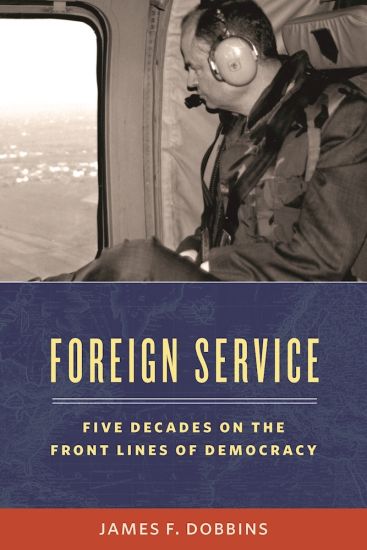
Foreign Service

Foreign Service

James Dobbins; Robert Zoellick

Brookings Institution
2017
sidottu
"A behind the scenes look at 50 years of US diplomacy.From Vietnam in the 1960s to Afghanistan in this decade, James Dobbins was on the frontlines of American diplomacy and worked to advance U.S. national interests in some of the world’s most difficult and troubled arenas.In Foreign Service, Dobbins takes the reader behind the scenes at the Vietnam peace talks, the darkest days of the Cold War, the reunification of Germany, the collapse of the Soviet Union, and the U.S. military interventions in Afghanistan, Bosnia, Haiti, Kosovo, and Somalia. He provides a thoughtful insider’s account of all these ventures, analyzes the sources of both success and failure, and provides incisive portraits of many of the chief actors.Presidents Clinton, Bush, and Obama turned repeatedly to Dobbins as a diplomatic trouble-shooter with the right instincts and experience to help find solutions for seemingly irresolvable problems. Foreign Service vividly captures why they did."
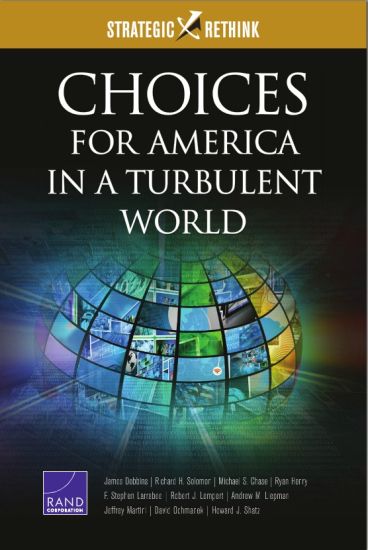
Choices for America in a Turbulent World

Choices for America in a Turbulent World

James Dobbins; Richard H Solomon; Michael S. Chase; Ryan Henry; F. Stephen Larrabee; Robert J. Lempert; Andrew M. Liepman; Jeffrey Martini; David Ochmanek; Howard J. Shatz

RAND
2015
pokkari
The first in a series exploring the elements of a national strategy for U.S. foreign policy, this book examines the most critical decisions likely to face the next president. The book covers global and regional issues and spotlights the long-term policy issues and organizational, financial, and diplomatic challenges that will confront senior U.S. officials in 2017 and beyond.
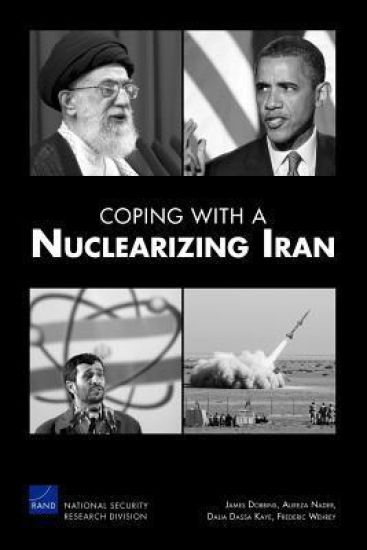
Coping with a Nuclearizing Iran

Coping with a Nuclearizing Iran

James Dobbins; Alireza Nader; Dalia Dassa Kaye; Frederic M. Wehrey

RAND
2011
pokkari
It is not inevitable that Iran will acquire nuclear weapons or even that it will gain the capacity to quickly produce them. U.S. and even Israeli analysts continually push their estimates for such an event further into the future. Nevertheless, absent a change in Iranian policy, it is reasonable to assume that, some time in the coming decade, Iran will acquire such a capability. Most recent scholarly studies have also focused on how to prevent Iran from acquiring nuclear weapons. Other, less voluminous writing looks at what to do after Iran becomes a nuclear power. What has so far been lacking is a policy framework for dealing with Iran before, after, and, indeed, during its crossing of the nuclear threshold. This monograph attempts to fill that gap by providing a midterm strategy for dealing with Iran that neither begins nor ends at the point at which Tehran acquires a nuclear weapon capability. It proposes an approach that neither acquiesces to a nuclear-armed Iran nor refuses to admit the possibility - indeed, the likelihood - of this occurring.
Building a More Resilient Haitian State

Building a More Resilient Haitian State

Keith Crane; James Dobbins; Laurel E. Miller; Charles P. Ries; Christopher S. Chivvis; Marla C. Haims; Marco Overhaus; Heather Lee Schwartz; Elizabeth Wilke

RAND
2010
pokkari
Hope for a prosperous and peaceful future for Haiti lies in building a more effective, resilient state. This report identifies the main challenges to more capable governance, evaluates existing plans for improving the delivery of public services, and proposes a realistic set of critical actions. The proposed state-building priorities merit the greatest degree of Haiti's and international donors' policy attention and financial commitment.
Occupying Iraq

Occupying Iraq

James Dobbins

RAND
2009
pokkari
The American engagement in Iraq has been looked at from many perspectives, to include examination of the flawed intelligence that provided the war's rationale, the failed effort to secure an international mandate, the rapid success of the invasion, and the long ensuing counterinsurgency campaign. This compelling new book focuses on the activities of the Coalition Provisional Authority (CPA) and its Administrator, L. Paul Bremer. The book also includes interviews with many of those in Baghdad and Washington responsible for setting and implementing occupation policy, on the memoirs of American and Iraqi officials who have since left office, on journalist accounts of the period, and on tens of thousands of internal and recently unclassified CPA documents, to which the authors were allowed access.
After the War

After the War

James Dobbins; Michele A. Poole; Austin Long; Ben Runkle

RAND
2008
pokkari
The United States has gained considerable experience in nation-building operations through its participation in at least eight significant operations since World War II - in Germany, Japan, Somalia, Haiti, Bosnia, Kosovo, Afghanistan, and Iraq. These eight cases can be split into three distinct periods: the post - World War II cases of Germany and Japan under the administrations of Franklin Roosevelt and Harry Truman; the post - Cold War cases of Somalia, Haiti, Bosnia, and Kosovo under the administrations of George H.W. Bush and Bill Clinton; and the post-9/11 cases of Afghanistan and Iraq under the administration of George W. Bush. Exploring both the decision-making style and structure of government in the three periods can lead to a deeper understanding of American decision-making on, and the American capacity for, nation-building.This volume first discusses some general theories of administration, leadership, and authority in order to frame the empirical evidence on nation-building. Then, each period of nation-building is examined, focusing on operations, the distribution of responsibility, how U.S. efforts fit into larger international efforts, and the impact of the decision-making structures on the overall success of the operation.Finally, the authors combine theory and evidence to draw conclusions about the influence of decision-making style and structure on American nation-building.
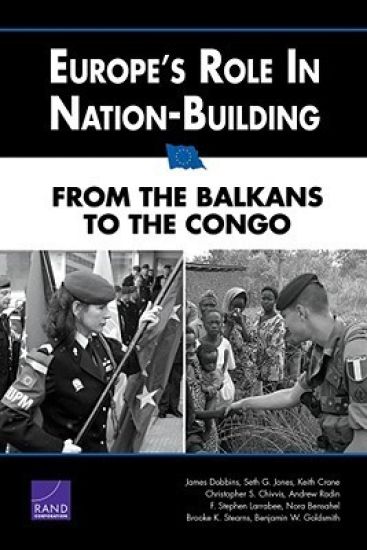
Europe's Role in Nation-building

Europe's Role in Nation-building

James Dobbins; Seth G. Jones; Keith Crane; Christopher S. Chivvis; Andrew Radin; F. Stephen Larrabee; Nora Bensahel; Brooke K. Stearns; Benjamin W. Goldsmith

RAND
2008
pokkari
Peace is the most essential product of nation-building. Without peace, neither economic growth nor democratization is possible. The authors of "Europe's Role in Nation-Building" investigate the use of armed force as part of broader nation-building efforts led by European powers and its success at achieving the objective of transforming a society emerging from conflict into one at peace with itself and its neighbours. They then evaluate Europe's performance against the U.S. and United Nations records in past nation-building operations.The authors focus on factors that can be influenced by outside powers, making valuable recommendations that address the pitfalls of and lessons learned from past operations. They emphasize the need for multilateral operations and the involvement of crucial actors like the European Union and NATO. The success of nation-building activities depends on the wisdom with which all resources are employed."The RAND Nation-Building" series is just this kind of resource, having drawn from a total of 22 European, U.N. and U.S. led nation-building operations since World War II.Other volumes in the series examine the involvement of the United States and the UN in nation-building efforts. In this new addition to the series, the authors take an in-depth look at six European cases (Macedonia, Bosnia, Cote d'Ivoire, Albania, the Democratic Republic of Congo, and Sierra Leone) and one Australian-led operation (the Solomon Islands) to complete a comprehensive history of best practices in nation-building. This series serves as an indispensable reference for the planning of successful future interventions.