Kirjojen hintavertailu. Mukana 12 595 353 kirjaa ja 12 kauppaa.

Kirjailija

James Earls

Kirjat ja teokset yhdessä paikassa: 11 kirjaa, julkaisuja vuosilta 2015-2026, suosituimpien joukossa The Evolving Breath Two-Volume Set. Vertaile teosten hintoja ja tarkista saatavuus suomalaisista kirjakaupoista.

11 kirjaa

Kirjojen julkaisuhaarukka 2015-2026.

The Evolving Breath Volume 1

The Evolving Breath Volume 1

James Earls; Christopher Gladwell

JESSICA KINGSLEY PUBLISHERS
2025
pokkari
As humans have evolved, so has the way we breathe.The Evolving Breath explores this evolution in a comprehensive way to help practitioners improve their clients' wellbeing. The authors uniquely combine evolutionary biology, anatomy, physiology, assessment, technique and psychology, to develop current concepts regarding the mechanics of human breath, whilst also bringing to light new approaches to the theory and practice of breathwork.All of this is explored in a way that is approachable and practical using text, images and videos, to bring the science to life. With practical applications such as alleviating dysfunctions and aiding digestion, The Evolving Breath is an essential read for anyone who teaches or practices breathwork.
Understanding the Human Foot

Understanding the Human Foot

James Earls

Human Kinetics Publishers
2025
pokkari
An essential resource for bodywork practitioners, physical therapists, and sports medicine practitioners. A vital guide to understanding the anatomy, form, and mechanics of the human foot.Understanding the Human Foot is a full-color, up-to-date overview of the structure and function of the foot, written for physical therapists and movement practitioners looking to deepen their understanding of holistic anatomy. Readers will gain perspective on the impact of foot shape, the interdependence of form and function, and the cellular processes that determine how our tissue is designed. Most importantly, author James Earls demonstrates how the foot relates to and interacts with the rest of the body during movement, laying the groundwork for a comprehensive and holistic approach to assessing, troubleshooting, and addressing functional and structural foot issues. Starting with big-picture questions-What is a foot, and what is it used for? How does it work, both on its own and as part of a whole?-before zeroing in on the 26 bones, 33 joints, and many muscles that make up the foot, Earls teaches anatomy the way he wishes he'd been taught 30 years ago: with a holistic emphasis on interrelated systems, real-life applications, and easy-to-understand language. He shares the following: Full-color illustrations for easy reference and improved understanding An overview of the bones, ligaments, and extrinsic and intrinsic muscles of the foot The impact of your gait on the rest of the body and the potential for problems as high up as the neck and shoulders Guidance on how to assess structural problems of the foot Corrective exercises A footwear guide to choosing the best shoe for your foot type
Functional Anatomy of Movement: An Illustrated Guide to Joint Movement, Soft Tissue Control, and Myofascial Anatomy-- For Yoga Teachers, Pilates Instr
A unique and comprehensive approach to functional anatomy through the lens of myofascial continuities, from the coauthor of Fascial Release for Structural Balance Whether we describe them as anatomy trains, myofascial chains, meridians, or slings--insights into the interconnected nature of fascial tissue have had a profound impact on our understanding of anatomy. The concept of tensegrity--the idea that changes in tension may affect the whole body rather than just one part--has likewise opened up new appreciations for the complex and interdependent nature of real-world bodily movements. But musculoskeletal anatomy still tends to be taught in a drastically simplified fashion, through the study of fixed anatomical positions that do little to prepare us for the reality of actual movements. In Functional Myofascial Anatomy, James Earls suggests that we need a new set of tools and vocabulary for watching and describing anatomy in motion. Earls argues that it is seeing movement in action--in different bodies and in different environments--that should inform our understanding of anatomy, rather than the other way around. By situating the different theories and metaphors of myofascial continuities against the context of common real-life movements such as sports exercises and yoga asanas, Earls explains how each theoretical system may be useful in different situations and applicable to different issues. Using up-to-date research, Earls digs into important questions for physical and manual therapists: which tissues really are contiguous? Does continuity of tissue actually show or demonstrate transmission of force and communication along those lines? And does fascial tissue have to be continuous for the body to actually transfer force? Accessibly written and fully illustrated, Functional Myofascial Anatomy offers practical applications for physical therapists, chiropractors, and bodyworkers, as well as new tools for teachers of yoga and pilates to develop a deeper understanding of anatomy and movement.
Functional Anatomy of Movement

Functional Anatomy of Movement

James Earls

Lotus Publishing Limited
2023
nidottu
Countering the oversimplified teaching of musculoskeletal anatomy via static positions, James Earls argues for a novel approach. He calls for new tools and vocabulary to observe and articulate anatomy in motion and posits that observing varied bodies in different environments should refine our anatomy understanding. Earls explores the profound effects of understanding fascial tissue interconnectedness-described as anatomy trains, myofascial chains, meridians, or slings-on our anatomical knowledge. He delves into the concept of tensegrity, emphasizing its contribution to our appreciation of the intricacy and interdependence of real-world body movements. By situating the different theories and metaphors of myofascial continuities against the context of common real-life movements such as sports exercises and yoga asanas, Earls describes the utility and application of each theoretical system to many different situations and issues. Using up-to-date research, Earls digs into important questions for physical and manual therapists: which tissues really are contiguous? Does continuity of tissue actually show or demonstrate transmission of force and communication along those lines? And does fascial tissue have to be continuous for the body to actually transfer force? Accessibly written and fully illustrated, Functional Anatomy of Movement offers practical applications for physical therapists, chiropractors, and bodyworkers, as well as new tools for teachers of yoga and Pilates to develop a deeper understanding of anatomy and movement.
Born to Walk, Second Edition: Myofascial Efficiency and the Body in Movement
Understand the complexity of movement in this revised edition of the definitive guide to the physiology and mechanics of upright walking--now updated with 50% new material. Incorporates the Anatomy Trains model of human anatomy, plus the latest science on assessment, diagnosis, treatment, and sports medicine. The ability to walk upright on two legs is one of the major traits distinguishing us as humans, and yet the reasons for its development remain a mystery among scientists. In Born to Walk, author James Earls explores the mystery of walking's evolution by describing the complex mechanisms enabling us to be efficient in bipedal gait. Viewing the whole body as an interconnected unit, he explains how we can regain a flowing efficiency within our gait--an efficiency which is part of our natural design. Based on Thomas Myers's Anatomy Trains model of human anatomy, as well as the latest science in paleoanthropology, sports medicine, and anatomy, Earls's work demonstrates how the whole body collaborates in walking, and distills the complex actions into a simple sequence of "essential events" that engage the myofascia and utilize its full potential. Offering a unique combination of anatomy, body reading assessment, and technique, this revised edition provides bodyworkers, physical therapists, and movement teachers with new research on assessment, diagnosis, and treatment approaches. Earls offers a convenient model for understanding the complexity of movement while gaining a deeper insight into the physiology and mechanics of the walking process. This book is designed for movement therapy practitioners, physiotherapists, osteopaths, chiropractors, massage therapists, and bodyworkers hoping to understand gait and its mechanics. It will also appeal to anyone with an interest in evolution and movement.
Born to Walk

Born to Walk

James Earls

Lotus Publishing Limited
2020
pokkari
Designed to help movement therapists, physical therapists, and bodyworkers understand gait and its mechanics, and will appeal to anyone with an interest in evolution and movement. It offers a concise model for understanding the complexity of movement while gaining a deeper insight into the physiology and mechanics of the walking process.
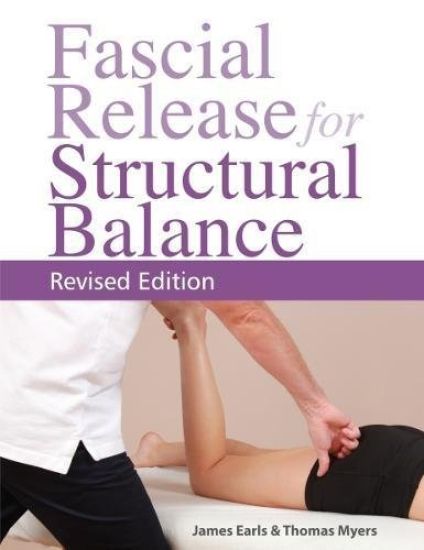
Fascial Release for Structural Balance, Revised Edition: Putting the Theory of Anatomy Trains Into Practice
Unlock the power of fascial release--the ultimate guide to structural balance and pain relief. From the creator and bestselling author of Anatomy Trains Myofascial Meridians for Manual and Movement Therapists. This thoroughly revised edition of the authoritative reference Fascial Release for Structural Balance brings the book up to date with all of the most current research on the role of fascia and myofascia in the body, and how treatment affects it. This edition takes advantage of more sophisticated testing to explore in greater detail the relationship between anatomical structure and function, making it an even more essential guide. Offering a detailed introduction to structural anatomy and fascial release therapy, including postural analysis, complete technique descriptions, and the art of proper assessment of a patient through "bodyreading," the book features 150 color photographs that clearly demonstrate each technique. The authors, both respected bodywork professionals, give any bodywork practitioner using manual therapy--including physiotherapists, osteopaths, chiropractors, myofascial and trigger point therapists, and massage therapists--the information they need to deliver effective treatments and create long-lasting, systemic change in clients' shape and structure. Fascia, the soft tissue surrounding muscles, bones, and organs, plays a crucial role in supporting the body. By learning to intelligently manipulate it, a bodyworker or therapist can help with many chronic conditions that their clients suffer from, providing immediate pain relief as well as reducing the strains that may contribute to the patient's ongoing aches and pains, leading to rapid, effective, and lasting pain relief. James Earls and Thomas Meyers argue that approaching the fascia requires "a different eye, a different touch, and tissue-specific techniques."