Kirjojen hintavertailu. Mukana 12 390 323 kirjaa ja 12 kauppaa.

Kirjailija

James F. Anderson

Kirjat ja teokset yhdessä paikassa: 14 kirjaa, julkaisuja vuosilta 1965-2025, suosituimpien joukossa Boot Camps. Vertaile teosten hintoja ja tarkista saatavuus suomalaisista kirjakaupoista.

Mukana myös kirjoitusasut: James F Anderson

14 kirjaa

Kirjojen julkaisuhaarukka 1965-2025.

Boot Camps

Boot Camps

James F. Anderson; Laronistine Dyson; Jerald C. Burns

University Press of America
1999
nidottu
Boot Camps introduces to the criminal justice profession a general, but comprehensive look at this military style alternative to incarceration. The authors demystify this relatively unknown treatment program by closely tracing the history of the use of this military model in US prisons to its revitalization by contemporary correctional experts. Boot Camps provide the reader with theoretical and practical arguments regarding the implications underlying this sentencing option. It reveals the social, political, and economic contexts that resurrected this punitive, yet rehabilitative, approach to 'getting tough' on crime. This book also reveals the effect that boot camps have on the crime rate, criminal offenders, public outcry, and strained correctional budgets. Using professional jargon in an easy-to-read format, the authors provide the general public with a better understanding of the advantages and disadvantages of boot camps.
Violence and Crime

Violence and Crime

James F. Anderson; Tazinski P. Lee; Kelley Reinsmith-Jones

TAYLOR FRANCIS LTD
2025
nidottu
This book examines the critical connections between criminal justice and public health perspectives on violence and crime. Violent crime involves not only criminal justice agencies, but social agencies, community groups, and public and private healthcare organizations. The authors provide a broad overview of prevalent forms of violence, focusing on how criminal justice and public health perspectives converge in the examination of and response to these issues. The book looks at the nexus of public health with problems as varied as assaultive violence, child abuse, rape and sexual abuse, interpersonal violence, elder abuse, suicide, police violence, teenage bullying, workplace violence, firearm injuries, and opioid addiction. The authors lay out a structure for an epidemiological approach to studying violent crime and offer policy recommendations for using both criminal justice and public health approaches to prevent violence. This volume spotlights the connections between violent crime and public health, and urges a consideration of public health in efforts to prevent and control violent crime. It is ideal for courses on violence in criminology, criminal justice, sociology, and social work, and an invaluable tool for practitioners, policy makers, researchers, advocates, and community volunteers in criminal justice, public health, and social service.
Violence and Crime

Violence and Crime

James F. Anderson; Tazinski P. Lee; Kelley Reinsmith-Jones

TAYLOR FRANCIS LTD
2025
sidottu
This book examines the critical connections between criminal justice and public health perspectives on violence and crime. Violent crime involves not only criminal justice agencies, but social agencies, community groups, and public and private healthcare organizations. The authors provide a broad overview of prevalent forms of violence, focusing on how criminal justice and public health perspectives converge in the examination of and response to these issues. The book looks at the nexus of public health with problems as varied as assaultive violence, child abuse, rape and sexual abuse, interpersonal violence, elder abuse, suicide, police violence, teenage bullying, workplace violence, firearm injuries, and opioid addiction. The authors lay out a structure for an epidemiological approach to studying violent crime and offer policy recommendations for using both criminal justice and public health approaches to prevent violence. This volume spotlights the connections between violent crime and public health, and urges a consideration of public health in efforts to prevent and control violent crime. It is ideal for courses on violence in criminology, criminal justice, sociology, and social work, and an invaluable tool for practitioners, policy makers, researchers, advocates, and community volunteers in criminal justice, public health, and social service.
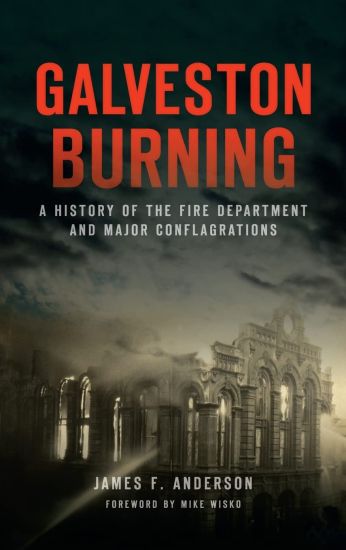
Galveston Burning

Galveston Burning

James F Anderson; Mike Wisko

History Pr
2021
sidottu
Since 1821, when Jean Lafitte sailed away from a burning Campeche, the history of Galveston has often been wreathed in smoke. Over the next century, one inferno breached the walls of Moro Castle, while another reduced forty-two blocks of the residential district to ash. Recognizing the importance of protecting the city, concerted efforts were made to establish the first paid fire department, create a city waterworks and regulate construction standards. Yet even with all the forethought and planning, rogue fires continued to consume architectural gems like Nicholas Clayton's Electric Pavilion. Author James F. Anderson explores the lessons that Galveston has learned from its fiery past in order to safeguard its future.
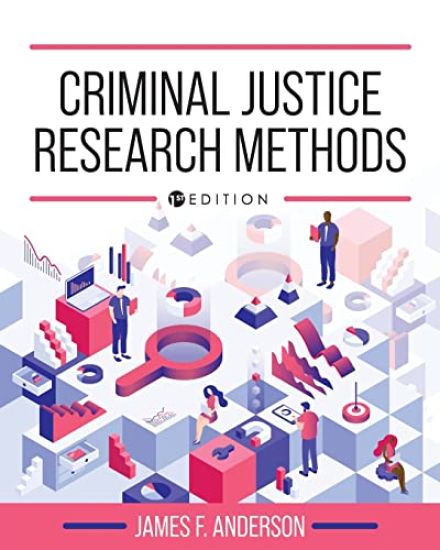
Criminal Justice Research Methods

Criminal Justice Research Methods

James F. Anderson

Cognella, Inc
2021
nidottu
Criminal Justice Research Methods provides students with an accessible, easy-to-understand guide to all aspects of social scientific research methods. It features a comprehensive discussion of qualitative and quantitative data gathering strategies and a plethora of current examples to help readers understand the process of doing research and investigating issues that are relevant to criminal justice and criminology.The opening chapter differentiates between pure and applied research, explains the relationship between theory, and method, identifies different types of research, and clarifies why research is necessary. Additional chapters cover ethical adherence, experimental designs, and crime data and sampling techniques. Students explore survey research designs and learn effective skillsets for interviewing and observing. The final chapters examine unobtrusive measures and secondary analysis; validity, reliability, and triangulated methods; and scaling and index construction. Throughout, learning objectives, summaries, discussion questions, and key terms support student engagement and retention.Concise and highly contemporary, Criminal Justice Research Methods is ideal for courses with emphasis on research in criminal justice and criminology.
Criminal Justice Research Methods

Criminal Justice Research Methods

James F. Anderson

Cognella Academic Publishing
2021
sidottu
Criminal Justice Research Methods provides students with an accessible, easy-to-understand guide to all aspects of social scientific research methods. It features a comprehensive discussion of qualitative and quantitative data gathering strategies and a plethora of current examples to help readers understand the process of doing research and investigating issues that are relevant to criminal justice and criminology.The opening chapter differentiates between pure and applied research, explains the relationship between theory, and method, identifies different types of research, and clarifies why research is necessary. Additional chapters cover ethical adherence, experimental designs, and crime data and sampling techniques. Students explore survey research designs and learn effective skillsets for interviewing and observing. The final chapters examine unobtrusive measures and secondary analysis; validity, reliability, and triangulated methods; and scaling and index construction. Throughout, learning objectives, summaries, discussion questions, and key terms support student engagement and retention.Concise and highly contemporary, Criminal Justice Research Methods is ideal for courses with emphasis on research in criminal justice and criminology.
Criminological Theories

Criminological Theories

James F. Anderson

Jones and Bartlett Publishers, Inc
2014
nidottu
Designed for undergraduate criminology and criminological theory courses, Criminological Theories: Understanding Crime in America, Second Edition explores crime, crime theory, and various forms of criminal behavior within the United States. It focuses exclusively on theory, avoiding superfluous discussion of the criminal justice system. Students will come away from the text with plausible explanations of crime causation, a greater appreciation of criminological theory, and the ability to think critically about the social reality of crime. Current and highly relevant, the text includes coverage of new developments in the field of criminology, including cultural, integrative, life-course, and green criminological theories. Student-friendly but comprehensive, Criminological Theories presents the most current crime statistics and research findings with contemporary examples of reported crime. Every chapter in this thought-provoking text opens with an outline and concludes with critical-thinking questions to ensure concept retention and student comprehension. Accessible and thorough, Criminological Theories: Understanding Crime in America, Second Edition is an essential resource for students to understand the motivation of criminal behavior.
Natural Theology: The Metaphysics of God

Natural Theology: The Metaphysics of God

James F. Anderson

Literary Licensing, LLC
2011
sidottu
""Natural Theology: The Metaphysics of God"" by James F. Anderson is a philosophical exploration of the existence and nature of God through the lens of natural theology. The book delves into the arguments for the existence of God, including the cosmological argument, the teleological argument, and the moral argument. Anderson also examines the attributes of God, such as omnipotence, omniscience, and omnibenevolence, and explores the implications of these attributes for our understanding of God and the world. The book engages with both classical and contemporary philosophical perspectives on God and offers a comprehensive and accessible introduction to natural theology.This scarce antiquarian book is a facsimile reprint of the old original and may contain some imperfections such as library marks and notations. Because we believe this work is culturally important, we have made it available as part of our commitment for protecting, preserving, and promoting the world's literature in affordable, high quality, modern editions, that are true to their original work.
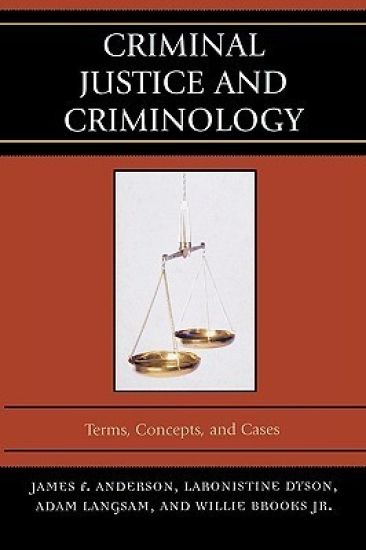
Criminal Justice and Criminology

Criminal Justice and Criminology

James F. Anderson; Laronistine Dyson; Adam Langsam; Willie Brooks

University Press of America
2007
nidottu
This dictionary contains criminal justice terms, criminological concepts, and over 100 cases decided by courts in the federal system, including the United States Supreme Court. These cases address aspects of criminal procedures, as well as individual rights in the U.S. Constitution related to the First, Fourth, Fifth, Sixth, Eighth, and Fourteenth Amendments. Using professional terms in an easy-to-read format, this book will provide the reader with a clear understanding of past and present concepts, terms, and case laws that are related to criminal justice and criminology. It serves as a perfect text for criminal justice and criminology programs at the undergraduate and graduate level. It can also be used as a supplemental adoption for these programs since most texts are written in an esoteric manner.
Legal Rights of Prisoners

Legal Rights of Prisoners

James F. Anderson; Laronistine Dyson

University Press of America
2001
nidottu
Legal Rights of Prisoners is a timely book that addresses the constitutional rights of people in places of confinement. More specifically, it examines the amendments that inmates use and the case law that has developed to address their concerns. The book examines the types of complaints and issues that prisoners bring before the courts. Moreover, it explains the American court systems, the process of justice, and describes the remedies that prisoners use to redress the government. Furthermore, the book discusses the defenses that general administrators use to justify their actions. In the final analysis, the book focuses on the future of correctional litigation.
Legal Rights of Prisoners

Legal Rights of Prisoners

James F. Anderson; Laronistine Dyson

University Press of America
2001
sidottu
Legal Rights of Prisoners is a timely book that addresses the constitutional rights of people in places of confinement. More specifically, it examines the amendments that inmates use and the case law that has developed to address their concerns. The book examines the types of complaints and issues that prisoners bring before the courts. Moreover, it explains the American court systems, the process of justice, and describes the remedies that prisoners use to redress the government. Furthermore, the book discusses the defenses that general administrators use to justify their actions. In the final analysis, the book focuses on the future of correctional litigation.
St. Augustine and being

St. Augustine and being

James F. Anderson

Springer
1965
nidottu
The properly metaphysical dimension of Augustine's thought has received little special attention among scholars - even "Scholastics. " The Thomist metaphysicians - especially we "Anglo-Saxon" ones - receive first honors for being the most neglectful of all. Why? I t is a puzzling phenomenon particularly in the light of the fact (recognized by almost every Thomist) that the very existence of Thomas the theologian is inconceivable apart from his pre-eminent Christian mentor in the intellectual life, the Bishop of Hippo. It is a puzzling phenomenon because, although the Christian metaphysics of Thomas Aquinas is not the Christian metaphysics of Augustine, these metaphysics could not be simply opposed to one another, else the theologies wherein they exercise the indispensable function of vital rational organs would themselves be discordant. But what respectable "Scholas­ tic" would deny that, in their essential teaching about God and the things of God, the thought of these two masters is remarkably congruent? May I suggest that one of the major reasons for this paradoxical neglect of Augustinian metaphysics on the part of Thomists (above all, in the English-speaking world) is their simplistic assumption that whereas Aquinas was an Aristotelian in phi­ losophy, Augustine was a Platonist, despite the fact that in theology they were substantially at one - as if there could be theological agreement, formally speaking, even where there is metaphysical disagreement, formally speaking.