Kirjojen hintavertailu. Mukana 12 182 286 kirjaa ja 12 kauppaa.
Kirjailija
James F. Lee
Kirjat ja teokset yhdessä paikassa: 12 kirjaa, julkaisuja vuosilta 1999-2016, suosituimpien joukossa Tasks and Communicating in Language Classrooms. Vertaile teosten hintoja ja tarkista saatavuus suomalaisista kirjakaupoista.
This work identifies developmental stages in the acquisition of object pronouns by instructed second language learners of Spanish. It examines learners ranging from beginner to advanced, where the most advanced are themselves teachers of Spanish language courses. Study abroad experience is also a variable in the data.The book explores language production from a functionalist perspective, examining form-to-function and function-to-form mappings. It provides insights into related developments in production, placement and processing of object pronouns. Detailed analysis reveals that the most powerful predictor of performance across levels and within levels for each of these is the level of the learner.Formal instruction and the study abroad experience is examined, both the specific instruction on object pronouns and overall exposure to instruction.
This work identifies developmental stages in the acquisition of object pronouns by instructed second language learners of Spanish. It examines learners ranging from beginner to advanced, where the most advanced are themselves teachers of Spanish language courses. Study abroad experience is also a variable in the data.The book explores language production from a functionalist perspective, examining form-to-function and function-to-form mappings. It provides insights into related developments in production, placement and processing of object pronouns. Detailed analysis reveals that the most powerful predictor of performance across levels and within levels for each of these is the level of the learner.Formal instruction and the study abroad experience is examined, both the specific instruction on object pronouns and overall exposure to instruction.
Processing Instruction is an approach to grammar instruction for second language learning, contrasting with traditional grammar instruction in its focus on structured input rather than learners' output. This book compares student assessment after traditional grammar instruction and after Processing Instruction to assess the positive benefits of this method of second language teaching. Rather than examining sentence-level tasks, the study looks at the relative effectiveness of Processing Instruction on discourse-level linguistic ability. Case studies using empirical data from second language learners of Japanese, Italian and English are used to highlight the benefits to the learner of this method of enhanced input. This monograph will be of interest to postgraduates and academics researching second language acquisition and applied linguistics.
Processing Instruction is an approach to grammar instruction for second language learning, contrasting with traditional grammar instruction in its focus on structured input rather than learners' output. This book compares student assessment after traditional grammar instruction and after Processing Instruction to assess the positive benefits of this method of second language teaching. Rather than examining sentence-level tasks, the study looks at the relative effectiveness of Processing Instruction on discourse-level linguistic ability. Case studies using empirical data from second language learners of Japanese, Italian and English are used to highlight the benefits to the learner of this method of enhanced input. This monograph will be of interest to postgraduates and academics researching second language acquisition and applied linguistics.
This volume tracks the impact Processing Instruction has made since its conception. The authors explain Processing Instruction, both its main theoretical underpinnings as well as the guidelines for developing structured input practices. They review the empirical research conducted to date, so that readers have an overview of new research carried out on the effects of Processing Instruction. The work concludes with reflections on the generalizability and limits of the research on Processing Instruction and offers future directions for Processing Instruction research.
Research on Processing Instruction has so far investigated the primary effects of Processing Instruction. In this book the results of a series of experimental studies investigating possible secondary and cumulative effects of Processing Instruction on the acquisition of French, Italian and English as a second language will be presented. The results of the three experiments have demonstrated that Processing Instruction not only provides learners the direct or primary benefit of learning to process and produce the morphological form on which they received instruction, but also a secondary benefit in that they transferred that training to processing and producing another morphological form on which they had received no instruction.
Research on Processing Instruction has so far investigated the primary effects of Processing Instruction. In this book the results of a series of experimental studies investigating possible secondary and cumulative effects of Processing Instruction on the acquisition of French, Italian and English as a second language will be presented. The results of the three experiments have demonstrated that Processing Instruction not only provides learners the direct or primary benefit of learning to process and produce the morphological form on which they received instruction, but also a secondary benefit in that they transferred that training to processing and producing another morphological form on which they had received no instruction.
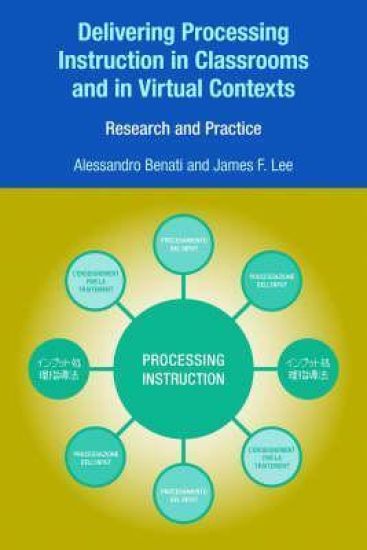
Processing Instruction (PI) is an approach to grammar instruction for second language learning. It derives its name from the fact that the instruction (both the explicit explanation as well as the practices) attempt to influence, alter, and/or improve the way learners process input. PI contrasts with traditional grammar instruction in many ways, most principally in its focus on input whereas traditional grammar instruction focuses on learners' output. The greatest contribution of PI to both theory and practice is the concept of "structured input", a form of comprehensible input that has been manipulated to maximize learners' benefit of exposure to input. This volume focuses on a new issue for PI, the role of technology in language learning. It examines empirically the differential effects of delivering PI in classrooms with an instructor and students interacting (with each other and with the instructor) versus on computers to students working individually. It also contributes to the growing body of research on the effects of PI on different languages as well as different linguistic items: preterite/imperfect aspectual contrast and negative informal commands in Spanish, the subjunctive of doubt and opinion in Italian, and the subjunctive of doubt in French. Further research contributions are made by comparing PI with other types of instruction, specifically, with meaning-oriented output instruction.
Processing Instruction (PI) is an approach to grammar instruction for second language learning. It derives its name from the fact that the instruction (both the explicit explanation as well as the practices) attempt to influence, alter, and/or improve the way learners process input. PI contrasts with traditional grammar instruction in many ways, most principally in its focus on input whereas traditional grammar instruction focuses on learners' output. The greatest contribution of PI to both theory and practice is the concept of "structured input", a form of comprehensible input that has been manipulated to maximize learners' benefit of exposure to input. This volume focuses on a new issue for PI, the role of technology in language learning. It examines empirically the differential effects of delivering PI in classrooms with an instructor and students interacting (with each other and with the instructor) versus on computers to students working individually. It also contributes to the growing body of research on the effects of PI on different languages as well as different linguistic items: preterite/imperfect aspectual contrast and negative informal commands in Spanish, the subjunctive of doubt and opinion in Italian, and the subjunctive of doubt in French. Further research contributions are made by comparing PI with other types of instruction, specifically, with meaning-oriented output instruction.
"Second Language Processing" examines the problems facing learners in the second language classroom from the theoretical perspectives of Processing Instruction, and Enhanced Input. These two theories are brought to bear on a variety of processing problems, such as the difficulty of understanding second language grammar, tense and adjectives. Case studies are pulled from a range of languages including Japanese, Italian and Spanish, through which the authors suggest practical solutions to these processing problems. This monograph will be of interest to postgraduates and academics researching second language acquisition and applied linguistics.
"Tasks and Communicating in Language Classrooms" is a significant new work in the area of classroom communication. This text takes a principled approach to how one can take the basic question-and-answer paradigm found in many, if not most, language textbooks and reformulate it into interactive tasks that place communication in the hands of the student-learners. This text is practical in terms of task development and task-based test design and development, and simultaneously well-grounded in theory and research. Continuing in the tradition of bringing theory, research, and practice together into one volume, Lee's work is a welcome addition to the "McGraw-Hill Second Language Professional" series.