Kirjojen hintavertailu. Mukana 12 390 323 kirjaa ja 12 kauppaa.

Kirjailija

James Fairhead

Kirjat ja teokset yhdessä paikassa: 11 kirjaa, julkaisuja vuosilta 1996-2025, suosituimpien joukossa Vaccine Anxieties. Vertaile teosten hintoja ja tarkista saatavuus suomalaisista kirjakaupoista.

11 kirjaa

Kirjojen julkaisuhaarukka 1996-2025.

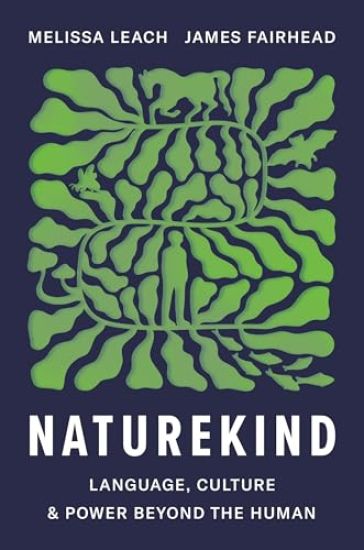
Naturekind

Naturekind

Melissa Leach; James Fairhead

PRINCETON UNIVERSITY PRESS
2025
pokkari
A new paradigm that integrates human and nonhuman communication and cultureAre language and culture uniquely human, justifying an exceptionalism that sets people apart from the rest of nature? New discoveries in the biological sciences have challenged this assumption, finding syntax, symbolism and social learning beyond the human, and identifying culture as a second inheritance system across the phyla from whales to insects and plants. Biologists are constrained, however, by the mechanistic ways communication is understood. In Naturekind, Melissa Leach and James Fairhead address this impasse by extending insights from structural linguistics, social semiotics, anthropology and indigenous theorization into wider life, integrating them with new biological findings to develop a new structural biosemiotics paradigm.Leach and Fairhead argue that such a paradigm can provide a unified theory of meaning-making across all of nature, or “naturekind,” allowing new theorisation about human and nonhuman communication and culture. They examine people’s communicative encounters with chickens, horses, bees, bats and plants, and with assemblages of living and nonliving entities—forests, seas, soils and cities. Marrying the new biology with the structural social sciences, they contend, provides powerful insights for living well with wider life on a shared planet and transforming political relations.
Naturekind

Naturekind

Melissa Leach; James Fairhead

PRINCETON UNIVERSITY PRESS
2025
sidottu
A new paradigm that integrates human and nonhuman communication and cultureAre language and culture uniquely human, justifying an exceptionalism that sets people apart from the rest of nature? New discoveries in the biological sciences have challenged this assumption, finding syntax, symbolism and social learning beyond the human, and identifying culture as a second inheritance system across the phyla from whales to insects and plants. Biologists are constrained, however, by the mechanistic ways communication is understood. In Naturekind, Melissa Leach and James Fairhead address this impasse by extending insights from structural linguistics, social semiotics, anthropology and indigenous theorization into wider life, integrating them with new biological findings to develop a new structural biosemiotics paradigm.Leach and Fairhead argue that such a paradigm can provide a unified theory of meaning-making across all of nature, or “naturekind,” allowing new theorisation about human and nonhuman communication and culture. They examine people’s communicative encounters with chickens, horses, bees, bats and plants, and with assemblages of living and nonliving entities—forests, seas, soils and cities. Marrying the new biology with the structural social sciences, they contend, provides powerful insights for living well with wider life on a shared planet and transforming political relations.

The Captain and "the Cannibal"

The Captain and "the Cannibal"

James Fairhead

Yale University Press
2015
sidottu
The astounding saga of an American sea captain and the New Guinean nobleman who became his stunned captive, then ally, and eventual friend Sailing in uncharted waters of the Pacific in 1830, Captain Benjamin Morrell of Connecticut became the first outsider to encounter the inhabitants of a small island off New Guinea. The contact quickly turned violent, fatal cannons were fired, and Morrell abducted young Dako, a hostage so shocked by the white complexions of his kidnappers that he believed he had been captured by the dead. This gripping book unveils for the first time the strange odyssey the two men shared in ensuing years. The account is uniquely told, as much from the captive’s perspective as from the American’s. Upon returning to New York, Morrell exhibited Dako as a “cannibal” in wildly popular shows performed on Broadway and along the east coast. The proceeds helped fund a return voyage to the South Pacific—the captain hoping to establish trade with Dako’s assistance, and Dako seizing his chance to return home with the only person who knew where his island was. Supported by rich, newly found archives, this wide-ranging volume traces the voyage to its extraordinary ends and en route decrypts Morrell’s ambiguous character, the mythic qualities of Dako’s life, and the two men’s infusion into American literature—as Melville’s Queequeg, for example, and in Poe’s Pym. The encounters confound indigenous peoples and Americans alike as both puzzle over what it is to be truly human and alive.
Vaccine Anxieties

Vaccine Anxieties

Melissa Leach; James Fairhead

Earthscan Ltd
2007
nidottu
This book explores how parents understand and engage with childhood vaccination in contrasting global contexts. This rapidly advancing and universal technology has sparked dramatic controversy, whether over MMR in the UK or oral polio vaccines in Nigeria. Combining a fresh anthropological perspective with detailed field research, the book examines anxieties emerging as highly globalized vaccine technologies and technocracies encounter the deeply intimate personal and social worlds of parenting and childcare, and how these are part of transforming science-society relations. It retheorizes anxieties about technologies, integrating bodily, social and wider political dimensions, and challenges common views of ignorance, risk, trust and rumour - and related dichotomies between Northern risk society and Southern developing society - that dominate current scientific and policy debates. In so doing, the book reflects critically on the stereotypes that at times pass for explanations of public engagement with both routine vaccination and vaccine research. It suggests routes to improved dialogue between health professionals and the people they serve, and new ways to address science-society relations in a globalized world.
Vaccine Anxieties

Vaccine Anxieties

Melissa Leach; James Fairhead

Earthscan Ltd
2007
sidottu
This book explores how parents understand and engage with childhood vaccination in contrasting global contexts. This rapidly advancing and universal technology has sparked dramatic controversy, whether over MMR in the UK or oral polio vaccines in Nigeria. Combining a fresh anthropological perspective with detailed field research, the book examines anxieties emerging as highly globalized vaccine technologies and technocracies encounter the deeply intimate personal and social worlds of parenting and childcare, and how these are part of transforming science-society relations. It retheorizes anxieties about technologies, integrating bodily, social and wider political dimensions, and challenges common views of ignorance, risk, trust and rumour - and related dichotomies between Northern risk society and Southern developing society - that dominate current scientific and policy debates. In so doing, the book reflects critically on the stereotypes that at times pass for explanations of public engagement with both routine vaccination and vaccine research. It suggests routes to improved dialogue between health professionals and the people they serve, and new ways to address science-society relations in a globalized world.
Science, Society and Power

Science, Society and Power

James Fairhead; Melissa Leach

Cambridge University Press
2003
pokkari
In this book, James Fairhead and Melissa Leach bring science to the heart of debates about globalisation, exploring transformations in global science and contrasting effects in Guinea, one of the world’s poorest countries, and Trinidad, a more prosperous, industrialised and urbanised island. The book focuses on environment, forestry and conservation sciences that are central to these countries and involve resources that many depend upon for their livelihoods. It examines the relationships between policies, bureaucracies and particular types of scientific enquiry and explores how ordinary people, the media and educational practices engage with this. In particular it shows how science becomes part of struggles over power, resources and legitimacy. The authors take a unique ethnographic perspective, linking approaches in anthropology, development and science studies. They address critically prominent debates in each, and explore opportunities for new forms of participation, public engagement and transformation in the social relations of science.
Science, Society and Power

Science, Society and Power

James Fairhead; Melissa Leach

Cambridge University Press
2003
sidottu
In this book, James Fairhead and Melissa Leach bring science to the heart of debates about globalisation, exploring transformations in global science and contrasting effects in Guinea, one of the world's poorest countries, and Trinidad, a more prosperous, industrialised and urbanised island. The book focuses on environment, forestry and conservation sciences that are central to these countries and involve resources that many depend upon for their livelihoods. It examines the relationships between policies, bureaucracies and particular types of scientific enquiry and explores how ordinary people, the media and educational practices engage with this. In particular it shows how science becomes part of struggles over power, resources and legitimacy. The authors take a unique ethnographic perspective, linking approaches in anthropology, development and science studies. They address critically prominent debates in each, and explore opportunities for new forms of participation, public engagement and transformation in the social relations of science.
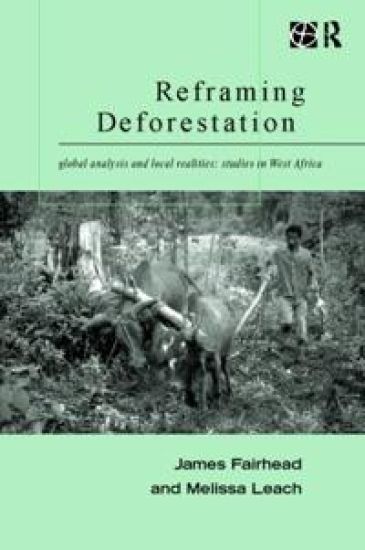
Reframing Deforestation

Reframing Deforestation

James Fairhead; Melissa Leach

Routledge
1998
sidottu
This study reviews how West African deforestation is represented and the evidence which informs deforestation orthodoxy. On a country by country basis (covering Sierra Leone, Liberia, Cote D'Ivoire, Ghana, Togo and Benin), and using historical and social anthropological evidence the authors evaluate this orthodox critically. Reframing Deforestation suggests that the scale of deforestation wrought by West African farmers during the twentieth century has been vastly exaggerated. The authors argue that global analyses have unfairly stigmatised West Africa and obscured its more sustainable, even landscape-enriching practices. Stessing that dominant policy approaches in forestry and conservation require major rethinking worldwide, Reframing Deforestation illustrates that more realistic assessments of forest cover change, and more respectful attention to local knowledge and practices, are necessary bases for effective and appropriate environmental policies.
Reframing Deforestation

Reframing Deforestation

James Fairhead; Melissa Leach

Routledge
1998
nidottu
This study reviews how West African deforestation is represented and the evidence which informs deforestation orthodoxy. On a country by country basis (covering Sierra Leone, Liberia, Cote D'Ivoire, Ghana, Togo and Benin), and using historical and social anthropological evidence the authors evaluate this orthodox critically. Reframing Deforestation suggests that the scale of deforestation wrought by West African farmers during the twentieth century has been vastly exaggerated. The authors argue that global analyses have unfairly stigmatised West Africa and obscured its more sustainable, even landscape-enriching practices. Stessing that dominant policy approaches in forestry and conservation require major rethinking worldwide, Reframing Deforestation illustrates that more realistic assessments of forest cover change, and more respectful attention to local knowledge and practices, are necessary bases for effective and appropriate environmental policies.
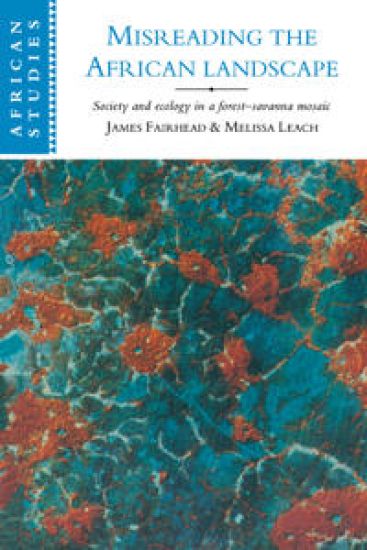
Misreading the African Landscape

Misreading the African Landscape

James Fairhead; Melissa Leach

Cambridge University Press
1996
pokkari
Islands of dense forest in the savanna of ‘forest’ Guinea have long been regarded both by scientists and policy-makers as the last relics of a once more extensive forest cover, degraded and degrading fast due to its inhabitants’ land use. James Fairhead and Melissa Leach question these entrenched assumptions. They show, on the contrary, how people have created forest islands around their villages, and how they have turned fallow vegetation more woody, so that population growth has implied more forest, not less. They also consider the origins, persistence, and consequences of a century of erroneous policy. Interweaving historical, social anthropological and ecological data, this unique study advances a novel theoretical framework for ecological anthropology, forcing a radical reexamination of some central tenets in each of these disciplines.