Kirjojen hintavertailu. Mukana 12 159 890 kirjaa ja 12 kauppaa.

Kirjailija

James Fenimore Cooper

Kirjat ja teokset yhdessä paikassa: 1 713 kirjaa, julkaisuja vuosilta 1826-2026, suosituimpien joukossa Oeuvres de J. F. Cooper. T. 13 Le Bourreau de Berne. Vertaile teosten hintoja ja tarkista saatavuus suomalaisista kirjakaupoista.

1 713 kirjaa

Kirjojen julkaisuhaarukka 1826-2026.

The Prairie: A Tale

The Prairie: A Tale

James Fenimore Cooper

State University of New York Press
1985
pokkari
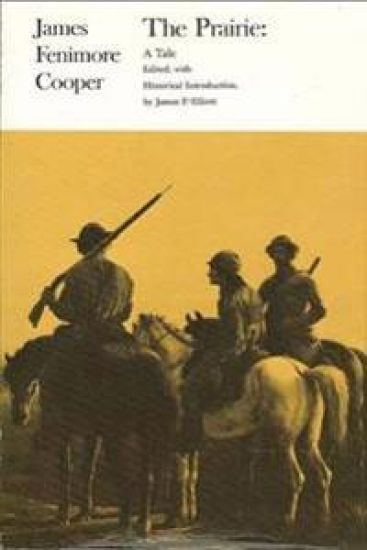
In the spring of 1826, soon after the publication of The Last of the Mohicans, James Fenimore Cooper immersed himself in The Prairie. In taking Natty Bumppo from his beloved forests of New York state to the Great American Plains, Cooper was in part fulfilling his own prophecy at the end of The Pioneers. Though he was certainly recalling the periodic westward removals of Daniel Boone, one of the prototypes of Natty Bumppo, he was also responding to the ever-increasing public interest in Jefferson's Louisiana Purchase.No characterization more clearly exhibits the firmness of Cooper's vision than that of Natty Bumppo. As his colossal entrance implies, Cooper has reconceived him, and through him, the world in which he moves. Though descended from the garrulous hunter of The Pioneers and reduced to the lowly occupation of a trapper, his moral stature has undergone an apotheosis. Though he is again in The Prairie the loyal guide he was in The Last of the Mohicans, his words here take on even more striking moral force. He is both the spokesman for and the representation of, the most basic rhythm of existence, the natural cycle of life which must end in death.The metaphor of the prairie as the sea, shaped by Cooper's meditation on the relationships between Nature, God, and Man, seems to have had a fertile hold on his imagination. The sea is, as he knew by personal experience, a place of isolation and emptiness on whose surface man lives a precarious life. Imagistically Cooper's plot sets his little bands-the groups of outcasts led by Natty, Ishmael's family, the Sioux, and the Pawnees-to converge and tack away from each other. There is also much in the bursts of action-escapes, captures, shifting alliances, steering by moonlight-that evokes sea life. This same metaphor also points us to a central theme of The Prairie. Beyond the fast-paced action, the novel becomes a meditation on the ways of establishing justice between men.
Gleanings in Europe

Gleanings in Europe

James Fenimore Cooper

State University of New York Press
1983
pokkari
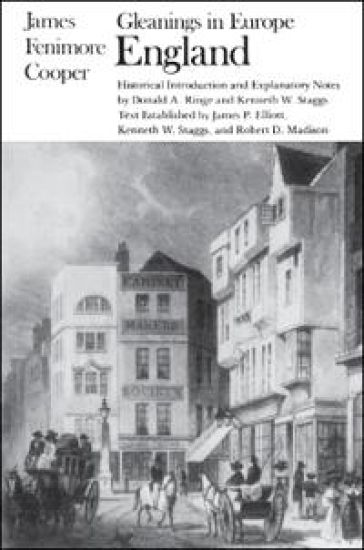
A contemporaneous reviewer called James Fenimore Cooper's England "unquestionably the most searching and thoughtful, not TO say philosophical of any" of the books "published by an American on England." Another cited with approval the "potent causticity" with which a fellow reviewer "develope[d] the gangrene of the author's mind in its most foul and diseased state." Such were the extremes of response elicited by publication in 1837 of the fourth and most controversial book in Cooper's travel series, Gleanings in Europe. Partly because of his ambivalence for most things British, England is perhaps the most fascinating of the travel volumes to the modern reader. Probably no American of his time was received more hospitably by the British upper classes, nor did any reciprocate with shrewder or more scalding criticism. Cooper himself thought well of his book, taking some delight in the stir it made in London and expecting it to do much good at home. The modern reader will be delighted by his novelist's eye for the revealing scene or detail and by the multidimensional perspective he provides on British-American cultural conflicts of the 1820s and 1830s.
Gleanings in Europe

Gleanings in Europe

James Fenimore Cooper

State University of New York Press
1983
pokkari
In the summer of 1828 James Fenimore Cooper, his wife, and their five children set out from Paris for Switzerland, and Cooper wrote that he experienced a "glorious anticipation," for "a common-place converse with men was about to give place to a sublime communion with Nature." Sketches of Switzerland, the book which describes this experience and which is republished here for the first time in the United States since its original issue in 1836, was the first of five European travel books written, Cooper said, "for my own Countrymen," in which the American novelist gave "rapid sketches" of what he saw "with American eyes," studiously avoiding the drab, factual accounts of ordinary tourists. His indispensable resources in the composition of Switzerland were his gifts of total recall and his skill in writing prose pictures in the style then known as "picturesque." Seeking an immediacy analogous to that of the artist's brush, Cooper captures various elements of "picturesque" style, especially the incongruity between the sublime, terrifying scenery and the more familiar sights and associations of domestic life. Even in the creation of verbal pictures, Cooper could not resist expressing his concerns with society and politics; and though his criticism seems harmless enough today-perhaps even salutary-it was disturbing to American readers less secure than Cooper in their confidence in their institutions and society. Partly, at least, for this reason, Cooper's most successful nonfictional experiment in the "picturesque" mode has never been adequately appreciated.
Gleanings in Europe

Gleanings in Europe

James Fenimore Cooper

State University of New York Press
1983
pokkari
Describing Italy as "the only region of the earth that I truly love," James Fenimore Cooper used the style of picturesque impressionism to convey his vision of Italy as the microcosm of an ordered and a beautiful world.In theory, the picturesque style of writing could produce verbal sketches that embodied a visual complexity similar to that of the great Baroque and Romantic landscape paintings. In practice, the hundreds of travel books written in the picturesque style in the early 1900s communicated rapturous enthusiasm with blurred or even false reports of actual scenes. Cooper, with his scrupulous fidelity to the seen world, intended to alter this practice decisively.The response of his imagination to the light, color, forms, artifacts and figures of the Italian landscape and to the manifold significances they embody follows in joyful appreciation of the land, culture and people of a country that induced in him the desire "to enjoy the passing moment."In Italy, Cooper refrained from commenting on politics, though he was an incorrigibly political man who responded to an insistent need to define the New World in defining the Old. The independence of his observations drew censure from American reviewers of the 1830s, who could not comprehend that his preference for the Bay for Naples over New York Harbor reflected his intellectual passion to rise above nationalistic feelings in matters of taste, morality and justice.
The Last of the Mohicans

The Last of the Mohicans

James Fenimore Cooper

Bantam USA
1982
pokkari
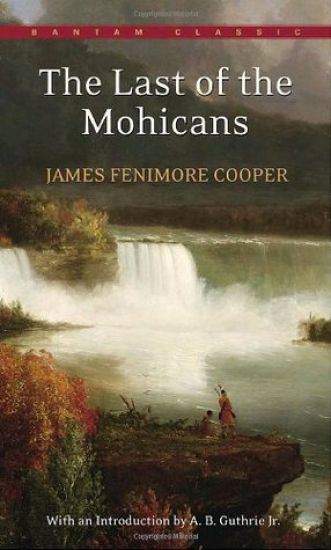
Cooper wrote five "leather-stocking tales," of which this is the second and most famous. Here the white frontiersman Hawkeye (aka Peter Bumppo and Leather Stocking) is nobly matched with Uncas, the Indian of the title. The feeling for nature and the excitement of the action are remarkable, no less so than Cooper's nostalgic view of the Indians and trappers who formed what he clearly thought of as a wilderness elite.
Wyandotte, or the Hutted Knoll

Wyandotte, or the Hutted Knoll

James Fenimore Cooper

State University of New York Press
1981
pokkari
"One of the misfortunes of a nation, is to hear little besides its own praises," wrote James Fenimore Cooper in his Preface to Wyandotté in 1843. The novel arrived at a time when a patriotic mythology about the American Revolution was developing, and Cooper's somber tale of the sufferings of an isolated family in upstate New York during the Revolution was not congruent with the celebratory stories then being told. One reviewer indeed objected to Cooper's "cynicism which hunts after cracks and crevices and unshapely stones in the altar of our political devotion." In its critical trenchancy, somber tone, and subdued action, Wyandotté is representative of the strongest novels of Cooper's last decade. The elements of romance that are prominent in his fiction of the 1820s here give way to a new emphasis upon characterization and a new interest in familial life. As Edgar Allen Poe observed, in Maud Meredith Cooper creates his most spirited heroine, and in Saucy Nick, his most credible Indian. "Nothing is truly patriotic," Cooper warns us in his Preface, "that is not strictly true and just." In his last tale of the Revolution, he leaves national self-congratulation to the orators and newspaper editors and hews to his own demanding conception of devotion to his country.
Wyandotte, or the Hutted Knoll

Wyandotte, or the Hutted Knoll

James Fenimore Cooper

State University of New York Press
1981
sidottu
"One of the misfortunes of a nation, is to hear little besides its own praises," wrote James Fenimore Cooper in his Preface to Wyandotté in 1843. The novel arrived at a time when a patriotic mythology about the American Revolution was developing, and Cooper's somber tale of the sufferings of an isolated family in upstate New York during the Revolution was not congruent with the celebratory stories then being told. One reviewer indeed objected to Cooper's "cynicism which hunts after cracks and crevices and unshapely stones in the altar of our political devotion." In its critical trenchancy, somber tone, and subdued action, Wyandotté is representative of the strongest novels of Cooper's last decade. The elements of romance that are prominent in his fiction of the 1820s here give way to a new emphasis upon characterization and a new interest in familial life. As Edgar Allen Poe observed, in Maud Meredith Cooper creates his most spirited heroine, and in Saucy Nick, his most credible Indian. "Nothing is truly patriotic," Cooper warns us in his Preface, "that is not strictly true and just." In his last tale of the Revolution, he leaves national self-congratulation to the orators and newspaper editors and hews to his own demanding conception of devotion to his country.
The Pathfinder

The Pathfinder

James Fenimore Cooper

State University of New York Press
1980
pokkari
With the publication of The Pathfinder in 1840, James Fenimore Cooper engaged in what he called the "hazardous experiment" of reviving one of his most popular characters who had been allowed to die in a previous novel. Natty Bumppo-who had appeared as Leatherstocking in The Pioneers, as Hawkeye in The Last of the Mohicans, and who had died as the Trapper in The Prairie-appears again as the hero of The Pathfinder. Encouraged by his British publisher to write another tale of the American frontier, Cooper revived his character to take him to the shores of Lake Ontario, the Inland Sea, for an adventurous story of sailors, Indians, and hunters. Inspired by his own experiences as a mid-shipman on Lake Ontario in 1808-09, Cooper writes in his most picturesque fashion of the wilderness of the Great Lakes, the Thousand Islands, and Niagara. "Never did the art of writing tread more closely upon the art of the painter," wrote Honoré de Balzac in his review of The Pathfinder. Cooper writes of places that were wilderness in his youth and that changed rapidly in his own lifetime as cities and commerce developed around the Great Lakes. Cooper's attitude toward this development was ambivalent, as he indicated in his Preface: "That great results are intended to be produced by means of these wonderful changes, we firmly believe...but that they will prove to be of the precise results now so generally anticipated, in consulting the experience of the past, and taking the nature of man into account, the reflecting and intelligent may be permitted to doubt." The Pathfinder remains a classic and entertaining account of the American wilderness and of aspects of human experience in the New World.
The Pioneers or the Sources of the Susquehanna

The Pioneers or the Sources of the Susquehanna

James Fenimore Cooper

State University of New York Press
1980
pokkari
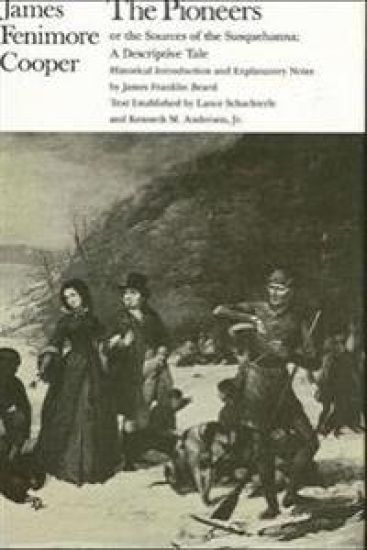
Written in 1821-22 at a crucial point in Cooper's life and based on some of his most cherished youthful memories, The Pioneers today evokes the American pioneering experience with astonishing vibrance of authentic detail and a largeness of philosophic grasp seldom if ever equaled in our fiction.The circumstances behind the composition and publication of the book are here explained for the first time; and the text, originally set without competent supervision in the midst of the yellow fever epidemic in New York in 1822, is presented with the cumulative improvements of Cooper's "strenuous pen" in five subsequent revisions, without the customary accumulation of compositorial errors.Quite possibly America's first bestseller (3,500 copies were sold within hours of publication), The Pioneers became the first of the world-famous Leatherstocking Tales. Its verbal pictures "excited a sensation among the artists, altogether unprecedented in the history of our domestic literature" and helped establish the style of the Hudson River School, our first group of landscape painters. Translated early into all the major languages of Europe, The Pioneers was one of the first American novels to carry distinctive, authoritative American experience to the world.
The Crater

The Crater

James Fenimore Cooper

Harvard University Press
1962
sidottu
Excerpt: ...the American axe. But it was not quite so easy to get the timber down to the cove. The keel, in particular, gave a good deal of trouble. Heaton had brought along with him both cart and wagon wheels, and without that it is questionable if the stick could have been moved by any force then at the command of the colony. By suspending it in chains beneath the axles, however, it was found possible to draw it, though several of the women had to lend their aid in moving the mass. When at the head of the Stairs, the timber was lowered on the rock, and was slid downwards, with occasional lifts by the crowbar and handspike. When it reached the water it was found to be much too heavy to float, and it was by no means an easy matter to buoy it up in such a way that it might be towed. The Anne was three times as long making her passage with this keel in tow, as she was without it. It was done, however, and the laying of the keel was effected with some little ceremony, in the presence of nearly every soul belonging to the colony. The getting out and raising of the frame of the 'Friend Abraham White' took six weeks. Great importance was attached to success in this matter, and everybody assisted in the work with right good will. At one time it was doubted if stuff enough could be found in the ship to plank her up with, and it was thought it might become necessary to break up the Rancocus, in order to complete the job. To Bridgets great joy, however, the good old Rancocus
The Last of the Mohicans

The Last of the Mohicans

James Fenimore Cooper

Createspace Independent Publishing Platform
1826
pokkari
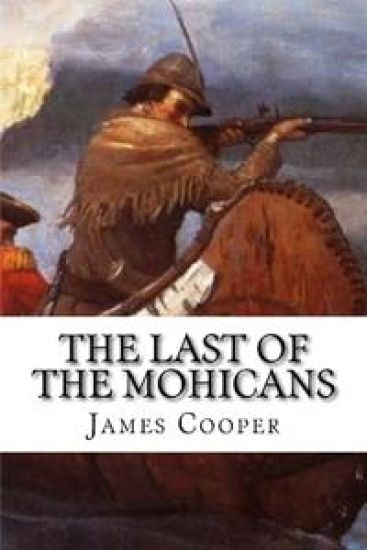
The Last of the Mohicans is a historical novel, it is the second book of the Leatherstocking Tales pentalogy. The story takes place in 1757, during the French and Indian War, when France and Great Britain battled for control of the North American colonies and the French called on allied Native American tribes to fight against the British soldiers.