Kirjojen hintavertailu. Mukana 12 311 853 kirjaa ja 12 kauppaa.

Kirjailija

James Fodor

Kirjat ja teokset yhdessä paikassa: 3 kirjaa, julkaisuja vuosilta 1995-2023, suosituimpien joukossa Christian Hermeneutics. Vertaile teosten hintoja ja tarkista saatavuus suomalaisista kirjakaupoista.

3 kirjaa

Kirjojen julkaisuhaarukka 1995-2023.

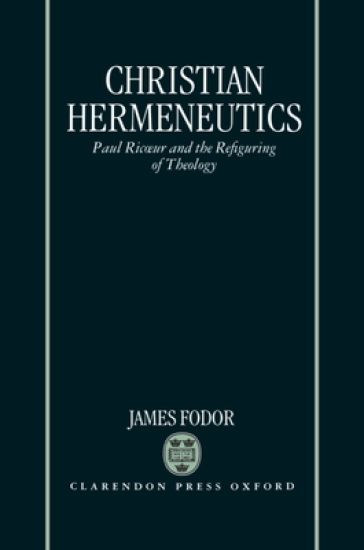
Christian Hermeneutics

Christian Hermeneutics

James Fodor

Clarendon Press
1995
sidottu
Paul Ricoeur is one of the most influential philosophers alive today. This book draws primarily on Ricouer's hermeneutic insights to address the fundamental question of how reference, truth, and meaning are related in the discourse of theology. The author defends the view that theological truth claims cannot be sustained without some appeal to the referential, or in Ricouer's terminology, "refigurative" potential intrinsic to our linguistic practices. What it means for Christians to tell the truth, for their language and life to display and thus elicit trust, cannot be understood apart from an appreciation of the refigurative power of language. By appealing to Aristotle's theory of mimesis (imitation) and muthos (plot), as well as to the ideas of Augustine and Heidegger on time, Paul Ricouer offers striking possibilities whereby theological discourse might renew its task of speaking truthfully of God, and hence of our relation to God, to one another, and to the world.
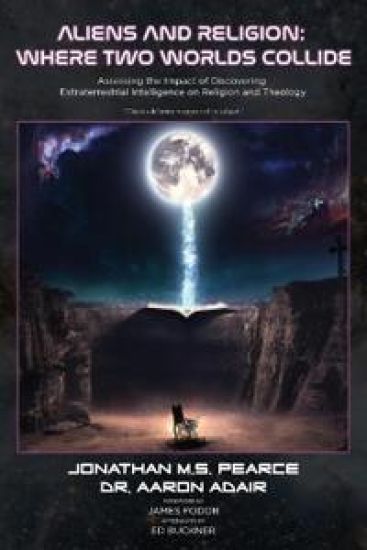
Aliens and Religion

Aliens and Religion

Jonathan M S Pearce; Aaron Adair; James Fodor

Onus Books
2023
pokkari
How big is the universe? Does intelligent extraterrestrial life exist somewhere in the universe? If so, how much extraterrestrial intelligent life (ETI) might there be? And if it is there, is it moral? Would they have a religion? And what would their existence say about human religions, theology, and beliefs?In short, is the existence of ETI incompatible with the belief in God, with certain religions and their theologies?These are the questions that Pearce (a philosopher) and Adair (a scientist who has worked on SETI - the search for ETI) seek to answer in this book. They take a close aim at Christian theology, focusing on previous claims of prominent astrotheologians who claim that there are no considerable problems that ETI existence causes for their belief systems. Pearce and Adair, however, show in this wide-ranging book (that touches on science, philosophy, psychology, and theology) that Christian (and other religious) belief is indeed threatened by the existence of ETI.Would aliens be fallen creatures, requiring salvation through atonement and the resulting incarnation of God? Would one Jesus suffice, or would the universe require trillions of Jesuses, many existing simultaneously? This, and many other such questions are discussed in this engaging book that adds to the growing discipline of astrotheology (and perhaps astro-atheology)."This well-written and provocative book is a substantial contribution to studies of the societal impact ofastrobiology, and especially to the new field of astrotheology."- Steven J. Dick, former NASA Chief Historian, author of Astrobiology, Discovery, and Societal Impact"I love definitive treatments of a subject. This is a definitive treatment of its subject. The impact and significance to religion of even the possibility of alien civilizations is much in need of a thorough look. Pearce and Adair cover every angle, and well."- Richard Carrier, Ph.D., author of Jesus Christ from Outer Space"The breadth and depth of knowledge in Aliens and Religion are truly impressive..."- David E. Pritchard, Physics Professor of Physics, MIT, and editor of Alien Discussions"An invaluable and highly entertaining resource for science fiction writers and readers alike, for both believers andskeptics, and anyone who enjoys wrestling with high-end thought experiments."- David Fitzgerald, author of The Complete Heretic's Guide to Western Religion Series"This is an impressive work It's an ingenious attempt to reach believers who are otherwise impervious to reason, which has a good chance of succeeding. Bravo "- John Loftus, author of God and Horrendous Suffering and The Case Against Miracles"...thoughtful, erudite, and deep dive... Highly recommended for anyone who has ever found themselveswondering about the possibilities hidden among the stars, and about what might happen if those possibilitiescame to Earth."- Eric Vanden Eykel, Associate Professor of Religious Studies, Forrest S. Williams Teaching Chair inHumanities, Ferrum College
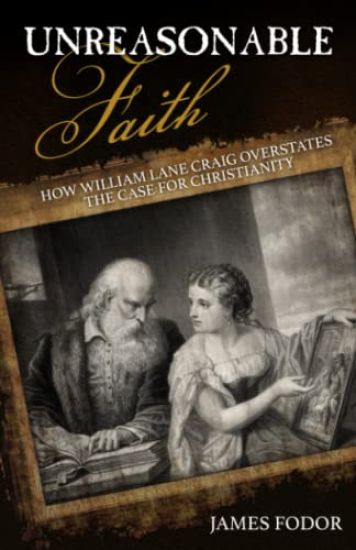
Unreasonable Faith

Unreasonable Faith

James Fodor

Hypatia Press
2022
pokkari
He has written or edited more than 30 books, his arguments for God and Jesus are frequently cited by Christian apologists around the world, and he has severely overstated his case through a series of blatant mischaracterizations and philosophical blunders. You may have heard of William Lane Craig, a professor of philosophy at Talbot School of Theology who is known for debating atheists, but even if you haven't you have probably heard his arguments through followers and fans. He is known for painting faith as the"reasonable" road, and falsely claiming that he can prove the validity of his religion. From his work attempting to show evidence for Jesus' resurrection to his development of the Kalam cosmological argument for the existence of God, Craig is respected among his peers on the Christian side of the religious spectrum. But is that deserved? What's at the core of these arguments? Are they philosophically sound? More importantly, is thisUnreasonable Faith? "an excellent destruction of W.L. Craig's entire apologetics. Cogently argued and factually accurate, this is required reading for anyone keen to question the soundness of anything W.L. Craig has argued over the decades. Which makes it an invaluable resource for refuting Christian apologetics generally." Richard Carrier, author on the historicity of Jesus. "This book should be required reading for anyone who is proposing to debate William Lane Craig on the existence of God. It should also be something that those who debate Craig on that topic advertise: 'this book gives an accurate idea of the amount of material that needs to be provided to begin to address the usual panoply of arguments that Craig puts forward in a debate'" Professor Graham Oppy, Monash. James Fodor has a graduate degree in physics at the University of Melbourne, and is a research assistant in structural biology at Monash University. With a keen interest in philosophy, he writes for the Rationalist magazine on various subjects in religion and epistemology. As president of the University of Melbourne Secular Society, he has engaged in numerous discussions and public debates concerning religion, with a focus on secular morality and the evidence for the resurrection of Jesus. He also has a keen interest in effective altruism and computational neuroscience.