Kirjojen hintavertailu. Mukana 12 293 282 kirjaa ja 12 kauppaa.

Kirjailija

James G. Blight

Kirjat ja teokset yhdessä paikassa: 11 kirjaa, julkaisuja vuosilta 1992-2017, suosituimpien joukossa Vietnam If Kennedy Had Lived. Vertaile teosten hintoja ja tarkista saatavuus suomalaisista kirjakaupoista.

11 kirjaa

Kirjojen julkaisuhaarukka 1992-2017.

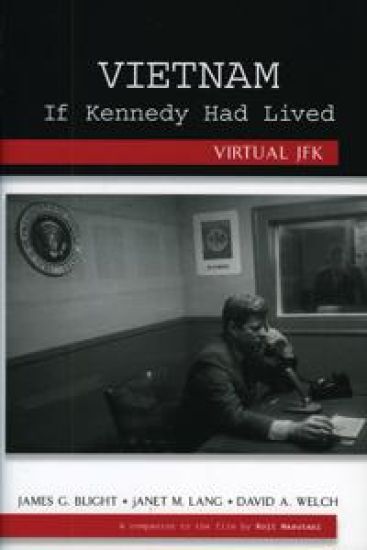
Vietnam If Kennedy Had Lived

Vietnam If Kennedy Had Lived

James G. Blight; janet M. Lang; David A. Welch; Fredrik Logevall

Rowman Littlefield Publishers
2009
sidottu
The Virtual JFK DVD is now available! For more information on the film companion to the book, visit http://www.virtualjfk.com/ It Matters Who Is President—Then and Now At the heart of this provocative book lies the fundamental question: Does it matter who is president on issues of war and peace? The Vietnam War was one of the most catastrophic and bloody in living memory, and its lessons take on resonance in light of America's current devastating involvement in Iraq. Tackling head-on the most controversial and debated "what if" in U.S. foreign policy, this unique work explores what President John F. Kennedy would have done in Vietnam if he had not been assassinated in 1963. Drawing on a wealth of recently declassified documents, frank oral testimony of White House officials from both the Kennedy and Johnson administrations, and the analysis of top historians, this book presents compelling evidence that JFK was ready to end U.S. involvement well before the conflict escalated. With vivid immediacy, readers will feel they are in the president's war room as the debates raged that forever changed the course of American history—and continue to affect us profoundly today as the shadows of Vietnam stretch into Iraq.
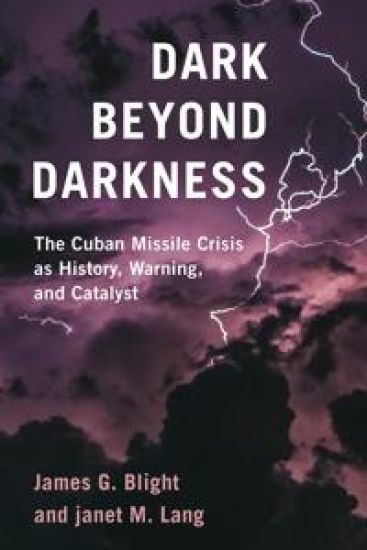
Dark Beyond Darkness

Dark Beyond Darkness

James G. Blight; janet M. Lang

Rowman Littlefield
2017
sidottu
In Dark Beyond Darkness, James Blight and janet Lang, among the world’s foremost authorities on the Cuban missile crisis, synthesize the findings from their thirty-year project on the most dangerous moment in recorded history. Authoritative, accessible, and written with their usual flair and wit, DBD is the first book to take readers deeply inside the experience and calculations of Fidel Castro, who was willing to martyr Cuba if his new Russian ally would nuke the U.S. and destroy it. Blight and Lang have established that in October 1962, the world was on the brink of Armageddon, and that we escaped by luck. Their history is scary but unimpeachably accurate: we just barely escaped the cold and the dark in October 1962. Their history also comes with a warning: we are currently at risk not only of Armageddon-fast, in a war between superpowers, but Armageddon-in-Slow-Motion (the result a climate catastrophe following a regional nuclear war), and from Armageddon, Oops! (a conflict sparked by an accident, which is misinterpreted, and ends in nuclear war). Drawing on the insights of poets, musicians and novelists, as well as climate scientists and agronomists, they show the terrible risk we run by refusing to abolish nuclear weapons.
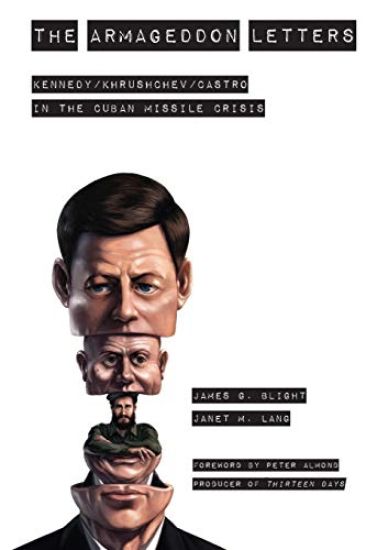
The Armageddon Letters

The Armageddon Letters

James G. Blight; janet M. Lang

Rowman Littlefield
2015
nidottu
In October, 1962, the Cuban missile crisis brought human civilization to the brink of destruction. On the 50th anniversary of the most dangerous confrontation of the nuclear era, two of the leading experts on the crisis recreate the drama of those tumultuous days as experienced by the leaders of the three countries directly involved: U.S. President John F. Kennedy, Soviet Premier Nikita Khrushchev, and Cuban President Fidel Castro. Organized around the letters exchanged among the leaders as the crisis developed and augmented with many personal details of the circumstances under which they were written, considered, and received, Blight and Lang poignantly document the rapidly shifting physical and psychological realities faced in Washington, Moscow, and Havana. The result is a revolving stage that allows the reader to experience the Cuban missile crisis as never before—through the eyes of each leader as they move through the crisis. The Armageddon Letters: Kennedy, Khrushchev, Castro in the Cuban Missile Crisis transports the reader back to October 1962, telling a story as gripping as any fictional apocalyptic novel.
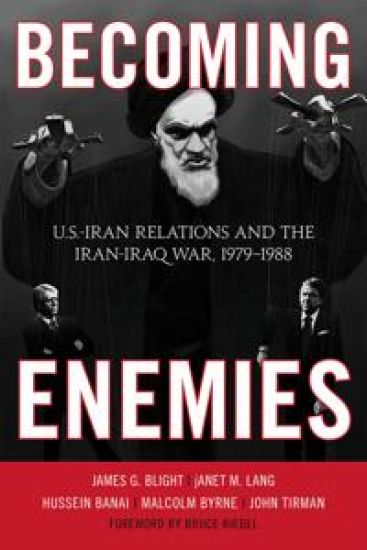
Becoming Enemies

Becoming Enemies

James G. Blight; janet M. Lang; Hussein Banai; Malcolm Byrne; John Tirman; Bruce Riedel

Rowman Littlefield Publishers
2014
nidottu
Becoming Enemies brings the unique methods of critical oral history, developed to study flashpoints from the Cold War such as the Cuban Missile Crisis, to understand U.S. and Iranian relations from the fall of the Shah in 1978 through the Iranian hostage crisis and the Iran-Iraq war. Scholars and former officials involved with U.S. and UN policy take a fresh look at U.S and Iranian relations during this time, with special emphasis on the U.S. role in the Iran-Iraq War. With its remarkable declassified documentation and oral testimony that bear directly on questions of U.S. policymaking with regard to the Iran-Iraq War, Becoming Enemies reveals much that was previously unknown about U.S. policy before, during, and after the war. They go beyond mere reportage to offer lessons regarding fundamental foreign policy challenges to the U.S. that transcend time and place.
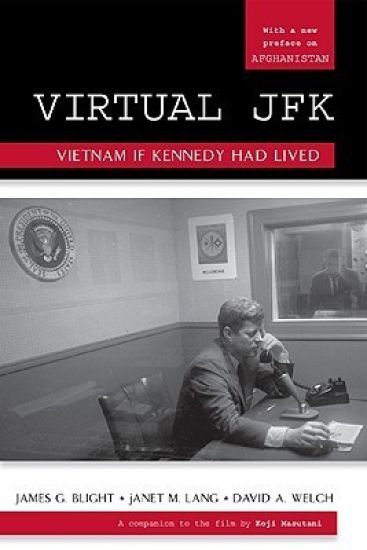
Virtual JFK

Virtual JFK

James G. Blight; janet M. Lang; David A. Welch; Fredrik Logevall

Rowman Littlefield Publishers
2010
nidottu
The Virtual JFK DVD is now available! For more information on the film companion to the book, visit http://www.virtualjfk.com/ It Matters Who Is President—Then and Now At the heart of this provocative book lies the fundamental question: Does it matter who is president on issues of war and peace? The Vietnam War was one of the most catastrophic and bloody in living memory, and its lessons take on resonance in light of America's current devastating involvement in Iraq. Tackling head-on the most controversial and debated "what if" in U.S. foreign policy, this unique work explores what President John F. Kennedy would have done in Vietnam if he had not been assassinated in 1963. Drawing on a wealth of recently declassified documents, frank oral testimony of White House officials from both the Kennedy and Johnson administrations, and the analysis of top historians, this book presents compelling evidence that JFK was ready to end U.S. involvement well before the conflict escalated. With vivid immediacy, readers will feel they are in the president's war room as the debates raged that forever changed the course of American history—and continue to affect us profoundly today as the shadows of Vietnam stretch into Iraq.
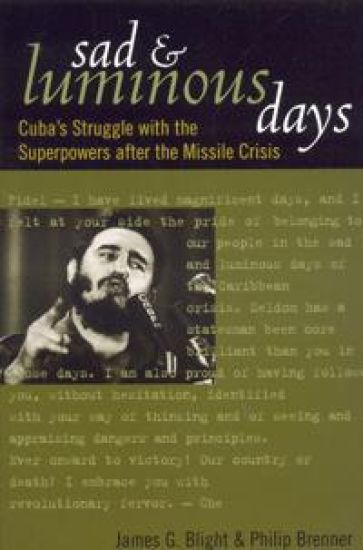
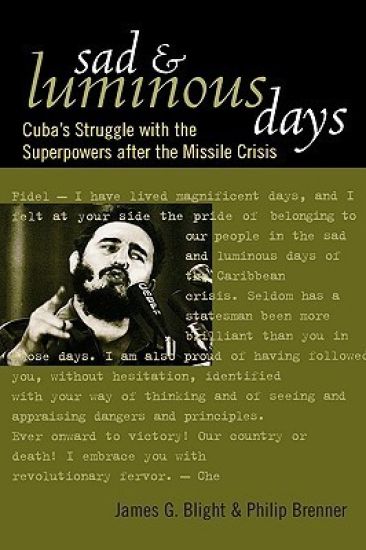
Sad and Luminous Days

Sad and Luminous Days

James G. Blight; Philip Brenner

Rowman Littlefield Publishers
2007
nidottu
In October 1962 school children huddled under their desks and diplomats feverishly negotiated as the world sat on the brink of nuclear war. The Cuban Missile Crisis was the most dangerous moment in modern history and resulted in a changed worldview for the United States, the Soviet Union, and Cuba. In tracing the developments of the missile crisis and beyond, Sad and Luminous Days presents and interprets a heretofore unavailable (and largely unknown) secret speech that Castro delivered to the Cuban leadership in 1968. In it, Castro reflects on the crisis and reveals the distrust and bitterness that characterized Cuban-Soviet relations in 1968. Blight and Brenner frame the annotated speech with an examination of the missile crisis itself, and an analysis of Cuban-Soviet relations between 1962–1968, ending with an epilogue that highlights the lessons the missile crisis offers us in the current search for security and a stable world order. Sad and Luminous Days sheds new light on Cuban-Soviet relations and should be required reading not only for Cold-War scholars and historians, but also for anyone intrigued by the drama of the thirteen momentous days in October 1962.
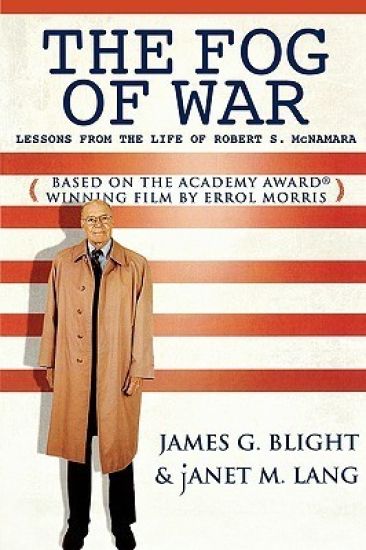
The Fog of War

The Fog of War

James G. Blight; janet M. Lang

Rowman Littlefield Publishers
2005
nidottu
Robert S. McNamara is one of modern America's most controversial figures. His opinions, policies, and actions have led to a firestorm of debate, ignited most recently by Errol Morris's Academy Award-winning film, The Fog of War. In the companion book, editors James G. Blight and janet M. Lang use lessons from McNamara's life to examine issues of war and peace in the 20th century. McNamara's career spans some of America's defining events—from the end of World War I, through the course of World War II, and the unfolding of the Cold War in Cuba, Vietnam, and around the world. The Fog of War brings together film transcripts, documents, dialogues, and essays to explore what the horrors and triumphs of the 20th century can teach us about the future.
Sad and Luminous Days

Sad and Luminous Days

James G. Blight; Philip Brenner

Rowman Littlefield Publishers
2002
sidottu
In October 1962 school children huddled under their desks and diplomats feverishly negotiated as the world sat on the brink of nuclear war. The Cuban Missile Crisis was the most dangerous moment in modern history and resulted in a changed worldview for the United States, the Soviet Union, and Cuba. In tracing the developments of the missile crisis and beyond, Sad and Luminous Days presents and interprets a heretofore unavailable (and largely unknown) secret speech that Castro delivered to the Cuban leadership in 1968. In it, Castro reflects on the crisis and reveals the distrust and bitterness that characterized Cuban-Soviet relations in 1968. Blight and Brenner frame the annotated speech with an examination of the missile crisis itself, and an analysis of Cuban-Soviet relations between 1962–1968, ending with an epilogue that highlights the lessons the missile crisis offers us in the current search for security and a stable world order. Sad and Luminous Days sheds new light on Cuban-Soviet relations and should be required reading not only for Cold-War scholars and historians, but also for anyone intrigued by the drama of the thirteen momentous days in October 1962.
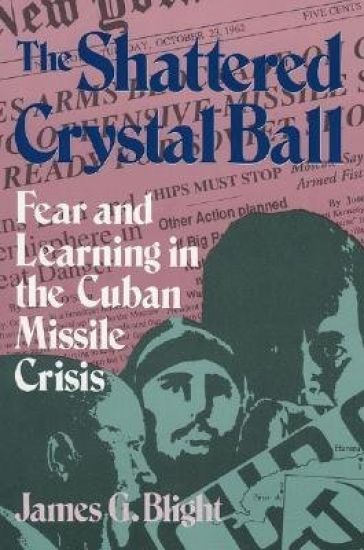
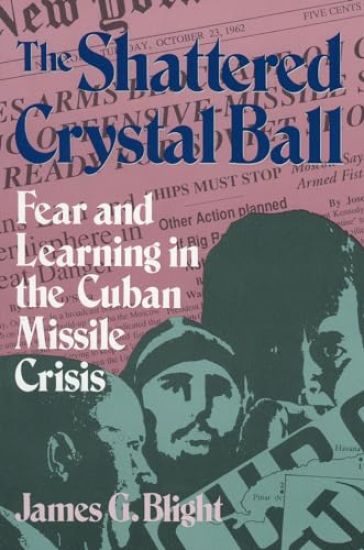
The Shattered Crystal Ball

The Shattered Crystal Ball

James G. Blight

Rowman Littlefield
1992
nidottu
...an extraordinarily accurate and insightful account of the Cuban missile crisis. I remember well the fear of which he writes so persuasively. - Robert S. McNamara, Secretary of Defense to Presidents Kennedy and Johnson
Back to the Brink

Back to the Brink

Bruce J. Allyn; James G. Blight; David A. Welch

University Press of America
1992
sidottu
In January 1989, many of the principal actors in the 1962 Cuban missile crisis met with scholars for two days in Moscow to examine the events and lessons of the crisis. CSIA Occasional Paper No. 9 is the complete annotated transcript of this conference, which was the first time that principal Soviet and American actors in the crisis were joined by their Cuban counterparts in developing the historical record.
The Shattered Crystal Ball

The Shattered Crystal Ball

James G. Blight

Rowman Littlefield
1992
sidottu
This study of the resolution of the Cuban Missile Crisis provides a contribution to the field of international relations and nuclear psychology. The book contains a reassessment of the lessons learned from the crisis. A number of political theorists have indicated that historically, if world leaders had access to a crystal ball, they would have foreseen the dire consequences of their military actions and would have never taken the steps they did. In "The Shattered Crystal Ball" the author believes the Soviet, Cuban and US leaders were able to look, to see the future shatter and to step back from nuclear disaster. Blight argues that the fear of nuclear war was powerful and that it was the controlling factor in the outcome of the crisis. This study is intended to be of interest to students of political science, psychology, history and US policy analysis and national security.