Kirjojen hintavertailu. Mukana 12 390 323 kirjaa ja 12 kauppaa.

Kirjailija

James Greenaway

Kirjat ja teokset yhdessä paikassa: 5 kirjaa, julkaisuja vuosilta 2012-2025, suosituimpien joukossa The Differentiation of Authority. Vertaile teosten hintoja ja tarkista saatavuus suomalaisista kirjakaupoista.

5 kirjaa

Kirjojen julkaisuhaarukka 2012-2025.

Inherent Human Dignity

Inherent Human Dignity

Glenn Hughes; James Greenaway

UNIVERSITY OF NOTRE DAME PRESS
2025
nidottu
Inherent Human Dignity explores the philosophical and existential foundations of what it means to be human. Inherent Human Dignity is a philosophical meditation and defense of the value of being human. Glenn Hughes explores the existential foundations of these concepts in this structured and accessible study about the experience of being human. Hughes locates human dignity within the philosophical, political, and historical horizons of human culture. Guided by Eric Voegelin and Bernard Lonergan, literary and artistic examples, key moments of our modern era, and his own scholarship on the religions of the world, Hughes unfolds and accounts for human dignity's place in our world. He additionally utilizes key moments of our modern era to frame our understanding of human dignity, paying close attention to the Universal Declaration of Human Rights that was created by the United Nations following World War II. Ultimately, Hughes's meditation is concerned both with exploring the maximally differentiated set of insights into the meaning of being human and with articulating why the discovery of the inherent equal dignity of every person—without exception—is a profound and unique achievement.
Inherent Human Dignity

Inherent Human Dignity

Glenn Hughes; James Greenaway

UNIVERSITY OF NOTRE DAME PRESS
2025
sidottu
Inherent Human Dignity explores the philosophical and existential foundations of what it means to be human. Inherent Human Dignity is a philosophical meditation and defense of the value of being human. Glenn Hughes explores the existential foundations of these concepts in this structured and accessible study about the experience of being human. Hughes locates human dignity within the philosophical, political, and historical horizons of human culture. Guided by Eric Voegelin and Bernard Lonergan, literary and artistic examples, key moments of our modern era, and his own scholarship on the religions of the world, Hughes unfolds and accounts for human dignity's place in our world. He additionally utilizes key moments of our modern era to frame our understanding of human dignity, paying close attention to the Universal Declaration of Human Rights that was created by the United Nations following World War II. Ultimately, Hughes's meditation is concerned both with exploring the maximally differentiated set of insights into the meaning of being human and with articulating why the discovery of the inherent equal dignity of every person—without exception—is a profound and unique achievement.
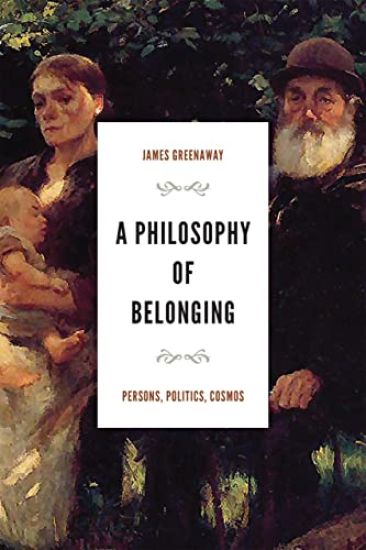
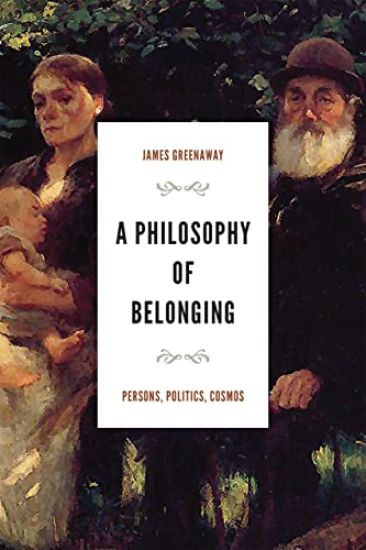
A Philosophy of Belonging

A Philosophy of Belonging

James Greenaway

UNIVERSITY OF NOTRE DAME PRESS
2023
sidottu
James Greenaway offers a philosophical guide to understanding, affirming, and valuing the significance of belonging across personal, political, and historical dimensions of existence. A sense of belonging is one of the most meaningful experiences of anyone's life. Inversely, the discovery that one does not belong can be one of the most upsetting experiences. In A Philosophy of Belonging, Greenaway treats the notion of belonging as an intrinsically philosophical one. After all, belonging raises intense questions of personal self-understanding, identity, mortality, and longing; it confronts interpersonal, sociopolitical, and historical problems; and it probes our relationship with both the knowable world and transcendent mystery. Experiences of alienation, exclusion, and despair become conspicuous only because we are already moved by a primordial desire to belong. Greenaway presents a hermeneutical framework that brings the intelligibility of belonging into focus and discusses the works of various representative thinkers in light of this hermeneutic. The study is divided into two main parts, "Presence" and "Communion." In the first, Greenaway considers the abiding presence of the cosmos as the context of personhood and the world, followed by the presence of persons to themselves and others by way of consciousness and embodiment, culminating in a discussion of the unrestricted horizon of meaning that love makes present in persons. In the second part, belonging in community is explored as a crucial type of communion that is both politically and historically structured. Moreover, communion has direction and a quality of sacredness that offers itself for consideration. Greenaway concludes with a discussion of the consequences of refusing presence and communion, and what is involved in the repudiation of belonging.
A Philosophy of Belonging

A Philosophy of Belonging

James Greenaway

UNIVERSITY OF NOTRE DAME PRESS
2023
nidottu
James Greenaway offers a philosophical guide to understanding, affirming, and valuing the significance of belonging across personal, political, and historical dimensions of existence. A sense of belonging is one of the most meaningful experiences of anyone's life. Inversely, the discovery that one does not belong can be one of the most upsetting experiences. In A Philosophy of Belonging, Greenaway treats the notion of belonging as an intrinsically philosophical one. After all, belonging raises intense questions of personal self-understanding, identity, mortality, and longing; it confronts interpersonal, sociopolitical, and historical problems; and it probes our relationship with both the knowable world and transcendent mystery. Experiences of alienation, exclusion, and despair become conspicuous only because we are already moved by a primordial desire to belong. Greenaway presents a hermeneutical framework that brings the intelligibility of belonging into focus and discusses the works of various representative thinkers in light of this hermeneutic. The study is divided into two main parts, "Presence" and "Communion." In the first, Greenaway considers the abiding presence of the cosmos as the context of personhood and the world, followed by the presence of persons to themselves and others by way of consciousness and embodiment, culminating in a discussion of the unrestricted horizon of meaning that love makes present in persons. In the second part, belonging in community is explored as a crucial type of communion that is both politically and historically structured. Moreover, communion has direction and a quality of sacredness that offers itself for consideration. Greenaway concludes with a discussion of the consequences of refusing presence and communion, and what is involved in the repudiation of belonging.
The Differentiation of Authority

The Differentiation of Authority

James Greenaway

The Catholic University of America Press
2012
sidottu
In this study, James Greenaway explores the philosophical continuity between contemporary Western society and the Middle Ages. Allowing for genuinely modern innovations, he makes the claim that the medieval search for order remains fundamentally unbroken in our search for order today. The new premium on the individual from the twelfth century onward suggests a constellation of problems that had existential, religious, and political dimensions; a constellation that is uniquely Western and which was no less problematic for the medieval soul than it is for the modern soul. As the Middle Ages began, authority in society was held to have two forms: the political and the spiritual. Greenaway studies the emergence of a new, third notion of authority: the existential. He argues that the upheaval that ensued from a dynamic, but largely invisible, third authority within Christendom led to a crisis of meaning that affected all, but to which only the greatest minds of the time were sensitive. The tortuous working out of a new order revealed a turn toward existence that inevitably restructured relations among the now three pillars of authority and gradually led to the denouement of the medieval world. The vast historical material presented is loosely circumscribed by the judicious use of Eric Voegelin’s History of Political Ideas. Greenaway weighs the contributions of Joachim of Fiore, John of Salisbury, John of Paris, Marsilius of Padua, Dante, John Wycliffe, and Sir John Fortescue among others, and argues that the political work of William of Ockham and the mysticism of Nicholas of Cusa are crucial for understanding the transition from the medieval to the modern world. The study concludes by considering firstly the existential significance of citizenship in liberal democracy and secondly a contrasting, non Western form of authority in Islam; both of which serve to highlight the achievement of the medieval differentiation of authority and the philosophical uniqueness of Western society.