Kirjojen hintavertailu. Mukana 12 595 353 kirjaa ja 12 kauppaa.

Kirjailija

James Harris

Kirjat ja teokset yhdessä paikassa: 52 kirjaa, julkaisuja vuosilta 1992-2026, suosituimpien joukossa Keeshond Training Handbook. Vertaile teosten hintoja ja tarkista saatavuus suomalaisista kirjakaupoista.

52 kirjaa

Kirjojen julkaisuhaarukka 1992-2026.

Diaries And Correspondence

Diaries And Correspondence

James Harris

Palala Press
2018
pokkari
This work has been selected by scholars as being culturally important, and is part of the knowledge base of civilization as we know it. This work was reproduced from the original artifact, and remains as true to the original work as possible. Therefore, you will see the original copyright references, library stamps (as most of these works have been housed in our most important libraries around the world), and other notations in the work.This work is in the public domain in the United States of America, and possibly other nations. Within the United States, you may freely copy and distribute this work, as no entity (individual or corporate) has a copyright on the body of the work.As a reproduction of a historical artifact, this work may contain missing or blurred pages, poor pictures, errant marks, etc. Scholars believe, and we concur, that this work is important enough to be preserved, reproduced, and made generally available to the public. We appreciate your support of the preservation process, and thank you for being an important part of keeping this knowledge alive and relevant.
The Great Fear

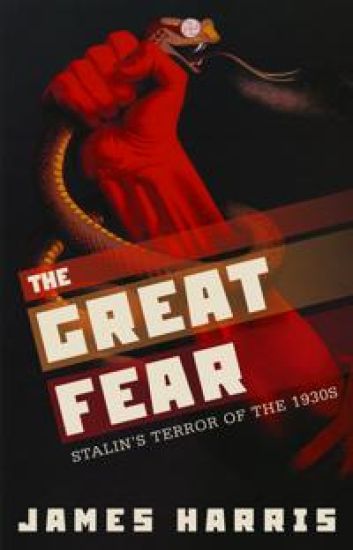
The Great Fear

James Harris

Oxford University Press
2017
nidottu
Between the winter of 1936 and the autumn of 1938, approximately three quarters of a million Soviet citizens were subject to summary execution. More than a million others were sentenced to lengthy terms in labour camps. Commonly known as 'Stalin's Great Terror', it is also among the most misunderstood moments in the history of the twentieth century. The Terror gutted the ranks of factory directors and engineers after three years in which all major plan targets were met. It raged through the armed forces on the eve of the Nazi invasion. The wholesale slaughter of party and state officials was in danger of making the Soviet state ungovernable. The majority of these victims of state repression in this period were accused of participating in counter-revolutionary conspiracies. Almost without exception, there was no substance to the claims and no material evidence to support them. By the time the terror was brought to a close, most of its victims were ordinary Soviet citizens for whom 'counter-revolution' was an unfathomable abstraction. In short, the Terror was wholly destructive, not merely in terms of the incalculable human cost, but also in terms of the interests of the Soviet leaders, principally Joseph Stalin, who directed and managed it. The Great Fear presents a new and original explanation of Stalin's Terror based on intelligence materials in Russian archives. It shows how Soviet leaders developed a grossly exaggerated fear of conspiracy and foreign invasion and lashed out at enemies largely of their own making.
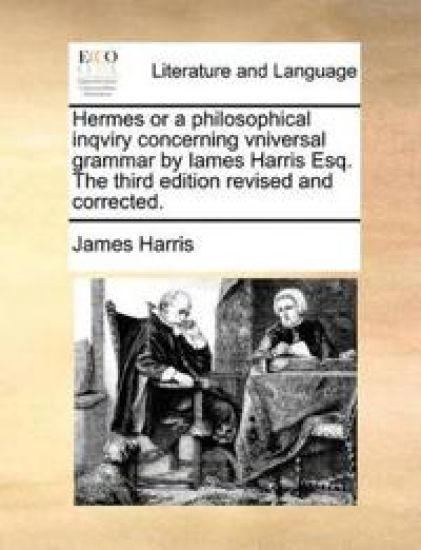
Hermes

Hermes

James Harris

Hansebooks
2017
pokkari
Hermes - Or, A philosophical Inquiry concerning universal Grammar is an unchanged, high-quality reprint of the original edition of 1771. Hansebooks is editor of the literature on different topic areas such as research and science, travel and expeditions, cooking and nutrition, medicine, and other genres. As a publisher we focus on the preservation of historical literature. Many works of historical writers and scientists are available today as antiques only. Hansebooks newly publishes these books and contributes to the preservation of literature which has become rare and historical knowledge for the future.
Masted Structures in Architecture

Masted Structures in Architecture

James Harris; Kevin Li

Routledge
2017
sidottu
This is the first fully comprehensive survey and analysis of masted structures and covers examples that have evolved during the past three decades. Masted Structures are one of the most interesting developments in post-war architecture resulting from a combination of technology, structural engineering theory and a collaboration between architects and engineers. This is an essential guide for architects to the structural and constructional implications of masted forms in relation to space enclosure, patterns of loading and use of differing materials and techniques. This useful volume will enable architects and engineers to understand the origins, development and nature of masted structures and will provide a stimulating basis for future design.
Think More Analogue, Be More Digital
The behaviour of today's consumer has changed beyond all recognition due to digital technology and media. However the drivers behind this remain rooted in the same analogue needs and motivations that have always been at the heart of all human behaviour. From explaining how a fart in a spacesuit can be great content to showing how the Muppets can help you find the best digital technology and why origami is the answer to achieving digital standout, through his unique style of storytelling James will show you how being a bit more analogue in the way you think can result in better digital strategy, planning and marketing communications.
Think More Analogue, Be More Digital _ Second Edition
The behaviour of today's consumer has changed beyond all recognition due to digital technology and media. However the drivers behind this remain rooted in the same analogue needs and motivations that have always been at the heart of all human behaviour. From explaining how a fart in a spacesuit can be great content to showing how the Muppets can help you find the best digital technology and why origami is the answer to achieving digital standout, through his unique style of storytelling James will show you how being a bit more analogue in the way you think can result in better digital strategy, planning and marketing communications.
Stalin's World

Stalin's World

Sarah Davies; James Harris

Yale University Press
2015
sidottu
Drawing on recently declassified material from Stalin’s personal archive in Moscow, this is the first attempt by scholars to systematically analyze the way Stalin interpreted and envisioned his world—both the Soviet system he was trying to build and its wider international context. Since Stalin rarely left his offices and perceived the world largely through the prism of verbal and written reports, meetings, articles, letters, and books, a comprehensive analysis of these materials provides a unique and valuable opportunity to study his way of thinking and his interaction with the outside world. Comparing the materials that Stalin read from week to week with the decisions that he subsequently shaped, Sarah Davies and James Harris show not only how Stalin perceived the world but also how he misperceived it. After considering the often far-reaching consequences of those misperceptions, they investigate Stalin’s contribution to the production and regulation of official verbal discourse in a system in which huge political importance was attached to the correct use of words and phrases..
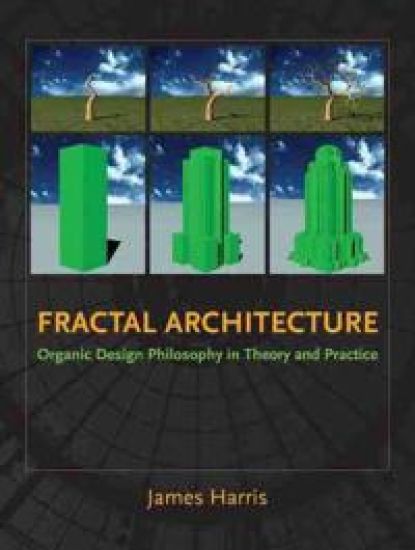
Fractal Architecture

Fractal Architecture

James Harris

University of New Mexico Press
2012
nidottu
Throughout history, nature has served as an inspiration for architecture and designers have tried to incorporate the harmonies and patterns of nature into architectural form. Alberti, Charles Renee Macintosh, Frank Lloyd Wright, and Le Courbusier are just a few of the well- known figures who have taken this approach and written on this theme. With the development of fractal geometry -the study of intricate and interesting self- similar mathematical patterns -in the last part of the twentieth century, the quest to replicate nature's creative code took a stunning new turn. Using computers, it is now possible to model and create the organic, self-similar forms of nature in a way never previously realised. In Fractal Architecture, architect James Harris presents a definitive, lavishly illustrated guide that explains both the ""how"" and ""why"" of incorporating fractal geometry into architectural design.