

Kirjailija
James Hegarty
Kirjat ja teokset yhdessä paikassa: 7 kirjaa, julkaisuja vuosilta 2011-2020, suosituimpien joukossa Compiling Algorithms for Heterogeneous Systems. Vertaile teosten hintoja ja tarkista saatavuus suomalaisista kirjakaupoista.
7 kirjaa
Kirjojen julkaisuhaarukka 2011-2020.

Does unhelpful thinking influence your sporting performance, or the athletes you work with? Athletes of all levels experience barriers to performance beyond the physical challenges they face. These can range from, performance anxiety, overthinking, and lack of concentration, to issues of motivation or difficulties when dealing with team members. ACT - Acceptance and Commitment Training/Therapy - is a modern and effective psychological approach based on a scientific understanding of human thought and emotional processes. ACT uses a practical and easy-to-use framework for skill development through values-based action, commitment, defusion, mindfulness, and acceptance. By utilising ACT, athletes will flourish into their better selves and improve their performances across their sports and beyond. ACT in Sport is a practical workbook that provides a variety of simple strategies for athletes, sport psychologists, and coaches - regardless of their level of ability - for growing their skills. It is a manual for anyone wanting to become familiar with this increasingly popular but poorly understood approach to the psychology of sports performance. More than 20 practical exercises are included, and a free-to-download workbook accompanies the book. Foreword by Patrick Smith and Steven C. Hayes.
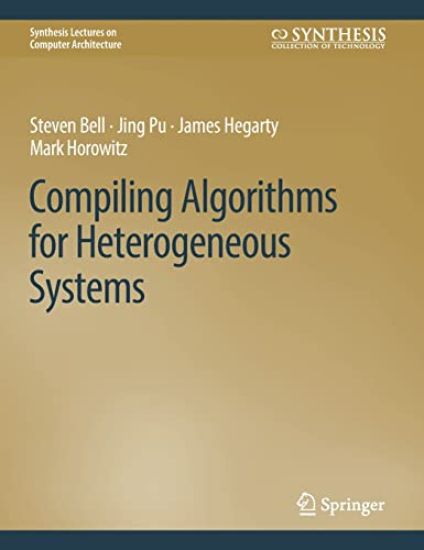
Compiling Algorithms for Heterogeneous Systems
Steven Bell; Jing Pu; James Hegarty; Mark Horowitz
Springer International Publishing AG
2018
sidottu
Most emerging applications in imaging and machine learning must perform immense amounts of computation while holding to strict limits on energy and power. To meet these goals, architects are building increasingly specialized compute engines tailored for these specific tasks. The resulting computer systems are heterogeneous, containing multiple processing cores with wildly different execution models. Unfortunately, the cost of producing this specialized hardware—and the software to control it—is astronomical. Moreover, the task of porting algorithms to these heterogeneous machines typically requires that the algorithm be partitioned across the machine and rewritten for each specific architecture, which is time consuming and prone to error. Over the last several years, the authors have approached this problem using domain-specific languages (DSLs): high-level programming languages customized for specific domains, such as database manipulation, machine learning, or image processing. By giving up generality, these languages are able to provide high-level abstractions to the developer while producing high-performance output. The purpose of this book is to spur the adoption and the creation of domain-specific languages, especially for the task of creating hardware designs. In the first chapter, a short historical journey explains the forces driving computer architecture today. Chapter 2 describes the various methods for producing designs for accelerators, outlining the push for more abstraction and the tools that enable designers to work at a higher conceptual level. From there, Chapter 3 provides a brief introduction to image processing algorithms and hardware design patterns for implementing them. Chapters 4 and 5 describe and compare Darkroom and Halide, two domain-specific languages created for image processing that produce high-performance designs for both FPGAs and CPUs from the same source code, enabling rapid design cycles and quick porting of algorithms. The final section describes how the DSL approach also simplifies the problem of interfacing between application code and the accelerator by generating the driver stack in addition to the accelerator configuration. This book should serve as a useful introduction to domain-specialized computing for computer architecture students and as a primer on domain-specific languages and image processing hardware for those with more experience in the field.
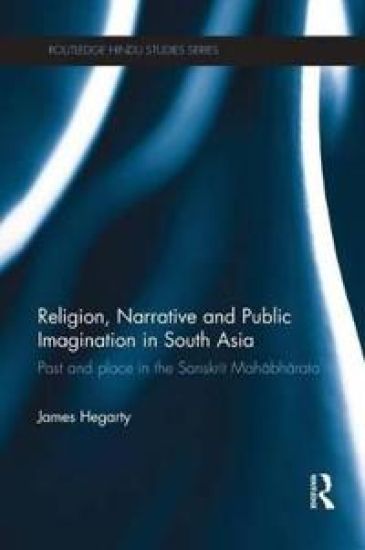
The Sanskrit Mahabharata is one of the greatest works of world literature and pivotal for the understanding of both Hindu traditions and wider society in ancient, medieval and modern South Asia. This book presents a new synthesis of philological, anthropological and cognitive-linguistic method and theory in relation to the study of narrative text by focusing on the form and function of the Mahabharata in the context of early South Asia.Arguing that the combination of structural and thematic features that have helped to establish the enduring cultural centrality of religious narrative in South Asia was first outlined in the text, the book highlights the Mahabharata’s complex orientation to the cosmic, social and textual past. The book shows the extent to which narrative is integral to human social life, and more generally the creation and maintenance of religious ideologies. It highlights the contexts of origin and transmission and the cultural function of the Mahabharata in first millennium South Asia and, by extension, in medieval and modern South Asiaby drawing on both textual and epigraphic sources. The book draws attention to what is culturally specific about the origination and transmission of early South Asian narrative and what can be used to enrich our orientation to narrative in human social life more globally.

Use this book to spark your imagination, to provoke your inspiration. Pick it up, choose a page randomly, or read a few. It is a book for busy, creative people who would rather make something than sit around reading a lengthy manuscript. This is your notebook. Fill the pages with your own notes, your own insights. Draw all over it, dog-ear some pages. If you like something, tear out the page and tape it to the wall! If something is completely stupid get out your biggest, fattest, marker and obliterate it - or rip it out and feed it to the shredder.
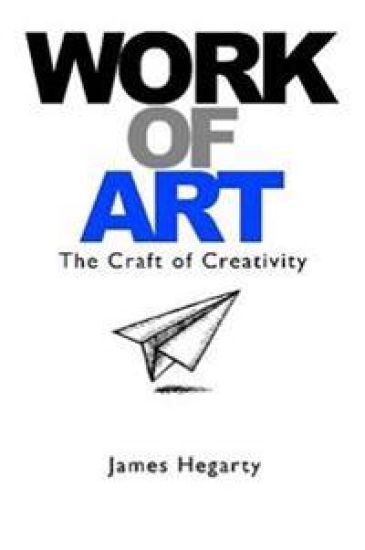
Do you want to be more creative in less time? Have better ideas and then know which ones to run with? Hegarty's book, Work of Art, shares 5 steps he discovered that can help anyone be more creative and make their ideas happen faster. Work of Art is about the craft of creativity - the work process - that turns great ideas into something awesome and real-world.
The Sanskrit Mahabharata is one of the greatest works of world literature and pivotal for the understanding of both Hindu traditions and wider society in ancient, medieval and modern South Asia. This book presents a new synthesis of philological, anthropological and cognitive-linguistic method and theory in relation to the study of narrative text by focusing on the form and function of the Mahabharata in the context of early South Asia.Arguing that the combination of structural and thematic features that have helped to establish the enduring cultural centrality of religious narrative in South Asia was first outlined in the text, the book highlights the Mahabharata’s complex orientation to the cosmic, social and textual past. The book shows the extent to which narrative is integral to human social life, and more generally the creation and maintenance of religious ideologies. It highlights the contexts of origin and transmission and the cultural function of the Mahabharata in first millennium South Asia and, by extension, in medieval and modern South Asiaby drawing on both textual and epigraphic sources. The book draws attention to what is culturally specific about the origination and transmission of early South Asian narrative and what can be used to enrich our orientation to narrative in human social life more globally.