

Kirjailija
James Higgins
Kirjat ja teokset yhdessä paikassa: 11 kirjaa, julkaisuja vuosilta 1997-2024, suosituimpien joukossa Lima. Vertaile teosten hintoja ja tarkista saatavuus suomalaisista kirjakaupoista.
11 kirjaa
Kirjojen julkaisuhaarukka 1997-2024.

This work has been selected by scholars as being culturally important and is part of the knowledge base of civilization as we know it.This work is in the public domain in the United States of America, and possibly other nations. Within the United States, you may freely copy and distribute this work, as no entity (individual or corporate) has a copyright on the body of the work.Scholars believe, and we concur, that this work is important enough to be preserved, reproduced, and made generally available to the public. To ensure a quality reading experience, this work has been proofread and republished using a format that seamlessly blends the original graphical elements with text in an easy-to-read typeface.We appreciate your support of the preservation process, and thank you for being an important part of keeping this knowledge alive and relevant.

Eco-Engineered Bioreactors
James Higgins; Al Mattes; William Stiebel; Brent Wootton
CRC Press
2020
nidottu
This book provides a comprehensive understanding of a highly innovative method of natural wastewater treatment using advanced in-groundbioreactors called Eco-Engineered Bioreactors (EEBs), and traces their evolution from the earliest aerated gravel bed versions once known as Engineered Wetlands (EWs) and now known as BREW Bioreactors (BBRs) all the way to today’s wide slate of aerobic and anaerobic varieties. Treatment using EEBs involves passing wastewaters through excavated basins in which they contact fixed films of microbial consortia on permeable substrate media. Written from the perspective of ecological engineers designing EEBs, this guide covers updated information on the state-of-the-art for EEBs, covering their morphologies, testing methods, designs, operations, and microbiology.
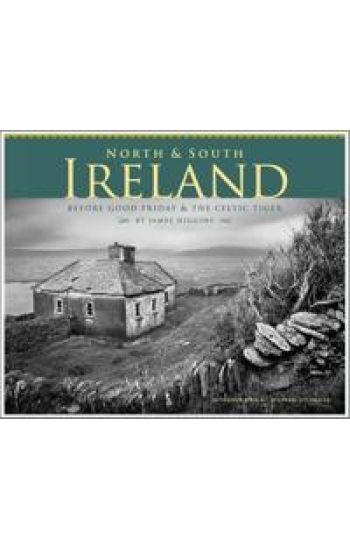
The photographs in this book were taken between 1982 through 1985. At that time Ireland had one of the poorest economies and highest rate of emigration in Europe. And across the border the Northern Ireland economy was being crippled by ongoing sectarian violence, the English army occupation, and hunger strikes against Margaret Thatchers IRA policies. This all began to change in the mid-1980s with the rise of the Celtic Tiger, brought about by new economic policies that welcomed foreign high-tech companies to Ireland. And later, in the 1990s, the Good Friday Agreement finally brought peace to Northern Ireland. This book is a snapshot of life in the Irelands before Good Friday and the Celtic Tiger. Mostly gone now but not forgotten. With North & South Ireland: Before Good Friday and the Celtic Tiger, James Higgins adds to his remarkable photography portfolio a set of astonishing images of people and places on an island that was on the cusp of enormous change. Hes cracked open a time capsule to reveal the enduring beauty, emotional power, and arresting visual facts of a land in two parts whose boundary lines fade under the photographers eye. In the middle 1980s, Higgins travelled to Northern Ireland and the Republic of Ireland several times. Initially, he was not searching for ancestors or out to explore a popular world destination. Rather, beginning with his first journey he was drawn in by Irish soulfulness. He did touch his roots among relatives in County Leitrim, but his curiosity sent him around the island to see what he could see, to find what he could find. He preserved what entered his mind. These images give us Ireland from top to bottom in those years before the giant tech companies transformed the economy and before the peace accords in the North, which calmed the Troubles that had destabilized the society there for decades. Many Americans, in particular, will recognise in these photographs the land of origin of their forebears or the place they themselves toured in the 1960s, 70s, and 80s. In their fixed form, Higgins photographs are timeless in the way the Irish sea and fields and faces hold time.

Eco-Engineered Bioreactors
James Higgins; Al Mattes; William Stiebel; Brent Wootton
CRC Press
2017
sidottu
This book provides a comprehensive understanding of a highly innovative method of natural wastewater treatment using advanced in-groundbioreactors called Eco-Engineered Bioreactors (EEBs), and traces their evolution from the earliest aerated gravel bed versions once known as Engineered Wetlands (EWs) and now known as BREW Bioreactors (BBRs) all the way to today’s wide slate of aerobic and anaerobic varieties. Treatment using EEBs involves passing wastewaters through excavated basins in which they contact fixed films of microbial consortia on permeable substrate media. Written from the perspective of ecological engineers designing EEBs, this guide covers updated information on the state-of-the-art for EEBs, covering their morphologies, testing methods, designs, operations, and microbiology.
Hand and Upper Extremity Rehabilitation
Rebecca Saunders; Romina Astifidis; Susan L. Burke; James Higgins; Michael A. McClinton
Churchill Livingstone Inc
2015
nidottu
Blending the latest technical and clinical skills of hand surgery and hand therapy, Hand and Upper Extremity Rehabilitation: A Practical Guide, 4th Edition walks you through the treatment of common medical conditions affecting the upper extremities and highlights non-surgical and surgical procedures for these conditions. This expanded fourth edition presents the latest research in hand and upper extremity rehabilitation and provides the purpose and rationale for treatment options. Clinical outcomes included in each chapter relate clinical expectations to the results of clinical research trials, providing you with the expected range of motion and function based on evidence in the literature. Highly structured organization makes information easy to find, allowing the text to function as a quick reference in the clinical setting. Contributors from a variety of clinical settings like hand therapy clinics, hospitals, and outpatient clinics means you get to learn from the experience of clinicians working in diverse clinical contexts like yourself. Over 400 line drawings and clinical photographs delineate important concepts described in text. Chapters divided into eight parts - Wound Management, Nerve Injuries, Tendon Injuries, Shoulder, Elbow, Wrist and Distal Radial Ulnar Joint, Hand, and Special Topics - so information can be located quickly. 51 leading experts offer fresh insight and authoritative guidance on therapeutic approaches for many common diagnoses. Treatment guidelines presented for each stage of recovery from a wide range of upper extremity conditions. NEW! Authoritative quick reference guide to surgical and non-surgical procedures for hand and all upper extremity conditions. NEW! Updated information and references offers the latest information and research in the areas of hand and upper extremity rehabilitation. NEW! Larger trim size and new design accommodates a two-column format that is easier to follow.


Dublin: A Cultural History
James Higgins; Siobhan Marie Kilfeather
Oxford University Press
2005
sidottu
Europe's most westerly capital city was established by invaders and was for most of its history the locus of colonial administration, the engine room of foreign power, and a major site of indigenous resistance. From The Act of Union through nineteenth-century decline and into the early years of Irish independence it was a city identified with poverty, dirt, and decaying splendor. The Celtic Tiger (as Ireland's recent economic boom been called) produced sweeping changes, including massive new building projects, and the surprising revelation that Dublin has become fashionable. Siobh n Kilfeather finds the legacy of the past undergoing a series of transformations in the vibrant atmosphere of contemporary Dublin.
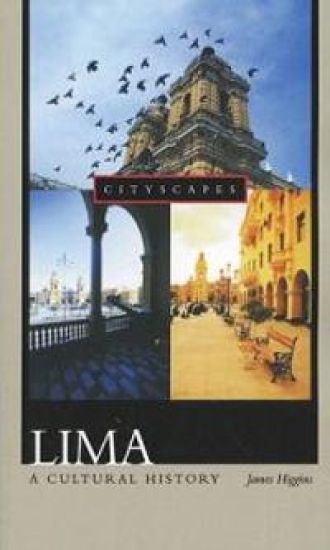
Formerly the viceregal capital of Spain's vast South American empire, Lima is today a sprawling metropolis struggling to cope with a population of eight million. Located on the coast between the Andean foothills and the Pacific Ocean, it is many cities in one, with an indigenous past, an old colonial heart, and turn-of-the-century quarters modeled on Paris. Leafy suburbs like San Isidro and tranquil seaside communities such as Barranco contrast with ever-expanding shantytowns. Lima has always dominated national life, as the center of political and economic power. Long a stronghold of the European elite, the city is now home to millions of Peruvians from the Andean region as well as the descendants of African slaves and migrants from Europe, China and Japan. As a popular saying puts it, the whole of Peru is now in Lima. James Higgins explores the city's history and evolving identity as reflected in its architecture, literature, painting and music. Tracing its trajectory from colonial enclave to modern metropolis, he reveals how the capital now embodies the diversity and dynamism of Peru itself. -- CITY OF HISTORY: ceremonial sites and museums of pre-Hispanic antiquities; colonial churches and mansions; the Museum of the Inquisition; monuments to the heroes of Independence. -- CITY OF CULTURE: pre-Columbian textiles, pottery and goldwork; Baroque architecture and art; writers such as Mario Vargas Llosa and Alfredo Bryce Echenique; painters and sculptors; a vibrant popular culture. -- CITY OF MULTICULTURAL EXCHANGE: the indigenous legacy; the imposition of Spanish culture; African slaves; European and Asian immigrants; mass migration from the provinces.
Formerly the viceregal capital of Spain's vast South American empire, Lima is today a sprawling metropolis struggling to cope with a population of eight million. Located on the coast between the Andean foothills and the Pacific Ocean, it is many cities in one, with an indigenous past, an old colonial heart, the port of Callao, and turn-of-the-century quarters modelled on Paris. Leafy suburbs like San Isidro and tranquil seaside communities such as Barranco contrast with ever-expanding shantytowns. Lima has always dominated national life, as the centre of political and economic power. Long a stronghold of the European elite, the city is now home to millions of Peruvians from the Andean region as well as the descendants of African slaves and migrants from Europe, China and Japan. As a popular saying puts it, the whole of Peru is now in Lima. James Higgins explores the city's history and evolving identity as reflected in its architecture, literature, painting and music. Tracing its trajectory from colonial enclave to modern metropolis, he reveals how the capital now embodies the diversity and dynamism of Peru itself. CITY OF HISTORY: ceremonial sites and museums of pre-Hispanic antiquities; colonial churches and mansions; the Museum of the Inquisition; monuments to the heroes of Independence. CITY OF CULTURE: pre-Columbian textiles, pottery and goldwork; Baroque architecture and art; writers such as Mario Vargas Llosa and Alfredo Bryce Echenique; painters and sculptors; a vibrant popular culture. CITY OF MULTICULTURAL EXCHANGE: the indigenous legacy; the imposition of Spanish culture; African slaves; European and Asian immigrants; mass migration from the provinces.

The twentieth century has seen an impressive flourishing of Peruvian poetry, making it one of the richest in Latin America. This book is based on a series of in-depth readings of the work of a dozen outstanding figures – Eguren, Vallejo, Moro, Westphalen, Adán, Eielson, Belli, Varela, Cisneros, Hinostroza, Verástegui and Sánchez León. At the same time, these readings form part of a general study which, viewing Peruvian poetry as a process, examines the principal tendencies of the period spanning the 1920s and 1970s and relates it to the major literary movements of modern times and to Peru’s socio-political history.