

Kirjailija
James Hillman
Kirjat ja teokset yhdessä paikassa: 49 kirjaa, julkaisuja vuosilta 1990-2025, suosituimpien joukossa Philosophical Intimations: Uniform Edition of the Writings of James Hillman, Vol. 8. Vertaile teosten hintoja ja tarkista saatavuus suomalaisista kirjakaupoista.
49 kirjaa
Kirjojen julkaisuhaarukka 1990-2025.


In this work, acclaimed Jungian James Hillman examines the concepts of myth, insights, eros, body, and the mytheme of female inferiority, as well as the need for the freedom to imagine and to feel psychic reality. By examining these ideas, and the role they have played both in and outside of the therapeutic setting, Hillman mounts a compelling argument that, rather than locking them away in some inner asylum or subjecting them to daily self-treatment, man's "peculiarities" can become an integral part of a rich and fulfilling daily life.Originally published by Northwestern University Press in 1972, this work had a profound impact on a nation emerging self-aware from the 1960s, as well as on the era's burgeoning feminist movement. It remains a profound critique of therapy and the psychological viewpoint, and it is one of Hillman's most important and enduring works.
Offers a liberating vision of childhood troubles and an exciting approach to themes such as freedom, and, most of all, calling - that invisible mystery at the centre of every life that voices the fundamental question, 'What is in my heart that I must do, be and have? And why?'
In the boldest expose on the nature of power since Machiavelli, celebrated Jungian therapist James Hillman shows how the artful leader uses each of two dozen kinds of power with finesse and subtlety. Power, we often forget, has many faces, many different expressions. "Empowerment," writes best-selling Jungian analyst James Hillman, "comes from understanding the widest spectrum of possibilities for embracing power." If food means only meat and potatoes, your body suffers from your ignorance. When your idea of food expands, so does your strength. So it is with power. "James Hillman," says Robert Bly, "is the most lively and original psychologist we have had in America since William James." In Kinds Of Power, Hillman addresses himself for the first time to a subject of great interest to business people. He gives much needed substance to the subject by showing us a broad experience of power, rooted in the body, the rnind, and the emotions, rather than the customary narrow interpretation that simply equates power with strength. Hillman's "anatomy" of power explores two dozen expressions of power every artful leader must understand and use, including: the language of power, control, influence, resistance, leadership, prestige, authority, exhibitionism, charisma, ambition, reputation, fearsomeness, tyranny, purism, subtle power, growth, and efficiency.

Jarring contemporary notions of psychology and politics, and pushing beyond them to offer the beginnings of new paradigms, this book examines the legacy of psychotherapy. It exposes psychology as an ideology that collaborates with traditional notions of individualism - notions that are no longer tenable. James Hillman is the author of "A Blue Fire", "Interviews", "The Dream and the Underworld", "The Myth of Analysis" and "Re-visioning Psychology". Michael Ventura is the author of "Shadow Dancing in the U.S.A.".
What is the meaning of strong emotions? What is emotion itself? What is really happening in therapy when people "express their emotions?"As James Hillman writes in his new preface to this sweeping study, he intends nothing less than "to vitalize a standard topic of academic psychology by making the theory of emotion as crucial as is emotion itself in our lives." Hillman offers an informative and readable survey of a range of theories of emotion, focusing on the twentieth century but moving also from Greek thought to early Christianity to nineteenth-century German physiology. The work challenges readers to rethink our concepts and thereby to re-experience emotional phenomena.Hillman's study contributes to today's renewed interest in the history of the body. Furthermore, his understanding of emotions in terms of epiphany makes a stimulating contribution to phenomenology. It is equally thought-provoking for the therapist, the philosopher, the intellectual historian, and the general reader.
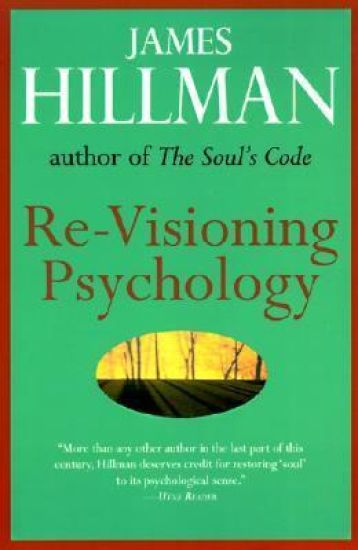
This groundbreaking classic explores the necessity of connections between our life and soul and developing the main lines of the soul-making process.