Kirjojen hintavertailu. Mukana 12 142 290 kirjaa ja 12 kauppaa.

Kirjailija

James Hutson

Kirjat ja teokset yhdessä paikassa: 28 kirjaa, julkaisuja vuosilta 2003-2026, suosituimpien joukossa Sensemaking and Neuroaesthetics. Vertaile teosten hintoja ja tarkista saatavuus suomalaisista kirjakaupoista.

28 kirjaa

Kirjojen julkaisuhaarukka 2003-2026.

Sensemaking and Neuroaesthetics

Sensemaking and Neuroaesthetics

James Hutson; Piper Hutson; Morgan Harper-Nichols

Springer International Publishing AG
2024
sidottu
This book investigates the complex interrelationships between neuroscience, arts, technical design, and the spectrum of neurodivergent conditions, introducing the emerging topic of neuroarts. It emphasizes the power of art and technologies as a multisensory tool for helping neurodivergent individuals discover their sensory preferences, and for neurotypical individuals to broaden their understanding of the world by simulating different sensory experiences. Drawing on the enactivism theory, which posits that cognitive processes are inherently shaped through the dynamic interplay between an organism and its environmental context, the authors discuss the applications of emerging technologies and propose a new theory to discuss and identify ‘neurotribes’ based on their relation to sense making or the body.A timely and well-needed resource for scholars in the fields of neuroaesthetics and neurodiversity, as well as art therapists, clinical psychologists, and medical practitioners specializing in neurodiversity and sensory perception disorders, this book can also serve cultural institutions developing inclusive experiences for a neurodiverse public, and professionals in the tech industry focusing on AI, augmented reality, and sensory technology.
Agentic Intelligence

Agentic Intelligence

James Hutson

TAYLOR FRANCIS LTD
2026
sidottu
Agentic Intelligence examines the emergence of AI systems capable of autonomous goal formation, adaptive decision-making, and sustained interaction across complex environments. Framed at the intersection of artificial intelligence, cognitive science, ethics, and organizational practice, the book traces the conceptual foundations of agentic systems while rigorously interrogating their technical architectures and social implications. Through applied case studies spanning education, creative industries, and knowledge work, the volume demonstrates how agentic AI reshapes labor, authorship, and expertise rather than merely accelerating existing workflows. Written for researchers, practitioners, and institutional leaders, the book provides a critical framework for designing, governing, and integrating agentic systems responsibly within human-centered contexts.
Stagecraft Rewired

Stagecraft Rewired

Michael Harding; James Hutson

TAYLOR FRANCIS LTD
2026
sidottu
Stagecraft Rewired explores how artificial intelligence and intelligent systems can be seamlessly integrated into contemporary theatre while preserving artistic agency, ethical responsibility, and historical awareness. The book offers a comprehensive journey from conceptual foundations to real-world applications. It includes critical analysis, case studies, production workflows, and pedagogical models, providing readers with clear frameworks for ethical tool use and practical strategies for rehearsal and production. The volume also addresses key topics such as authorship, collaboration, accessibility, and accountability in technology-mediated performance. By situating AI within a historical lineage of adaptation and creative recombination, the book reframes intelligent systems as an extension of traditional theatrical methods rather than a disruption. Readers will benefit from actionable guidance on institutional governance, teaching models that emphasize transparency, and forward-looking principles for navigating the future of stagecraft. This book is an invaluable resource for theatre practitioners, educators, students, arts administrators, and cultural policymakers interested in the intersection of technology and performance.
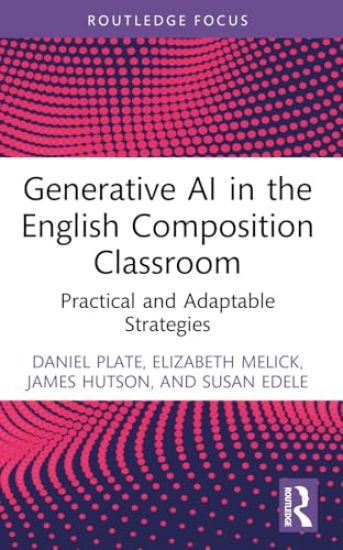
Generative AI in the English Composition Classroom

Generative AI in the English Composition Classroom

Daniel Plate; Elizabeth Melick; James Hutson; Susan Edele

TAYLOR FRANCIS LTD
2026
nidottu
Designed to cater to the needs of both novice and seasoned writing instructors, this book provides a range of practical and adaptable strategies for integrating generative artificial intelligence (AI) into English writing curricula. Generative AI in the English Composition Classroom proposes strategic methodologies to ensure that AI is utilized as a facilitator of learning and creativity, rather than as a shortcut to academic success. With a particular emphasis on sophisticated large language models such as Claude, ChatGPT, and Gemini, this book critically addresses potential challenges, including concerns related to academic integrity. It includes case studies and practical strategies to exemplify how AI can enhance the writing process while emphasizing the continuing importance of a solid foundation in writing structure, processes, and rhetorical strategies. These case studies and strategies are designed for immediate application, offering educators and students practical tools to effectively navigate AI-augmented writing environments. Finally, the book looks to the future, discussing the evolving skillsets required in the workforce and how educators can equip students for a future in which AI is an integral component. A forward-thinking and invaluable guide, this book will be of interest to educators involved in teaching English Composition and writing.
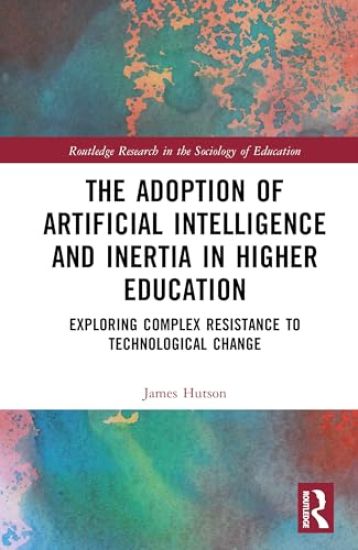
The Adoption of Artificial Intelligence and Inertia in Higher Education
This research monograph explores the complex resistance to integrating Artificial Intelligence (AI) within higher education institutions. Despite the significant potential of AI to enhance education, faculty adoption remains inconsistent and is often met with skepticism.This book investigates key factors contributing to this resistance, such as leadership deficits, funding barriers, cultural inertia, and faculty attitudes toward technological change. Drawing on qualitative and quantitative empirical data, case studies from U.S. and international institutions, and theoretical analysis, the book uncovers underlying concerns about job security and professional identity.It points to actionable strategies for overcoming these barriers, and will be relevant for scholars, researchers, advanced students and educators grappling with issues navigating technological integration in academia, and with interests in the sociology of education, educational technology, and higher education administration.
Beyond Code

Beyond Code

Daniel Plate; James Hutson

TAYLOR FRANCIS LTD
2025
sidottu
AI-powered coding tools are revolutionizing software development, transforming programming from a specialized skill into an accessible educational practice across disciplines. This book investigates how tools such as Cursor AI, GitHub Copilot, and Replit's Ghostwriter are dismantling traditional barriers to entry for learners—particularly those from non-STEM backgrounds—by enabling natural language code generation, intelligent debugging, and interactive, project-based learning. Bridging the gap between theoretical instruction and practical application, the book serves as both a guide and a critical framework for integrating generative AI into curricula. It highlights how these tools expand the boundaries of programming education by supporting interdisciplinary applications, from literary analysis to creative writing, thereby making coding relevant and actionable for students in the humanities and beyond. The book equips educators with the tools and strategies necessary to incorporate AI-assisted programming into diverse academic contexts by offering lesson plans and adaptable project models. This resource is essential for instructors seeking to demystify coding, promote inclusivity in technical learning, and reimagine the role of software literacy in the twenty-first-century classroom.
Beyond Code

Beyond Code

Daniel Plate; James Hutson

TAYLOR FRANCIS LTD
2025
nidottu
AI-powered coding tools are revolutionizing software development, transforming programming from a specialized skill into an accessible educational practice across disciplines. This book investigates how tools such as Cursor AI, GitHub Copilot, and Replit's Ghostwriter are dismantling traditional barriers to entry for learners—particularly those from non-STEM backgrounds—by enabling natural language code generation, intelligent debugging, and interactive, project-based learning. Bridging the gap between theoretical instruction and practical application, the book serves as both a guide and a critical framework for integrating generative AI into curricula. It highlights how these tools expand the boundaries of programming education by supporting interdisciplinary applications, from literary analysis to creative writing, thereby making coding relevant and actionable for students in the humanities and beyond. The book equips educators with the tools and strategies necessary to incorporate AI-assisted programming into diverse academic contexts by offering lesson plans and adaptable project models. This resource is essential for instructors seeking to demystify coding, promote inclusivity in technical learning, and reimagine the role of software literacy in the twenty-first-century classroom.
Cinematic Algorithms

Cinematic Algorithms

James Hutson; Andrew Smith

TAYLOR FRANCIS LTD
2025
sidottu
This book explores the groundbreaking integration of generative artificial intelligence into filmmaking and visual storytelling. From democratizing video production to reshaping aesthetics, this book highlights the creative revolution AI offers. Through case studies, interviews with innovative artists, and historical perspectives, it examines how intelligent systems enhance creativity while challenging traditional notions of authorship and originality. With practical guides and forward-looking insights, this volume is essential for anyone curious about the intersection of technology and visual culture, offering a vivid portrait of the future of storytelling in an AI-driven world.
Sensemaking and Neuroaesthetics

Sensemaking and Neuroaesthetics

James Hutson; Piper Hutson; Morgan Harper-Nichols

Springer International Publishing AG
2025
nidottu
This book investigates the complex interrelationships between neuroscience, arts, technical design, and the spectrum of neurodivergent conditions, introducing the emerging topic of neuroarts. It emphasizes the power of art and technologies as a multisensory tool for helping neurodivergent individuals discover their sensory preferences, and for neurotypical individuals to broaden their understanding of the world by simulating different sensory experiences. Drawing on the enactivism theory, which posits that cognitive processes are inherently shaped through the dynamic interplay between an organism and its environmental context, the authors discuss the applications of emerging technologies and propose a new theory to discuss and identify ‘neurotribes’ based on their relation to sense making or the body.A timely and well-needed resource for scholars in the fields of neuroaesthetics and neurodiversity, as well as art therapists, clinical psychologists, and medical practitioners specializing in neurodiversity and sensory perception disorders, this book can also serve cultural institutions developing inclusive experiences for a neurodiverse public, and professionals in the tech industry focusing on AI, augmented reality, and sensory technology.

Inclusive Smart Museums

Inclusive Smart Museums

James Hutson; Piper Hutson

Springer International Publishing AG
2025
nidottu
This book delves into the significant and timely intersection of cultural heritage, neurodiversity, and smart museums, exploring how various immersive techniques can create more inclusive and engaging heritage experiences for neurodiverse audiences.
Charting the AI Transition in Education and Business Environments
This book delineates a comprehensive framework designed to ultimately assist organizations as they navigate the critical juncture—often termed the inflection point—in adopting generative Artificial Intelligence (AI). Addressing the exigent shift in organizational strategy mandated by Industry 4.0, and urging a transition from mere digital transformation to what is being progressively understood as "generative transformation,” it fills a conspicuous lacuna in both academic and practical discourses by presenting a timely synthesis of research, empirical studies, and case analyses. The authors utilize an interdisciplinary methodology, bridging the epistemological divide between the technological intricacies of generative AI and its effective implementation within institutional frameworks. Reorienting the focus of organizational leaders from a simplistic replacement paradigm to one of technological-human augmentation, it works toward a prescriptive blueprint for enabling organizations to adopt generative AI without compromising their most valuable asset: human intellectual and emotional capital. Fostering interdisciplinary dialog among academics, industry professionals, and policymakers, it fills a critical gap in current discourses and serves as a catalyst for future research and collaboration.
Creative Convergence

Creative Convergence

James Hutson; Jason Lively; Bryan Robertson; Peter Cotroneo; Martin Lang

Springer International Publishing AG
2024
nidottu
Embark on a journey that transcends the boundaries of art and technology in the groundbreaking realm of Creative Convergence: The AI Renaissance in Art and Design. This isn't just another book on art and technology- it's a journey that sparks curiosity, fuels innovation, and challenges traditional artistic boundaries. Discover the power of generative Artificial Intelligence (AI) as it melds with human expression, propelling artistry into uncharted territories and redefining traditional notions of both originality and creativity. The text is not just about art or AI; it is about the fusion of both, catalyzing a creative revolution that challenges previous assumptions about human-machine collaboration and how ideation, conceptualization, process and execution are radically rethought. Have you ever wondered how/will AI revolutionize training, education and execution in art and design? Delve into this captivating treatment that contextualizes the disruptions we are experiencing today in the technological innovations and artistic responses and integrations of the past five hundred years. Human creativity has always struggled against technological advance, but ultimately integrated and redefined what "art" is in each era. As such, you will see how AI can be incorporated in various artistic disciplines in this study. Explore real-world case studies that showcase AI's practical impact on 3D design, drawing, digital art, and even web design. The book also addresses the controversial question: Can AI be a co-creator in the creative and artistic process, even assisting in creating an original, signature style? Brace yourself for revelations that will challenge your perceptions of traditional artistry.