Kirjojen hintavertailu. Mukana 12 595 353 kirjaa ja 12 kauppaa.

Kirjailija

James J. F. Forest

Kirjat ja teokset yhdessä paikassa: 9 kirjaa, julkaisuja vuosilta 2001-2024, suosituimpien joukossa Digital Influence Warfare in the Age of Social Media. Vertaile teosten hintoja ja tarkista saatavuus suomalaisista kirjakaupoista.

Mukana myös kirjoitusasut: James J.F. Forest, James (J.F.) Forest

9 kirjaa

Kirjojen julkaisuhaarukka 2001-2024.

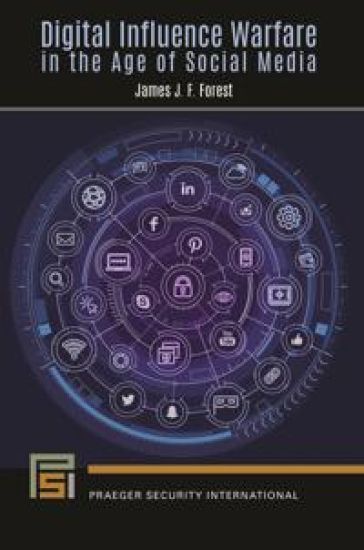
Digital Influence Warfare in the Age of Social Media

Digital Influence Warfare in the Age of Social Media

James J. F. Forest

BLOOMSBURY PUBLISHING PLC
2024
nidottu
Spotlights how various entities are using the Internet to shape people's perceptions and decision-making, and describes detailed case studies as well as the tools and methods used to identify automated, fake accounts. This book brings together three important dimensions of our everyday lives. First is digital—the online ecosystem of information providers and tools, from websites, blogs, discussion forums, and targeted email campaigns to social media, video streaming, and virtual reality. Second, influence—the most effective ways people can be persuaded, in order to shape their beliefs in ways that lead them to embrace one set of beliefs and reject others. And finally, warfare—wars won by the information and disinformation providers who are able to influence behavior in ways they find beneficial to their political, social, and other goals. The book provides a wide range of specific examples that illustrate the ways people are being targeted by digital influencers. There is much more to digital influence warfare than terrorist propaganda, "fake news," or Russian efforts to manipulate elections: chapters examine post-truth narratives, fabricated "alternate facts," and brainwashing and disinformation within the context of various political, scientific, security, and societal debates. The final chapters examine how new technical tools, critical thinking, and resilience can help thwart digital influence warfare efforts.
Digital Influence Mercenaries

Digital Influence Mercenaries

James (J.F.) Forest

Naval Institute Press
2022
sidottu
In today's online attention economy, supply and demand have created a rapidly growing market for firms and entrepreneurs using the tactics, tools, and strategies of digital influence warfare to gain profit and power. This book focuses on the more malicious types of online activity such as deception, provocation, and a host of other dirty tricks conducted by these "digital influence mercenaries." They can be located anywhere with an Internet connection--Brazil, China, Iran, Macedonia, Russia, Zimbabwe--and the targets of their influence efforts can be whomever and wherever they are paid to attack. They can do this for state governments willing to pay and provide their targeting instructions (usually in support of foreign policy objectives) and may have specific metrics by which they will assess the mercenaries' performance. Non-state actors (including corporations and political parties) can pay for these kinds of digital influence services as well. And in addition to being paid for services rendered, digital influence mercenaries can also profit simply by manipulating the targeted advertising algorithms used by social media platforms.James J. F. Forest describes in detail the various tools and tactics these mercenaries use to exploit the uncertainties, fears, and biases of their targets including bots, deep-fake images, fake news, provocation, deception and trolling. He also shows how they weaponize conspiracy theories and disinformation to manipulate people's beliefs and perceptions. Forest also highlights how government agencies and social media platforms are trying to defend against these foreign influence campaigns through such tactics as shutting down offending websites, Facebook pages, and YouTube channels; tagging disinformation with warning labels; identifying and blocking coordinated inauthentic behavior; and suspending social media accounts, often permanently. European and North American governments have launched numerous investigations against these mercenaries, and in some cases have brought criminal charges. Forest concludes with suggestions for how each of us can learn to identify disinformation and other malicious efforts and defend ourselves in the future.
Digital Influence Warfare in the Age of Social Media

Digital Influence Warfare in the Age of Social Media

James J. F. Forest

Praeger Publishers Inc
2021
sidottu
Spotlights how various entities are using the Internet to shape people's perceptions and decision-making, and describes detailed case studies as well as the tools and methods used to identify automated, fake accounts.This book brings together three important dimensions of our everyday lives. First is digital—the online ecosystem of information providers and tools, from websites, blogs, discussion forums, and targeted email campaigns to social media, video streaming, and virtual reality. Second, influence—the most effective ways people can be persuaded, in order to shape their beliefs in ways that lead them to embrace one set of beliefs and reject others. And finally, warfare—wars won by the information and disinformation providers who are able to influence behavior in ways they find beneficial to their political, social, and other goals.The book provides a wide range of specific examples that illustrate the ways people are being targeted by digital influencers. There is much more to digital influence warfare than terrorist propaganda, "fake news," or Russian efforts to manipulate elections: chapters examine post-truth narratives, fabricated "alternate facts," and brainwashing and disinformation within the context of various political, scientific, security, and societal debates. The final chapters examine how new technical tools, critical thinking, and resilience can help thwart digital influence warfare efforts.
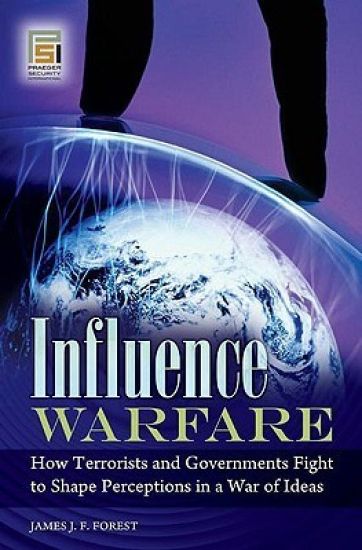
Influence Warfare

Influence Warfare

James J. F. Forest

Praeger Publishers Inc
2009
sidottu
This important work, edited by an expert on terrorism, focuses on the 21st-century struggle for strategic influence and ways in which states can neutralize the role of new media in spreading terrorist propaganda.In an era where anyone can have access to the Internet or other media forms that make widespread communication easy, terrorists and insurgents can spread their messages with complete freedom, creating challenges for national security. Influence Warfare: How Terrorists and Governments Fight to Shape Perceptions in a War of Ideas focuses on the core of the ongoing struggle for strategic influence and, particularly, how states can counter the role media and the Internet play in radicalizing new agents of terrorism. As the book makes clear, governments need to find ways to effectively confront non-state adversaries at all levels of the information domain and create an understanding of strategic communications within a broad range of technologies. The essays from the international group of authors who contributed to this work offer a deeper understanding of the ongoing struggle. Influence Warfare also provides a set of case studies that illustrate how the means and methods of strategic influence can impact a nation's security.Case studies
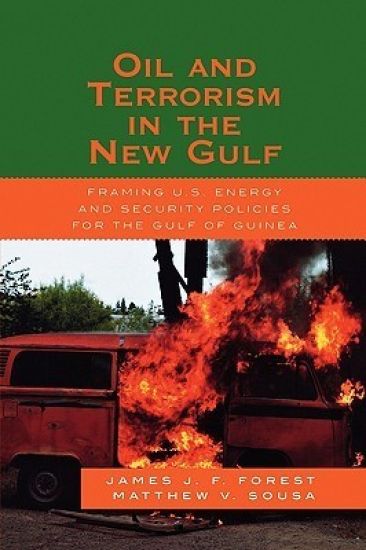
Oil and Terrorism in the New Gulf

Oil and Terrorism in the New Gulf

James J.F. Forest; Matthew V. Sousa

Lexington Books
2006
nidottu
Oil and Terrorism in the New Gulf examines the national security implications of U.S. energy security policies in the Middle East, and the emerging U.S. involvement in oil exploration and extraction in West Africa. Similar political, social, and economic challenges—poverty, corruption, lack of infrastructure, and weak governments—are seen in the oil-producing states of both the Middle East and Africa. Drawing comparisons between these two regions allows Forest and Sousa to formulate policy recommendations for how to handle foreign policy toward Africa in the future based on lessons learned from past interaction with the Middle East. Oil and Terrorism in the New Gulf promises to inform a lively debate over the future of U.S. foreign policies toward Africa and is a valuable resource for policymakers and the academic community that should be approached in a coherent, integrated fashion to ensure the success of the United State's energy and national security agendas.
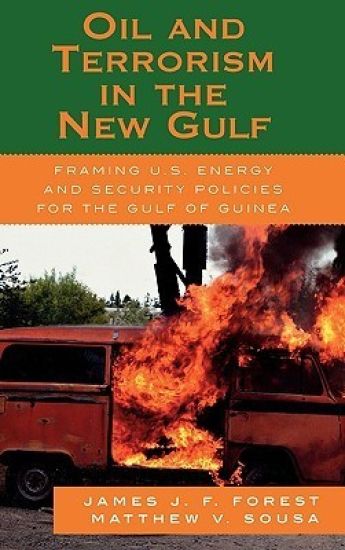
Oil and Terrorism in the New Gulf

Oil and Terrorism in the New Gulf

James J.F. Forest; Matthew V. Sousa

Lexington Books
2006
sidottu
Oil and Terrorism in the New Gulf examines the national security implications of U.S. energy security policies in the Middle East, and the emerging U.S. involvement in oil exploration and extraction in West Africa. Similar political, social, and economic challenges_poverty, corruption, lack of infrastructure, and weak governments_are seen in the oil-producing states of both the Middle East and Africa. Drawing comparisons between these two regions allows Forest and Sousa to formulate policy recommendations for how to handle foreign policy toward Africa in the future based on lessons learned from past interaction with the Middle East. Oil and Terrorism in the New Gulf promises to inform a lively debate over the future of U.S. foreign policies toward Africa and is a valuable resource for policymakers and the academic community that should be approached in a coherent, integrated fashion to ensure the success of the United State's energy and national security agendas.