Kirjojen hintavertailu. Mukana 12 595 353 kirjaa ja 12 kauppaa.

Kirjailija

James Joyce

Kirjat ja teokset yhdessä paikassa: 672 kirjaa, julkaisuja vuosilta 1914-2026, suosituimpien joukossa Ulysses. Vertaile teosten hintoja ja tarkista saatavuus suomalaisista kirjakaupoista.

Mukana myös kirjoitusasut: James Joyce.

672 kirjaa

Kirjojen julkaisuhaarukka 1914-2026.

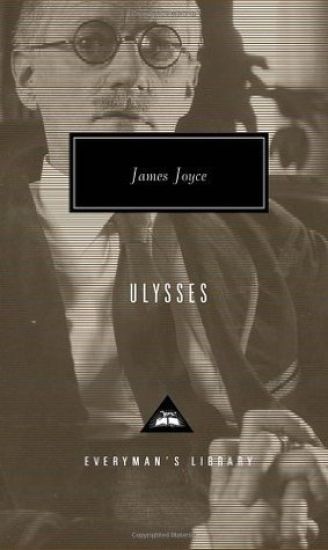
Ulysses: Introduction by Craig Raine

Ulysses: Introduction by Craig Raine

James Joyce

Everyman's Library
1997
sidottu
The most famous day in literature is June 16, 1904, when a certain Mr. Leopold Bloom of Dublin eats a kidney for breakfast, attends a funeral, admires a girl on the beach, contemplates his wife's imminent adultery, and, late at night, befriends a drunken young poet in the city's red-light district.An earthy story, a virtuoso technical display, and a literary revolution all rolled into one, James Joyce's Ulysses is a touchstone of our modernity and one of the towering achievements of the human mind.
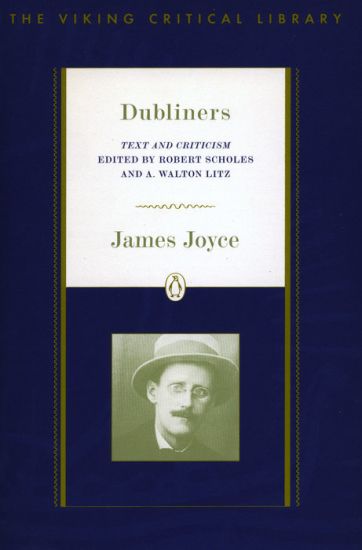
Dubliners

Dubliners

James Joyce

PENGUIN BOOKS AUSTRALIA
1996
pokkari
This Vintage Classics edition of James Joyce's groundbreaking story collection has been authoritatively edited by scholars Hans Walter Gabler and Walter Hettche and includes a chronology, bibliography, and afterword by John S. Kelly. Also included in a special appendix are the original versions of three of the stories as well as Joyce's long-suppressed preface to Dubliners. With the fifteen stories in Dubliners Joyce reinvented the art of fiction, using a scrupulous, deadpan realism to convey truths that were at once blasphemous and sacramental. Whether writing about the death of a fallen priest (The Sisters), the petty sexual and fiscal machinations of Two Gallants, or of the Christmas party at which an uprooted intellectual discovers just how little he really knows about his wife (The Dead), Joyce takes narrative art to places it had never been before.
Dubliners

Dubliners

James Joyce

Hawk Press
1995
pokkari
Dubliners is a collection of 15 short stories by James Joyce, first published in 1914. The fifteen stories were meant to be a naturalistic depiction of the Irish middle class life in and around Dublin in the early years of the 20th century. The stories were written at the time when Irish nationalism was at its peak and a search for a national identity and purpose was raging at crossroads of history and culture, Ireland was jolted by various converging ideas and influences. They center on Joyce's idea of an epiphany: a moment where a character has a special moment of self-understanding or illumination. Many of the characters in Dubliners later appeared in minor roles in Joyce's novel Ulysses. The initial stories in the collection are narrated by children as protagonists, and as the stories continue, they deal with the lives and concerns of progressively older people. This is in line with Joyce's tripartite division of the collection into childhood, adolescence and maturity.
A Portrait of the Artist as a Young Man

A Portrait of the Artist as a Young Man

James Joyce

Dover Publications Inc.
1994
pokkari
Masterpiece of semi-autobiographical fiction reveals a powerful portrait of the coming of age of a young man of unusual intelligence, sensitivity, and character. Telling portrayals of an Irish upbringing and schooling, the Catholic Church and its priesthood, Parnell and Irish politics, sexual experimentation and its aftermath, and problems with art and morality.
Dubliners

Dubliners

James Joyce

PENGUIN BOOKS LTD
1993
pokkari
A definitive edition of perhaps the greatest short story collection in the English languageJames Joyce’s Dubliners is a vivid and unflinching portrait of “dear dirty Dublin” at the turn of the twentieth century. These fifteen stories, including such unforgettable ones as “Araby,” “Grace,” and “The Dead,” delve into the heart of the city of Joyce’s birth, capturing the cadences of Dubliners’ speech and portraying with an almost brute realism their outer and inner lives. Dubliners is Joyce at his most accessible and most profound, and this edition is the definitive text, authorized by the Joyce estate and collated from all known proofs, manuscripts, and impressions to reflect the author’s original wishes.For more than seventy years, Penguin has been the leading publisher of classic literature in the English-speaking world. With more than 1,700 titles, Penguin Classics represents a global bookshelf of the best works throughout history and across genres and disciplines. Readers trust the series to provide authoritative texts enhanced by introductions and notes by distinguished scholars and contemporary authors, as well as up-to-date translations by award-winning translators.
Portrait of the Artist as a Young Man

Portrait of the Artist as a Young Man

James Joyce; Hans Walter Gabler

CRC Press Inc
1993
sidottu
First published in 1993. The seminal invention for James Joyce's A Portrait of the Artist as a Young Man was the narrative essay A Portrait of the Artist’. This reprinting also includes an introduction of its origin to publication in 1914 as a serialised narrative in ‘The Egoist’ journal.
A Portrait of the Artist as a Young Man

A Portrait of the Artist as a Young Man

James Joyce

RANDOM HOUSE USA INC
1993
pokkari
"I will not serve that in which I no longer believe, whether it call itself my home, my fatherland or my church: and I will try to express myself in some mode of life or art as freely as I can and as wholly as I can, using for my defence the only arms I allow myself to use -- silence, exile, and cunning." James Joyce's supremely innovative fictional autobiography is also, in the apt phrase of the biographer Richard Ellmann, nothing less than "the gestation of a soul." For as he describes the shabby, cloying, and sometimes terrifying Dublin upbringing of his alter ego, Stephen Dedalus, Joyce immerses the reader in his emerging consciousness, employing language that ranges from baby talk to hellfire sermon to a triumphant artist's manifesto. The result is a novel of immense boldness, eloquence, and energy, a work that inaugurated a literary revolution and has become a model for the portrayal of the self in our time. The text of this edition has been newly edited by Hans Walter Gabler and Walter Hettche and is followed by a new afterword, chronology, and bibliography by Richard Brown.
Dubliners

Dubliners

James Joyce

Random House USA Inc
1993
pokkari
This Vintage Classics edition of James Joyce's groundbreaking story collection has been authoritatively edited by scholars Hans Walter Gabler and Walter Hettche and includes a chronology, bibliography, and afterword by John S. Kelly. Also included in a special appendix are the original versions of three of the stories as well as Joyce's long-suppressed preface to Dubliners. With the fifteen stories in Dubliners Joyce reinvented the art of fiction, using a scrupulous, deadpan realism to convey truths that were at once blasphemous and sacramental. Whether writing about the death of a fallen priest ("The Sisters"), the petty sexual and fiscal machinations of "Two Gallants," or of the Christmas party at which an uprooted intellectual discovers just how little he really knows about his wife ("The Dead"), Joyce takes narrative art to places it had never been before.
Dubliners

Dubliners

James Joyce

Wordsworth Editions Ltd
1993
nidottu
Introduction and Notes by Laurence Davies, Dartmouth College, New Hampshire. Living overseas but writing, always, about his native city, Joyce made Dublin unforgettable. The stories in Dubliners show us truants, seducers, gossips, rally-drivers, generous hostesses, corrupt politicians, failing priests, amateur theologians, struggling musicians, moony adolescents, victims of domestic brutishness, sentimental aunts and poets, patriots earnest or cynical, and people striving to get by. In every sense an international figure, Joyce was faithful to his own country by seeing it unflinchingly and challenging every precedent and piety in Irish literature.
Ulysses

Ulysses

James Joyce

Everyman's Library
1992
sidottu
James Joyce's masterpiece, Ulysses, tells of the diverse events which befall Leopold Bloom and Stephen Dedalus in Dublin on one day in June 1904. It is considered to be one of the most important works of modernist literature and was hailed as a work of genius by W. B. Yeats, T. S. Eliot and Ernest Hemingway. Scandalously frank, wittily erudite, mercurially eloquent, resourcefully comic and generously humane, Ulysses offers the reader a life-changing experience
A Portrait of the Artist as a Young Man

A Portrait of the Artist as a Young Man

James Joyce

Wordsworth Editions Ltd
1992
nidottu
With an Introduction and Notes by Dr. Jacqueline Belanger, University of Cardiff. A Portrait of the Artist as a Young Man represents the transitional stage between the realism of Joyce's Dubliners and the symbolism of Ulysses, and is essential to the understanding of the later work. This novel is a highly autobiographical account of the adolescence of Stephen Dedalus, who reappears in Ulysses, and who comes to realize that before he can become a true artist, he must rid himself of the stultifying effects of the religion, politics and essential bigotry of his background in late 19th century Ireland. Written with a light touch, this is perhaps the most accessible of Joyce’s works.
Dubliners

Dubliners

James Joyce

The Lilliput Press Ltd
1992
nidottu
James Joyce is his own best interlocutor: 'My intention was to write a chapter of the moral history of my country and I chose Dublin for the scene because that city seemed to me the centre of paralysis. I have tried to present it to the indifferent public under four of its aspects: childhood, adolescence, maturity and public life. The stories are arranged in this order. I have written it for the most part in a style of scrupulous meanness and with the conviction that he is a very bold man who dares to alter in the presentment, still more to deform, whatever he has seen and heard. It is not my fault that the odour of ashpits and old weeds and offal hangs round my stories. I seriously believe that you will retard the course of civilisation in Ireland by preventing the Irish people from having one good look at themselves in my nicely polished looking glass.' Dubliners, one of the great short-story collections in the English language, was first published in London on 15 June 1914 by Grant Richards, who had rejected the original set of twelve stories in September 1906; in the interim, according to Joyce, it was turned down by forty publishers. This consummate book, illustrated by the artist Louis le Brocquy, was published privately by The Dolmen Press in 1986. It is now being made widely available for the first time, the text deriving from Robert Scholes' 1967 edition, which restored Joyce's original punctuation and corrections. Le Brocquy's drawings, hieroglyphic 'shadows thrown by the text', are haunting accompaniments to these fifteen stories or 'incidents' in the life of a city, in Joyce's first major prose work. With this handsome edition, Dubliners returns fittingly to its source.
A Portrait of the Artist as a Young Man: Introduction by Richard Brown
A beautiful Everyman's Library Contemporary Classics hardcover edition of James Joyce's first and still most widely read novel, with an introduction by Richard Brown.In A Portrait of the Artist as a Young Man, Joyce makes a strange peace with the traditional narrative of a young man's self-discovery by respecting its substance while exploding its form, thereby inaugurating a literary revolution. Published in 1916 when Joyce was already at work on Ulysses, A Portrait of the Artist as a Young Man is exactly what its title says and much more. In an exuberantly inventive masterpiece of subjectivity, Joyce portrays his alter ego, Stephen Dedalus, growing up in Dublin and struggling through religious and sexual guilt toward an aesthetic awakening. In part a vivid picture of Joyce's own youthful evolution into one of the twentieth century's greatest writers, it is also a moment in the intellectual history of an age. Everyman's Library pursues the highest production standards, printing on acid-free cream-colored paper, with full-cloth cases with two-color foil stamping, decorative endpapers, silk ribbon markers, European-style half-round spines, and a full-color illustrated jacket. Contemporary Classics include an introduction, a select bibliography, and a chronology of the author's life and times.
A Portrait Of The Artist As A Young Man

A Portrait Of The Artist As A Young Man

James Joyce

Everyman's Library
1991
sidottu
The portrayal of Stephen Dedalus's Dublin childhood and youth, his quest for identity through art and his gradual emancipation from the claims of family, religion and Ireland itself, is also an oblique self-portrait of the young James Joyce and a universal testament to the artist's 'eternal imagination'.Joyce expertly encapsulates the development of individual consciousness and the role of the artist in society in what is considered one of his greatest works.
Dubliners

Dubliners

James Joyce

Everyman's Library
1991
sidottu
His stories are fillled with the rich detail of Dublin life, portraying ordinary, often defeated lives with unflinching realism. He writes of social decline, sexual desire and exploitation, corruption and personal failure, yet creates a brilliantly compelling, unique vision of the world and of human experience. The stories all centre around the city of Dublin and its inhabitants at the beginning of the twentieth century. They offer a moving portrait of an entire world and era long since disappeared.
Dubliners

Dubliners

James Joyce

Bantam USA
1990
pokkari
James Joyce has been hailed as one of the great literary rebels of our time. He rebelled against social and literary conventions, against Catholicism, and against Dublin, the city at the center of this magnificent collection of stories. In "Dubliners, "Joyce paints vivid portraits of the denizens of the city of his birth, from the young boy encountering death in the fist story, The Sisters, to the middle-aged Gabriel of the haunting final story, The Dead. This collection is both unflinchingly realistic portrait of dear dirty Dublin and, as Joyce himself explained, a window through which his countrymen could get one good look at themselves. "
Dubliner

Dubliner

James Joyce

SUHRKAMP VERLAG
1987
pokkari
Die Rolle der gesetzlichen Krankenkasse im Gesundheitssystem hat sich in den vergangenen zwei Jahrzehnten stark verändert: In den 1980er Jahren war sie noch ausführendes Organ des Sozialrechts, heute ist sie dagegen aktiv im wettbewerblichen Leistungs- und Versorgungsmanagement nach amerikanischem und schweizerischem Vorbild. So kommt es, dass Bürger heute in der Wahl ihrer Krankenkasse mit einer Vielfalt an Tarifen und Leistungsangeboten konfrontiert sind. Dieses Szenario ist das Ergebnis einer Gesundheitspolitik, die sich die wettbewerbliche Selbstregulierung des GKV-Systems als Gestaltungsziel in das Reformprogramm geschrieben hat. Das vorliegende Buch rekonstruiert die Ziele und Interventionsfelder der Gesundheitspolitik vor dem Hintergrund eines Phasenwechsels: Die Kostendämpfungspolitik der 1970er und 1980er Jahre bezog sich noch ausschließlich auf das Finanzierungssystem des Gesundheitssektors. Die heutige Politik will darüber hinaus Wirtschaftlichkeitsreserven erschließen und das durch Verbandsmacht geprägte Regulierungsgefüge von innen heraus neu gestalten. Die Suche gilt heute neuen institutionellen Arrangements, in denen sich marktähnliche Mechanismen von Angebot und Nachfrage entfalten können. Als Ergebnis ihrer Studie weist die Autorin auf die Chancen hin, die die Strukturreformen des vergangenen Jahrzehnts für eine Institutionenpolitik im Gesundheitssektor eröffnet haben. In der suchenden und experimentellen Herangehensweise der jüngeren Politik wurden die Entscheidungskorridore im Reformprozess neu abgesteckt. Inhalt Einleitung: Nicht Staat, nicht Markt und doch mehr Wettbewerb ? wohin steuert das Gesundheitswesen? Teil 1: Wie teuer darf Gesundheit sein? Reformpolitik in der Phase der Kostendämpfung 1. ?Beitragssatz? und ?Gesundheitsquote? ? die ökonomische Messlatte der Gesundheitspolitik 2. Das Finanzierungssystem als Interventionsfeld der Kostendämpfungspolitik (a) Das Sozialversicherungsmodell (b) Die staatlich-etatistische Finanzierung (c) Der private Versicherungsmarkt 3. Kostendämpfungspolitik in Deutschland 4. Kostendämpfungspolitiken in Europa 5. Morbiditätslast, Fortschrittsfalle oder anbieterinduzierte Nachfrage: Was steckt hinter der ?Kostenexplosion?? Teil 2: Wieviel ?Managed Care? verträgt die Gesetzliche Krankenversicherung? Zum Stand der Strukturreformen 6. Wettbewerb, Rationalisierung und Ergebnisorientierung im Gesundheitswesen 7. Das Steuerungssystem als Interventionsfeld der Reformpolitik (a) Verbandsverhandlungen in den Sozialversicherungsländern (b) Die Verwaltungshierarchien des Staatlichen Gesundheitsdienstes (c) Defizite und Reformbedarfe 8. Gesundheitsstrukturreformen in Deutschland (a) Die Organisationsreform der Gesetzlichen Krankenversicherung (b) Neue Vertrags- und Versorgungsformen im ambulanten Sektor (c) Leistungstransparenz und preisliche Vergütung im Krankenhaussektor (d) Staatliche und verbandliche Regulierungsfunktionen im Wandel 9. Gesundheitsstrukturreformen in Europa (a) ?Regulierter Wettbewerb? im Rahmen der Sozialversicherung (b) Die ?Internen Märkte? des Nationalen Gesundheitsdienstes (c) Konvergenz der Gesundheitssysteme? Zusammenfassung und Ausblick: Solidarsystem im Umbau ? Entwicklungsbedarf und Gestaltungsoptionen Verzeichnis der Tabellen und Abbildungen Literatur
A Portrait of the Artist as a Young Man: Text, Criticism, and Notes
A Portrait of the Artist as a Young Man portrays Stephen Dedalus's Dublin childhood and youth, providing an oblique self-portrait of the young James Joyce. At its center are questions of origin and source, authority and authorship, and the relationship of an artist to his family, culture, and race. Exuberantly inventive, this coming-of-age story is a tour de force of style and technique.
Stephen Hero

Stephen Hero

James Joyce

NEW DIRECTIONS PUBLISHING CORPORATION
1963
nidottu
This early version of A Portrait of the Artist as a Young Man in which Stephen Daedalus rebels against church, country and family, is taken from an incomplete manuscript and is supported by literary and bibliographical notes