Kirjojen hintavertailu. Mukana 12 595 353 kirjaa ja 12 kauppaa.

Kirjailija

James K Morningstar

Kirjat ja teokset yhdessä paikassa: 3 kirjaa, julkaisuja vuosilta 2017-2024, suosituimpien joukossa War and Resistance in the Philippines, 1942-1944. Vertaile teosten hintoja ja tarkista saatavuus suomalaisista kirjakaupoista.

3 kirjaa

Kirjojen julkaisuhaarukka 2017-2024.

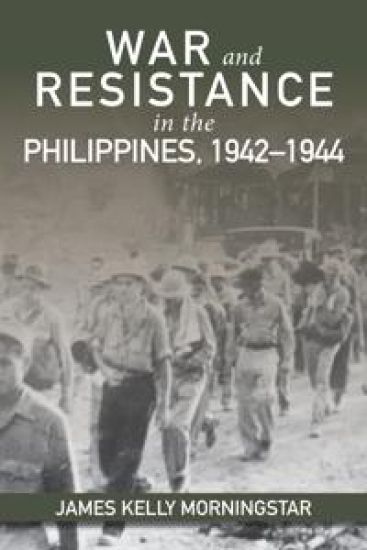
War and Resistance in the Philippines, 1942-1944

War and Resistance in the Philippines, 1942-1944

James K Morningstar

Naval Institute Press
2024
nidottu
War and Resistance in the Philippines, 1942-1944 repairs the fragmentary and incomplete history of events in the Philippine Islands between the surrender of Allied forces in May 1942 and MacArthur's return in October 1944. No book has comprehensively examined the Filipino resistance during this crucial period. Here, James Kelly Morningstar provides for the first time a comprehensive history of the protracted fighting by 260,000 guerrillas in 277 units across the archipelago. Beginning with the Japanese occupation, the collapse of the United States Forces, Far East (USAFFE), and the simultaneous rise of the complex, diverse Philippine guerrilla movements, Morningstar exposes the inadequacy of MacArthur's conventional plans while revealing his inchoate preparation for guerrilla resistance. Morningstar then recounts in detail the impromptu resistance led by refugee American and Filipino soldiers, local politicians, and social revolutionaries left to battle the Japanese--and each other--with emphasis on how Japanese, American, and Filipino actions influenced and proscribed each other. From a distance, MacArthur contacted select guerrillas and organized agents to deliver supplies and radios to them by submarine. In this way he empowered some to gain power as part of a united framework under his leadership. This not only kept alive the resistance that denied the Japanese exploitation of the Philippines while setting the conditions for MacArthur's return, it also ensured that no one guerrilla leader could challenge America's supremacy. MacArthur's selective support to guerrilla groups that encouraged continued Filipino dependence on the United States would prove fatal for the incipient Maoist social revolution on Luzon. Even so, the Filipinos' shared sacrifice in their act of resistance fueled a national consciousness that created a sense of deserved nationhood.War and Resistance in the Philippines, 1942-1944 concludes with a brief discussion of legacies of the guerrilla resistance. MacArthur's return reestablished the power of American and Filipino political elites. Guerrillas and other citizens who had experienced exceptional hardship now had to fight for recognition. However, the war had resulted in a more united Philippine national identity along with new political institutions to repair the divisions between the formerly exiled government, the collaborationists, and the members of resistance. These momentous years of struggle in the Philippines changed the tide of history and challenge our understanding of war and resistance.
War and Resistance in the Philippines, 1942-1944

War and Resistance in the Philippines, 1942-1944

James K Morningstar

Naval Institute Press
2021
sidottu
War and Resistance in the Philippines, 1942-1944 repairs the fragmentary and incomplete history of events in the Philippine Islands between the surrender of Allied forces in May 1942 and MacArthur's return in October 1944. No book has comprehensively examined the Filipino resistance during this crucial period. Here, James Kelly Morningstar provides for the first time a comprehensive history of the protracted fighting by 260,000 guerrillas in 277 units across the archipelago. Beginning with the Japanese occupation, the collapse of the United States Forces, Far East (USAFFE), and the simultaneous rise of the complex, diverse Philippine guerrilla movements, Morningstar exposes the inadequacy of MacArthur's conventional plans while revealing his inchoate preparation for guerrilla resistance. Morningstar then recounts in detail the impromptu resistance led by refugee American and Filipino soldiers, local politicians, and social revolutionaries left to battle the Japanese--and each other--with emphasis on how Japanese, American, and Filipino actions influenced and proscribed each other. From a distance, MacArthur contacted select guerrillas and organized agents to deliver supplies and radios to them by submarine. In this way he empowered some to gain power as part of a united framework under his leadership. This not only kept alive the resistance that denied the Japanese exploitation of the Philippines while setting the conditions for MacArthur's return, it also ensured that no one guerrilla leader could challenge America's supremacy. MacArthur's selective support to guerrilla groups that encouraged continued Filipino dependence on the United States would prove fatal for the incipient Maoist social revolution on Luzon. Even so, the Filipinos' shared sacrifice in their act of resistance fueled a national consciousness that created a sense of deserved nationhood. War and Resistance in the Philippines, 1942-1944 concludes with a brief discussion of legacies of the guerrilla resistance. MacArthur's return reestablished the power of American and Filipino political elites. Guerrillas and other citizens who had experienced exceptional hardship now had to fight for recognition. However, the war had resulted in a more united Philippine national identity along with new political institutions to repair the divisions between the formerly exiled government, the collaborationists, and the members of resistance. These momentous years of struggle in the Philippines changed the tide of history and challenge our understanding of war and resistance.
Patton's Way

Patton's Way

James K Morningstar

Naval Institute Press
2017
sidottu
Patton’s Way is a unique approach to the legend of General George S. Patton Jr. and his development and application of modern warfare. Rather than a biography, Patton’s Way argues that popular representations of Patton are built on misconceptions and incomplete understandings about his approach to battle. Morningstar addresses the contradiction between the historiographical criticism of Patton’s methods and popular appreciation for his successes. The author identifies several schools of thought offering explanations yet, he notes, they all fail to fully comprehend the real Patton. The secret to Patton’s success was a radical and purposely-crafted doctrine developed over several decades. The author identifies four core principles in Patton’s creed: targeting the enemy’s morale through shock; utilizing highly practiced combined arms mechanized columns; relying on mission tactics and flexible command and control; and employing multi-layered and synthesized intelligence systems to identify enemy capabilities and weak spots. These precepts directly contradicted official U.S. Army doctrine and created misunderstandings that led commanders to truncate Patton’s operations in Tunisia, Sicily, and France. Morningstar details how Patton developed and applied each principle and uses the breakout from Normandy as a case study to illustrate Patton’s Way in application. This book discusses the “death and resurrection” of Patton’s ideas in the U.S. Army directly following World War II to the present and comments on the status of Patton’ ideas in the Army today.