Kirjojen hintavertailu. Mukana 12 152 606 kirjaa ja 12 kauppaa.

Kirjailija

James Ker-Lindsay

Kirjat ja teokset yhdessä paikassa: 6 kirjaa, julkaisuja vuosilta 2011-2023, suosituimpien joukossa The Cyprus Problem. Vertaile teosten hintoja ja tarkista saatavuus suomalaisista kirjakaupoista.

6 kirjaa

Kirjojen julkaisuhaarukka 2011-2023.

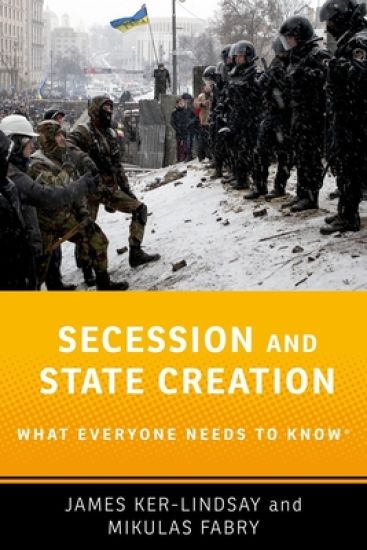
Secession and State Creation

Secession and State Creation

James Ker-Lindsay; Mikulas Fabry

Oxford University Press Inc
2023
nidottu
What makes a state? This question has attracted more and more attention in recent years with Catalan's illegal vote for independence from Spain and Palestine's ongoing search for international recognition. And while Scotland chose to remain with the United Kingdom, discussions of independence have only continued as the ramifications of the later Brexit vote begin to set in. As James Ker-Lindsay and Mikulas Fabry show in this new addition to the What Everyone Needs to Know® series, the road to statehood does not run smooth. Declaring independence is only the first step; gaining both local and global acceptance is necessary before a state can become truly independent. The prospect of losing territory is usually not welcomed by the parent state, and any such threat to an existing culture and its economy is often met with resistance--armed or otherwise. Beyond this immediate conflict, the international community often refuses to accept new states without proof of defined territory, a settled population, and effective government, which frequently translates to a democratic one with demonstrated respect for human rights. Covering the legal, political, and practical issues of secession and state creation, Ker-Lindsay and Fabry provide an essential guide to this timely topic.
Secession and State Creation

Secession and State Creation

James Ker-Lindsay; Mikulas Fabry

Oxford University Press Inc
2023
sidottu
What makes a state? This question has attracted more and more attention in recent years with Catalan's illegal vote for independence from Spain and Palestine's ongoing search for international recognition. And while Scotland chose to remain with the United Kingdom, discussions of independence have only continued as the ramifications of the later Brexit vote begin to set in. As James Ker-Lindsay and Mikulas Fabry show in this new addition to the What Everyone Needs to Know® series, the road to statehood does not run smooth. Declaring independence is only the first step; gaining both local and global acceptance is necessary before a state can become truly independent. The prospect of losing territory is usually not welcomed by the parent state, and any such threat to an existing culture and its economy is often met with resistance--armed or otherwise. Beyond this immediate conflict, the international community often refuses to accept new states without proof of defined territory, a settled population, and effective government, which frequently translates to a democratic one with demonstrated respect for human rights. Covering the legal, political, and practical issues of secession and state creation, Ker-Lindsay and Fabry provide an essential guide to this timely topic.

Survival 58.4

Survival 58.4

Kristin Ven Bruusgaard; Erik Jones; Christopher S. Chivvis; Dawood Azami; James Ker-Lindsay

Routledge
2016
nidottu
Survival, the bi-monthly publication from The International Institute for Strategic Studies, is a leading forum for analysis and debate of international and strategic affairs. With a diverse range of authors, thoughtful reviews and review essays, Survival is scholarly in depth while vivid, well-written and policy-relevant in approach. Shaped by its editors to be both timely and forward-thinking, the publication encourages writers to challenge conventional wisdom and bring fresh, often controversial, perspectives to bear on the strategic issues of the moment.
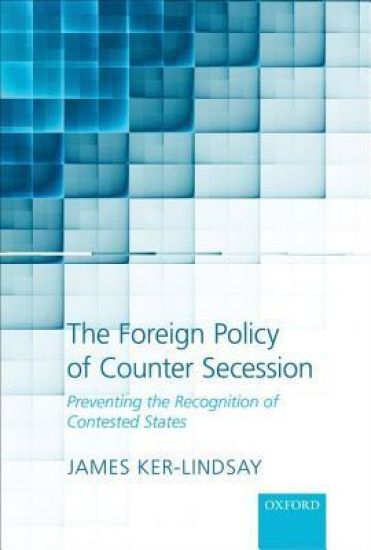
The Foreign Policy of Counter Secession

The Foreign Policy of Counter Secession

James Ker-Lindsay

Oxford University Press
2012
sidottu
How do states prevent the recognition of territories that have unilaterally declared independence? At a time when the issue of secession is becoming increasingly significant on the world stage, this is the first book to consider this crucial question. Analysing the efforts of the governments of Serbia, Georgia, and Cyprus to prevent the international recognition of Kosovo, South Ossetia, Abkhazia, and northern Cyprus the work draws on in depth interviews with a number of leading policy makers to explain how each of the countries has designed, developed, and implemented its counter secession strategies. After explaining how the principle of the territorial integrity of states has tended to take precedence over the right of self-determination, it examines the range of ways countries facing a separatist threat can prevent recognition by other states and considers the increasingly important role played by international and regional organisations, especially the United Nations, in the recognition process. Additionally, it shows how forms of legitimisation or acknowledgement are also central elements of any counter-recognition process, and why steps to prevent secessionist entities from participating in major sporting and cultural bodies are given so much attention. Finally, it questions the effects of these counter recognition efforts on attempts to solve these territorial conflicts. Drawing on history, politics, and international law this book is the first and only comprehensive account of this increasingly important field of foreign policy.
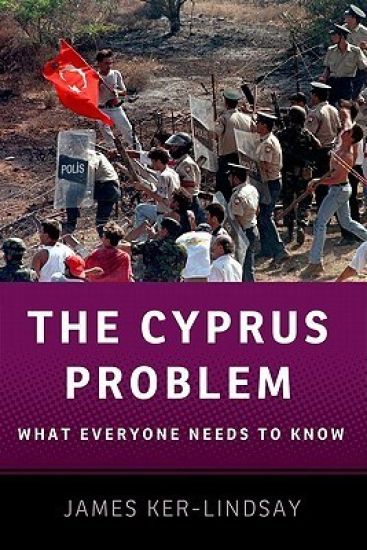
The Cyprus Problem

The Cyprus Problem

James Ker-Lindsay

Oxford University Press Inc
2011
sidottu
For nearly 60 years--from its uprising against British rule in the 1950s, to the bloody civil war between Greek and Turkish Cypriots in the 1960s, the Turkish invasion of Cyprus in the 1970s, and the United Nation's ongoing 30-year effort to reunite the island--the tiny Mediterranean nation of Cyprus has taken a disproportionate share of the international spotlight. And while it has been often in the news, accurate and impartial information on the conflict has been nearly impossible to obtain. In The Cyprus Problem, James Ker-Lindsay offers an incisive, even-handed account of the conflict. Ker-Lindsay covers all aspects of the Cyprus problem, placing it in historical context, addressing the situation as it now stands, and looking toward its possible resolution. The book begins with the origins of the Greek and Turkish Cypriot communities as well as the other indigenous communities on the island (Maronites, Latin, Armenians, and Gypsies). Ker-Lindsay then examines the tensions that emerged between the Greek and Turkish Cypriots after independence in 1960 and the complex constitutional provisions and international treaties designed to safeguard the new state. He pays special attention to the Turkish invasion in 1974 and the subsequent efforts by the UN and the international community to reunite Cyprus. The book's final two chapters address a host of pressing issues that divide the two Cypriot communities, including key concerns over property, refugee returns, and the repatriation of settlers. Ker-Lindsay concludes by considering whether partition really is the best solution, as many observers increasingly suggest. Written by a leading expert, The Cyprus Problem brings much needed clarity and understanding to a conflict that has confounded observers and participants alike for decades.
The Cyprus Problem

The Cyprus Problem

James Ker-Lindsay

Oxford University Press Inc
2011
nidottu
For nearly 60 years--from its uprising against British rule in the 1950s, to the bloody civil war between Greek and Turkish Cypriots in the 1960s, the Turkish invasion of Cyprus in the 1970s, and the United Nation's ongoing 30-year effort to reunite the island--the tiny Mediterranean nation of Cyprus has taken a disproportionate share of the international spotlight. And while it has been often in the news, accurate and impartial information on the conflict has been nearly impossible to obtain. In The Cyprus Problem, James Ker-Lindsay offers an incisive, even-handed account of the conflict. Ker-Lindsay covers all aspects of the Cyprus problem, placing it in historical context, addressing the situation as it now stands, and looking toward its possible resolution. The book begins with the origins of the Greek and Turkish Cypriot communities as well as the other indigenous communities on the island (Maronites, Latin, Armenians, and Gypsies). Ker-Lindsay then examines the tensions that emerged between the Greek and Turkish Cypriots after independence in 1960 and the complex constitutional provisions and international treaties designed to safeguard the new state. He pays special attention to the Turkish invasion in 1974 and the subsequent efforts by the UN and the international community to reunite Cyprus. The book's final two chapters address a host of pressing issues that divide the two Cypriot communities, including key concerns over property, refugee returns, and the repatriation of settlers. Ker-Lindsay concludes by considering whether partition really is the best solution, as many observers increasingly suggest. Written by a leading expert, The Cyprus Problem brings much needed clarity and understanding to a conflict that has confounded observers and participants alike for decades.